




In a perfect world, club fitting would be completely empirical. Fitting results would be based on evidence you can see, measure and test. Feelings and preconceived notions need not apply.
We know, however, that’s not always the case.
More often than not a little pixie dust is involved. It gets spread generously over assumptions, subjective input and trying to shoehorn a thorough fitting into a 60-minute window. You have fitters who rely too much on data and others who rely too much on spiffs and inventory.
What we’re left with is an imperfect system. It’s not uncommon that two different fittings with two different fitters on two different days can yield two completely different results, even though both fitters may, in fact, have your best interests at heart.
It’s all too easy, at that point, to throw the baby out with the bathwater and say club fitting is a scam or other such nonsense. But the truth is there are more good fitters than bad ones. Every horror story can be matched with 10 to 20 tales of excellent experiences yielding excellent results.
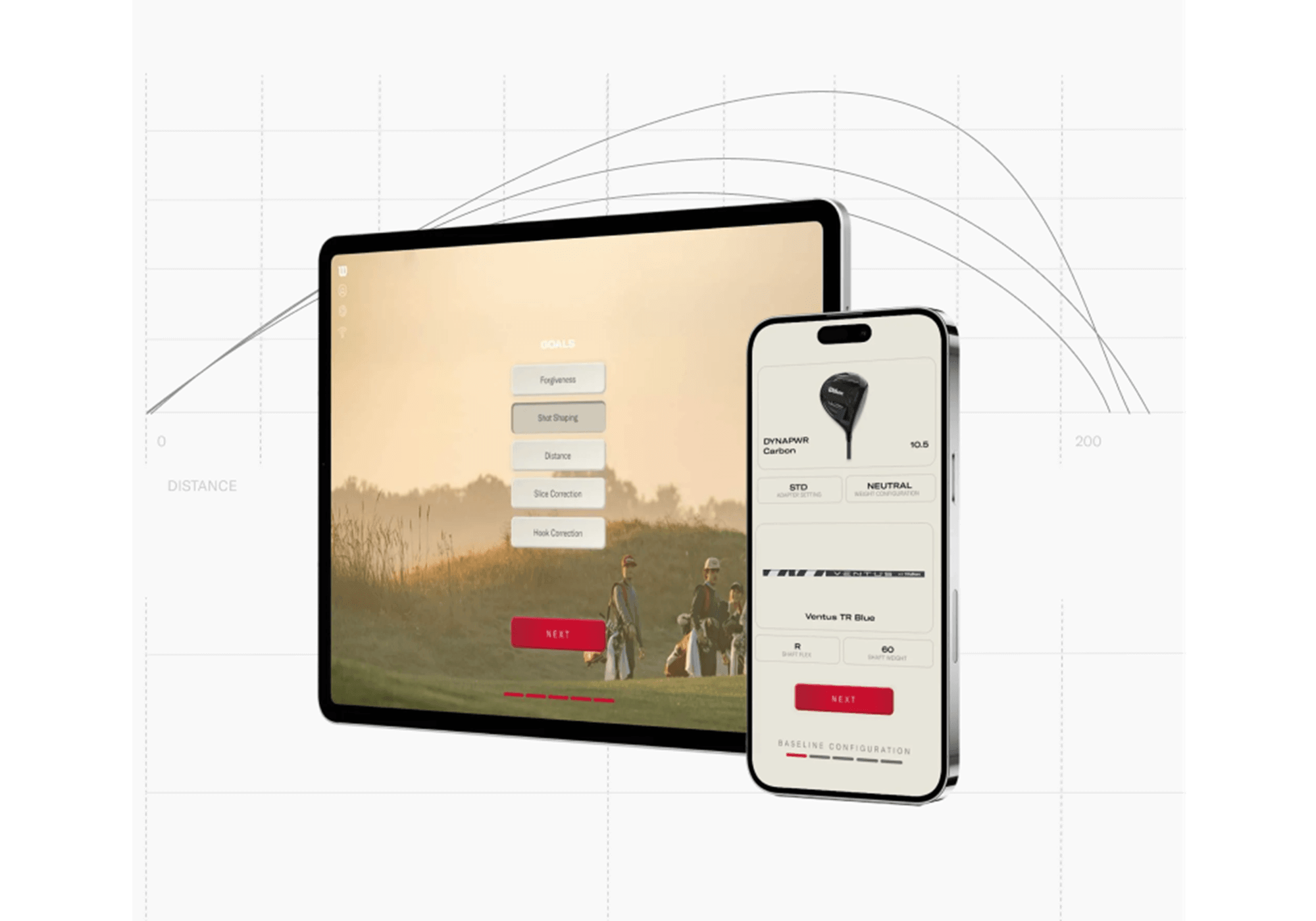
All of this is why I’m so fascinated by the new Wilson Fit AI system. It’s a proprietary, artificial-intelligence driven fitting app developed by Wilson that integrates directly into a GC Quad launch monitor. Then, in a matter of seconds, it immediately turns your launch monitor numbers into a fitting recommendation and several alternatives.
This, friends, is definitely worth looking into further.
Wilson Fit AI: What it is and what it isn’t
Wilson Fit AI is a self-learning, artificial intelligence-fueled fitting algorithm. Introduced in 2023 as a Blast Motion sensor on a special fitting club, Wilson Fit AI has grown up. In March, Wilson launched it’s new version, an app-based program that connects directly to a GC Quad launch monitor (Trackman compatibility is launching soon). The app leverages an enhanced AI engine to give you a fast and accurate fitting. It can get you something to work with after about five swings. The more input you give it, the more detailed it can get.
This is a little different from the industry’s other premier fitting tool, the Mizuno Shaft Optimizer 3D with Swing DNA technology. That can plot an entire Mizuno bag for you from driver to lob wedge within five swings. Wilson Fit AI will fit you for irons and drivers right now (wedges and putters are coming) and it gives you detailed data, targets and options. Most importantly, it gives a good fitter the opportunity to add in his or her own wisdom and experience to optimize the end result.
But is Wilson Fit AI accurate? Will it lock you into something you don’t want? Does it mean any idiot who can run an app will now be a fitter?
Those are all solid and reasonable questions. Let’s see if we can answer some of them for you.
The Wilson Fit AI process
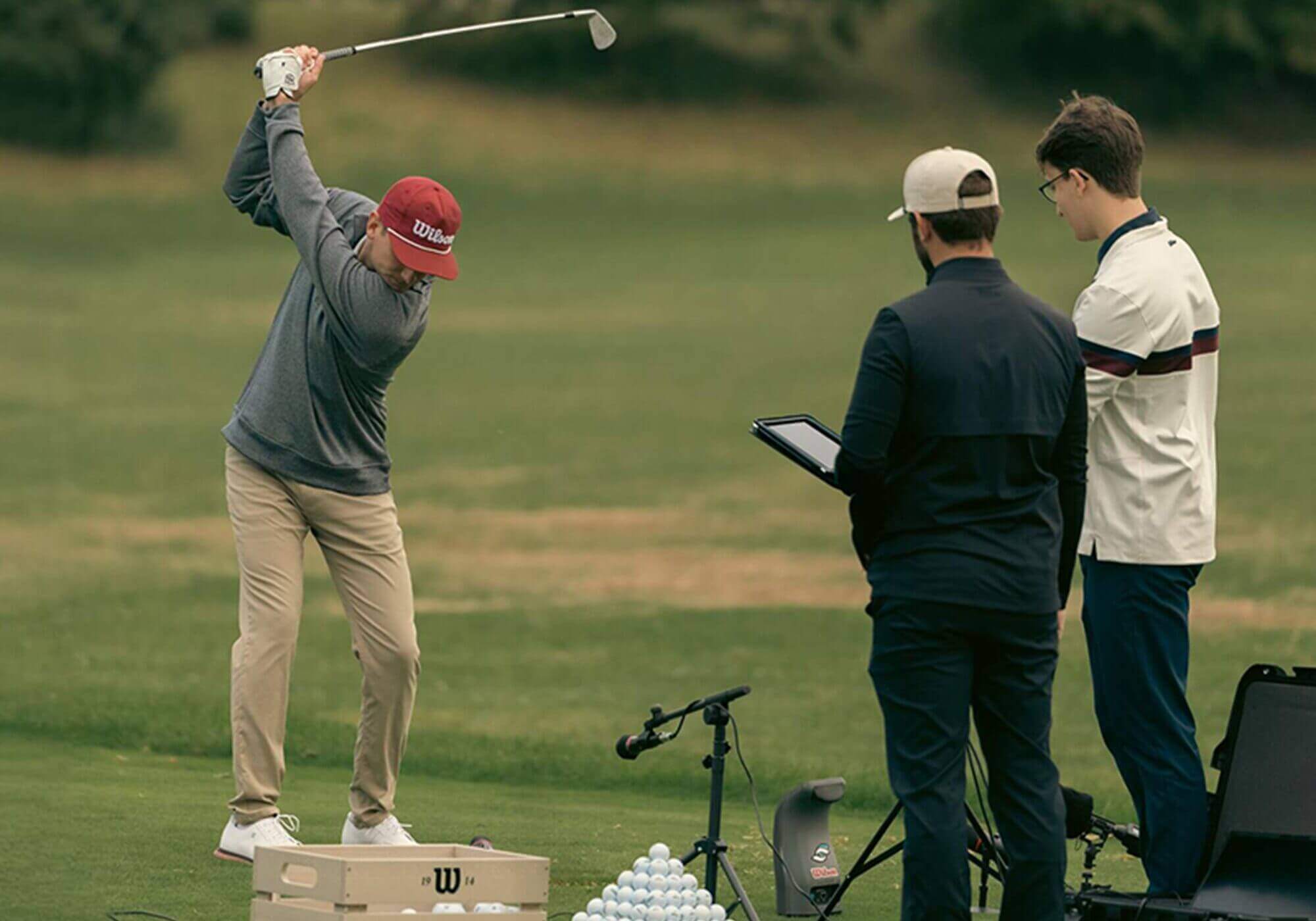
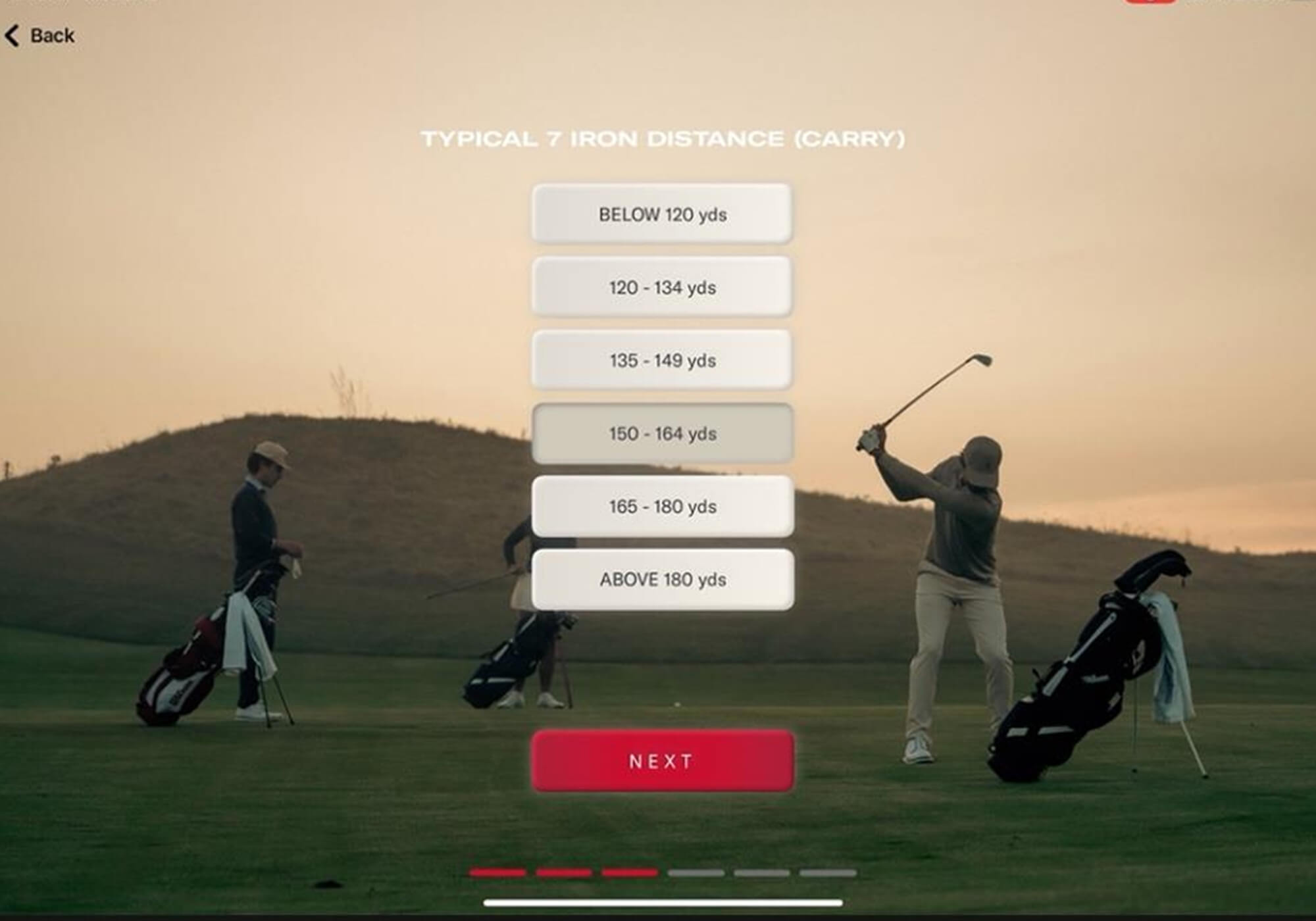
I was fortunate enough to experience Wilson Fit AI at the Wilson Innovation Center in suburban Chicago a few weeks ago with Wilson’s Ed Garland. The process starts by providing the app with some basic information to work with, such as player experience, goals, handicap index, 7-iron carry distance and preferred iron shot shape.
The fitter then gets height and wrist to floor measurements.
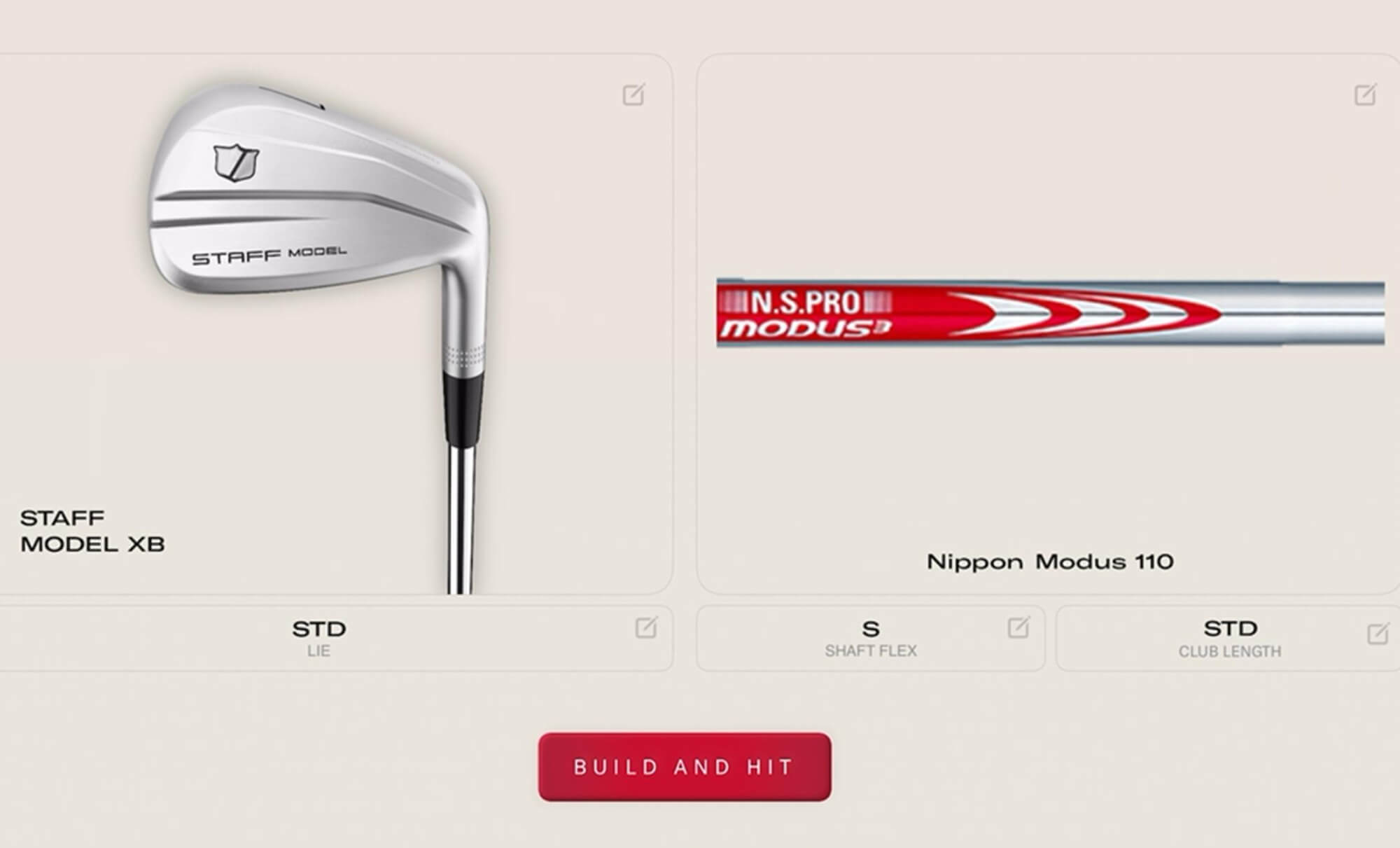
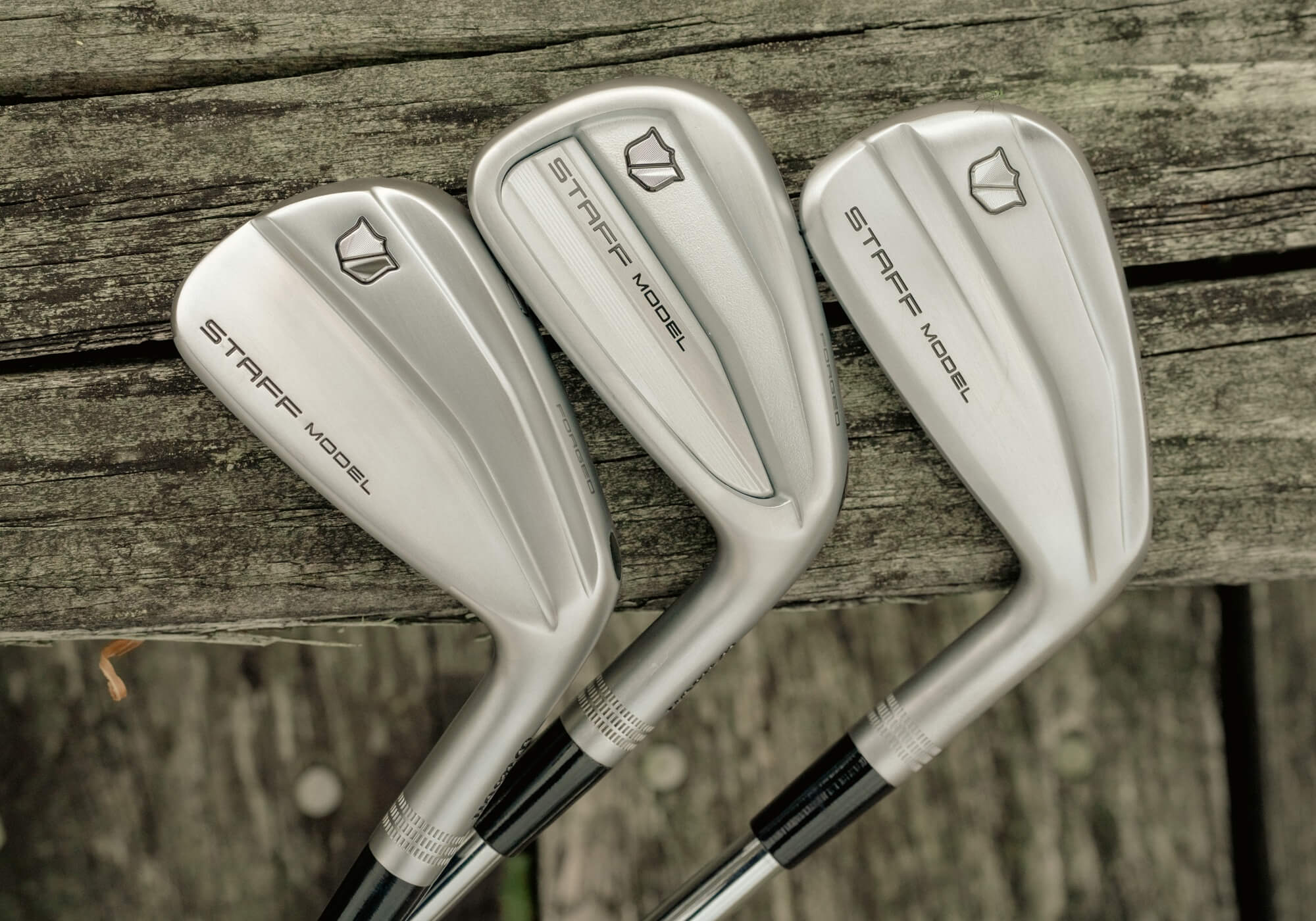
That’s enough to get you into a club to start. In my case, it was the Wilson Staff Model XB, with a standard-length Nippon Modus 110 shaft in stiff. Then you hit some shots.
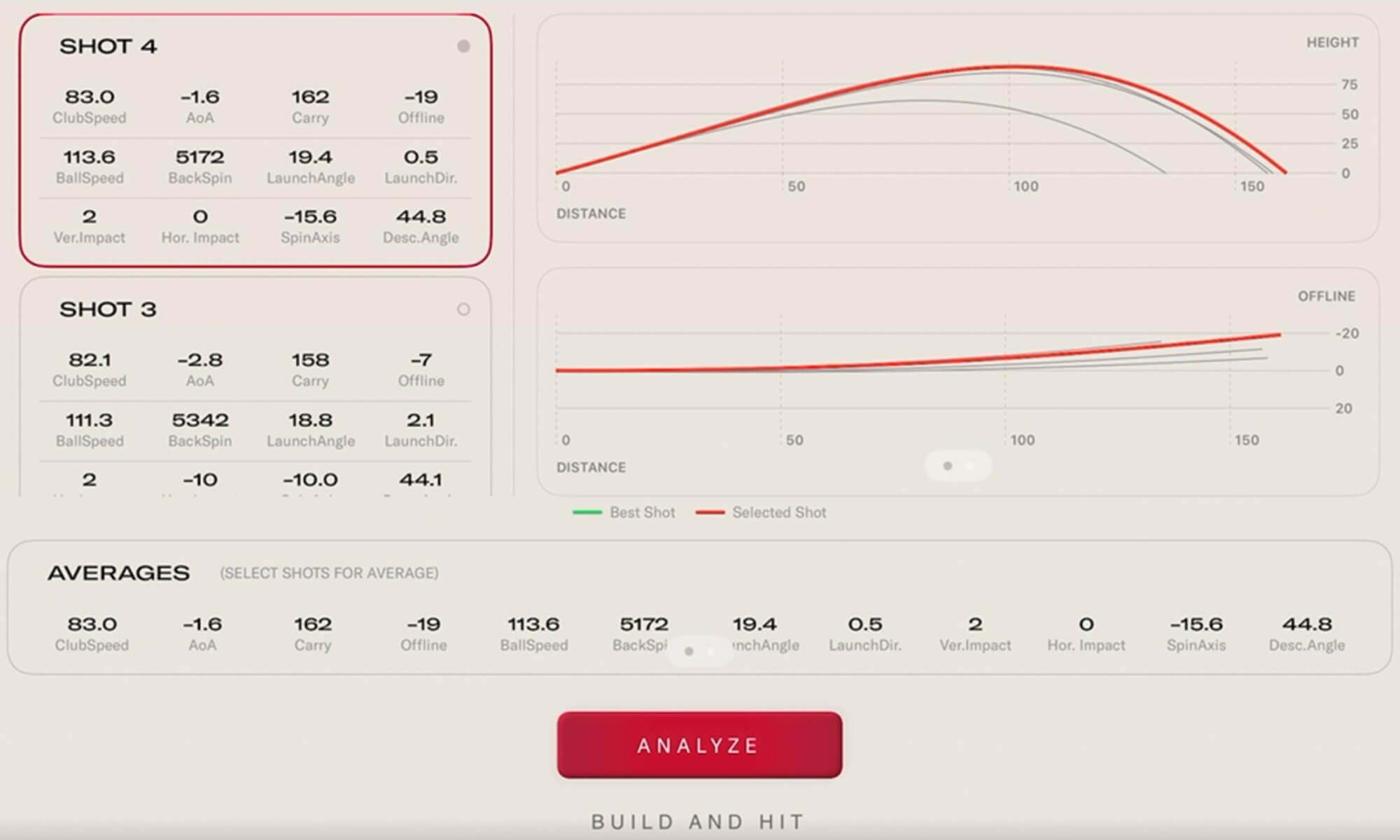
The Wilson Fit AI app then interprets in real time all of the club and ball data the GC Quad picks up. It measures more than 25 swing metrics in all, including club speed, attack angle, carry and offline distances, ball speed, spin, launch angle and direction, where on the face you’re making impact, spin axis and descent angle. The app also gives you a graphic display of your shots including side view with distance and height as well as a top-down view with distance and dispersion. The best shots are outlined in green and you can select an individual shot to get those specifics.
My first round with the XB 7-iron showed an 83-mph average club speed, a 1.6-degree angle of attack (groundskeepers love me – I don’t take big divots), 113.6 mph ball speed, 5,172 rpm spin and 162 yards of carry. The concern was my offline, 19 yards to the left. I have a draw with a tendency to overcook.
Virtually every fitting I’ve had over the past decade has recommended a flatter lie angle for that very reason. I didn’t tell Ed that going in, but he picked up on it after maybe two swings.
Next steps
Ed also said the 5,127 rpm spin was a tad low for that swing speed. That old wives’ tale that a 7-iron should spin at around 7,000 rpm is fine if you swing your 7-iron at 100 mph. For every 10 mph below that, you should drop your spin expectations by 1,000 rpm. So if you swing your 7-iron around 90, target 6,000 rpm and at 80 you should target 5,000 rpm. At 83 mph, 5,127 wasn’t bad but he thought we could do a little better.
The club data was also interesting. The app shows vertical and horizontal impact (I was catching it in the center but just a tad high) and compares face to path. I had a slight in-to-out path but with a square face – hence the 19 yards left.
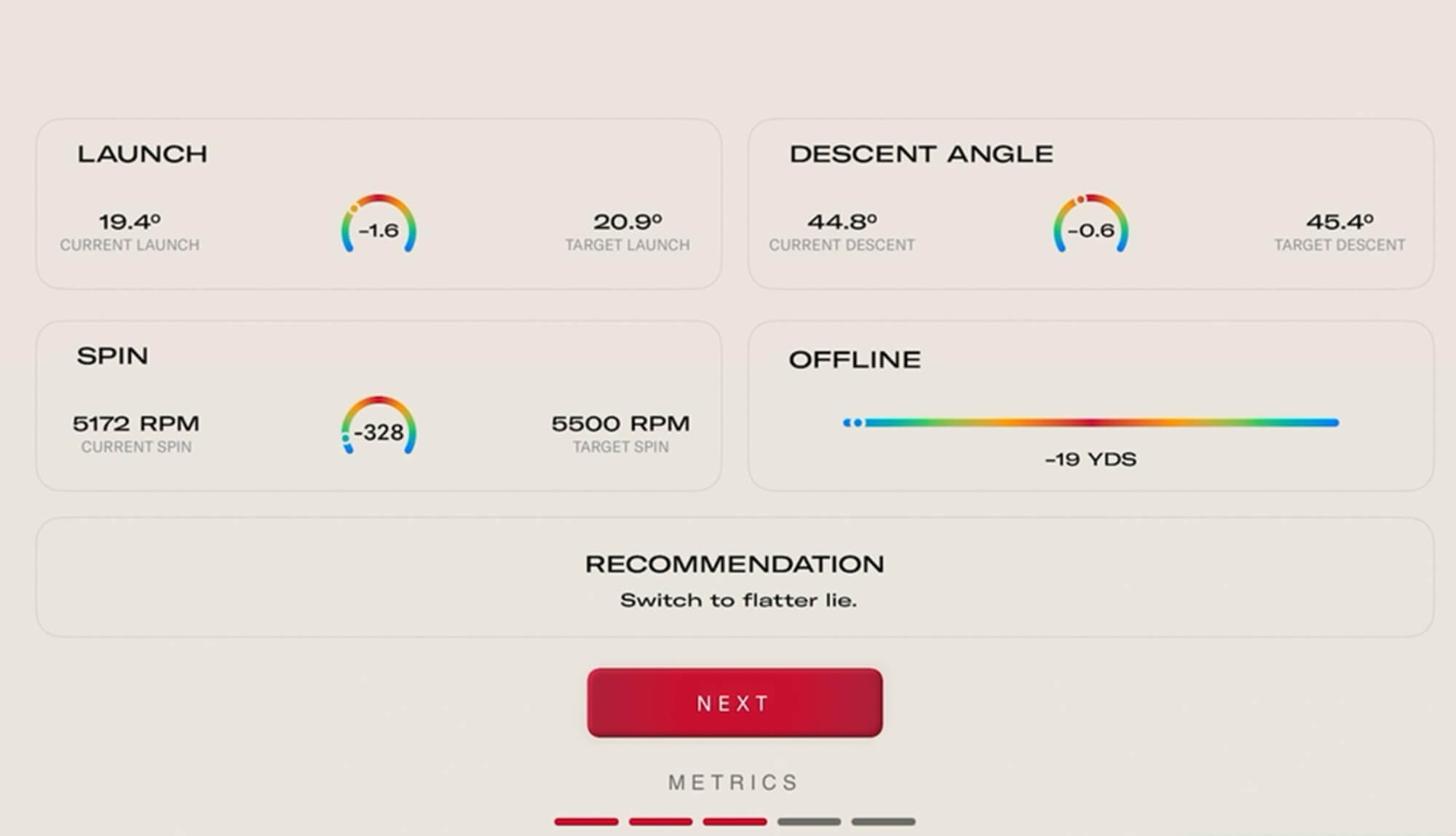
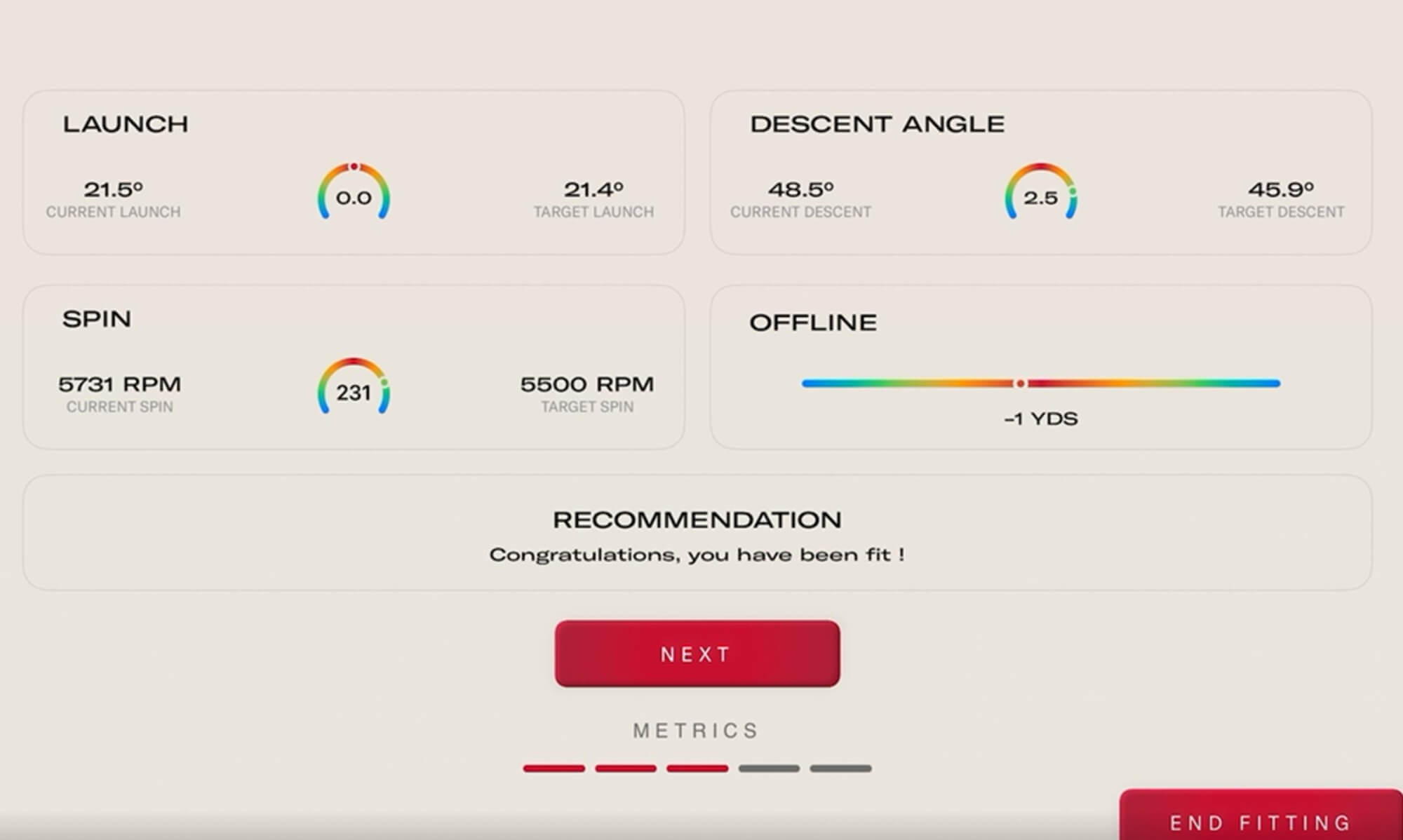
At the bottom of the Wilson Fit AI screen is an Analyze button. It compares your performance to ideal targets based on its growing database of shots in your swing speed and handicap range. The app targeted a 20.9-degree launch angle (mine was 19.4) and 5,500 rpm. It also suggested a 45.4-degree descent angle. Mine was close at 44.8.
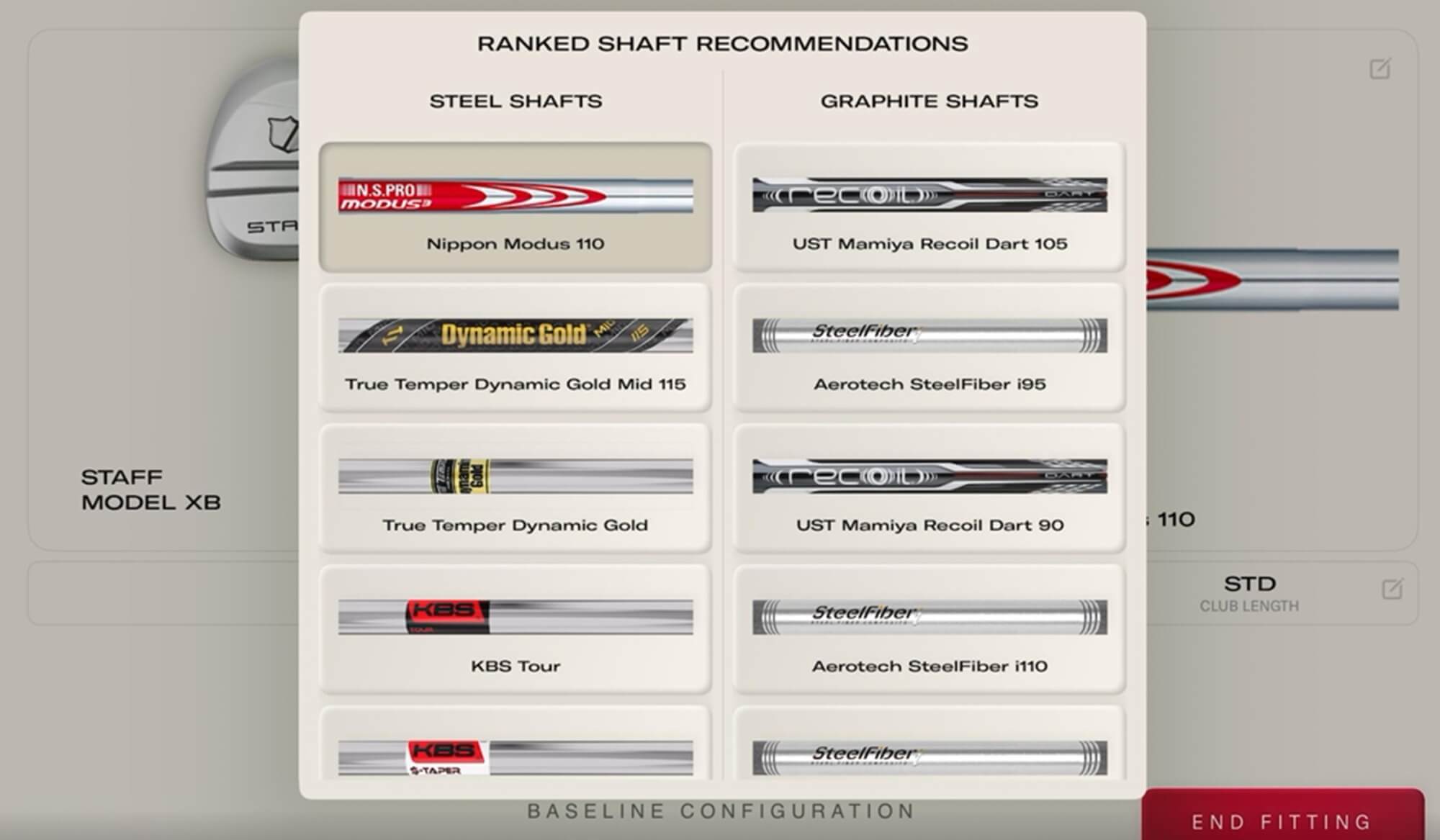
It picked up on going with a flatter lie almost as quickly as Ed did. From there, Wilson Fit AI gives the fitter the option to dive deeper and try different builds to find a better fit. It suggested trying a Dynamic Gold Mid 115, a KBS Tour and a KBS $-Taper. It also recommended some graphite options including a shaft I had never tried before: the Aerotech SteelFiber i95.
“Since we’re here in the candy store, let’s see what happens,” said Ed.
Ka-boom, baby!
Ed built flat options with the Mid 115 and $-Taper. They were OK but neither made my nostrils flare. Then we tried the Steelfiber i95 in stiff.
After two swings, we both knew it. My brother-in-law was watching. He knew it, too. The guy making prototype tennis racquets in the next wing of the Wilson Innovation Center knew. Hell, somewhere the Ghosts of Gene Sarazen and Sam Snead probably knew.
The app collected all the data and let the data do the talking. Clubhead speed peaked at 84.5 mph. I was worried I’d be all over the place with the lighter shaft but I had the tightest face impact dispersion of any shaft I tried (and we tried a few more). Carry dropped a tick to 160 but my offline dropped from 19 yards left to two yards left. Launch angle was spot on and my draw spin axis was a little more under control.
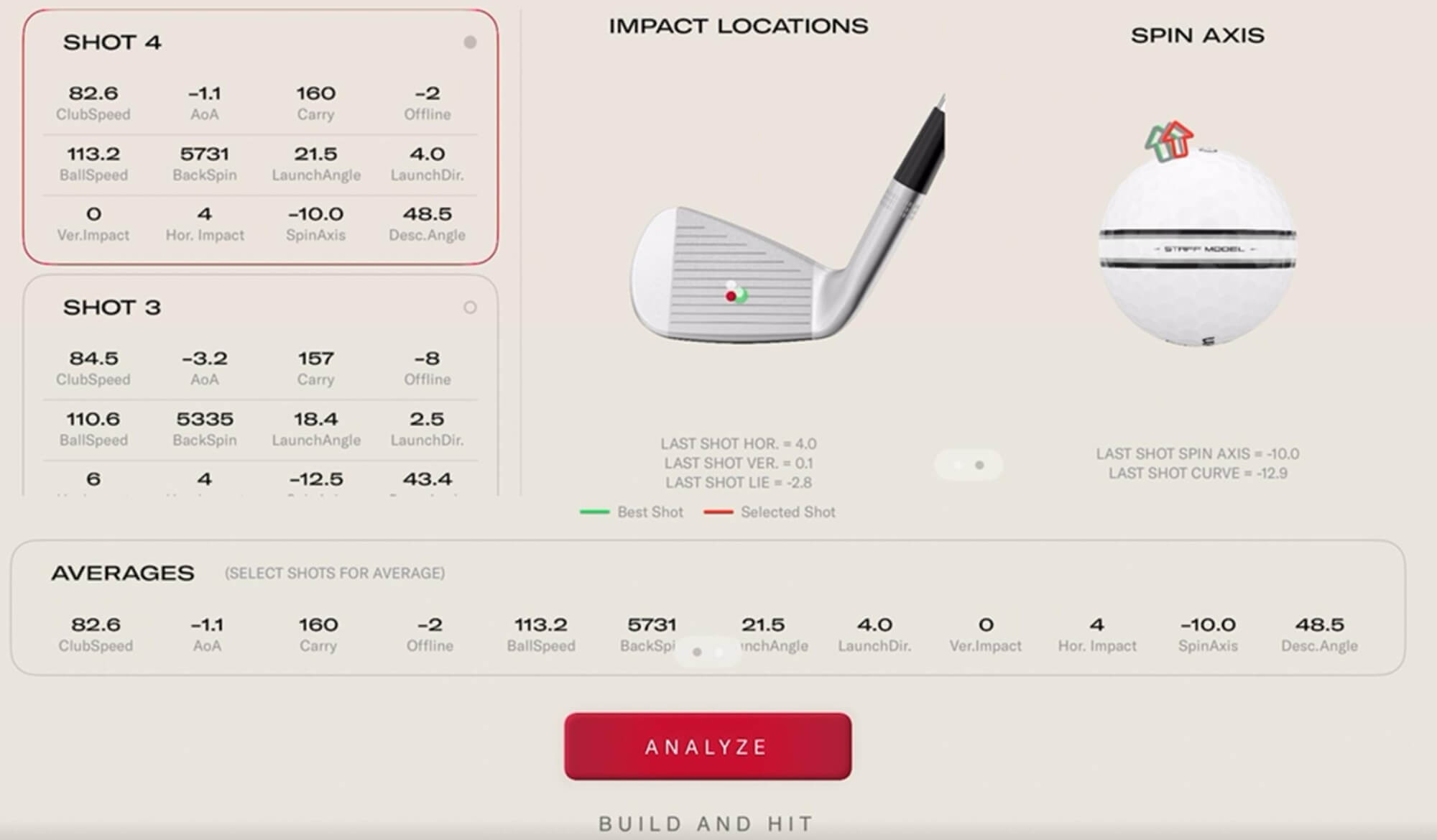
Just to show the fitter doesn’t have to be a slave to the app, Ed suggested trying one degree flat, just for fun. That little tweak brought the offline down to only a single yard.
The two biggest eye openers: 5,731 rpm worth of spin and a 48.5-degree descent angle.
That, friends, is a license to go pin-hunting.
At this point, even the app knew: “Congratulations,” it read. “You have been fit.”
Just for fun, we tried the Steelfiber i110. It was obviously heavier which changed the swing dynamics some. I caught a few that rivaled the i95 but the consistency wasn’t there. We also tried the Nippon Modus 105 in XS, figuring we’d all have a good laugh. Surprisingly, my left-right dispersion was quite good with it. Unfortunately, my front-back was not. With the i95, my overall dispersion was about the size of a picnic blanket.
Wilson Fit AI bottom line: An effective tool
The key word here, friends, is tool. It’s not going to replace your fitter with some sort of robotic R2D2-looking kiosk. Well, it could, I suppose, but that’s not a fitting experience I’d sign up for. In the right hands, it’s a tool to a: make the process go a little faster, and b: provide the golfer and fitter with data, targets and comparative info that’s hard to argue with.
Although I’m not opposed to graphite shafts, I had never considered the Aerotech Steelfiber before. As mentioned, my concern was stability, especially with something that light. However, based on its algorithms and database of swings that were similar to mine, Wilson Fit AI at least made the suggestion. It was Ed who said what the hell, let’s give it a try.
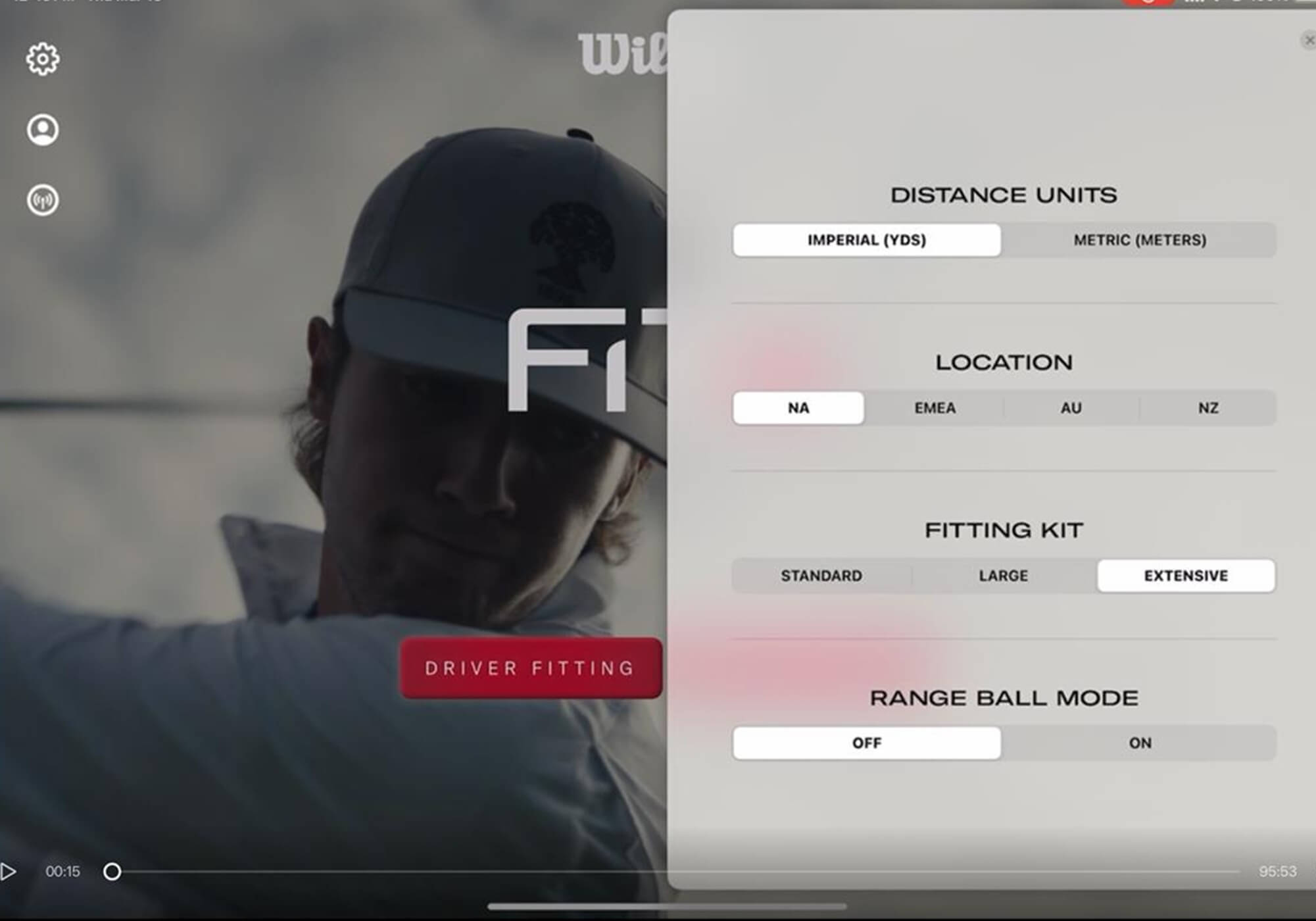
Interestingly, the Wilson Fit AI app is a free download on the Apple App Store (it’s not available for Android at this time) but it won’t do you any good. It’s designed for Wilson’s partner fitters and requires a company-supplied pin to actually use (not to mention a GC Quad).
Is there a world where a typical golfer could use something like this to fit himself or herself? Possibly, but remember the entire reason Wilson built this AI app in the first place: to help Wilson fitters sell Wilson clubs. Whether that goal changes in the coming years is anyone’s guess but Wilson is in the club business, not the app business.
I wouldn’t hold your breath. However, if you are looking to get fit, I’d highly recommend finding a Wilson Fit AI-equipped fitter. It’s fast and might take you places you’d have never considered. It’s worth the effort.
For a list of Wilson Fit AI fitters and fitting locations, check out the Wilson Golf website.






Tim
4 months ago
The Wilson website claims that the PGA TourSuperstore supports Webfit AI. When I call the store they claim they don’t. When I contacted Wilson, they claimed that the closest place was in Nebraska (a mighty long way from Boston). John — where did you go? I know you are somewhere nearby.
Tim
4 months ago
Du-oh I can read that you got it done at Wilson in Chicago. Oh well.