


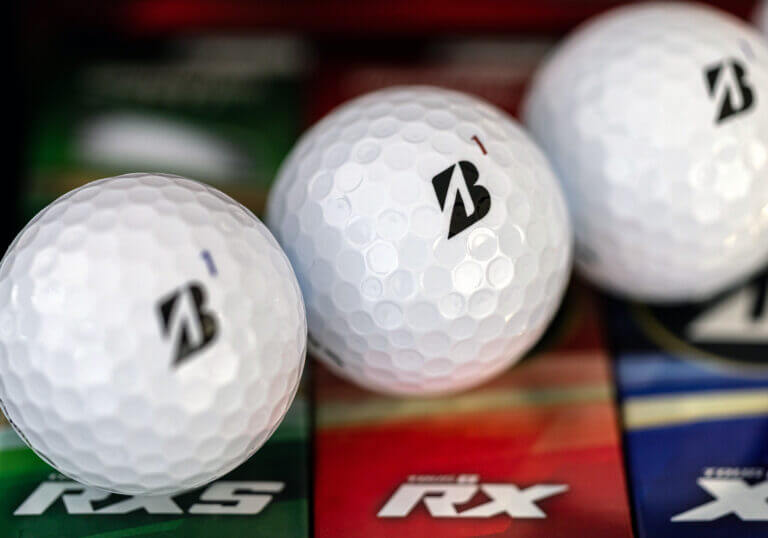
Pushing the Limits of Distance.
That’s the tagline Bridgestone has attached to its new TOUR B lineup—and, this time, it feels like more than an incremental tweak.
According to Bridgestone R&D, the new TOUR B represents a step change—the kind the company believes comes along roughly once a decade. Not a marginal gain, not a seasonal refresh, not the familiar biannual spec shuffle that defines most golf ball releases. Instead, the new TOUR B series introduces a foundational technology designed to reset how Bridgestone approaches speed, stability and overall golf ball performance.
That technology is called VeloSurge and while the name might suggest a single material breakthrough, it’s something broader. VeloSurge represents a new way of integrating the core and mantle into a unified system, designed to produce more speed and greater stability across the entire TOUR B lineup.
For a brand that once sat comfortably as the No. 2 ball in the U.S. market—and still holds the top spot in Japan—the new TOUR B lineup isn’t just about distance. It’s about reestablishing relevance in a category that has become far more competitive since Bridgestone last made a meaningful leap forward.
And it all starts with that new foundation.
Bridgestone: #1 in ball fitting … Not so much at retail
Bridgestone bills itself as the No. 1 ball fitter in golf. Over the better part of the last two decades, the company has fitted more than 4.5 million golfers for golf balls. The insights gleaned from those fittings inform product design across the lineup. In fact, ball fitting is what ultimately led to the development of the RX, which—more often than not—is the best-selling ball in the TOUR B family.
Full disclosure: Bridgestone’s fitting system has never been as robust as I’d like. The process involves hitting shots with a driver (and only the driver), with recommendations made largely based on swing speed. That’s antithetical to how some competitors approach ball fitting, at least those that take the concept seriously. Still, there’s something to be said for nearly 20 years of real-world fitting efforts—especially when you consider that many seemingly serious ball brands don’t have much of a fitting program beyond your web browser.
Twenty years is 20 years longer than most have been doing it.
So it’s certainly not for lack of effort that those fittings haven’t translated directly to sales. It wasn’t all that long ago that Bridgestone was the No. 2 ball brand in the U.S. market and it remains No. 1 in Japan. But as competitors such as Callaway and TaylorMade have become far more serious about the golf ball category, Bridgestone’s U.S. market share has dipped.
With the release of the new TOUR B lineup, Bridgestone hopes to reverse that trend and reestablish itself as a leader in the golf ball space.
That effort begins with a new foundational technology.
VeloSurge: Unlocking speed and stability
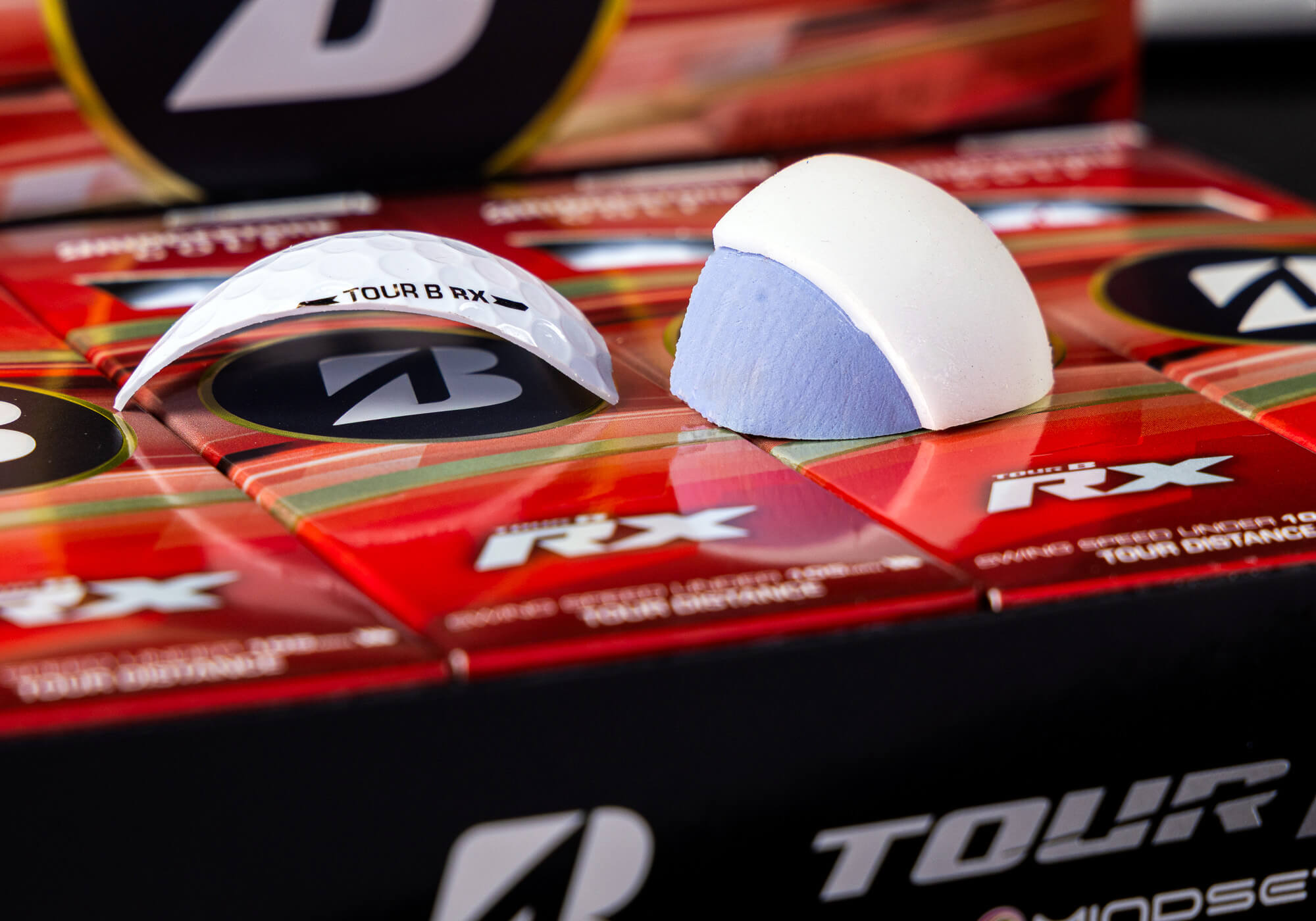
At the core—kind of at the core—of the new TOUR B story is VeloSurge, the foundational technology hinted at earlier.
The first thing to know is that VeloSurge isn’t a single material. Instead, it’s what Bridgestone describes as a new core–mantle integration.
Basically, VeloSurge is meant to explain how new materials work together to improve performance. It encompasses changes to the core and mantle formulations but, more importantly, how those materials adhere to one another and function as a system to produce more speed and greater stability throughout the lineup.
Working from the outside in, VeloSurge begins with a new mantle material. Beyond noting that the material features a higher acid ratio, Bridgestone is understandably tight-lipped about the actual chemistry. What matters is that the new mantle is significantly more dense.
Bridgestone has also updated its core formulation. While core changes are often discussed primarily as a way to influence spin, Bridgestone emphasizes that these updates are critical to creating the core–mantle integration that powers VeloSurge.
Bold claims
Given the “Pushing the Limits of Distance” tagline and the positioning of VeloSurge as a breakthrough technology, big claims were inevitable.
More speed
More speed leads to more distance and the centerpiece of Bridgestone’s performance claims is meaningful ball speed gains.
In testing with its Tour staff, Bridgestone reported the following improvements relative to the 2024 model. Jason Day saw gains of 2.3 mph in ball speed and 6.7 yards of distance. Chris Gotterup recorded gains of 2.1 mph in ball speed and seven yards of distance.
Bridgestone also shared data from two non-staff players. One saw gains of 1.9 mph and 5.1 yards, while the other gained 1.7 mph and 3.6 yards compared to the 2025 Pro V1x.
As always, gains are player dependent. That said, Bridgestone reports that everyday golfers have seen average gains of 2.3 mph and 8.7 yards of distance. The company notes that some golfers saw even larger gains although suggesting increases of up to 13 yards didn’t strike Bridgestone as realistic—even if legal was comfortable with the claim.
An interesting footnote: the biggest gains were seen with the VS BLUE prototype balls which correspond to the TOUR B XS. While the other three models showed average gains between seven and 8.5 yards, testers saw average gains of 3.6 mph and 12.1 yards with the XS.
Also worth noting, the VS GREEN and VS RED prototypes (RXS and RX, respectively) showed increases of 200–300 rpm in greenside spin compared to the 2024 models.
How?
Speed and distance claims are ubiquitous in golf so it’s fair to ask how Bridgestone achieved these gains without crossing the line.
According to Bridgestone, the speed increases come from two primary sources. First, the more efficient energy transfer created by the VeloSurge core: mantle integration produces higher ball speeds off the face.
The second source is less glamorous but arguably just as important. Bridgestone says the new materials are fundamentally more consistent which allowed engineers to push speed targets higher without increasing the risk of non-conforming results.
Higher MOI
MOI in golf balls isn’t discussed nearly as often as it is with clubs although it’s likely just as misunderstood.
With golf balls, MOI isn’t about preserving ball speed on mishits. As the object receiving the energy, the ball simply reacts to what it’s given. Off-center strikes on a sphere aren’t quite the same thing as mishits on a clubface.
That said, higher MOI in a golf ball is achieved the same way it is in a club: shifting mass toward the perimeter.
Bridgestone’s denser mantle moves weight away from the core and toward the outer portion of the ball. In addition to contributing to speed, Bridgestone says the higher MOI design improves spin-axis stability.
In practical terms, that means the ball should curve less when impact conditions promote something other than straight flight.
The MOI gains are most pronounced in the TOUR B X and TOUR B XS, the models Bridgestone positions for higher swing speed players. According to Bridgestone’s data, these VeloSurge-powered balls offer best-in-class MOI.
For the RX and RXS, Bridgestone notes that MOI was already strong. While the gains aren’t as dramatic as they are with the X and XS, the RX models still lead their category.
Those pesky USGA limits
Whenever speed and distance claims are made, questions about conformity are inevitable. Even in what still qualifies as the pre-rollback era, the USGA’s rules for golf balls don’t allow much wiggle room.
That said, there are a few important nuances. The USGA’s initial velocity test caps speed under a specific test condition but most golf balls don’t come particularly close to that limit. Speed correlates strongly with compression and until balls start approaching 100 on our gauges, passing the velocity test typically isn’t an issue.
Within the TOUR B lineup, compression data suggests the TOUR B X is the only model that might flirt with that threshold.
The USGA’s other test—the Overall Distance Standard—caps total distance. A significant amount of optimization happens through flight and spin tuning for swing conditions that differ from the USGA’s test setup: 120 mph club speed, 10 degrees of launch, 2,520 rpm using the calibration ball, made by Bridgestone.
After robot testing, balls are evaluated in the Indoor Test Range, where aerodynamic modeling predicts performance across a range of speeds and spins. Those results are fed into simulation tools to estimate distance for different swing types.
The wrinkle is that the USGA has its models, Bridgestone has its models. Every other ball manufacturer has their models. They don’t all align.
The takeaway is that the limits aren’t an ironclad lock on distance for every golfer. By optimizing flight and spin for specific player profiles, ball makers can still unlock distance gains—exactly what Bridgestone claims it has done.
Gradational Core
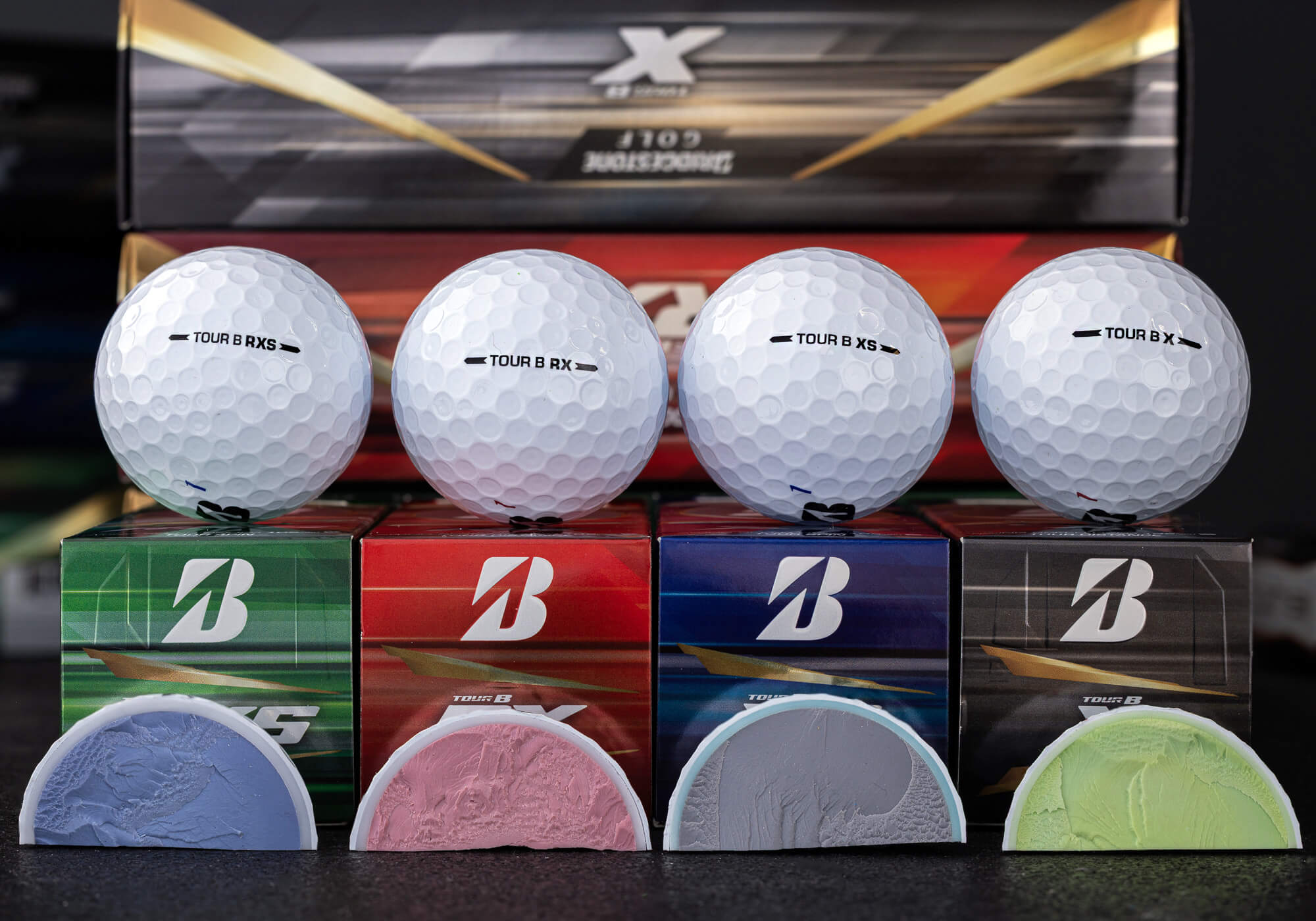
Every model in the TOUR B lineup uses three-piece construction. Bridgestone’s view is that fewer layers create more efficient energy transfer and higher MOI than more complex four- or five-piece designs.
To mimic the benefits of additional layers without the added complexity, TOUR B balls feature gradational core designs. Think chocolate lava cake. While golf balls no longer have liquid centers, gradational cores become progressively firmer from the center outward.
The result is meaningful spin separation without additional layers.
REACTIV IQ Cover (Smart Cover)
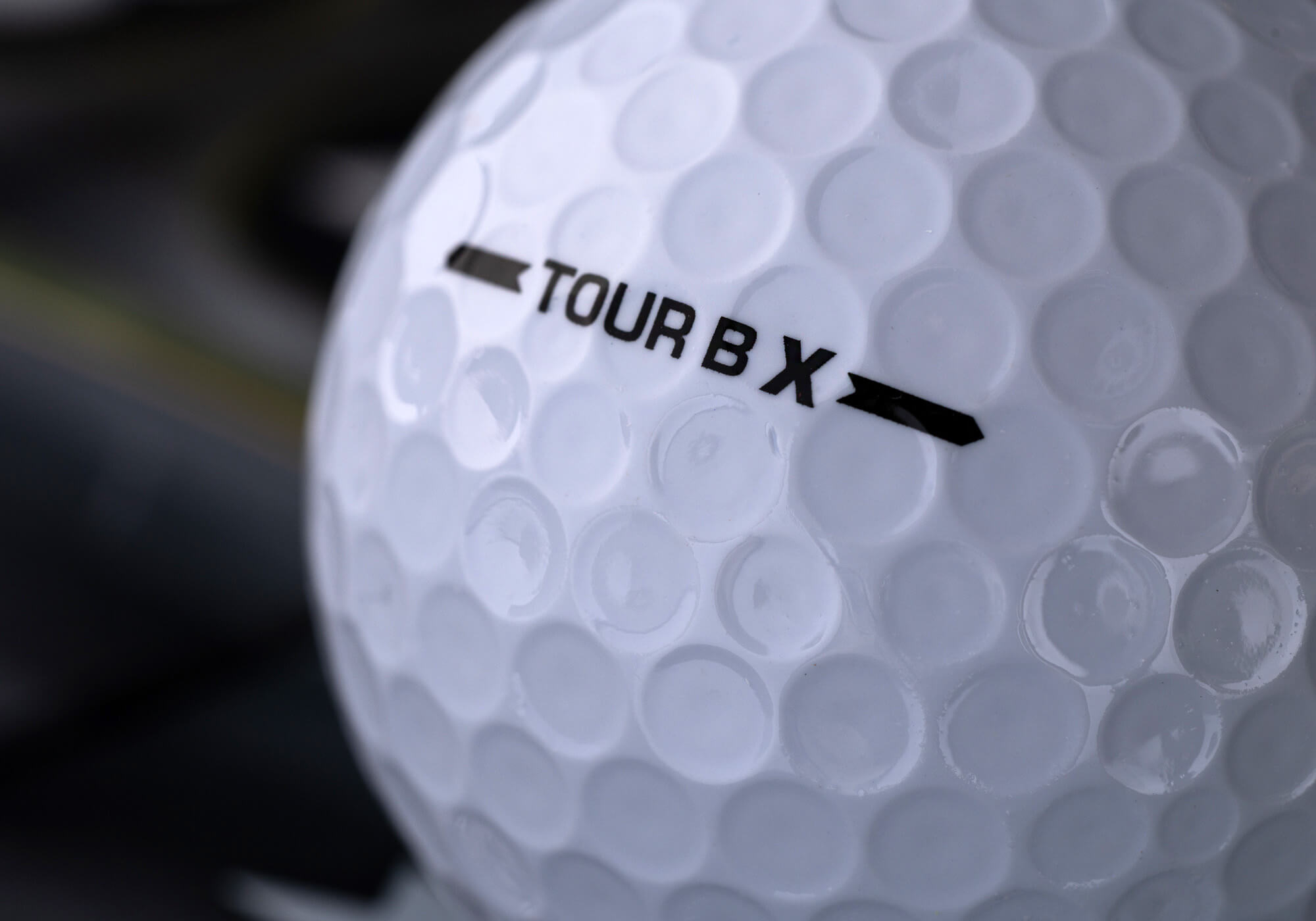
Bridgestone TOUR B balls again feature REACTIV IQ technology to which the company refers as Smart Cover.
The urethane formulation includes impact modifiers: chemical additives that change how the material behaves under force. On high-speed impacts, such as with a driver, the cover behaves firmer, helping increase ball speed.
On lower-speed impacts around the green, the cover effectively plays softer, allowing the ball to stay on the face longer and generate more spin.
It might sound like hokum but the concept is rooted in physics and is similar to material technologies used elsewhere in the golf industry.
Mindset
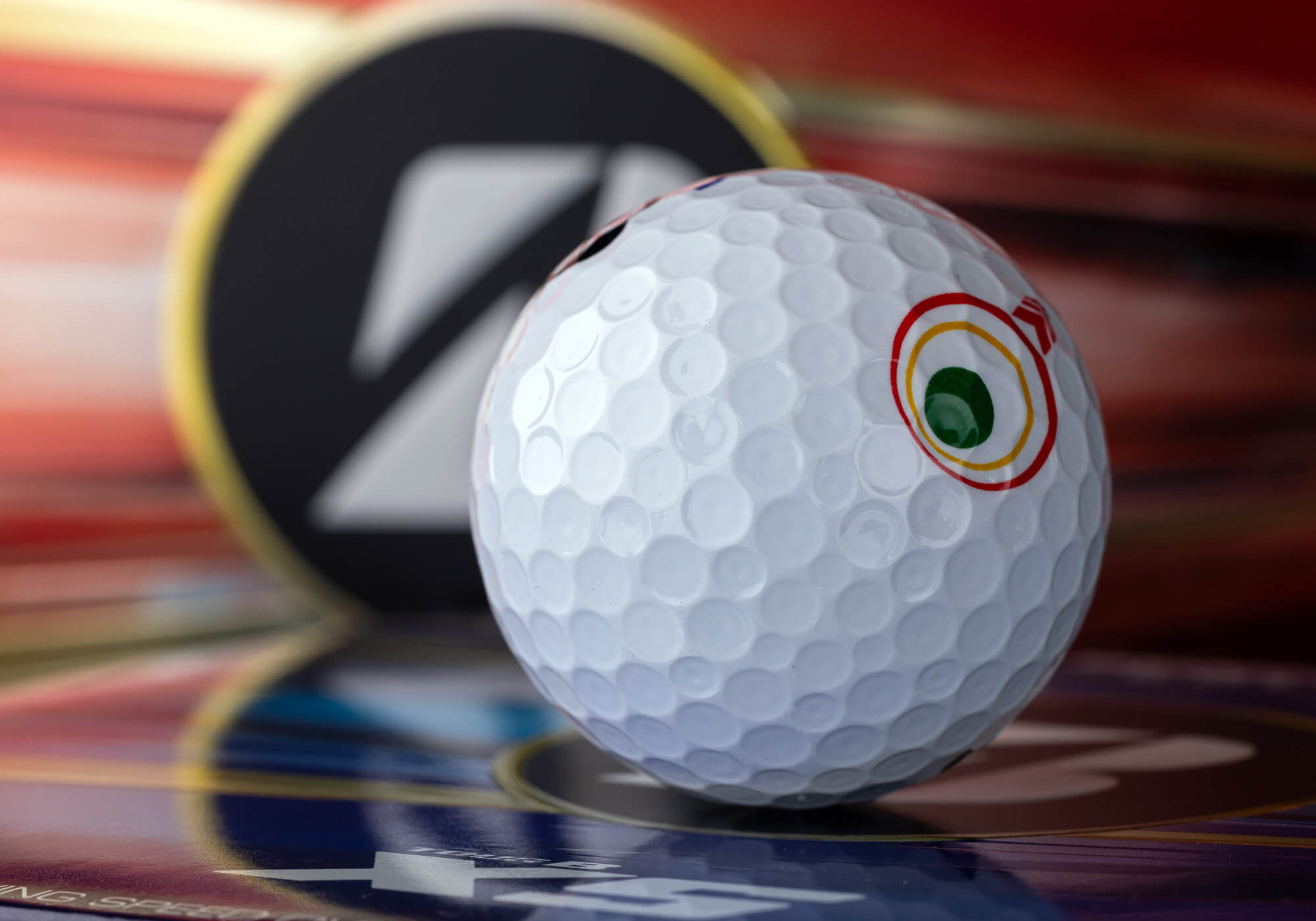
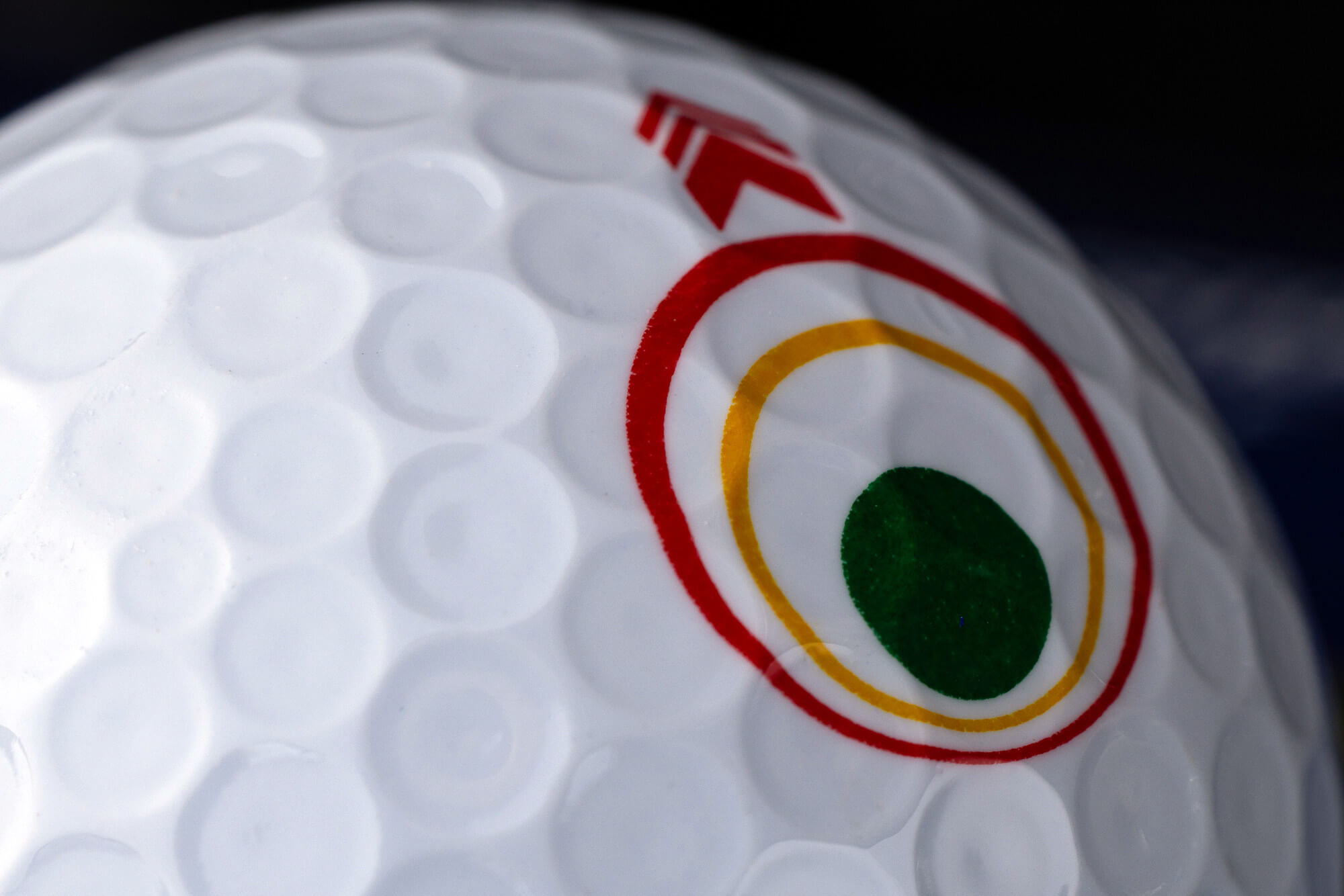
Developed with Jason Day and his mental coach, Jason Goldschmidt, the Mindset pattern isn’t about decoration. The circles and arrows are meant to guide a three-step process: identify, visualize, focus.
Execution, of course, is still on you.
While Day’s routine is more nuanced than what can be conveyed on a golf ball, Mindset serves as a visual reminder to establish a mental route before each shot.
Mindset versions of TOUR B balls are used by Jason Day, Kurt Kitayama, Chris Gotterup and Boo Weekley. The pattern accounts for roughly 40 percent of on-course sales and 35 percent of off-course sales, suggesting it has found meaningful traction.
No paint (Even in the Year of Paint)
With respect to the Fire Horse, 2026 is shaping up to be the year of paint in the golf ball world. You’ve heard Callaway’s paint story and another is on the way, which makes now a good time to talk about why paint matters.
Uneven paint application can negatively affect ball performance and it happens more often than you might think. Poor paint can lead to trajectory changes, increased curvature and reduced distance. We’ve seen this repeatedly in testing.
Bridgestone’s internal data shows paint issues can alter peak height—both how high and how far downrange the ball reaches its apex—and reduce distance by more than 10 yards, even before accounting for dispersion effects.
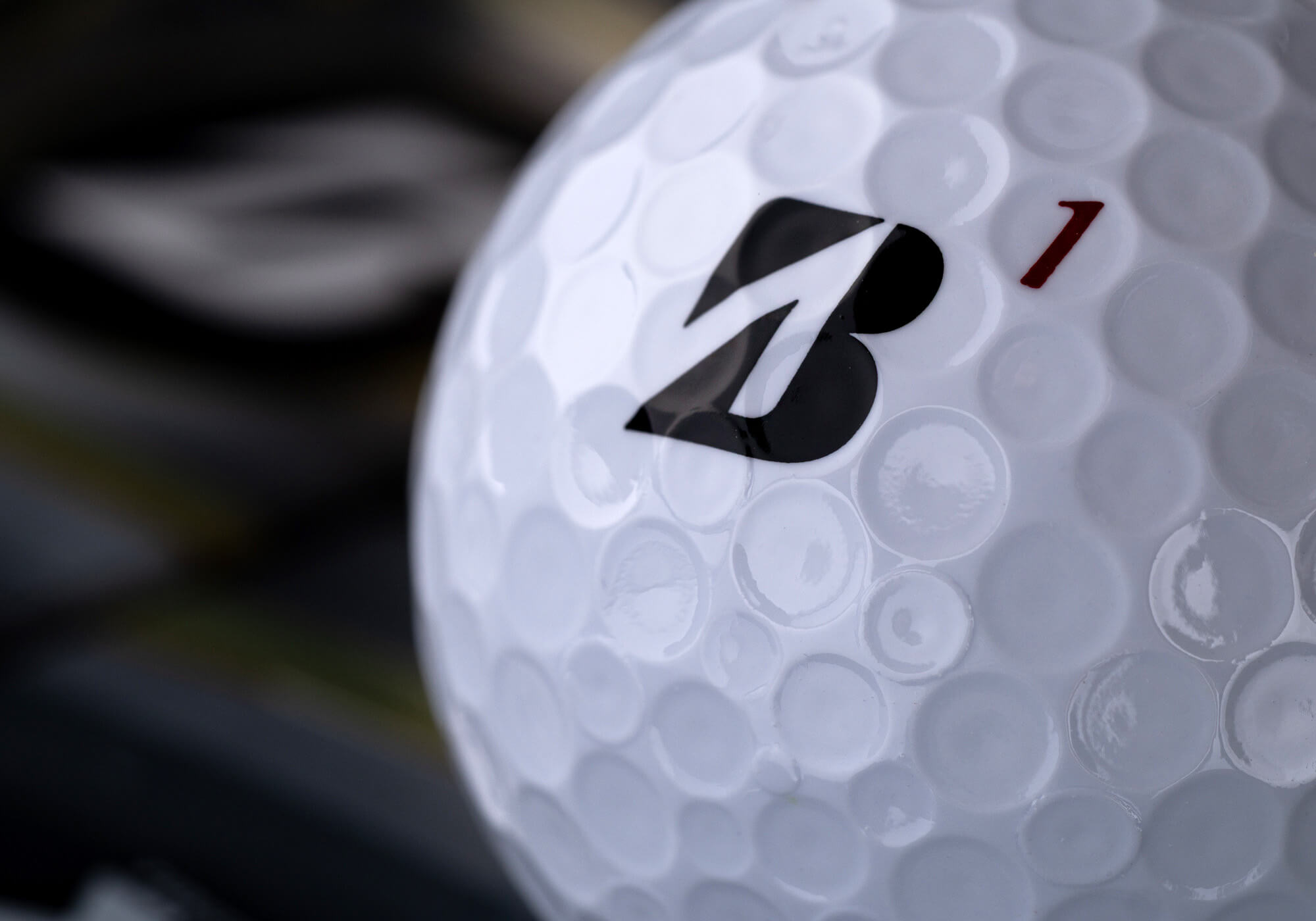
Bridgestone TOUR B balls aren’t painted. Instead, color agents are integrated directly into the urethane. There’s no sprayed-on paint layer to introduce inconsistency. Bridgestone notes that many visible scuffs occur in paint rather than the cover itself although those scuffs can still disrupt aerodynamics.
There is a clearcoat to protect logos, prevent discoloration and maintain wet-weather performance but the approach minimizes the opportunity for finishing-related issues.
Still four models
If you’re familiar with the TOUR B lineup, not much has changed structurally. All four models are slightly firmer this time around but their roles remain intact.
TOUR B RX and TOUR B RXS
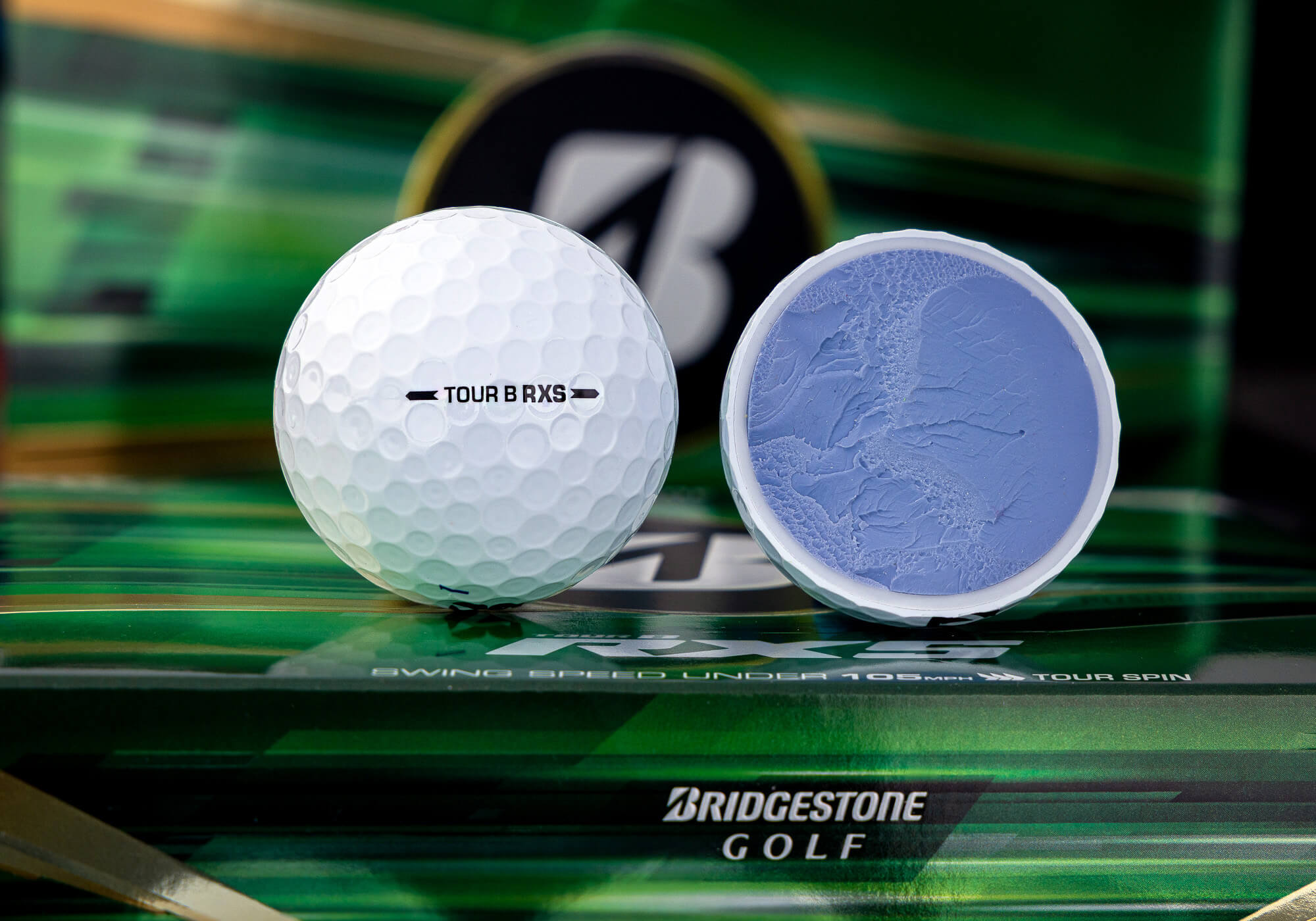
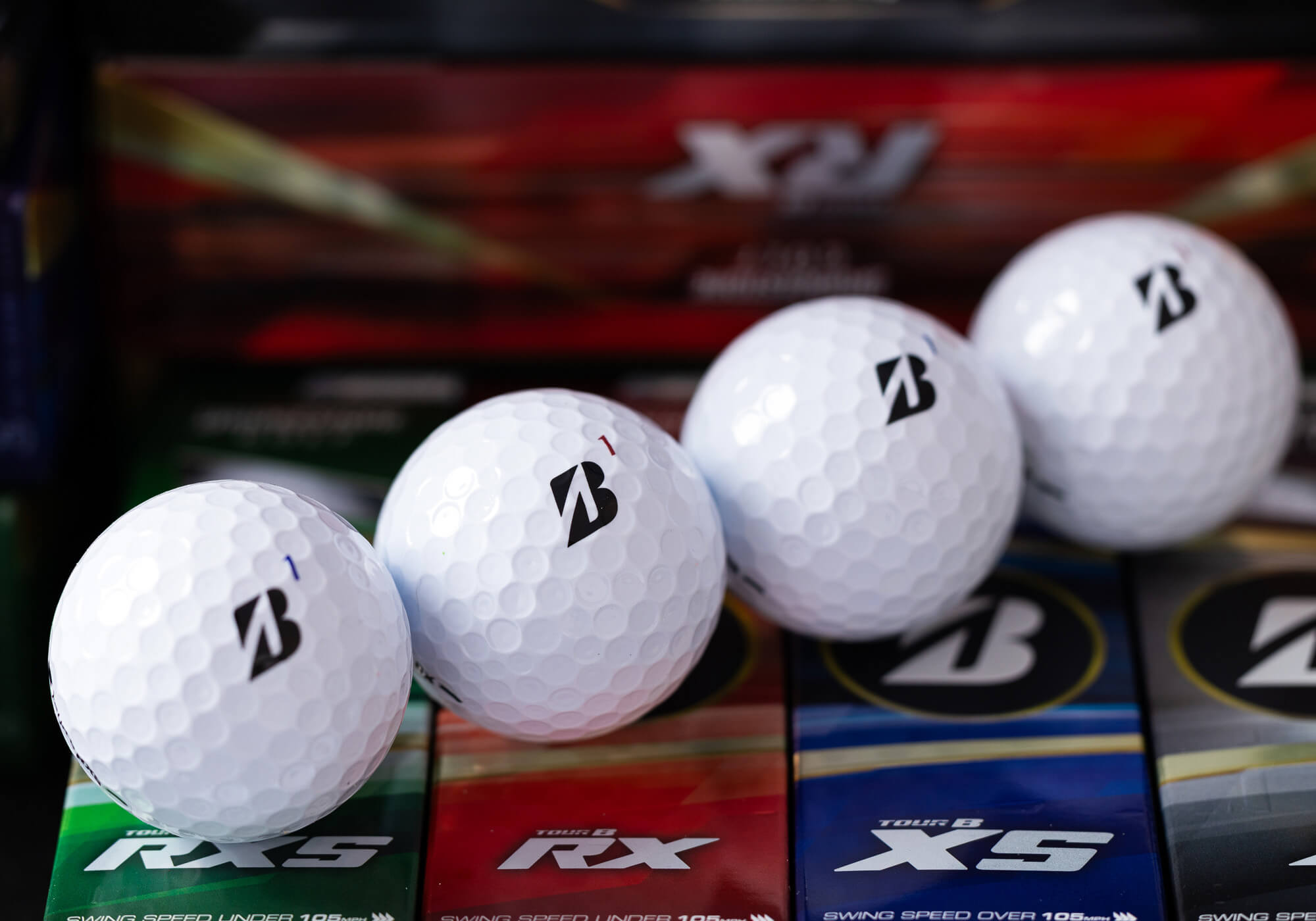
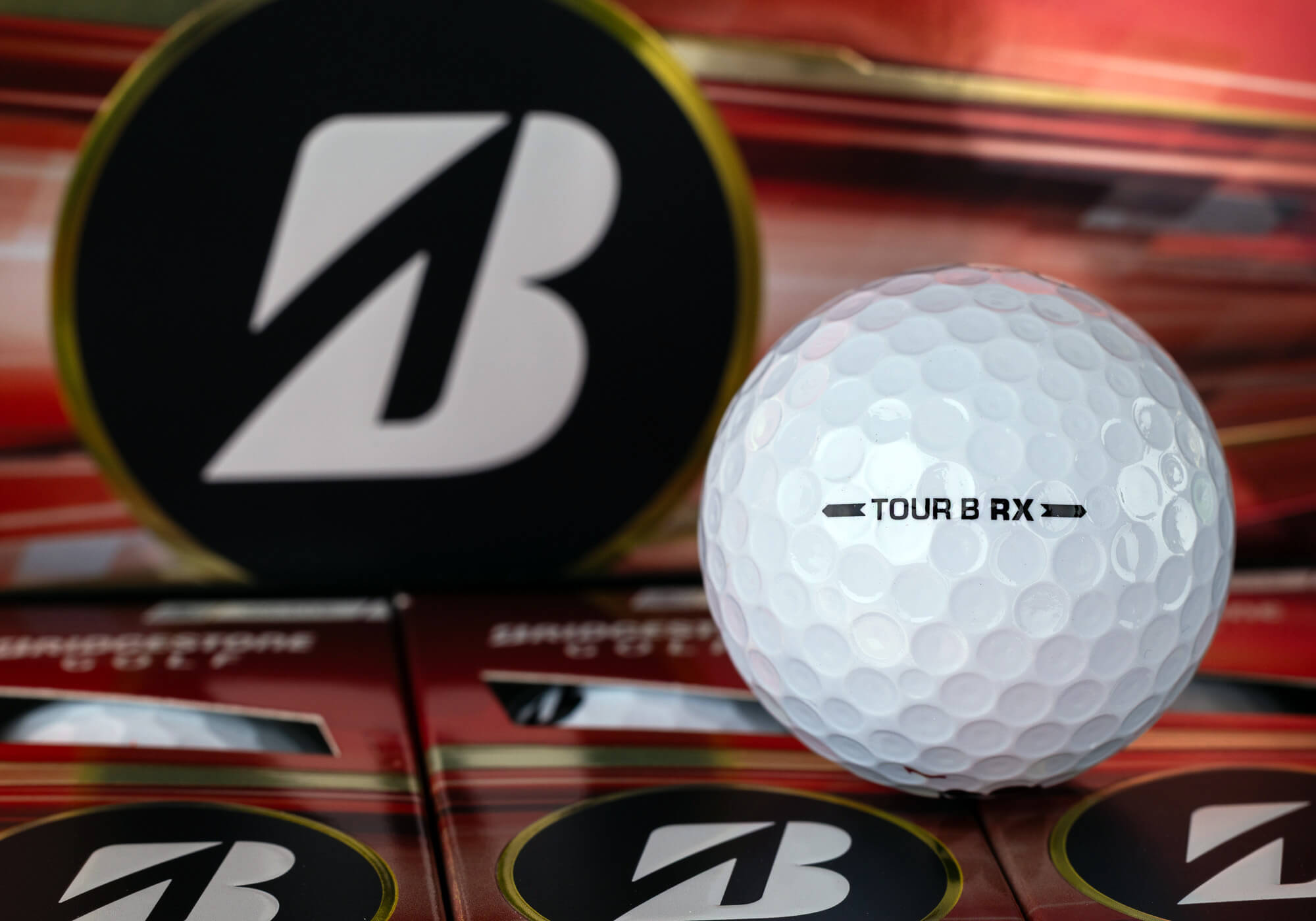
The RX and RXS are for golfers with swing speeds below 105 mph. While I’m not a fan of fitting balls purely by swing speed, the takeaway is that these models are lower compression and less prone to distance loss from over-compression.
The RX is the distance-oriented option while the RXS prioritizes greenside spin. The RXS is also the softer-feeling of the two.
For feel-driven golfers, the RXS is the softer of Bridgestone’s sub-105 mph models. On our gauges, the RXS measures 76, which puts it in the general ballpark of things like Callaway’s Chrome Soft.
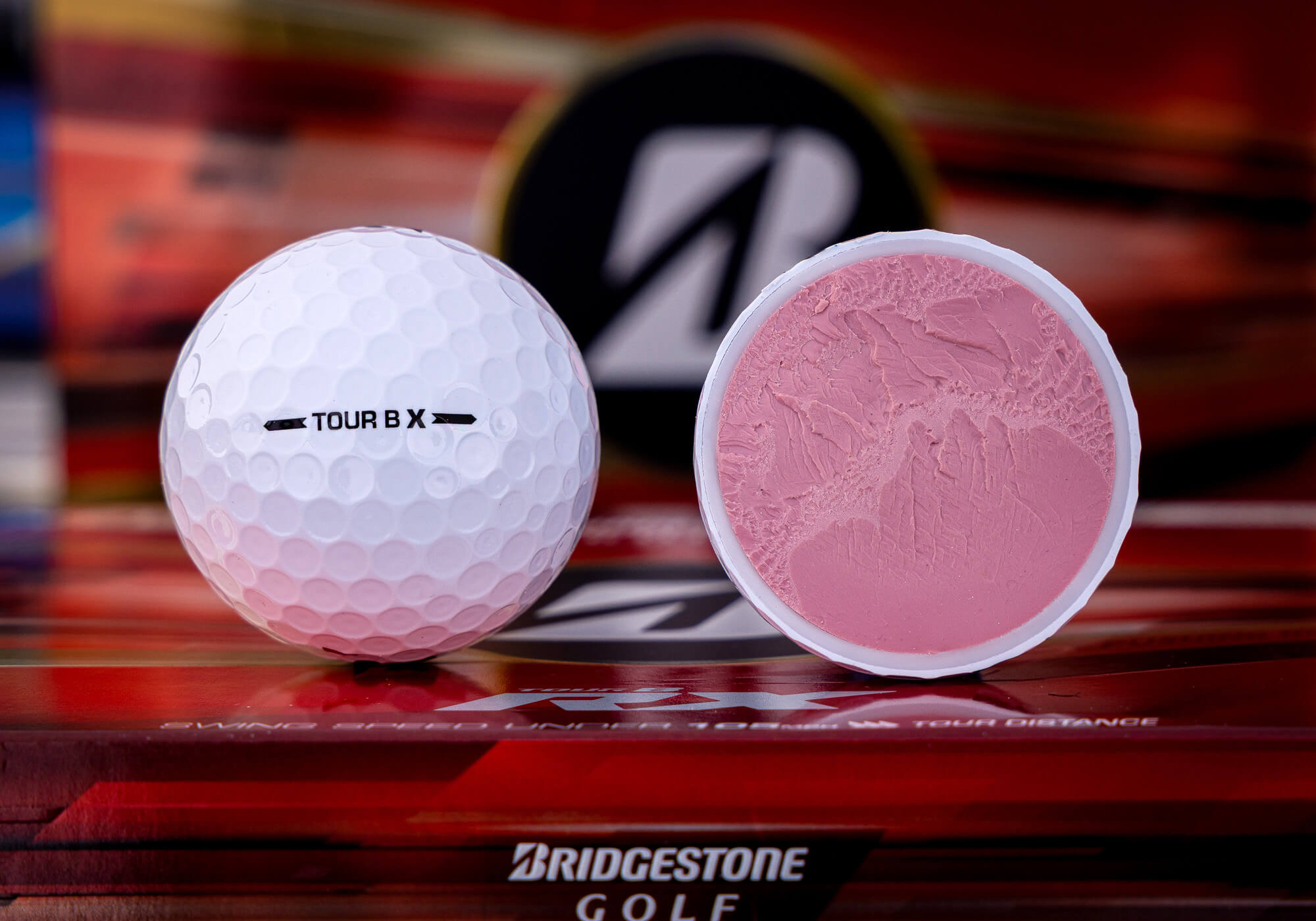
By comparison, the RX is firmer and faster than the RXS and can be expected to produce roughly 300 rpm less spin around the green.
Despite being in Bridgestone’s sub-105 swing speed category, we measured the new RX at 91. That’s actually a few points firmer than a Pro V1 and well into what we would consider to be the tour-level compression space.
Both models feature a new 320-dimple pattern—the first new pattern from Bridgestone in some time—designed to produce a lower, more penetrating flight.
TOUR B X and TOUR B XS
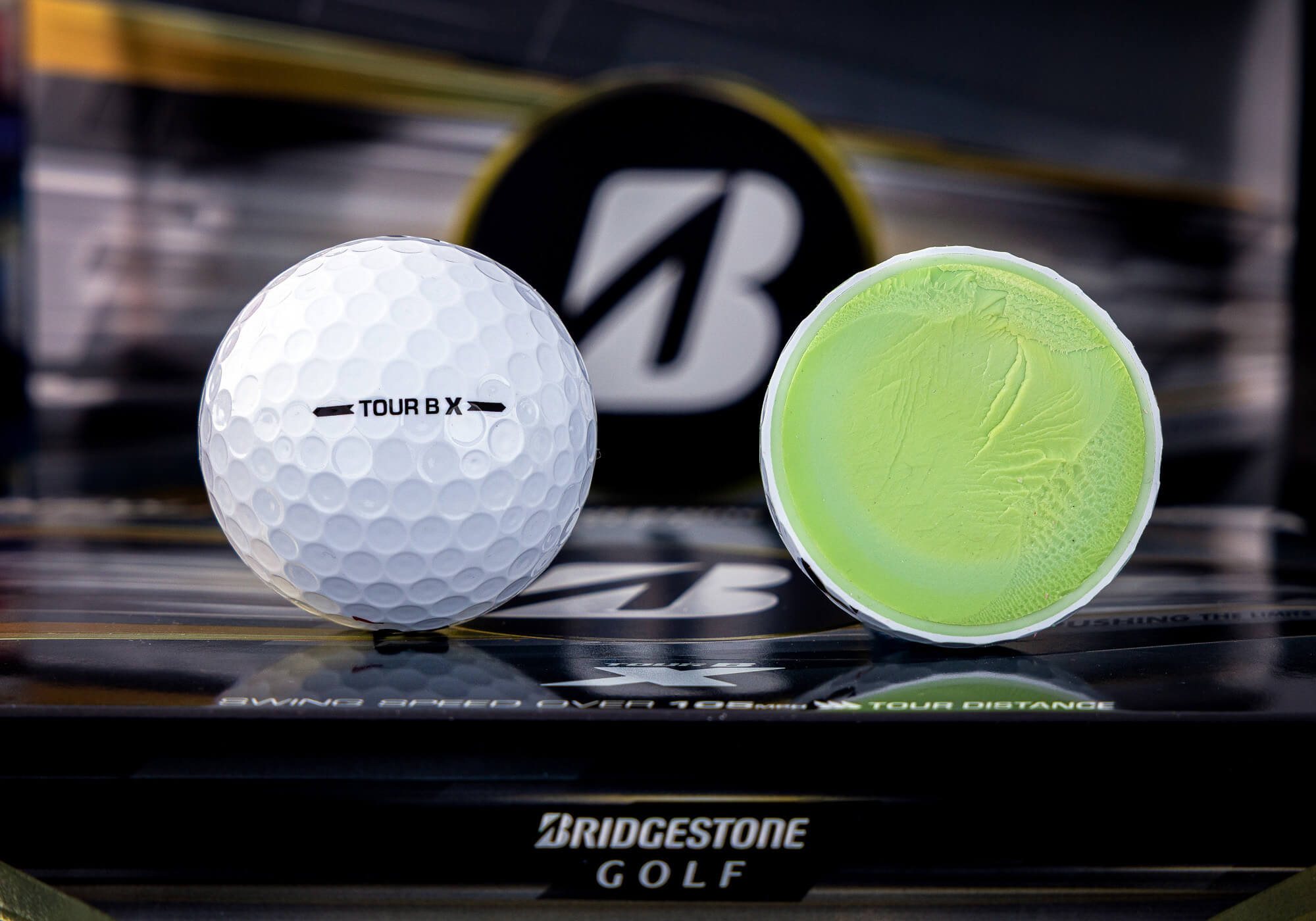
The TOUR B X and XS target higher-speed players although either can work for golfers seeking true tour-level performance.
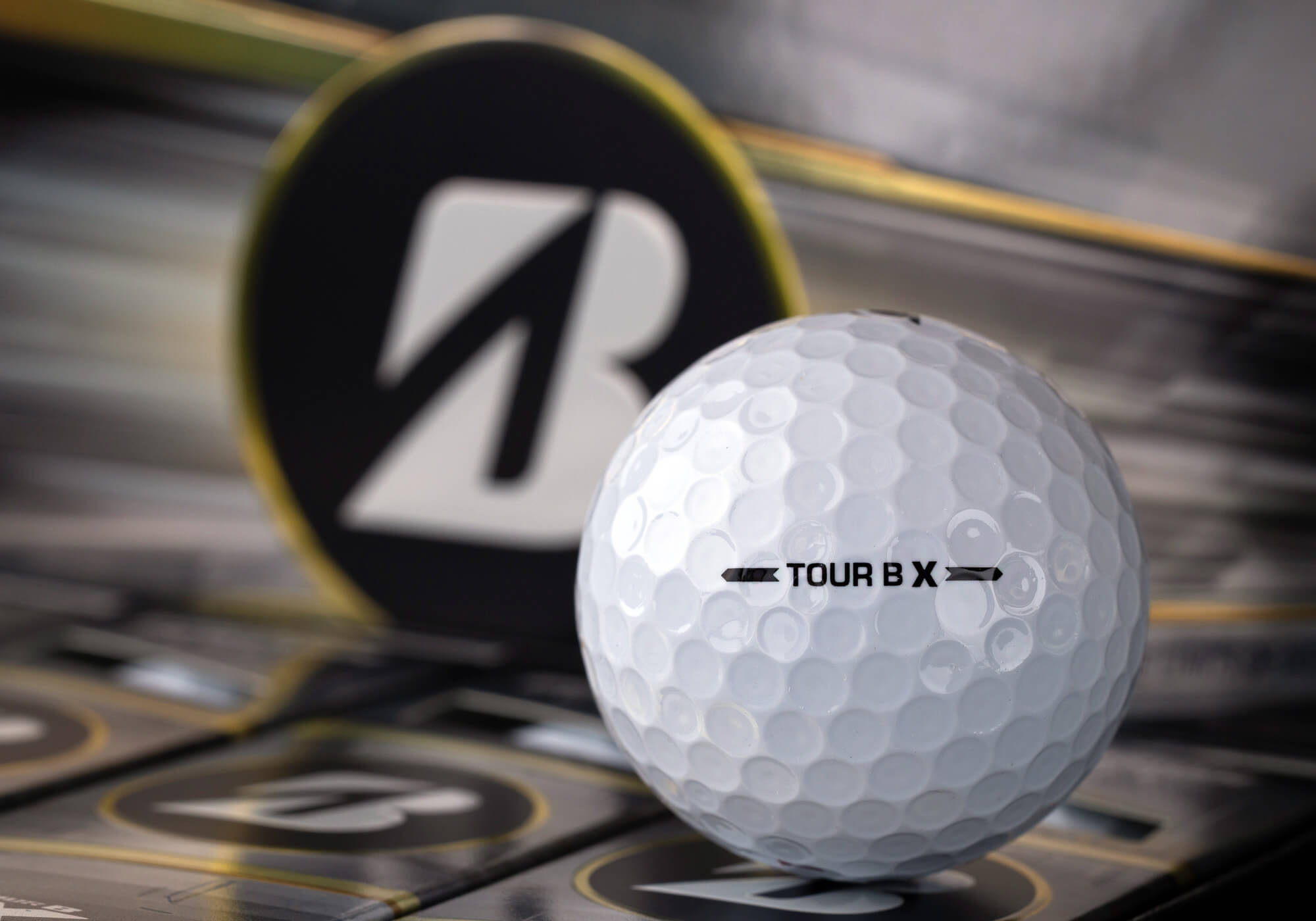
The TOUR B X is the distance-centric option and has consistently tested among the firmest and fastest balls on the market.
On our gauges, the new model measures 99, which is similar to offerings like Pro V1x (and Left Dash) as well as Chrome Tour X Triple Diamond, and Vice Pro Plus.
Said another way, it’s one of the firmest balls on the market.
Once uniquely Bryson DeChambeau’s ball, the X is now played by Jason Day, Chris Gotterup (who just won the Sony Open with the new TOUR B X) and Tiger Woods.
The XS was originally developed for Woods although he has since moved to the X for added distance without sacrificing too much spin.
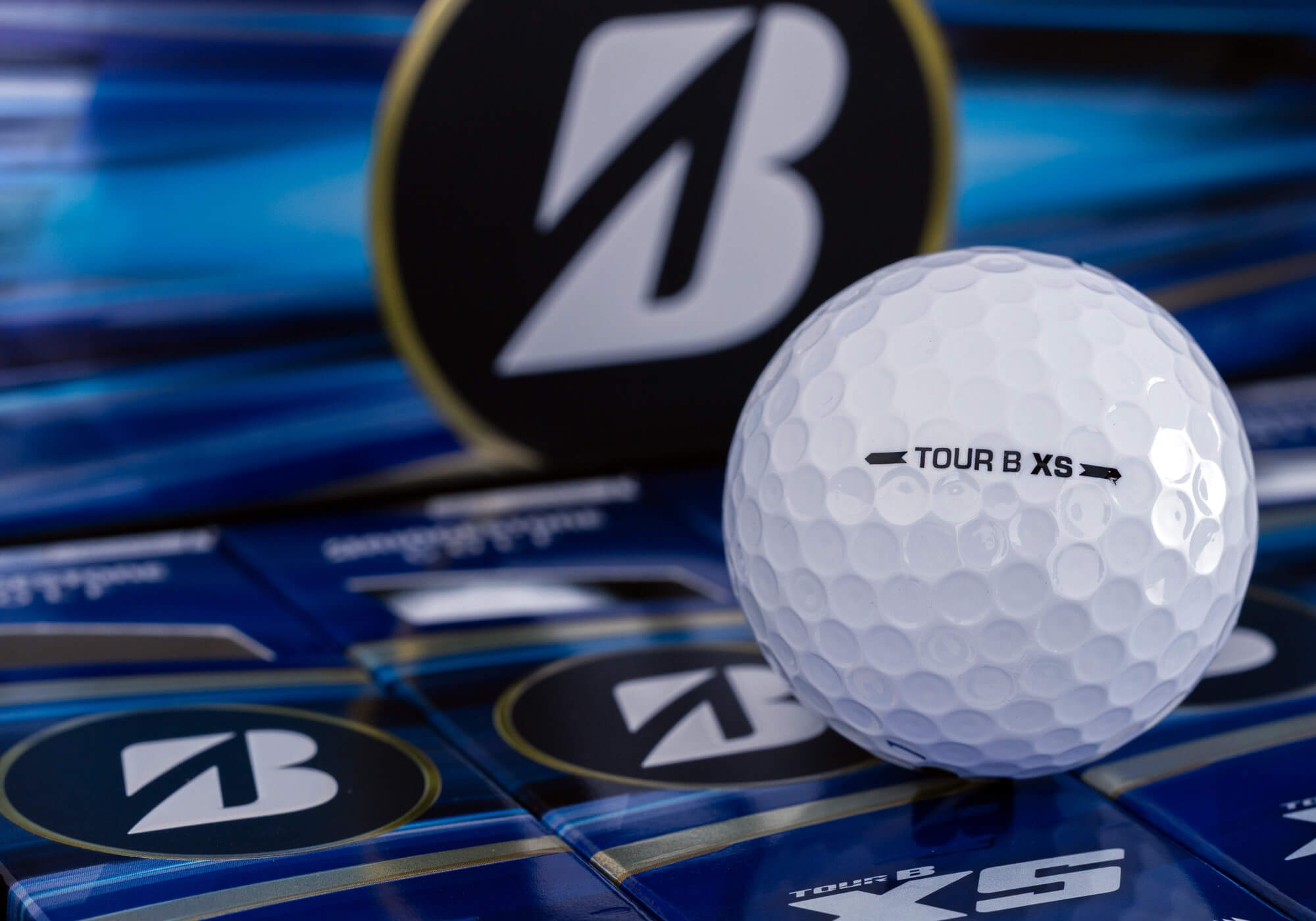
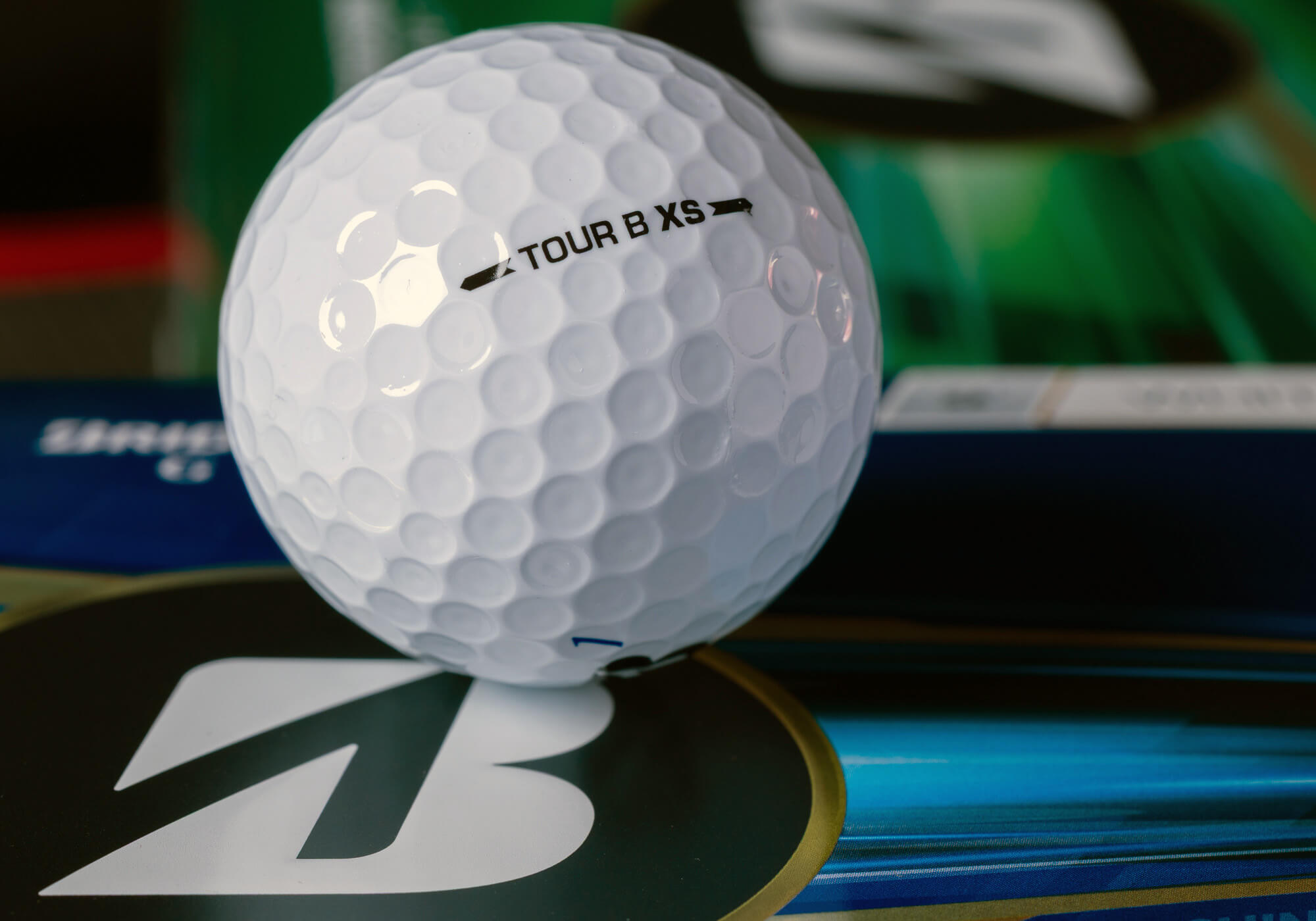
With Tiger moving to the TOUR B X, the XS has lost a bit of its identity. We measured compression at 85, which makes it a bit softer than most true tour-level offerings. Among established Tour brands, only the Srixon Z-Star is softer.
At the risk of beating a dead horse, you may have noticed that one of Bridgestone’s over 105 MPH balls (the XS) measures appreciably softer than its sub-105 balls (the RX). To an extent, it feels like the messaging hasn’t evolved at the same pace as the product line.
I digress.
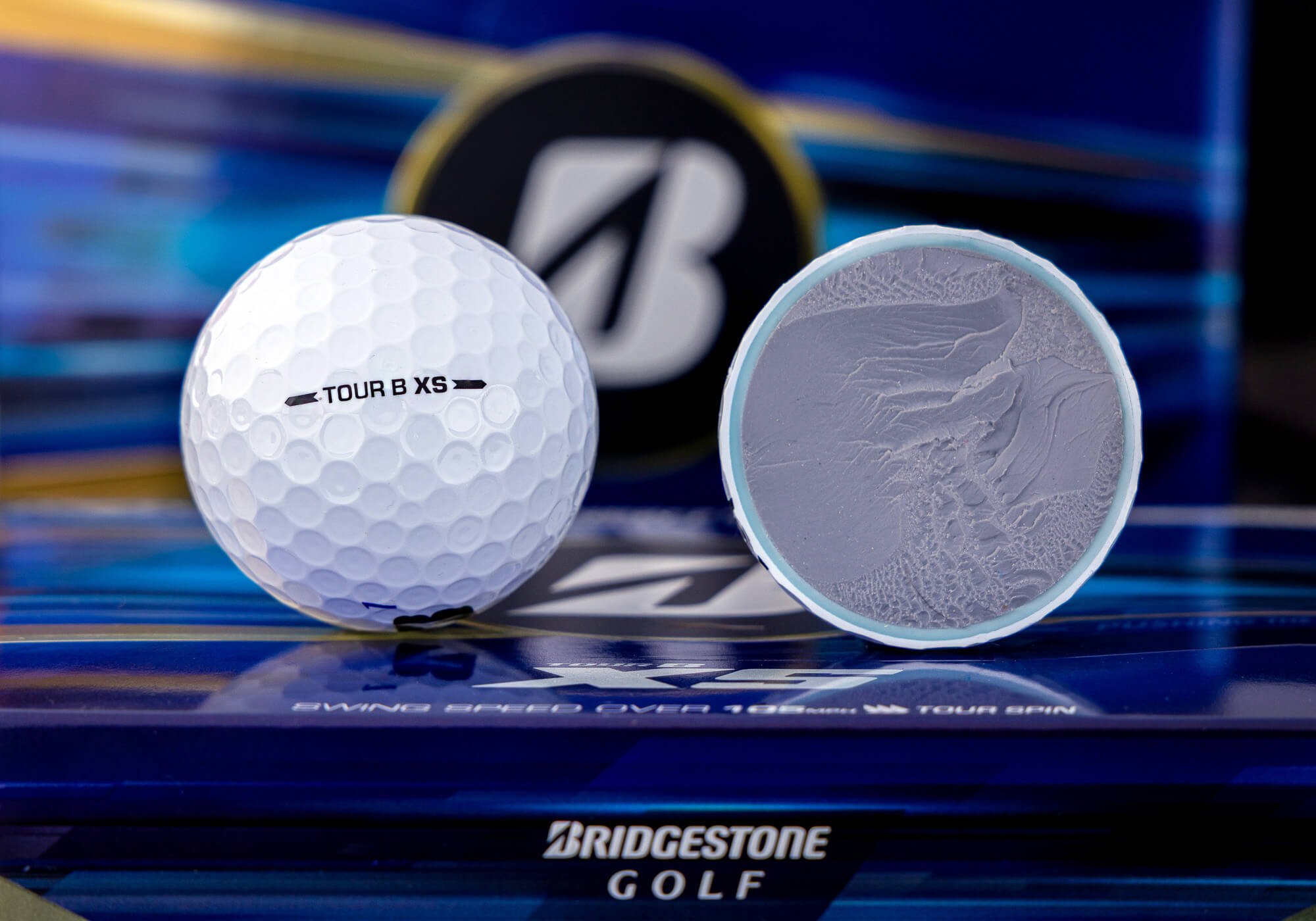
The XS remains notable for its above-average greenside spin. While that makes it the most niche option in the TOUR B lineup, for spin-challenged golfers—or anyone who simply wants to see a ball suck back—it remains one of the best in class.
One final note before moving on: testing, both ours and via Ballnamic, has shown Bridgestone balls to be among the best at maintaining spin in wet conditions. If that matters to you—and it probably should—TOUR B belongs near the top of your must-try list.
Packaging updates
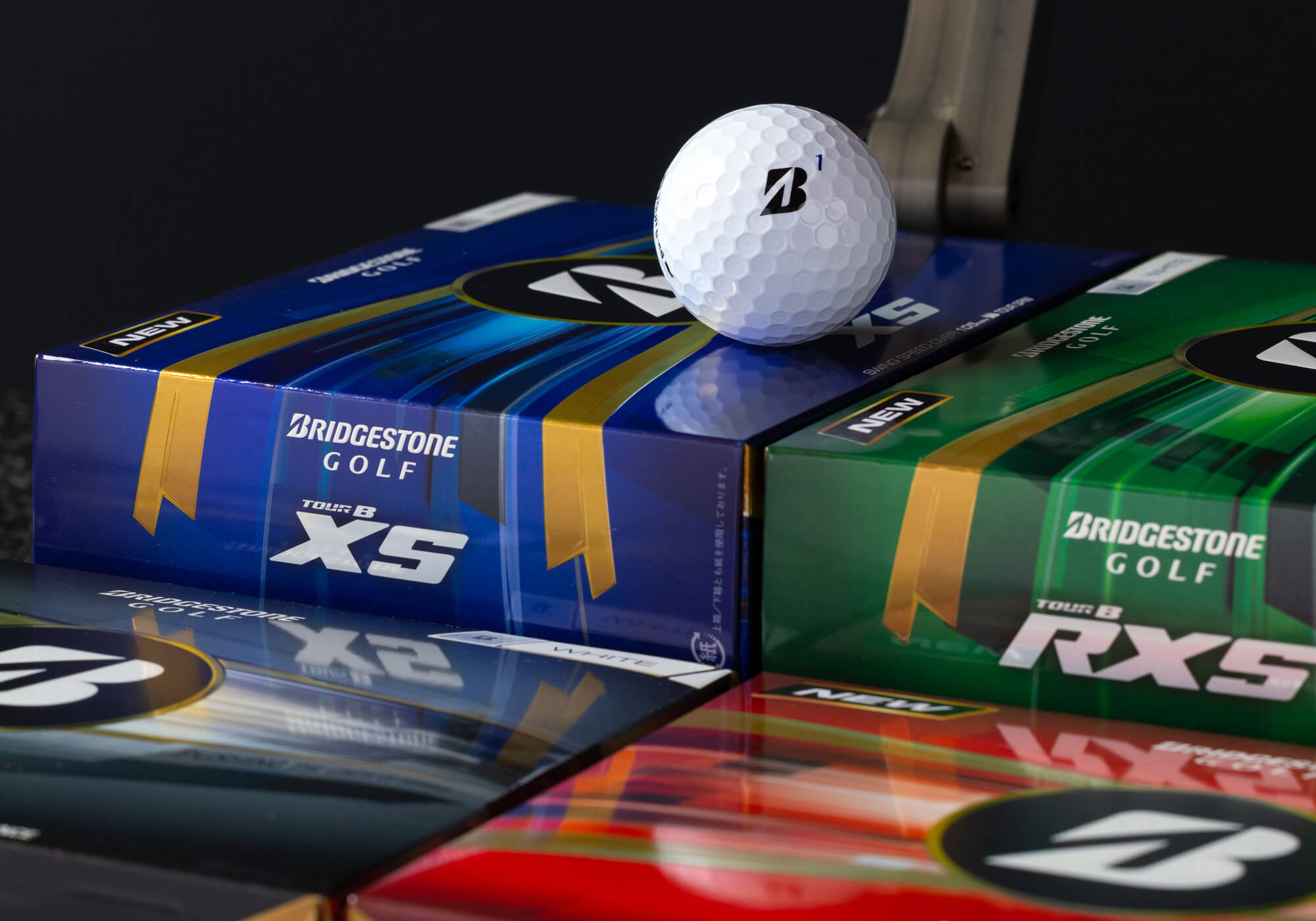
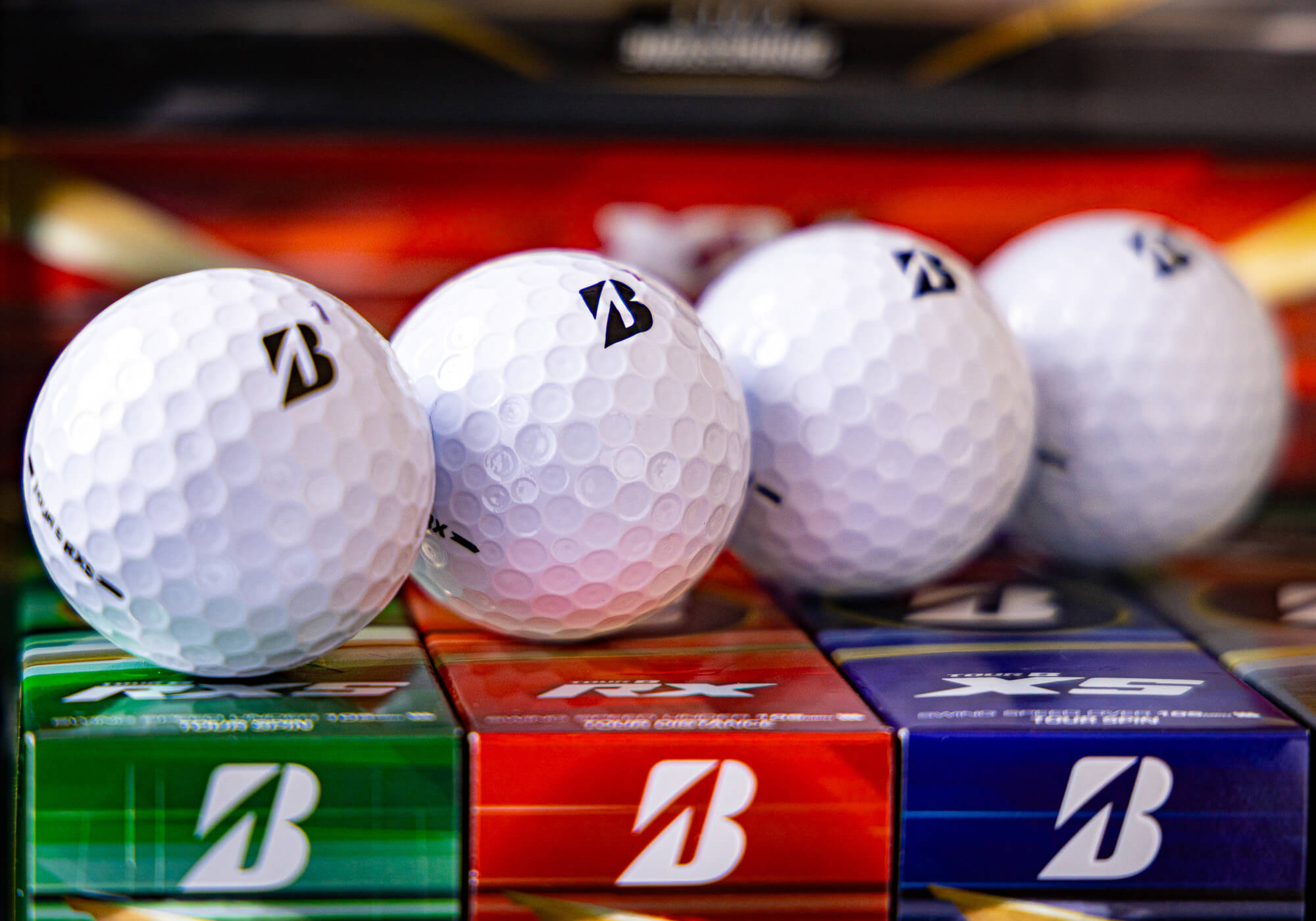
Bridgestone has leaned heavily into brighter packaging this year. Market research showed that many golfers identify their ball by color rather than model name: “the green one” or “the red one.” The updated boxes make those associations easier to spot on shelves.
Still TOUR B
Despite the generational nature of VeloSurge, Bridgestone opted to keep the “TOUR B” name. Given the brand’s strength in Japan and general familiarity elsewhere, the company chose continuity over reinvention.
Personally, I would have voted for a rename. “VS Black” has a nice ring to it.
What do you think?
Pricing and availability
The new Bridgestone TOUR B series golf balls will be available beginning Jan. 20 with a retail price of $54.99 per dozen.
Existing TOUR B inventory has been discounted to $44.99.
For more information, visit BridgestoneGolf.com.








WBN
9 months ago
Bridgestone has always been a top quality product and my favorite ball. I’m hoping the upgrade lives up to expectations. Looking forward to trying them.