



Imagine finishing a practice session, deciding your lob wedge needs replacing and walking into a golf shop to buy another.
Then imagine doing it again a few weeks later.
Ka-ching. Ka-ching. Ka-ching.
Add the golf balls, gloves, grips and other clubs you’ll use throughout the season and maintaining a PGA Tour player’s equipment starts looking considerably different from buying their bag just once.
We recently explored what it would cost to buy a Tour star’s clubs. But what if that player had to pay retail prices to keep their equipment going for an entire year?
In the illustrative budget below, the bill comes to more than $15,000—before we get into clothing, instruction, extensive club testing and more.
Here’s how quickly the bill can grow.
A few ground rules
Our hypothetical player already owns a complete bag. Golfers typically don’t change out their whole bags so it wouldn’t make sense to start from scratch.
And this is equipment that is directly involved in playing the game so we’re not going in the apparel direction. However, we are counting shoes and towels in gear.
We’re calculating purchases over the following year rather than charging for an entirely new setup on Jan. 1.
The budget assumes 100 rounds and includes clubs, balls, gloves, regripping and basic maintenance. It excludes clothing, travel, instruction, launch monitors and tournament/facility-provided range balls.
Retail equivalents stand in for equipment that isn’t commercially available. Prices are rounded where appropriate, before tax, with no trade-in or resale credits.
Wedges: $1,791
Wedges are one of the clearest examples of the difference between owning professional equipment and maintaining it.
As we explained in how often Tour pros replace their wedges, Justin Thomas has followed an approximate “1-2-3-4” pattern: one pitching wedge, two gap wedges, three sand wedges and four or more lob wedges during a year.
Other players follow different schedules. Adam Scott has described refreshing his wedges around the majors while Jordan Spieth replaces his lob wedge more frequently than his other wedges.
For our calculation, we’ll use two gap wedges, three sand wedges and four lob wedges. The pitching wedge is included in the iron-set allowance later.
At the listed $199 price for a Vokey SM11, those nine wedges cost $1,791.
That’s a substantial expense for just three positions in the bag.
It also explains why seeing an older wedge model in a professional’s setup doesn’t necessarily mean the physical club has survived years of practice. Our look at the wedges used by the Tour’s best short-game players shows the range of equipment choices at that level.
Golf balls: $2,950
Golf balls create one of the biggest variables in this exercise.
A ball taken out of tournament play hasn’t necessarily disappeared into a pond. It might be scuffed, given away to a little kid or moved into a personal practice supply.
For our budget, we’ll assume six new balls enter use per round over 100 rounds (about 25-ish tournaments). That’s a modeling choice, not a documented Tour average.
Six hundred balls equals 50 dozen. At Titleist’s listed $59 per dozen for Pro V1s, the annual bill is $2,950.
Change the assumption to three new balls per round and the cost falls to $1,475. Increase it to nine and it rises to $4,425. We’ll stick with six.
We’re also allowing retired playing balls to be reused for practice. Charging retail for every ball a player hits on a tournament range would produce a much bigger (and less useful) number.
For amateurs, choosing the right ball matters more than matching a professional’s consumption. Our 2026 golf ball test compares performance across models and swing speeds.
Gloves: $5,800
A fresh glove is a relatively small purchase. Hundreds of them aren’t.
Our hypothetical player goes through 200 gloves over the year, covering playing and practice use. Weather, practice volume and personal preference would change that number.
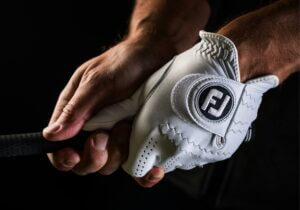
Using FootJoy’s listed $29 StaSof glove as our retail reference, the total is $5,800.
This is a highly personal number but it’s common for players to go through at least six gloves per tournament which would put us at upwards of 150 gloves per year. But you also have to factor in non-tournament weeks, practice, club testing, etc.
Some players might use considerably fewer. Others might want a fresh glove more often.
Either way, gloves are an easy expense to overlook when the conversation revolves around $650 drivers.
For the rest of us, replacement should depend on condition and performance. We covered what to watch for in How Often Do You Need to Buy a New Golf Glove?
Driver: $1,000
We’ll give our player one new driver during the year, priced at approximately $,1000, matching the listed retail price of a TaylorMade Qi4D plus a shaft.
That doesn’t mean every professional needs the equivalent of one new driver annually but it’s in the budget.
Some keep a head for more than a year while others replace heads during the season because of damage, performance changes or conformity testing. We explored that distinction in Tour Pros Are Forced to Replace Their Driver Heads. Should You Be Worried About Yours?
The budget could avoid automatically charging for a new aftermarket shaft every time a head changes but we are allocating for a new shaft in the driver.
Irons: $1,200
For irons, we’re allowing one replacement set during the year.
TaylorMade’s P7CB irons were listed at approximately $1,200 when we checked, providing a retail reference. That includes the pitching wedge which we excluded from the separate wedge calculation.
This is another assumption that can swing the total.
A player who keeps the same physical irons throughout the year spends nothing here. A player who wears through a set, changes models or needs replacements spends more.
The irons could be considerably more depending on model and shaft but we’ll keep the $1,200 given how irons are often not replaced.
Shoes: $1,500
Golf shoes deserve a line in the budget, too.
Our hypothetical player isn’t just walking 100 rounds. There are practice rounds, range sessions and hours spent working around the short-game area.
For this exercise, we’ll allow six new pairs over the year, covering replacements and different shoes in the rotation. That’s a budget assumption, not a verified PGA Tour average—and it doesn’t mean every pair gets worn out before another is introduced.
At $250 per pair, using current FootJoy Premiere Series pricing as our reference, the annual footwear bill reaches $1,500.
Some players could spend less by staying with a small rotation. Others could accumulate considerably more footwear through different styles, colors and special releases.
For amateurs, fit and performance should drive the purchase. Our 2026 spiked golf shoe test and spikeless shoe testcompare comfort, traction and stability across the options.
Towels: $420
The towel doesn’t get much attention until you need to dry your hands, wipe down a grip or clean mud off a clubface.
For our budget, we’ll allow 12 new towels over the year, covering a rotation and replacements for worn or misplaced towels. A freshly washed towel doesn’t count as another purchase, of course.
Using the $35 Titleist Players Terry towel as our retail reference, the annual bill comes to $420.
Unlike balls and gloves, towels can be washed and reused repeatedly so this expense depends heavily on how carefully the player and caddie maintain their supply.
Our look at seven items you should always have in your golf bag explains why a towel—and a spare—earns its place.
Other clubs and experiments: $500
We’ll reserve $500 for another club or equipment experiment.
It could go toward a fairway wood, utility iron, putter or shaft. It’s a spending allowance.
We’re avoiding charging for every club a manufacturer sends out for testing. Trying something on the range doesn’t necessarily mean our hypothetical retail customer would purchase it.
A committed tinkerer could exceed this allowance quickly but a player who leaves the bag alone might spend none of it.
There’s also no guarantee an experiment lasts as we talked about a few weeks ago.
Grips and maintenance: $400
Finally, we’ll set aside $400 for replacement grips, installation and basic club work including loft and lie checks.
This is a budget allowance rather than a quoted nationwide service price. Costs vary by grip, shop and work required.
It also doesn’t recreate the full value of having expert fitters and club builders available on Tour. Buying retail equipment and duplicating professional equipment support are different expenses.
If you wanted to add comprehensive fitting appointments, that would be another line item. Our guide to the real cost of getting fitted for golf clubs breaks down those potential charges.
The annual bill
| Category | Budget assumption | Annual cost |
| Wedges | Nine gap, sand and lob wedges at $199 | $1,791 |
| Golf balls | 50 dozen at $59 | $2,950 |
| Gloves | 200 at $29 | $5,800 |
| Driver | One complete driver | $1,000 |
| Irons | One replacement set including pitching wedge | $1,200 |
| Shoes | Six pairs | $1,500 |
| Towels | 12 towels | $420 |
| Other equipment | Allowance for a club or shaft purchase | $500 |
| Grips and maintenance | Annual allowance | $400 |
| Total | Illustrative annual budget, before tax | $15,561 |
The revealing number might be the $7,250 spent on gloves. Pros just go through so many of them.
What should amateurs take from this?
Certainly not that they need a $15,000 annual equipment budget!
A recreational golfer playing 25 rounds subjects equipment to a much different workload from someone playing and practicing professionally. Even among Tour players, replacement habits vary substantially.
You can make our total fall quickly by keeping the same irons, using fewer new balls and getting more life from each glove. You can make it climb exponentially by adding premium shafts, more frequent wedge replacements and a habit of buying putters whenever the current one misbehaves.
As we explained in five Tour equipment habits you should copy—and three you shouldn’t, copying a professional’s replacement calendar is rarely necessary.
The cost of professional equipment isn’t simply putting 14 expensive clubs in a bag. It’s keeping that equipment performing the way the player expects through a year of practice and competition.
The driver gets the attention. Fresh grooves, clean golf balls and new gloves keep adding to the bill.






KJC
1 hour ago
Thanks Sean, I needed this to show my wife how frugal I am! (He said trying to justify that new equipment purchase.)