


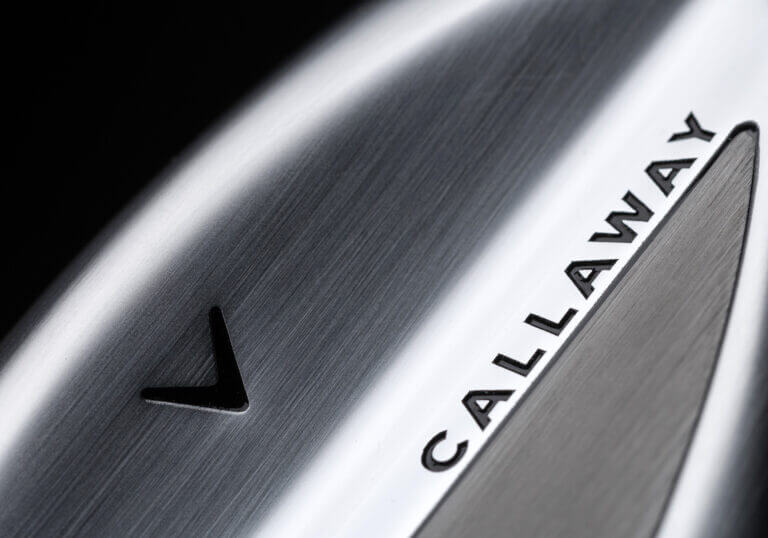
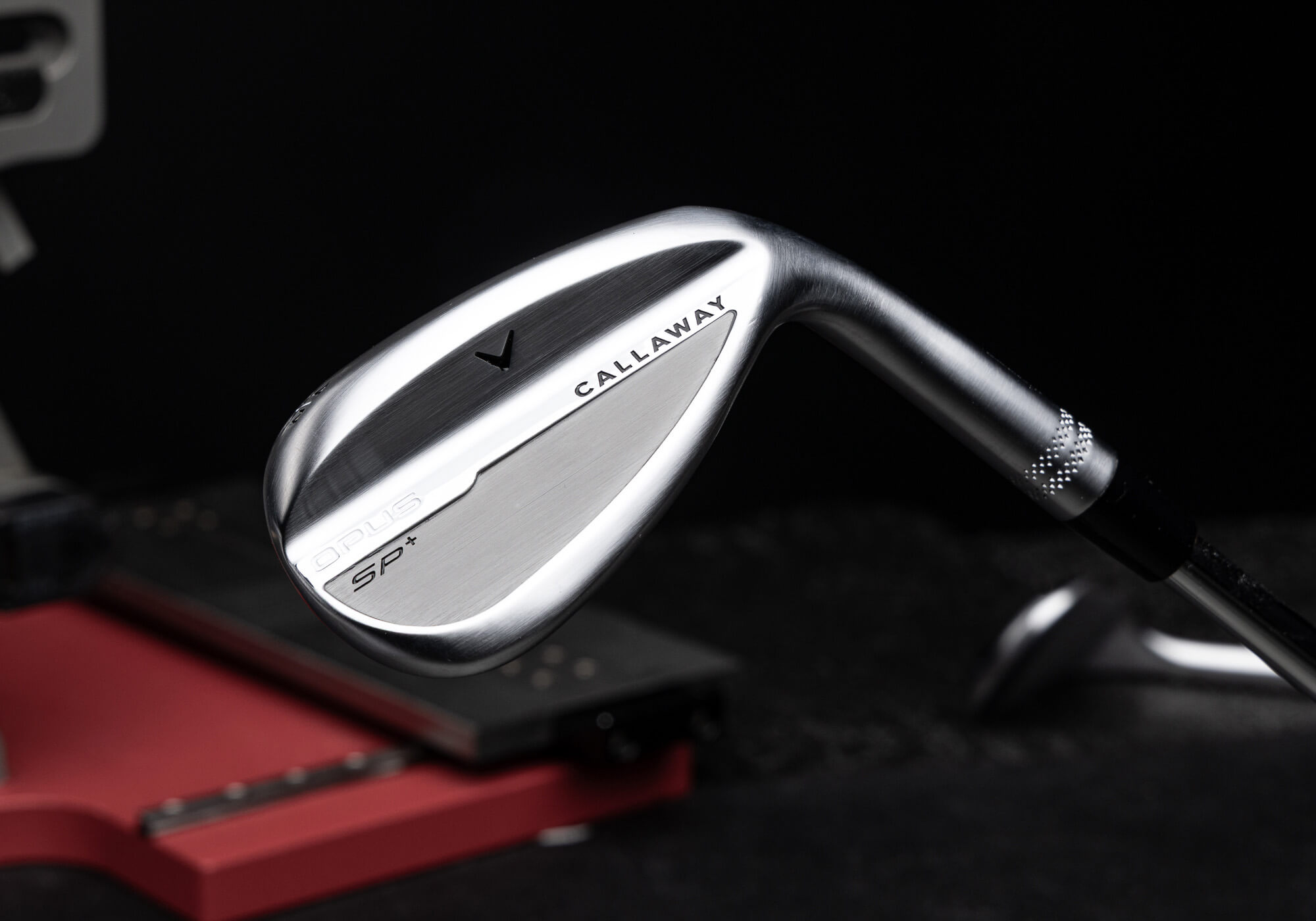
Lower launch. More spin. Tighter control. The new Opus SP+ wedges from Callaway aren’t chasing height—they’re chasing precision. By raising the center of gravity and concentrating more mass high in the head, Callaway’s latest scoring clubs are designed to produce a flatter, more penetrating flight with added spin.
In other words, they’re built to fly like a wedge is supposed to fly. Let’s start there.
Somewhere along the way, golfers decided wedges should climb. High, floaty shots often pass the eye test. They feel soft. They roll less. But if we’re talking about optimal trajectory, wedges aren’t meant to launch high.
The math that gets you to a sensible baseline is simple: (Loft of your club ÷ 2) – 2.
Hopefully, everyone remembers the order of operations but another way to say it is that a 56-degree wedge should launch around 26 degrees. Not 32. Not 38. Around 26.
Low. Flat. Spinny. You might even say “controlled.”
That’s the idea behind Opus SP+. If the original Opus SP was about raising the center of gravity for better control, SP+ is the amplified version. Callaway calls it” “Opus SP on steroids” and while the PGA Tour might take issue with it, for all the rules in the USGA’s book, juicing your wedge isn’t one of them.
If all of this leads you to believe that Opus SP+ is the updated version of the Opus Platinum then, yeah, you’ve pretty much got it.
Raising the center of gravity
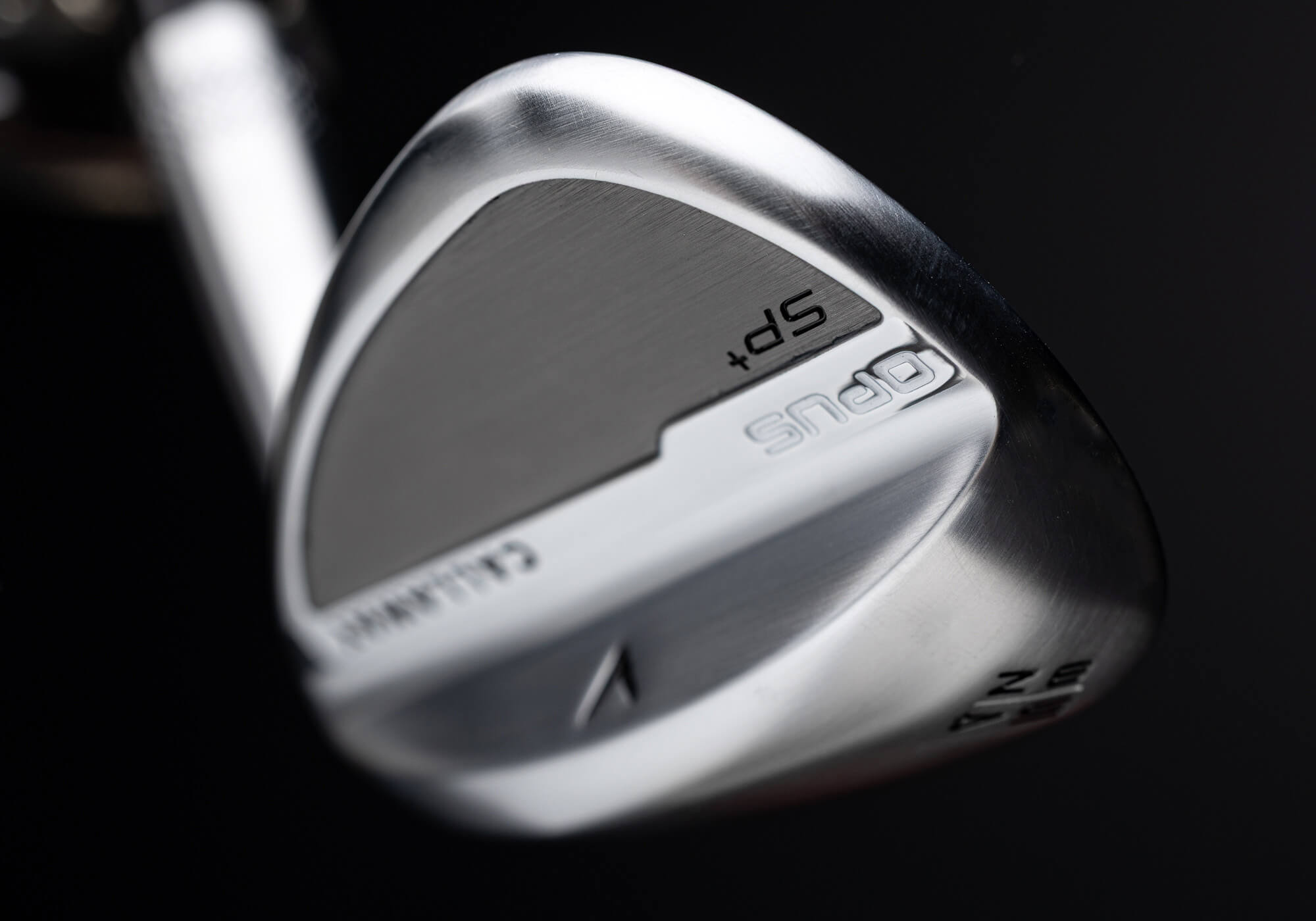
A good bit of the story of Opus SP+ revolves around CG location. That’s probably true for most wedge stories but let’s roll with it.
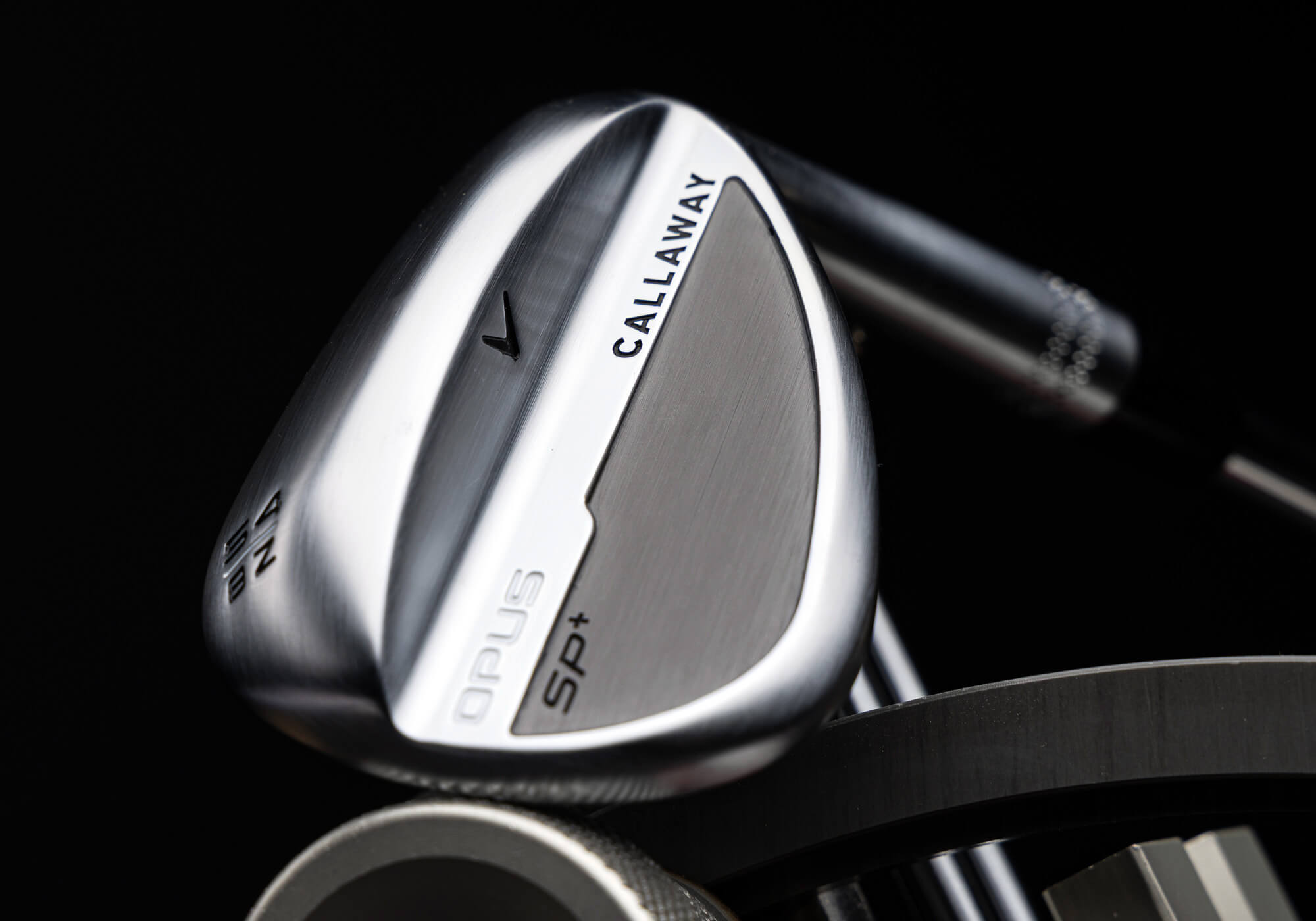
To push mass higher without ruining turf interaction, Callaway reworked the construction into a three-piece design: a cast 8620 body, a Metal Injection Molding (MIM) face and a significant chunk of tungsten positioned high in the head. The spin pocket cavity—the hollow area hidden behind the face—is 25 percent larger than the standard Opus SP, allowing more discretionary weight to shift upward. Compared to Opus Platinum, SP+ offers 23 percent more tungsten.
Great. More tungsten. Why does that matter?
To answer my own question: because raising CG lowers launch and increases spin consistency. Instead of the ball climbing excessively and relying on loft alone to stop, you get a flatter window that produces stopping power through spin and trajectory control.
That’s how wedges are supposed to work.
A quick word about MIM
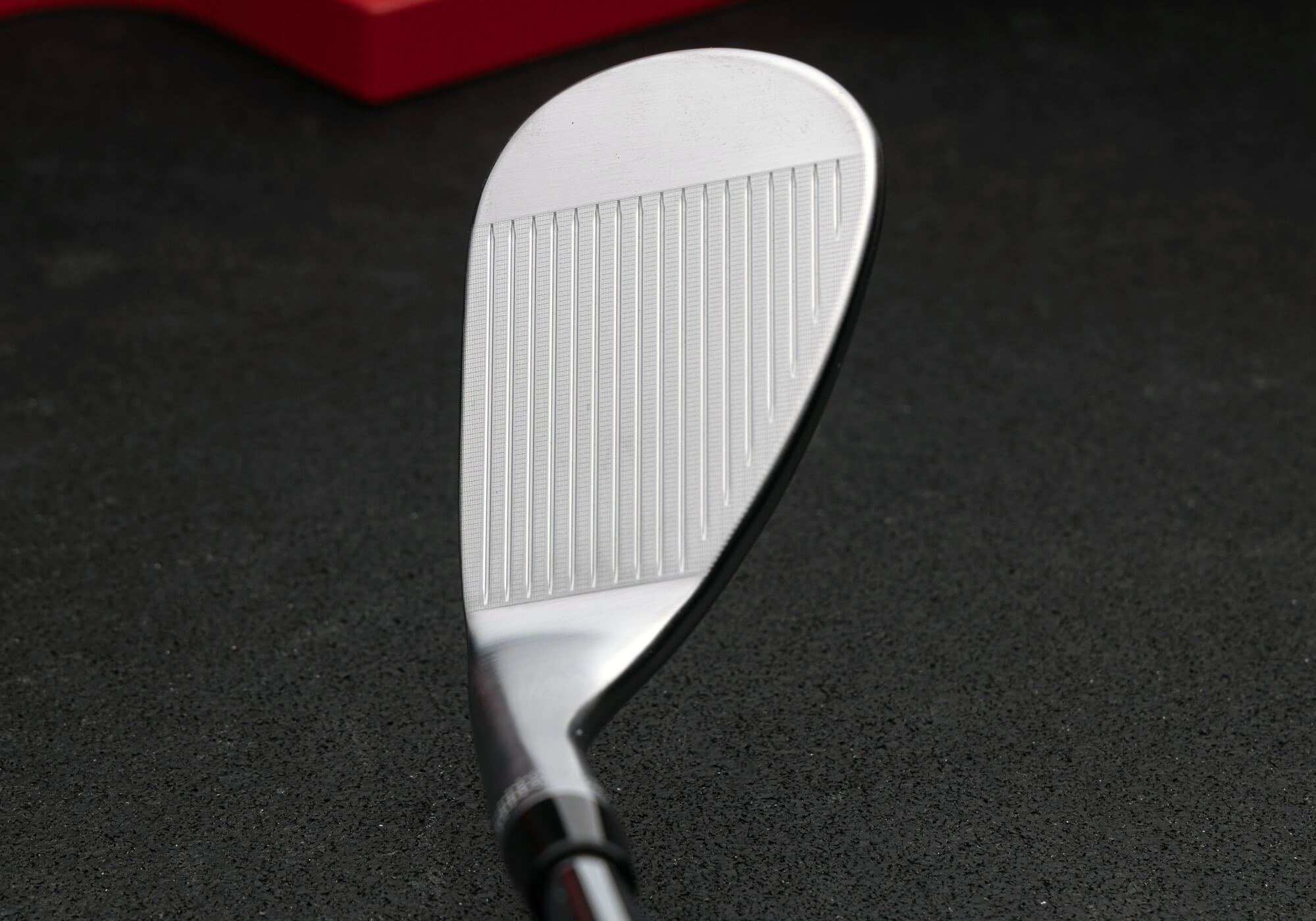
COBRA has leaned into full-head MIM construction for years. MIM uses finely powdered metal injected into a mold, then heated and fused into a dense, precise component.
In this case, Callaway uses MIM for the face only. The benefit isn’t marketing fluff. It’s consistency. Groove geometry stays tight. Tolerances are repeatable. Feel is soft and solid.
And for what it’s worth, most golfers would be hard-pressed to tell the difference between forged and cast when geometry and mass properties are similar. Shape and CG influence feel as much as the manufacturing process.
Spin Gen 2.0
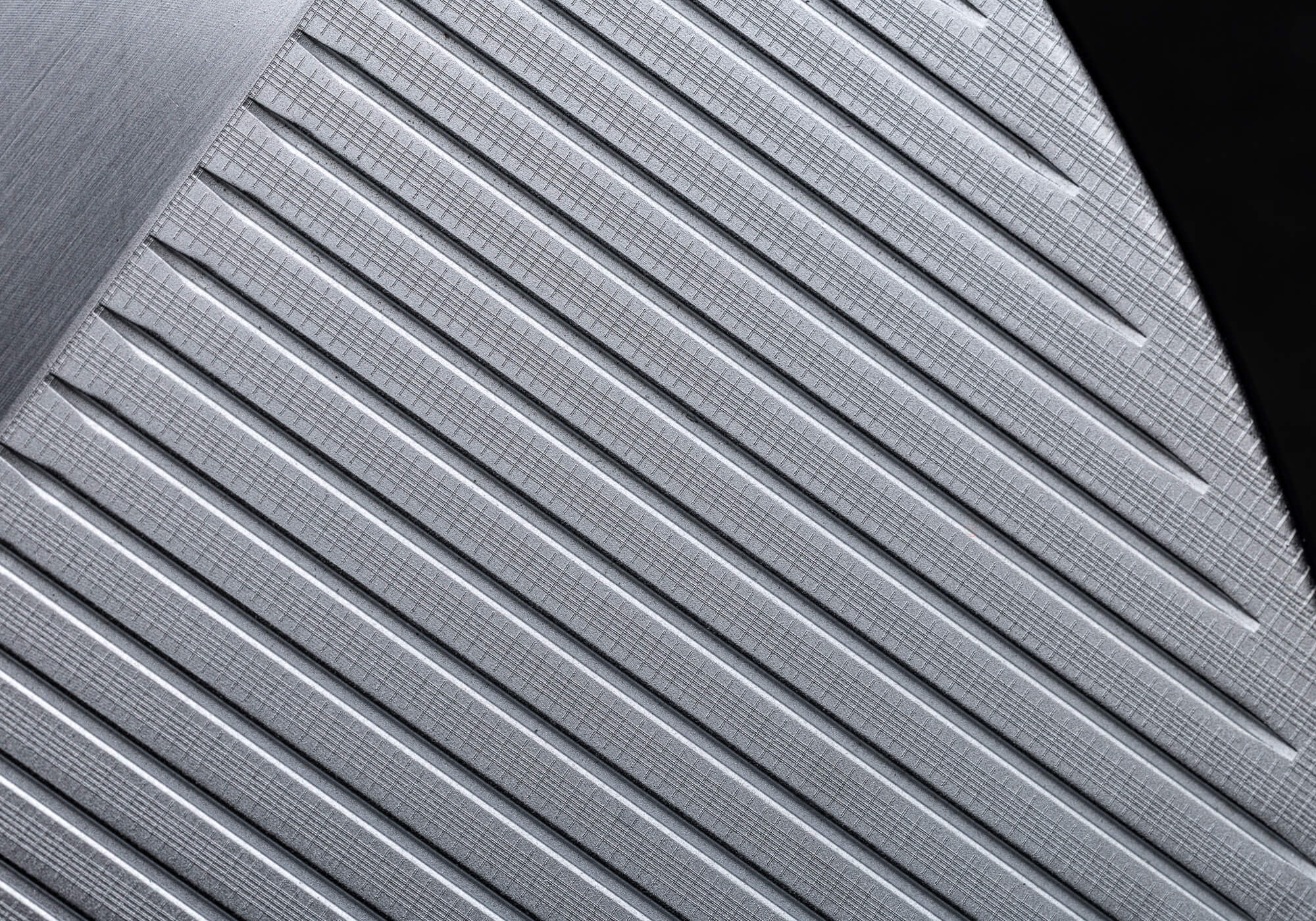
The face itself gets Callaway’s updated Spin Gen 2.0 treatment. There’s a new 17-degree groove angle and tighter pitch spacing designed to create more groove edge contact, especially from the rough.
As loft increases, consistency becomes everything. You’re not just hitting full shots. You’re opening the face. You’re adjusting trajectory. You’re trying to control carry numbers into tight pins.
Spin has to show up regardless of lie or what you need to do with your club to navigate it.
Shape 6 design
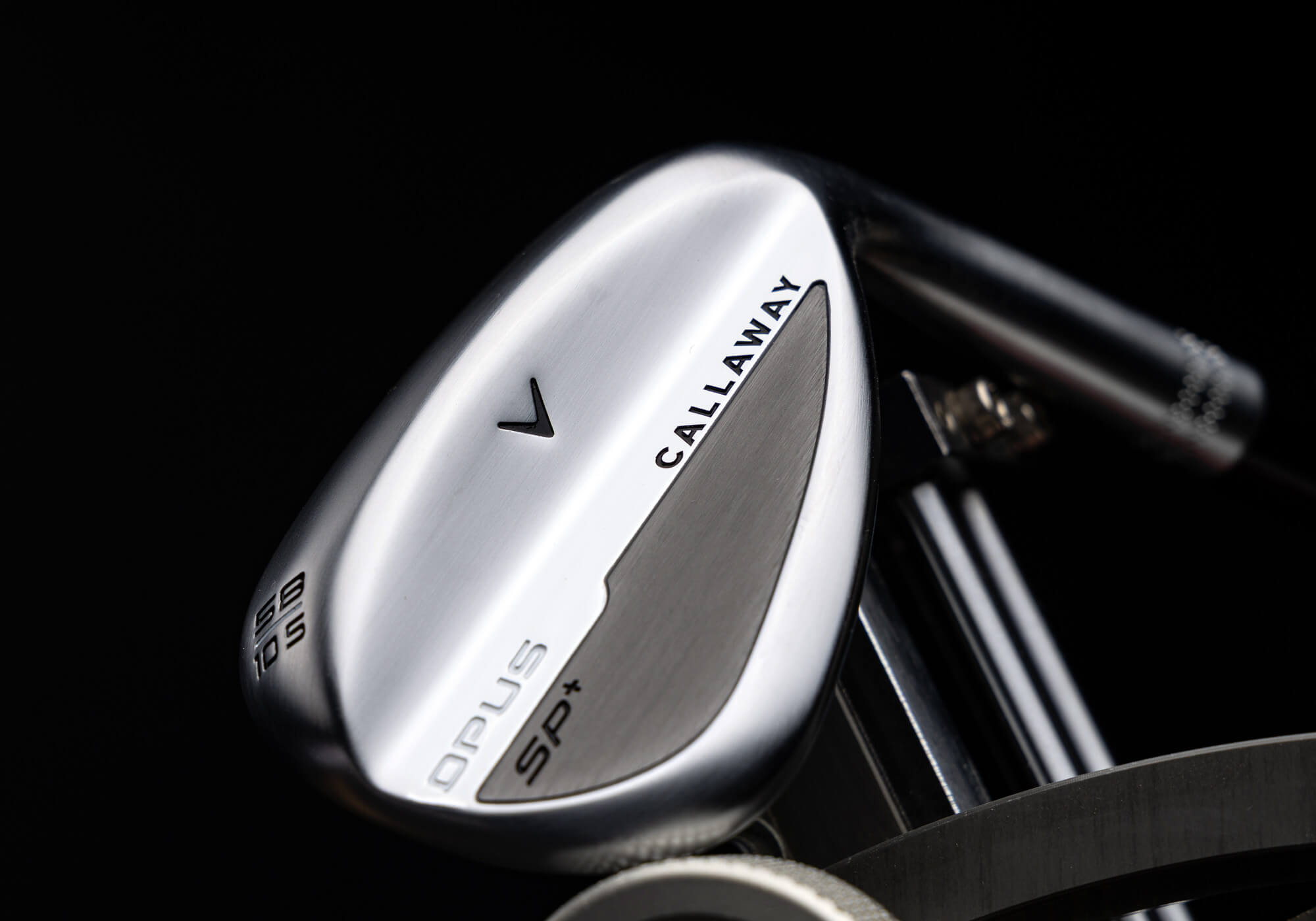
When Callaway was refining the Opus profile, multiple versions went to PGA Tour staff. “Shape 6” was the favorite so Shape 6 became the design and the simple description stuck.
It’s compact, clean and modern. And, frankly, it conveys what was a much-needed evolution in Callaway’s wedge shaping. Whether it was Shape 5 or Shape 6 probably doesn’t matter; the important detail is that Callaway is making better-looking wedges now and the Opus SP+ carries that same Tour-validated silhouette.
A few sensible grinds
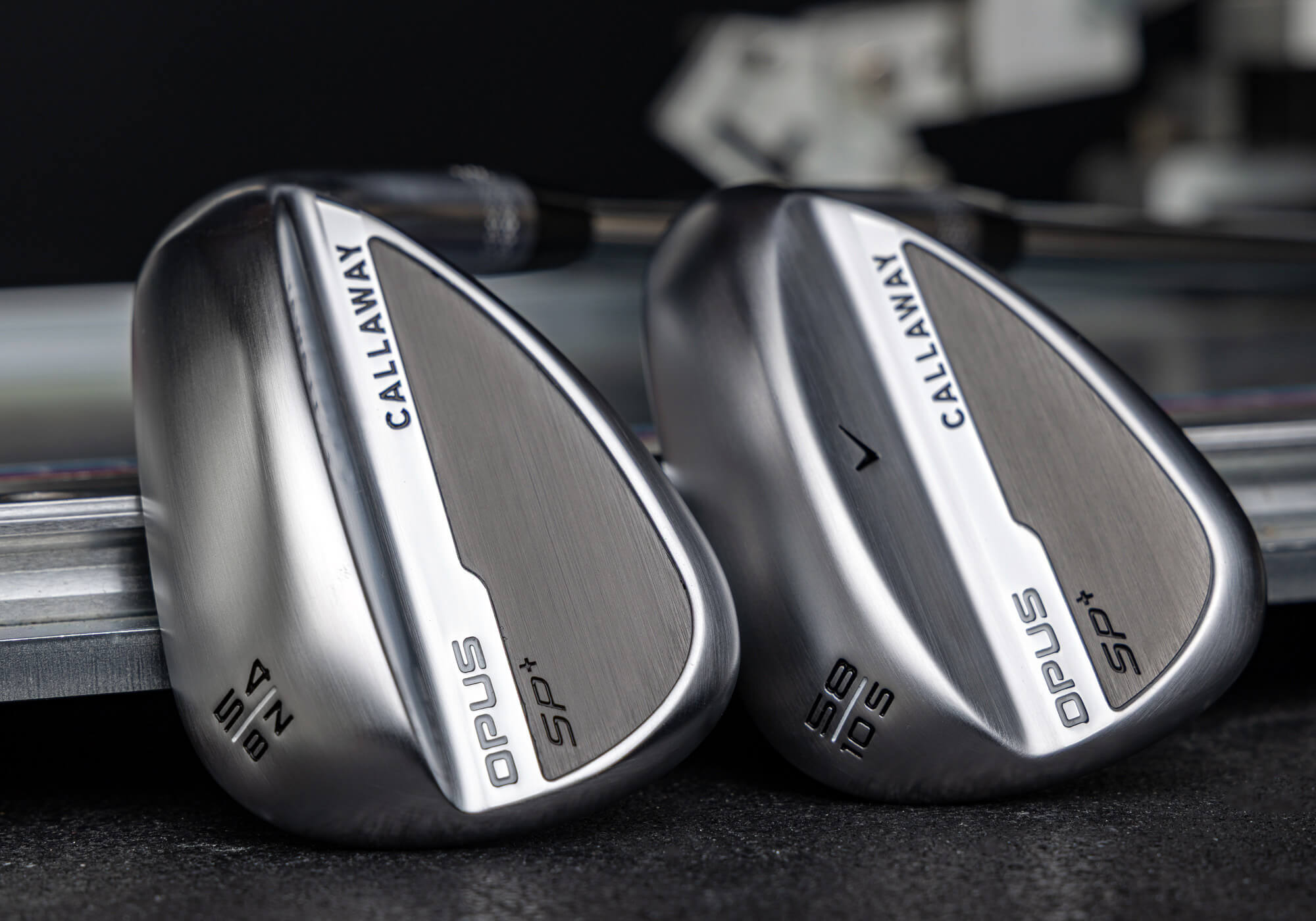
The Callaway Opus SP+ lives almost exclusively in sand and lob wedge territory. Opus SP+ wedges are available from 54 through 60 degrees (standard, two-degree increments). While that might feel a bit limited, it’s also intentional and sensible. Gap wedges tend to behave more like iron-set extensions. There’s not a lot of grind versatility and higher flight isn’t necessarily the enemy. Once you move into higher lofts and bringing flight down becomes part of the design objective, sole geometry and turf interaction matter more.
With that in mind, Callaway offers the Opus SP+ in three grinds.
Z grind
The Z grind is Callaway’s lowest bounce (eight degrees) option among Opus + wedges. It’s described as versatile, with heel, toe and trailing-edge relief that allows you to manipulate the face around the green. Callaway calls it “friendly,” and that’s fair insomuch as it offers low bounce but not aggressively so.
Would I like to see a lower-bounce option? Sure. Does it make sense for the guy who needs the extra help controlling trajectory offered by the SP+? Probably not.
The Z grind is available in 54, 56, 58 and 60 degrees.
X grind
The X grind is Callaway’s highest-bounce option at 12 degrees. Callaway positions the X grind for steeper players but there’s still plenty of heel, toe and a bit of trailing-edge relief to create versatility around the greens, albeit with less risk of digging.
The X grind is available in 56, 58 and 60 degrees.
S grind
The S sits between the Z and X with 10 degrees of bounce. The sole is less relieved than the other two which should convey that you’re trading a bit of versatility for square face performance. With that, like most of the ones in the middle, the Opus SP+ S grind is the safe choice when you’re not sure what you need.
When choosing a grind, keep in mind that in the wedge world, forgiveness isn’t about moment of inertia numbers. It’s about how well the sole moves through turf without digging and often the choice is between versatility (low bounce, plenty of sole relief) and forgiveness (wide, often simpler sole designs)
The S grind is available in 54, 56, 58 and 60 degrees.
Subtle spec changes
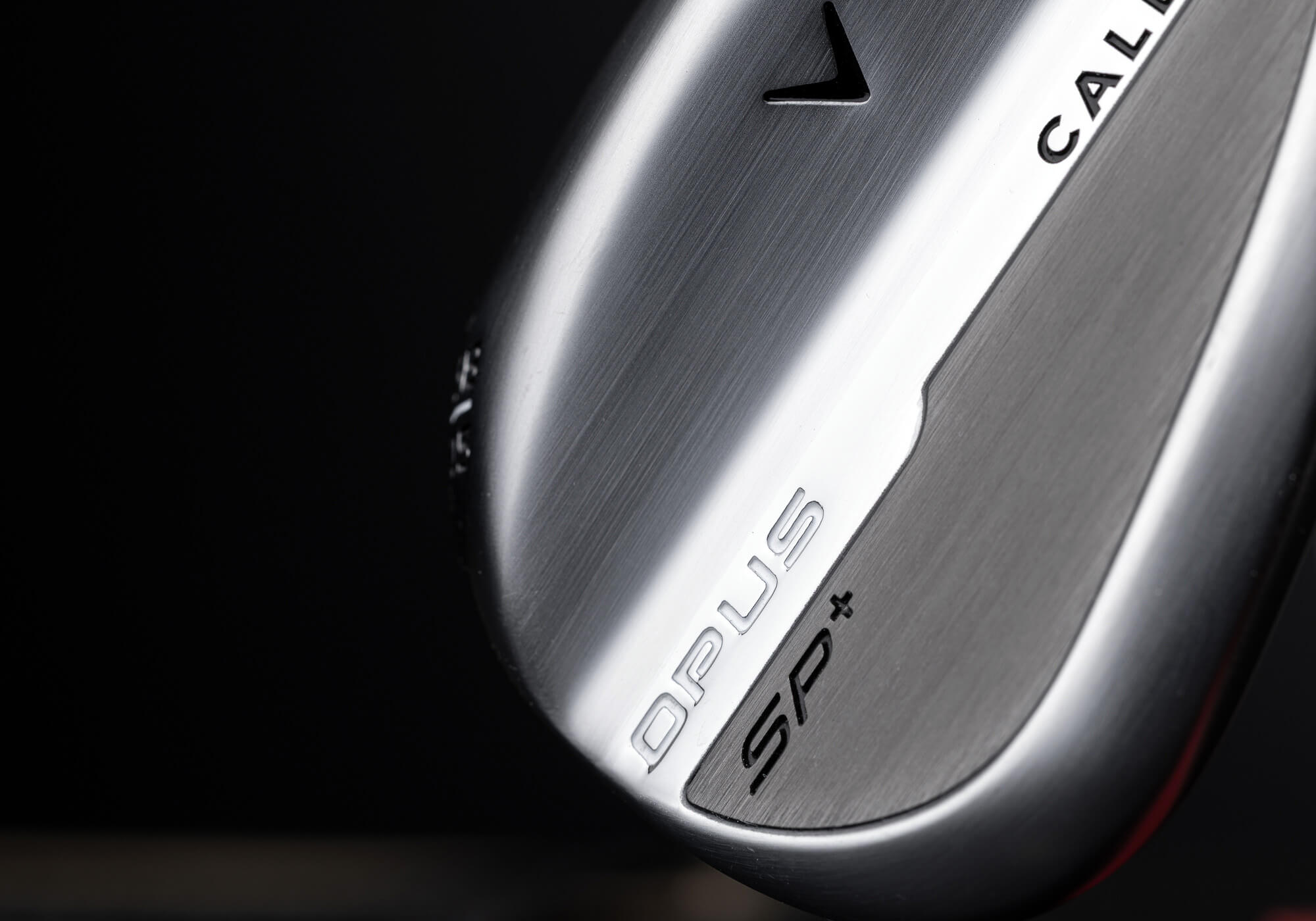
Filed under things you may not notice, Callaway quietly bumped swing weight in the higher lofts to D5. The stock build pairs Dynamic Gold S200 with a True Temper Icon Tour Velvet grip featuring the Callaway block logo.
Nothing radical.
The bigger point
Opus SP+ isn’t trying to impress you with height.
It’s trying to give you control.
By pushing CG higher and tightening groove geometry, Callaway is attempting to give average golfers access to a more Tour-like flight window. A trajectory that doesn’t float. A spin profile that holds up. A shot shape that flies low and bites when it lands.
Pricing and availability
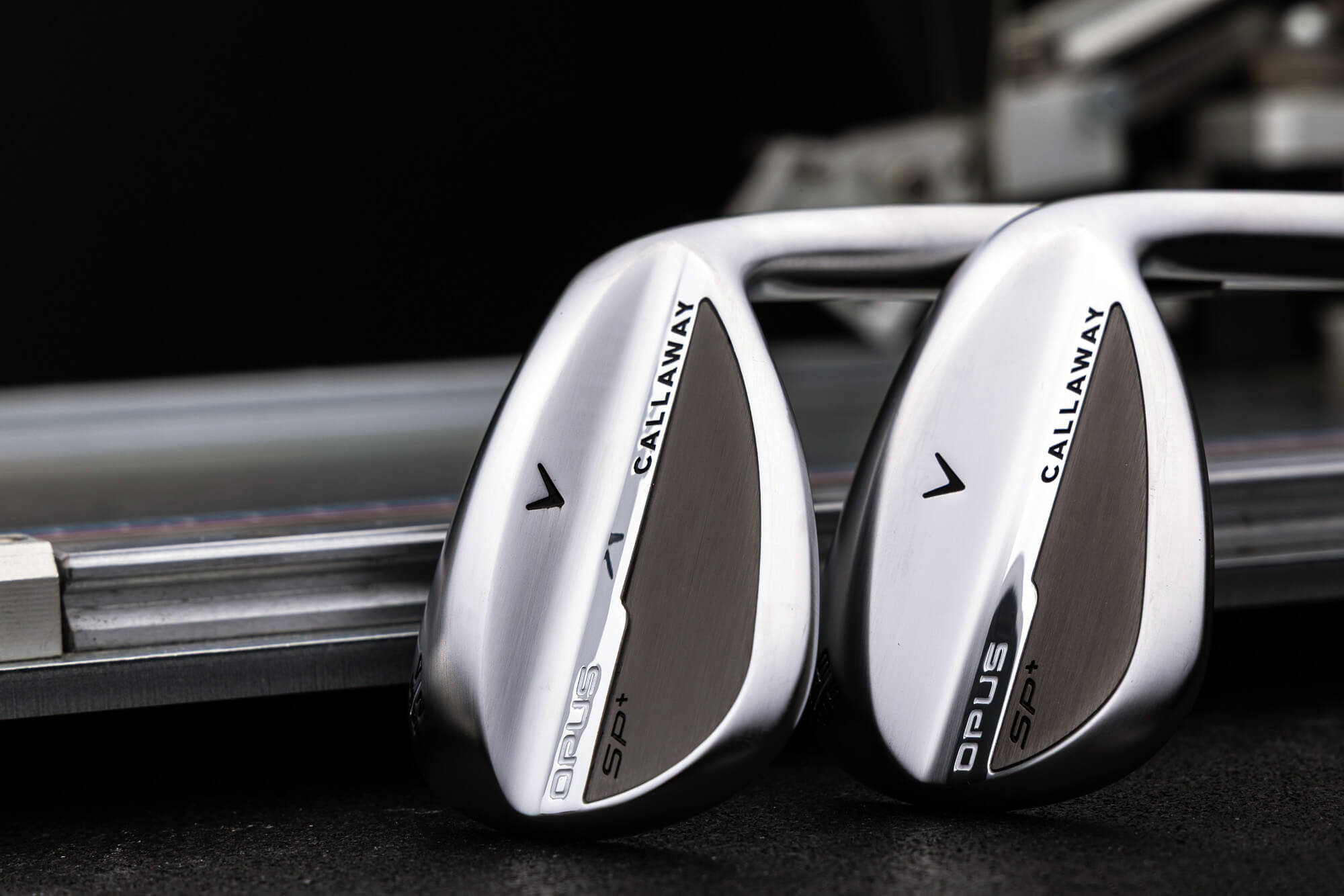
Callaway Opus SP+ wedges are available in a single finish (kind of a satin chrome). Retail price is $229.99. Available for pre-order now with full retail availability beginning March 6.
If that’s more than you want to pay for a bit of extra trajectory control, the original Opus Platinum has been discounted to make way for the Opus SP+.
For more information, visit CallawayGolf.com.





birdie dancer
8 months ago
$230 is why god invented lead tape