


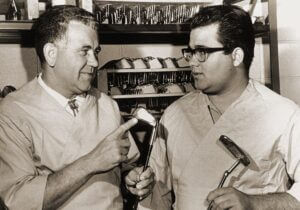
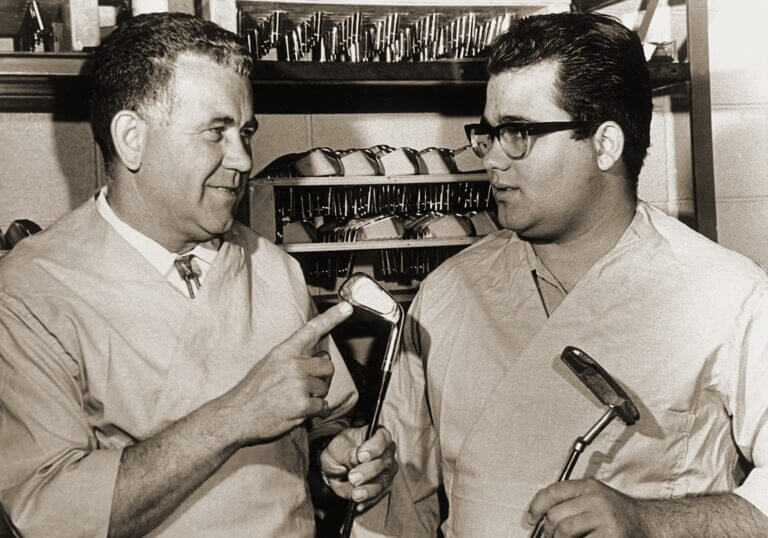
When you have a lengthy chin-wag with Karsten Solheim’s son and grandson, it’s almost impossible to confine it all to one article.
That’s why we’re doing two.
We’ve already shared with you the unique dynamics that have made PING a 67-year-old family-run business. Today, however, we want to share a frew more nuggets from our conversation with Karsten’s son and successor as PING CEO, John A. Solheim, as well as John’s son and successor, John K. Solheim.
Together, they gave us a fascinating glimpse behind the curtain of one of golf’s most consequential families and influential companies.
Let’s dive into the headline first. Yes, PING nearly got sold.

Fire up the Wayback Machine …
“At one point, Karsten and Louise (Karsten’s wife and business partner) were thinking of selling the company,” John A. Solheim tells MyGolfSpy. “This was before the Anser (putter) came out in 1966. It was to Dunlop.”
Ultimately, says John A., Dunlop decided not to buy. Can you for a minute imagine how different the golf world would be if that sale had taken place? Would we have ever seen the Anser? What about the Karsten K-1 irons in 1969? Or the PING Eye 2 irons in 1982?
I don’t know about you but I’m guessing Dunlop would really like that one back.

Wait, it gets better.
“There’s one company that still says if we’re ever interested in selling to just let them know,” says John A.
No, he wouldn’t tell me which one. Whoever it is, I’m not sure they could put enough zeros behind a “1” to make it happen.
“That’s the way business is today,” he adds. “But I think the family is very happy with what’s going on.”
“We can be a very solid business for the long-term and be content with that,” says John K., who, at 52, has been PING president since 2017 and CEO since 2022. “Private equity companies that buy in want to quadruple their money in four years. We’re in the golf space. We just don’t see that kind of growth.”
Working with Karsten
John A. is still Executive Chairman at PING and, at 80, stays out of the day-to-day operations. He still keeps up with PING’s engineering department and is involved in product development. As we shared in our previous article, John A. is very candid about how difficult the transition was when he took over for his father in the mid-1990s. Despite that, a lasting memory of his dad comes from PING’s early days when it was just the family working on clubs in their garage.
“We’d build a set of irons,” says John A. “They’d be mounted on a block and he’d have me do specific things to them like hand filing, the old way of doing things.
“Then he’d tell me, ‘I’ve been looking at them too long and my eyes don’t see everything. Look at what the toe of the 3-iron looks like. Make sure it looks like the 4-iron and the 4-iron looks like the 5-iron. That was the progression of the set. You look at every radius, every turn. Those were special days.”

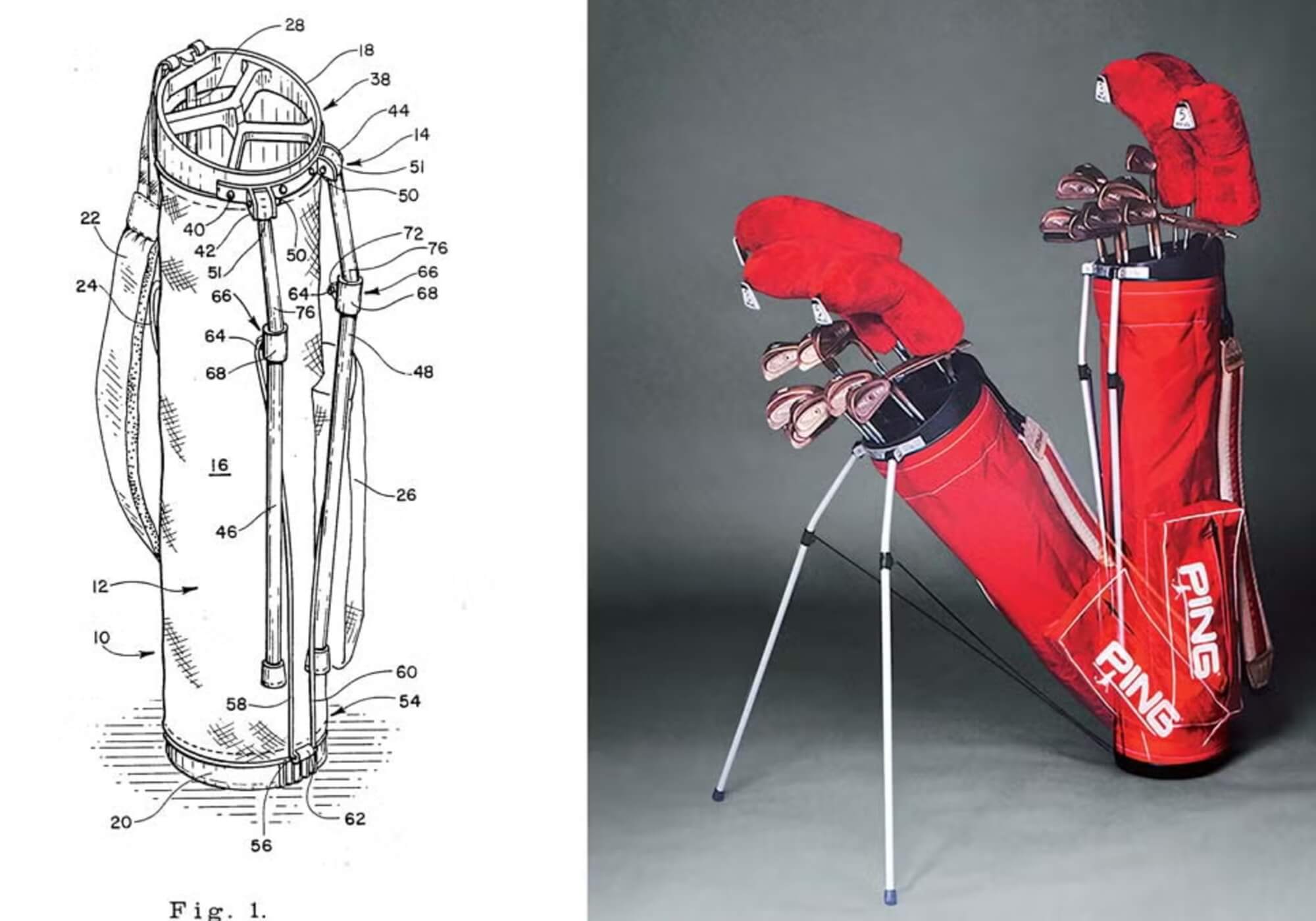
Years later, John A. was the driving force behind the original PING Hoofer golf bag, a project Karsten let his son run by himself.
“He stayed out of it. I lucked into the market on that because, at the time, people thought stand bags were for old people and that the younger generation wouldn’t want it. So I sent a set of bags to Oklahoma State for their golf team.
“The guys didn’t want to use them but one of them tried it. They played a tournament in the rain and he told the coach his clubs stayed drier because of the stand. After the coach heard that, he had everybody using a stand bag.”
Thus began the legend of the Hoofer.
The next generation’s moment
The next logical question for John A. was, of course, what is his favorite memory of working with John K? He didn’t have to think very long.
“You had just finished high school and I had you working on a stretched B60 putter,” he said, speaking directly to his son. “That project got you to go from the design all the way to making the part.”
Then, talking to me, he said, “He went to Oklahoma State and maybe two years later, I called to tell him the molds were ready and we were going to start producing them. Then I called to tell him we’re starting to ship them. Finally, I called him to tell him we just had a Tour victory with one. That felt really good.”
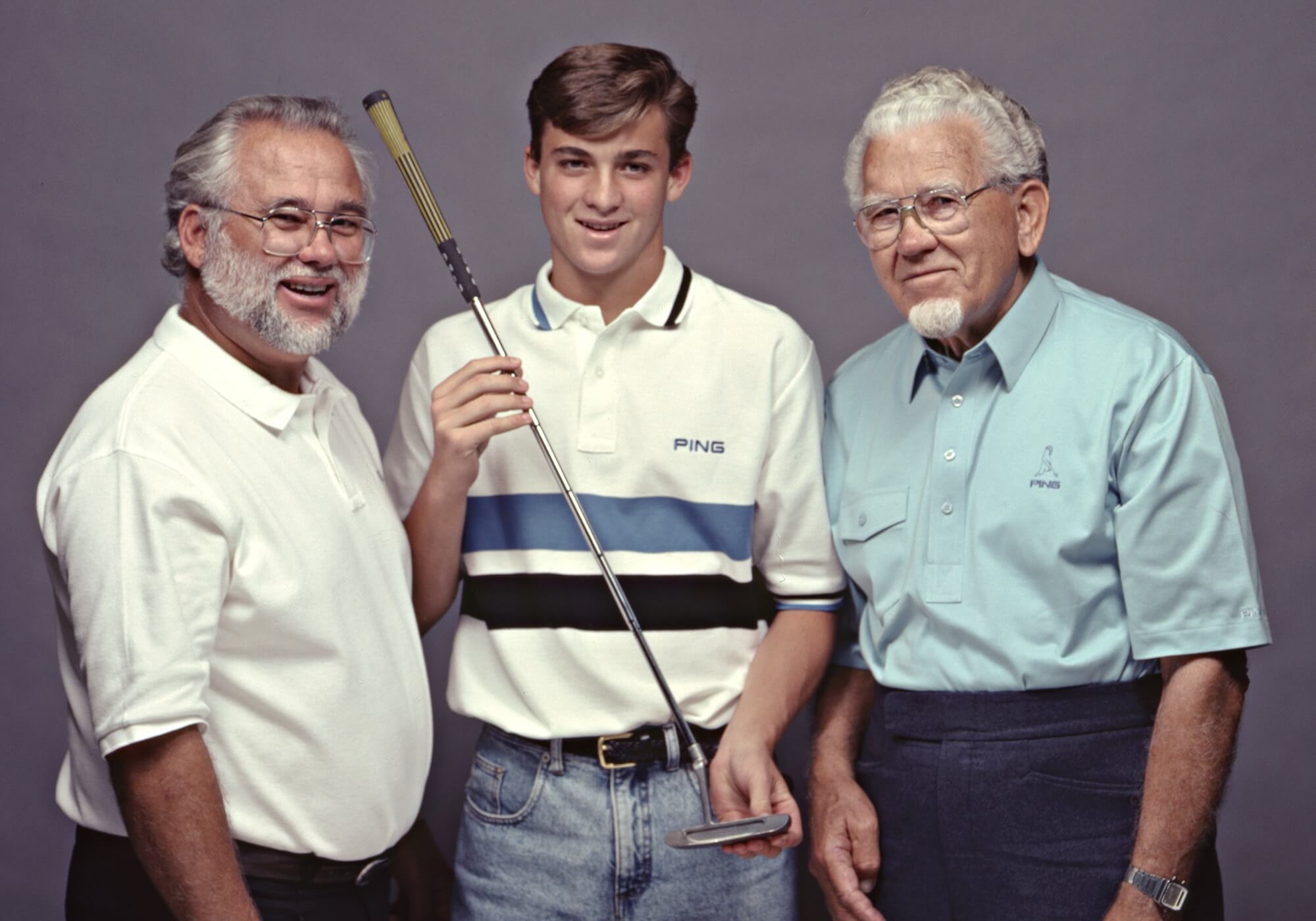
“I won’t take credit for the design,” adds John K. “I was the CAD (computer-aided design) worker and did all the computer work and made the prototypes. The design was wrapped up when I left for college. It took a while to make the tools so it was still a process to get it to market.”
Never underestimate Louise
PING company history Rob Griffin has said it many times but it bears repeating since we’re talking about Louise Solheim’s son and grandson.
“I believe that if Karsten had married a different young lady, we would not be here today,” says Griffin. “Louise was so important to the business and to Karsten. She had a way of keeping him focused and was his closest business advisor.”
“She was an amazing lady,” says John A. “Mom had great wisdom and an amazing memory. She remembered everything and always had great input at board meetings.”

Louise was on PING’s board of directors until 2015. She died two years later, just as her grandson was taking over as president.
“She and Karsten were running the business but they were like normal grandparents living down the street,” remembers John K. “Grandma was fantastic. Every time we’d visit, I’d get candy or old coins she had. I still like to collect coins.”
John K. also remembers her input at those board meetings.
“The wisdom she would bring was incredibly valuable. She compiled a list of Bible verses over the years that she’d refer to for business leadership. She passed that on to us.”

“Mom ran the business side and gave my dad the time to spend on design, which he loved,” adds John A.
And, like many a mom, she often mediated disputes between alpha males.
“Let’s put it this way, a lot of the time my dad and I would butt heads over different things. I’d suggest something to change a product or a marketing program and it would get shut down. I’d make a comment to my mom and the next day everything was fine. She’d have a talk with him and it would make a huge difference.”
The PING family tradition
We hope you enjoyed this rare glimpse behind the Solheim family curtain at PING. It’s been a fascinating look at the unique dynamics of a family-run business.
Like many of you reading this, I’ve worked in a family business and for family businesses. It’s never easy but John K. summed up the difference between ones that work and ones that don’t very succinctly.
“You have to embrace the friction, I guess. By hashing it out and disagreeing, we come up with some pretty good plans.”
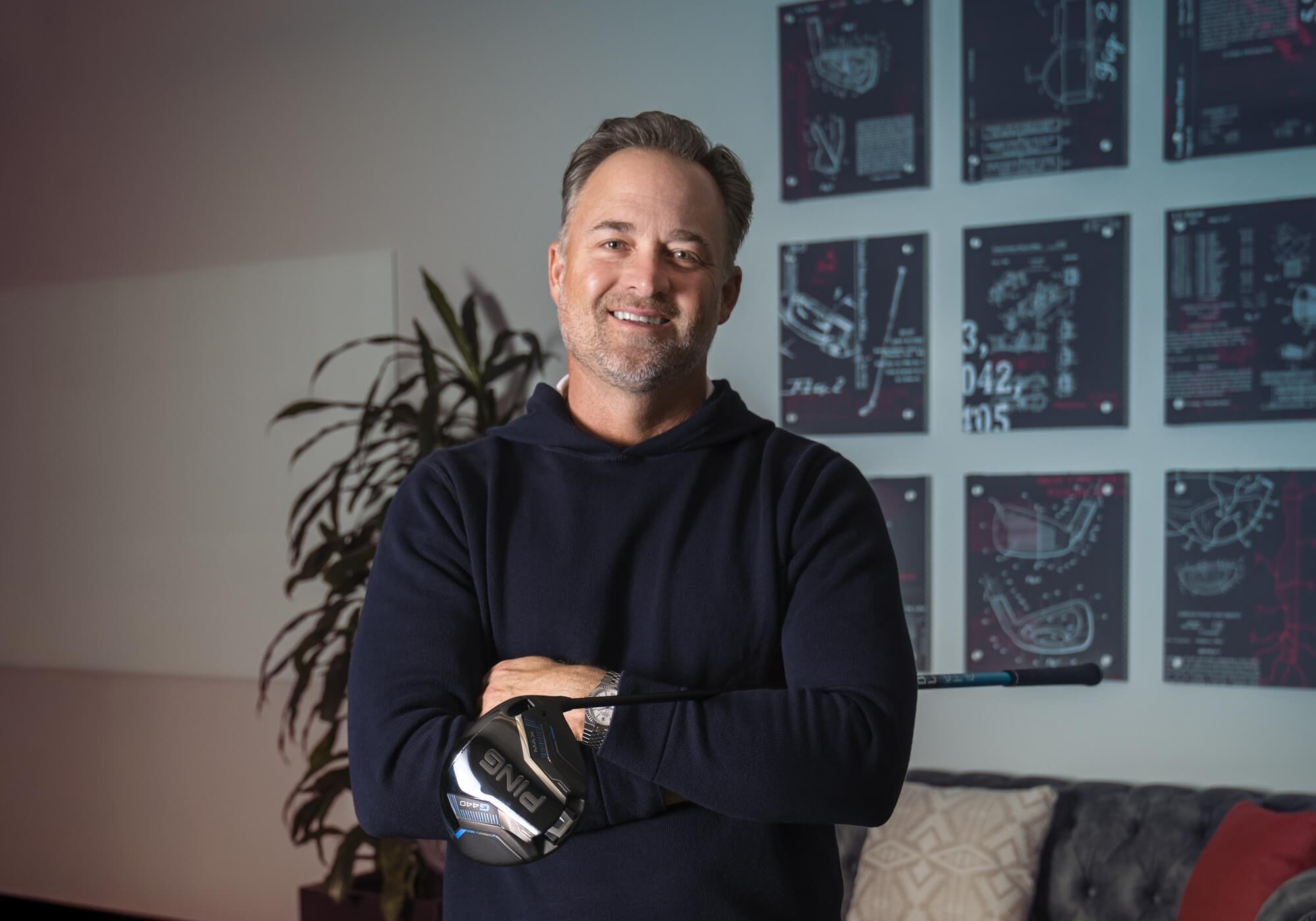
“We have a lot of great people here that are not Solheim family members who are leaders in the company,” adds John A. “At our core, everybody’s part of the extended family and that’s how we treat them.
“That’s kind of the secret sauce, I guess.”
If you’ve never worked in or for a family business, that may sound trite. If you have worked in or for one, especially a successful one, those sentiments ring truer.








mg
4 months ago
Thanks so much for the history lesson. Ping.