


Have you ever wondered how much difference a professional caddie would make to your game?
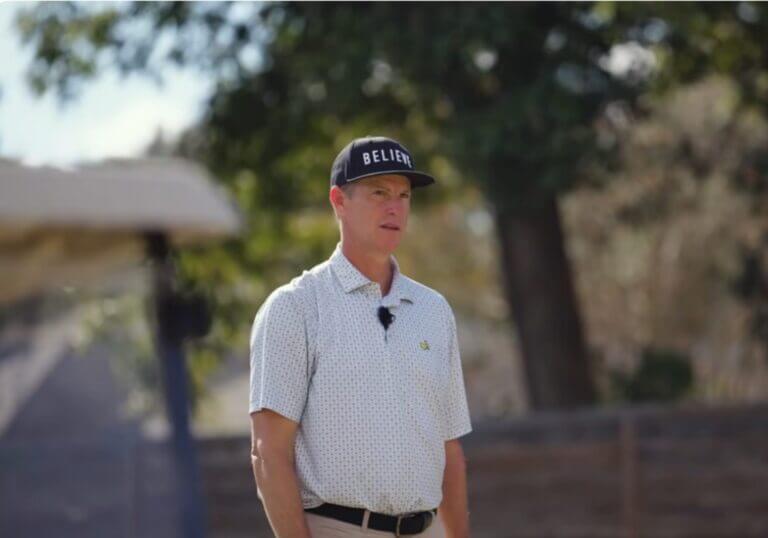
That’s the question Grant Horvat set out to explore in a golf video he released in December where he spent a full round caddied by Ted Scott (Scottie Scheffler’s caddie). On the surface, you would expect the obvious benefits: accurate yardages and precise club selection. But this video offers something more interesting. It gives a realistic look at what it is actually like to have a pro caddie involved in every decision throughout a round.
Do I believe Scott was giving Horvat the same level of detail and intensity he gives Scheffler in a major championship? Probably not. But that is not really the point. What makes this video a fun and worthwhile watch is what Horvat starts to notice about his own game and how even subtle changes in decision-making influence the outcome.
Here are the three biggest takeaways.
1. Tour caddies help with decisions, not mechanics
One of the most noticeable parts of the video is what Scott does not do.
There is no swing talk. No grip advice. No mechanical fixes. Scott never tries to change how Horvat moves the club. Even with Scheffler, Scott is not the swing coach. He has other people to help with that.
Instead, Scott works with the game the player brings that day and helps them choose the right shot to attempt.
That often looks like:
- adjusting targets away from pins
- identifying which misses are playable and which are not
- choosing clubs that remove short-siding from play
- planning shots around what happens when execution is less than perfect
The value is not in making good swings better. It is in preventing small mistakes from turning into big problems.
Most of us spend far more time thinking about how to hit a shot rather than if it is the right shot to attempt in the first place.
2. Green reading is often fine. Commitment is the problem.
One of the recurring themes in the video is Horvat saying he struggles with green reading. By the end of the round, it becomes clear that green reading isn’t really his issue. It’s trusting the decision he made.
What Scott does consistently is simplify the process and remove doubt before the stroke ever starts. He helps Horvat commit by:
- narrowing the read to a single clear line
- explaining how slope and grain influence the final few feet
- reinforcing what the putt should look like through impact
How often do you stand over a putt with a decent read, start the stroke and, halfway back, think it needs to be a little more left? So you try to help it. That second guess is usually worse than trusting the original read and living with the result.
Having a caddie, even one who is not tour-level, helps remove that hesitation. If you can learn to commit, you’ll make more putts.
3. Expectations are matched to the hole, not the scorecard
For me, this was the most interesting part of the video.
There is very little talk about whether a hole is a birdie hole or a par hole. Instead, nearly every conversation centers on where trouble comes into play and what outcome keeps the hole simple.
Scott consistently reframes the goal:
- being on the correct side of the green
- staying on the proper tier or shelf
- avoiding short-sided misses
- choosing outcomes that reduce the chance of big numbers
Shots are selected based on positioning and margin, not what looks best if everything goes right. When you watch Scheffler play a round of golf, this is exactly what it looks like.
The emphasis is on keeping the next shot manageable rather than forcing aggressive plays.
Final thoughts
You likely will never play with a professional caddie. Nevertheless, you can incorporate these tips and strategies into your next round. Playing great golf is not just about great shots. So much of it is decision making.
Grant Horvat shot two shots lower than his average score. There’s no telling if that’s all related to Ted Scott being on the bag but I don’t know too many golfers who would complain about saving two shots.









Michael Allan
9 months ago
I was the Asst. Caddie Manager at the Old Course in 2002 and you were very lucky to get John Paisley as your caddie for your round, he was one of the best at St Andrews that year, i have caddied in the Dunhill Links several times and seen pro caddies close up, they are basically a numbers machine for the player, they hardly read any greens that was nearly 100% by the player, on the flip side a caddie at the Old or Kingsbarns will read every green for a visiting golfer usually with a good success rate, John is a very nice guy as well which certainly helpd you be a successful caddie.