




You hit a chip that looks pretty good. It lands close to your spot, takes a bounce and then rolls six feet farther than you expected.
It’s easy to blame the green or assume you hit it too hard. Sometimes that’s the answer. But rollout is determined by launch, spin, strike and what happens when the ball hits the green.
If your chips consistently run farther than you expect, here are a few things to check.
Your golf ball may not spin enough around the green
Golfers tend to think about golf ball differences in terms of driver distance or feel but cover construction becomes especially important around the green.
Urethane-covered balls generally create more friction on these lower-speed wedge shots than many ionomer-covered models. More friction can mean more spin and more stopping power.
Take a look at the 2026 Ball Test Results to learn which golf ball would be best for you around the greens: Ball Test Results 2026.
Your grooves or conditions are reducing friction
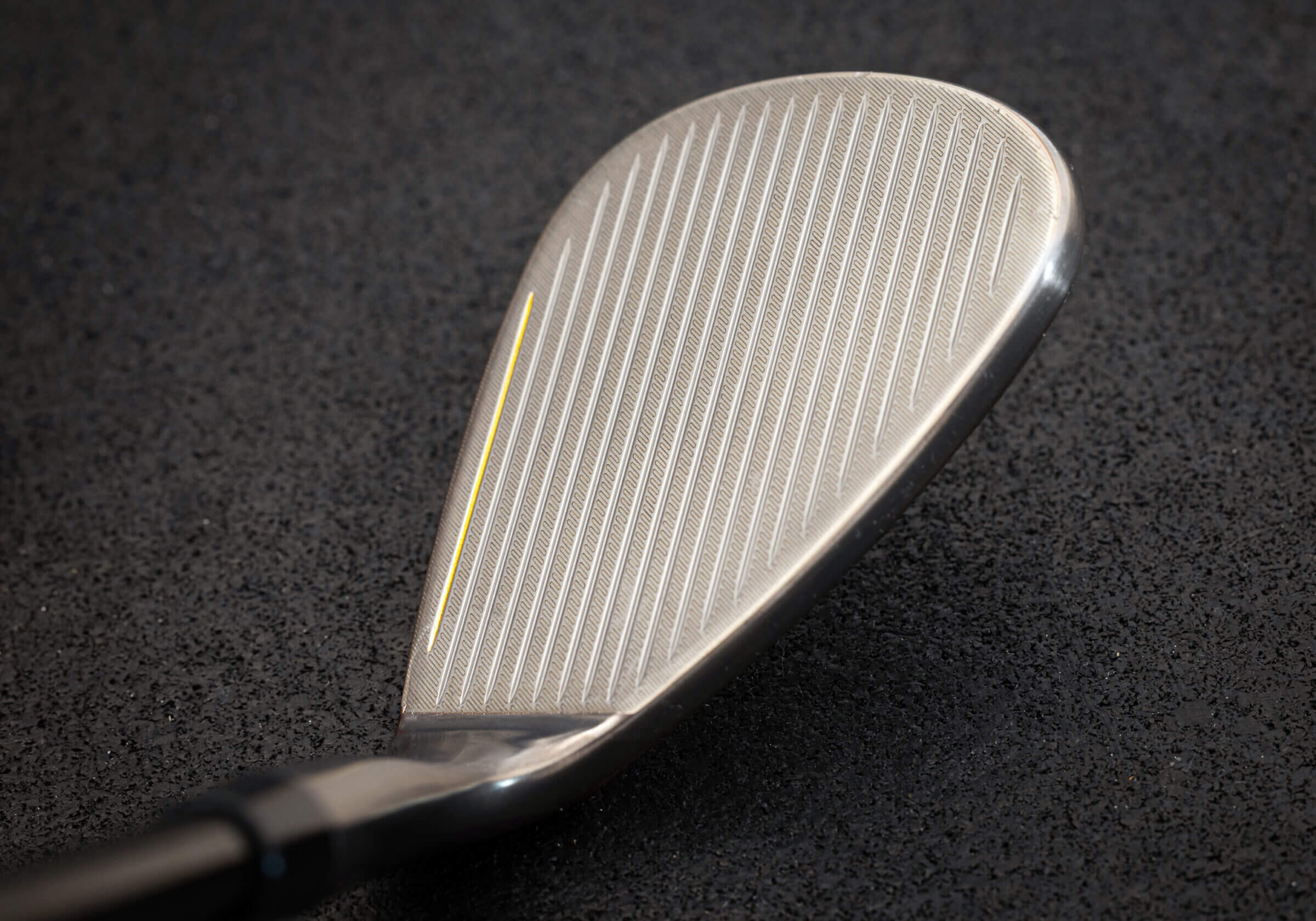
Grooves help maintain friction between the face and the golf ball, especially when grass, dirt or water get involved.
As wedges wear, spin performance can change. Vokey robot testing found a new wedge generated up to 2,000 rpm more spin than a wedge with more than 125 rounds of use.
Moisture can cause a similar problem. A clean ball on a tight fairway lie should not be expected to react the same way as a ball sitting in damp rough with grass trapped between it and the face.
You may be taking too much loft off the wedge
This is the mechanics issue I’d check first.
A 56-degree wedge doesn’t necessarily have 56 degrees of loft when you hit the ball. Ball position, shaft lean and face position all change the dynamic loft you deliver.
Golfers are often taught to play chips back in the stance, push their hands forward and hit down on the ball. If you take that too far, you can turn a 56-degree wedge into something that behaves much more like a pitching wedge (usually 44-48 degrees). If you set up that way with a pitching wedge, you may be chipping with something that’s more like an 8-iron (37-39 degrees).
The ball comes out lower and can have considerably more forward momentum when it lands.
If your chips constantly come out low and hot, experiment with moving the ball slightly forward and reducing excessive shaft lean.
You still have to account for the green
Even a perfectly struck chip is going to release on a firm, fast or downhill green. Read the chip as you would a putt and make sure that plays into your decision as to where to land the ball.
One simple way to start thinking about that is to look at this chart below. As the club gets lower lofted, the spot you need to land the ball gets closer to you. These are starting points, not guarantees. Green speed, slope, lie and your delivery will all change how much the ball rolls.
| Club | Approx. carry-to-roll | Where the ball lands |
|---|---|---|
| Sand wedge | 1:1 | About halfway |
| Pitching wedge | 1:2 | About 1/3 of the way |
| 9-iron | 1:3 | About 1/4 of the way |
| 8-iron | 1:4 | About 1/5 of the way |
| 7-iron | 1:5 | About 1/6 of the way |
Try this on the practice green
Take your normal golf ball and the wedge you use most often.
Pick one landing spot and hit five chips. Pay attention to where each ball lands and where it eventually stops.
Then make one change at a time. Try less shaft lean. Try another golf ball. Hit a few from the rough. Grab a pitching wedge or nine-iron.
You’ll quickly see that “how far should this chip roll?” doesn’t have one answer. You may also find out that your chip shot rolling out too far was really about you missing your landing spot.









Tom Marvin
2 months ago
Because you didn’t replace your 55 with a 68 with skid plate/bounce. You dont have to hit chip shots, I never have and golf is simple and easy. How, land your 68 2 feet from the hole for a one foot tap in. Some times its 3-4 feet, and the ball always stops imagine that. Ball in center of your stance always, do straight arm sweep if enough care, if not take a divot/ ball first contact. You can do golf the easy way or the hard way good luck.
Mike
1 month ago
A ’68*’? Many folks realistically can’t chip w/ a 60* & s/b using a 8 to PW & running it on/near the ground. Takes decent amount of skill to master a 68* & many folks don’t have the practice time.