


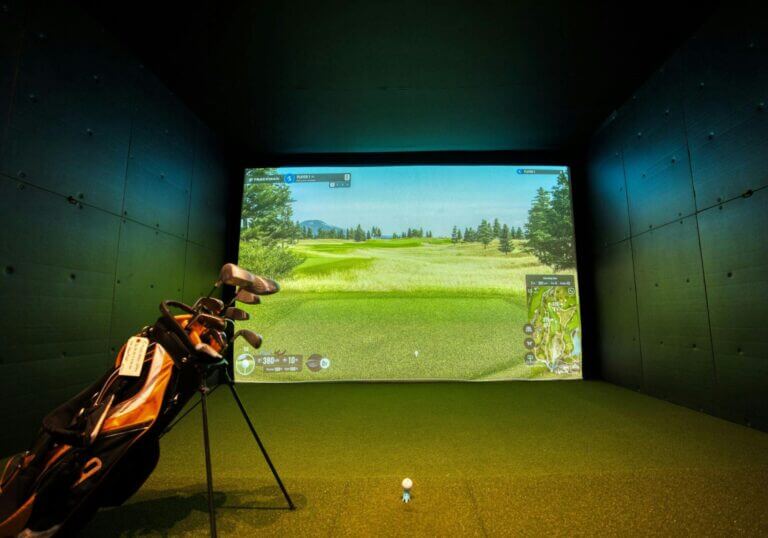
Golf simulators are fun, but let’s be honest, they’re a big investment. One of the best ways to justify that cost is by treating your simulator as more than just a toy. It’s a serious training tool. Whether it’s rainy, too hot or the middle of winter, a simulator gives you the chance to practice when the course doesn’t. For one PGA professional, that extra indoor grind didn’t just improve his game; it earned him a spot in the PGA Championship.
Who is Rupe Taylor?
Rupe Taylor is a 35-year-old PGA teaching professional based in Virginia Beach, Va. He runs “Play Better Now” out of the Virginia Beach National Golf Club where he spends most of his time helping others sharpen their game. When he finds time to work on his swing, it’s often indoors. He has a home simulator running Trackman software.
Taylor isn’t a household name but his story is a perfect example of what can happen when hard work meets modern technology. Despite a full lesson schedule and limited time to play, he’s turned his garage into a proving ground for elite performance.

His journey to the PGA Championship
To earn a spot in the 2025 PGA Championship at Quail Hollow, Taylor needed to finish inside the top 20 at the PGA Professional Championship.
He did just that, placing ninth with a two-under-par total over four rounds, good enough to punch his ticket to a major championship.
With a simulator as his primary practice tool, Taylor prepared by playing virtual rounds at Quail Hollow and utilizing feedback tools to fine-tune his swing.
He posted rounds of 80 and 84, missing the cut, but just qualifying is something only about 150 players in the world get to do each year. For any working golf professional, especially those not playing full-time, it’s a significant achievement, and it demonstrates that indoor golf practice can be effective.
How to make indoor simulator practice more effective
Similar to practicing at the driving range, there is a right and wrong way to work on your game with a golf simulator. If you stand there and hit balls, it’s going to be tough to see real improvements in your game and lower scores. Here are a few tips you can use to make the practice session more effective.
- Vary your clubs: Rotate through your bag rather than just sticking to the 7-iron and driver.
- Change targets: Simulate on-course decisions by aiming at different yardages and shot shapes.
- Use feedback: Launch monitor data is only helpful if you pay attention to it. Watch your face angle, path, attack angle and smash factor.
- Add pressure: Use skills tests, simulator games or shot challenges to simulate tournament nerves.
- Play courses: Just as Rupe Taylor did, try to play simulator rounds on some courses that you will be playing to help with course management and playing decisions.
Final thoughts
That said, indoor practice does have limitations. You’re not dealing with lies in the rough, sloping fairways or real-world wind. That kind of “playing” practice is something you can’t fully replicate in a simulator. However, Rupe Taylor showed us that dialed-in ball striking alone can get you a long way.





SkyChief
1 year ago
Too much simulator and range mat practice leads to fat shots on the course.