


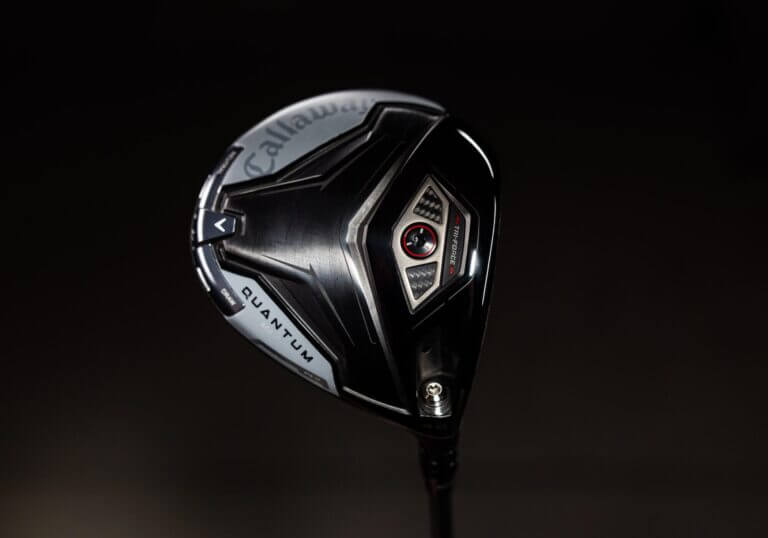
One question I’ve had on my mind about high MOI drivers is whether they help the golfers who need them more than they help the golfers who don’t.
On paper, the logic is simple to me. The golfer who needs forgiveness is the one who can’t find the center of the face consistently, the one who misses toward the heel or toe a lot. A head that holds ball speed on those strikes should do the most good for that player.
I dug into our data, 99 testers across seven years of MyGolfSpy driver testing, to find out. Here’s what I found.
The short version: the golfers who mishit the most did not gain more from forgiving heads. What forgiving heads do is different and it applies to almost everyone.
How we measured forgiveness
There’s a catch you should know about up front. We don’t have measured MOI for these heads. It isn’t in our database and it isn’t in our club configurations. So instead of relying on a spec sheet, we measured forgiveness from the data itself. We looked at how much ball speed each head keeps across typical off-center strikes.
The score holds up. It repeats for the same model from one year to the next (a correlation of 0.77 across 37 models which is strong) and it agrees with what you’d expect from the names. MAX heads and 10K-class heads both score well above average.
Think of it as a performance-based stand-in for MOI, not MOI itself. For the comparisons below, I took each tester’s most forgiving quarter of heads and compared them with their least forgiving quarter.
What forgiving heads do
Forgiving heads trade a little center-strike speed for more speed on bad hits. Average ball speed doesn’t change. What changes is how tightly your carry distances group.
| Outcome (most vs. least forgiving heads) | Difference | In plain terms |
|---|---|---|
| Ball speed, dead-center hits | −0.56 mph | Slightly slower |
| Ball speed, big mishits (20 mm+ off center) | +0.73 mph | Faster |
| Ball speed, overall average | −0.05 mph | No real change |
| Spin | +84 rpm | A bit more |
| Carry | −0.72 yd | A bit shorter |
| Carry spread | 0.47 yd, about 6% tighter | Shots land closer together |
| Sideways spread | −0.20 yd | Too small to call |
The payoff is the carry spread. Your shots land about six percent closer together which is what most golfers mean when they say a driver feels reliable. The cost is very small, about 0.7 yards of carry and a bit more spin.
One thing the data does not show is straighter drives.
The offline spread result crosses zero so the data doesn’t necessarily show the forgiving heads keep the ball more on line.
The test: Do inconsistent golfers gain more?
They don’t.
To test the assumption directly, I split testers by how often they miss the center of the face. The least consistent quarter miss by 20 mm (.8 of an inch) on more on 32 percent of their shots. For the most consistent quarter, that number is six percent.
If forgiveness helped bad strikers more, that group should gain noticeably more carry from forgiving heads. Their extra gain was just +0.33 yards which is within the noise of the data. In other words, we can’t tell it apart from zero. The test was sensitive enough to catch a difference as small as about a third of a yard so a real effect would have shown up if it were there.
Each big mishit gains about 0.7 mph from a forgiving head but the extra spin eats part of that and the center-strike cost is paid on every swing, even the good ones.
The 10K-class wrinkle
One group of drivers didn’t fit the pattern. The newest ultra-forgiving heads, the eight “10K-class” models from 2024 to 2026, score as the most forgiving in our data. You’d expect them to give up the most distance.
Instead, they carry 0.87 yards farther than the average driver in our tests. As with the other forgiving heads, that gain didn’t depend on how consistently a golfer strikes the ball.
So the small distance cost of forgiveness isn’t gone but it may be shrinking as designs improve.
What this means when you’re shopping for a driver
Stop asking whether you’re bad enough to need a forgiving driver. The better question is what you want from the head.
- If you value predictable yardages, a more forgiving head helps and it helps whether you strike the ball well or not.
- If you want maximum center-strike speed and your carry spread is already tight, you give up very little by choosing a less-forgiving head.
- Keep an eye on high MOI as technology improves the 10K models seem to have shown early signs of preserving distance without sacrificing forgiveness.







Leave A Reply