


I’ve hit a lot of drivers over the years, both through testing and in my own fittings. The more time I spend in a hitting bay, the less interested I am in finding the club that produces one perfect shot.
I want to know what happens across the entire group. How consistent is the contact? Where do the misses go? What changes when I adjust the club? Does the driver still perform when the swing isn’t perfect?
Those questions have also changed what I pay attention to during a fitting. Here are five things I think are worth watching the next time you test a driver.
1. Pay attention to shaft length
The golf equipment industry still can’t seem to agree on the definition of an inch. One manufacturer’s 45.75-inch driver may be another manufacturer’s 46.
That can make a difference when you’re comparing clubs.
A longer shaft can create more clubhead speed and potentially more distance. It can also make it harder to consistently find the center of the face. If you start missing the sweet spot more often, the extra speed doesn’t necessarily help.
A slightly shorter driver may not cost you as much distance as you expect because better contact can make up for some of the lost clubhead speed. You may also end up with a tighter dispersion pattern. If one driver is suddenly longer than everything else in your fitting, check the playing length before assuming the head is responsible for all of it.
2. Adjustable loft changes more than loft
When you change the loft setting on an adjustable driver, you are also changing the face angle.
Adding loft generally closes the face while decreasing loft opens it. Face angle has a significant influence on where the ball starts.
I used to think about an adjustable hosel mostly as a way to dial in launch and spin. Now I also pay close attention to what happens to starting direction.
If a driver is producing the launch conditions you want but the ball is consistently starting somewhere you don’t want it to, the hosel may give you another way to improve the setup. The bottom line here is don’t look at the loft number by itself. Watch what happens to the entire ball flight when you make the adjustment.
3. Not all movable weights do the same thing
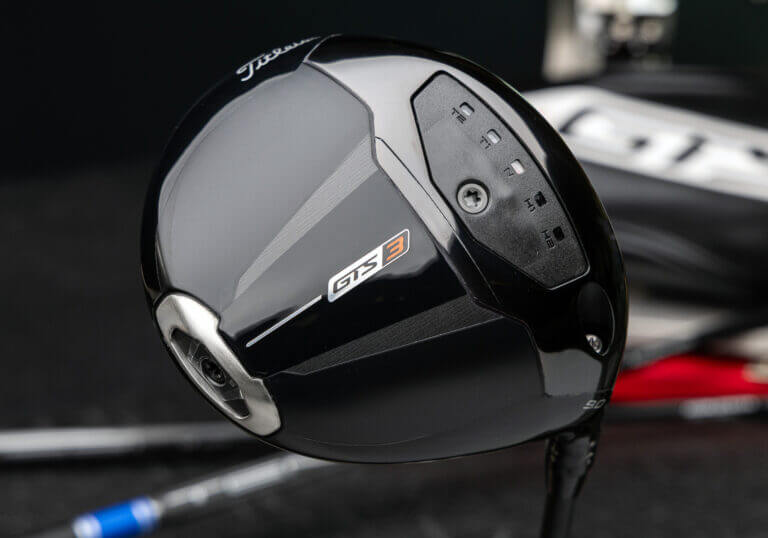
Seeing a weight track on the bottom of a driver doesn’t automatically mean you have a huge amount of adjustability.
What matters is how much mass you are moving and how far you can move it.
A meaningful amount of weight moved across a wider area of the clubhead can have a noticeable effect on center of gravity and ball flight. A lighter weight moving a short distance may produce a much smaller change.
This is something I would experiment with during a fitting rather than assuming the weight settings will do what you expect. Move the weight. Hit some shots. Look at the pattern.
4. Give the driver you don’t like a chance
Golfers tell us all the time that they can’t hit a club well if they don’t like the way it looks.
Testing has made me question that.
I’ve watched golfers complain about the shape, color or look of a driver at address and then produce some of their best results with it. I’ve also seen the opposite. A driver can look perfect behind the ball and perform poorly for that golfer.
Looks still matter. You have to enjoy the club you’re putting in the bag.
Just don’t eliminate something after two swings because the head shape isn’t your favorite. Give it enough shots to see what the performance looks like first.
5. Don’t let your longest drive win the fitting
One perfect strike can make almost any driver look good.
You hit one 10 yards farther than everything else and suddenly that becomes the club to beat. Meanwhile, the other shots may be going all over the place.
I care much more about what happens across the entire group.
Where did the misses go? How wide was the dispersion? Did ball speed hold up when contact moved away from the center? Was the carry relatively consistent?
Your best swing probably isn’t the one that needs the most help from your equipment. I want to know what the driver does when the strike moves a little high, low, heel or toe. It’s fun to hit long drives but you want to establish a pattern of consistently long and straight drives.
What I’m looking for now
Years of driver testing have made me less interested in finding the setup that can produce one incredible drive and more interested in finding the one that gives me the best collection of shots. I want something I have confidence in, even when I’m not having my best day on the golf course.





Charles Leu
3 weeks ago
Good article with good suggestions for what we should be considering. Personally I opt for tight dispersion over maximum distance. If I can’t be on the correct side of the fairway, then extra distance rarely compensates enough for the distance offline (especially if I’m in the rough).