



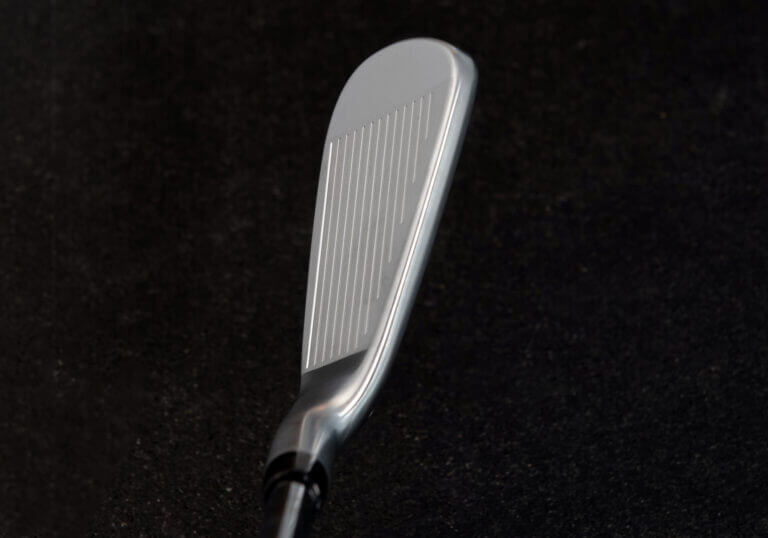
There are a lot of irons in your golf bag. If you can learn to hit those irons with accuracy and consistency, it’s going to lower your scores. Most golfers likely struggle with their irons because they rush their setup, ignore the basic mechanics and don’t understand how the transition from backswing to downswing works. If you want to learn to hit golf irons like a pro, here are five quick fixes.
1. Fix your aim first
One of the most interesting things to ask a golfer on the driving range is, “Where do you think you are aiming?” When I was teaching golf, I was shocked by the difference between where some golfers thought they were aiming and where they were actually aiming.
Inconsistent iron strikes aren’t always caused by swing mechanics. Sometimes, it’s just poor alignment.
When your alignment is off, you may subconsciously adjust the swing path. You can’t fix your ball striking if your alignment is forcing your body into bad habits.
To practice aim try this.
- Place an alignment stick or club along your toe line aimed parallel to your target line.
- Place a second stick a few feet in front of the ball, pointing exactly at your intended target.
- Take your stance and check that your clubface, body lines and visual references align consistently.
- Record your swing from down the line to verify.

2. Build a setup you can count on
Amateurs often find the setup one of the most boring parts of the game to work on. Put your feet on the ground, grip the club and go for it, right?
Wrong.
Professionals know a reliable setup lays the foundation for solid and consistent contact. They build their setup around the ball and club they are using and ensure proper distance from the ball, correct posture and alignment.
If you want to work on your setup, start here.
- Club first, then feet: Always place the clubface behind the ball before you position your feet. Aim the clubface at your target, then settle your grip and stance.
- Ball position: For mid-irons (6–8 ), position the ball just forward of center. For short irons (9-iron, wedges), center the ball more.
- Posture Check: Soften your knees slightly, hinge from the hips (imagine you are going to sit on a stool), and keep your spine relatively straight. Avoid hunching or locking your knees.

3. Get your weight moving sooner
Shifting your weight correctly can help ensure ball-first contact. Many amateurs hang back on their trail foot which can cause fat or thin shots. Professionals move the weight from their trail side to their lead side early on the downswing. In addition, most professionals will make less of a weight shift when hitting with irons than they do when swinging a driver.
- Start with more pressure on the lead foot: Put about 60-70 percent of your weight on the lead foot at the address. That will make it easier to get back to that position through impact.
- Load inside the trail foot: The hips must rotate without swaying or sliding as part of the backswing. Feeling like you turn and feel that pressure on the inside of the trail foot will keep the hip from swaying.
- Transition weight sooner: Watch some slow-motion videos of professional golfers striking irons. You’ll see the lower body starts transitioning weight back toward the lead side before the backswing is fully complete.
4. Position the lead shoulder
The lead shoulder movement on the downswing can greatly improve your ability to compress a golf ball. Better players move the lead shoulder slightly downward and forward as the first move from the top.
When the club gets to about hip height on the downswing, the shoulder starts to move back up.
High-handicappers and others struggling with inconsistent contact often pull the lead shoulder up and across too early in the swing. If you want that “trapped” feeling at impact, try this.
- Lead shoulder “down, then up”: After you transition from the backswing into the downswing, your lead shoulder should feel like it works diagonally “down and toward the target.”
- Avoid “Early Raise”: If your lead shoulder pops up too soon, you’ll likely stand up, flip the club or hit the ball thin.
- Finish with shoulder high: As the club approaches impact, the shoulder then rotates upward, allowing you to maintain shaft lean and a downward strike.
5. Finish balanced and forward
The finish is more than just looking good. It’s a checkpoint to ensure your weight is fully on your lead side. With a fully balanced finish, you’ll prevent a deceleration through impact.
When you practice, focus on holding your finish for at least five seconds. You should be able to do it each time.
Final thoughts
Hitting your golf irons like the pros takes some time and dedication. Make sure you practice purposefully and realize the level of detail that goes into striking the golf ball in the center of the face. Don’t ignore the basics like setup, ball placement, and holding your finish position.





Darren Jeffries
2 years ago
Very informative article 👌