




If your 7-iron goes 150 yards and your 8-iron goes 140, what do you do when you’ve got 145 to the pin? Jump on an 8 and risk coming up short? Smooth a 7 and hope it doesn’t fly? There are lots of ways to play golf, but being able to control iron distance is a sign of being a great player. If you want to be the one in control, here are some practical ways to take yardage off without reinventing your swing.
Step 1: Know your baseline (Carry, not total)
Before you start to dial in your ability to take distance off a golf shot, make sure you lock in your carry numbers. You’ll need these to help you determine if the changes you are making are actually helping to take distance off.
Get your baseline by:
- Hitting five solid shots per club, toss outliers, and average the carry.
- Write them down. Carry is stable; rollout changes with turf and wind.
- Now you know your true carry numbers and can base everything else on this.
Step 2: Four reliable yardage trims (Without changing your swing)
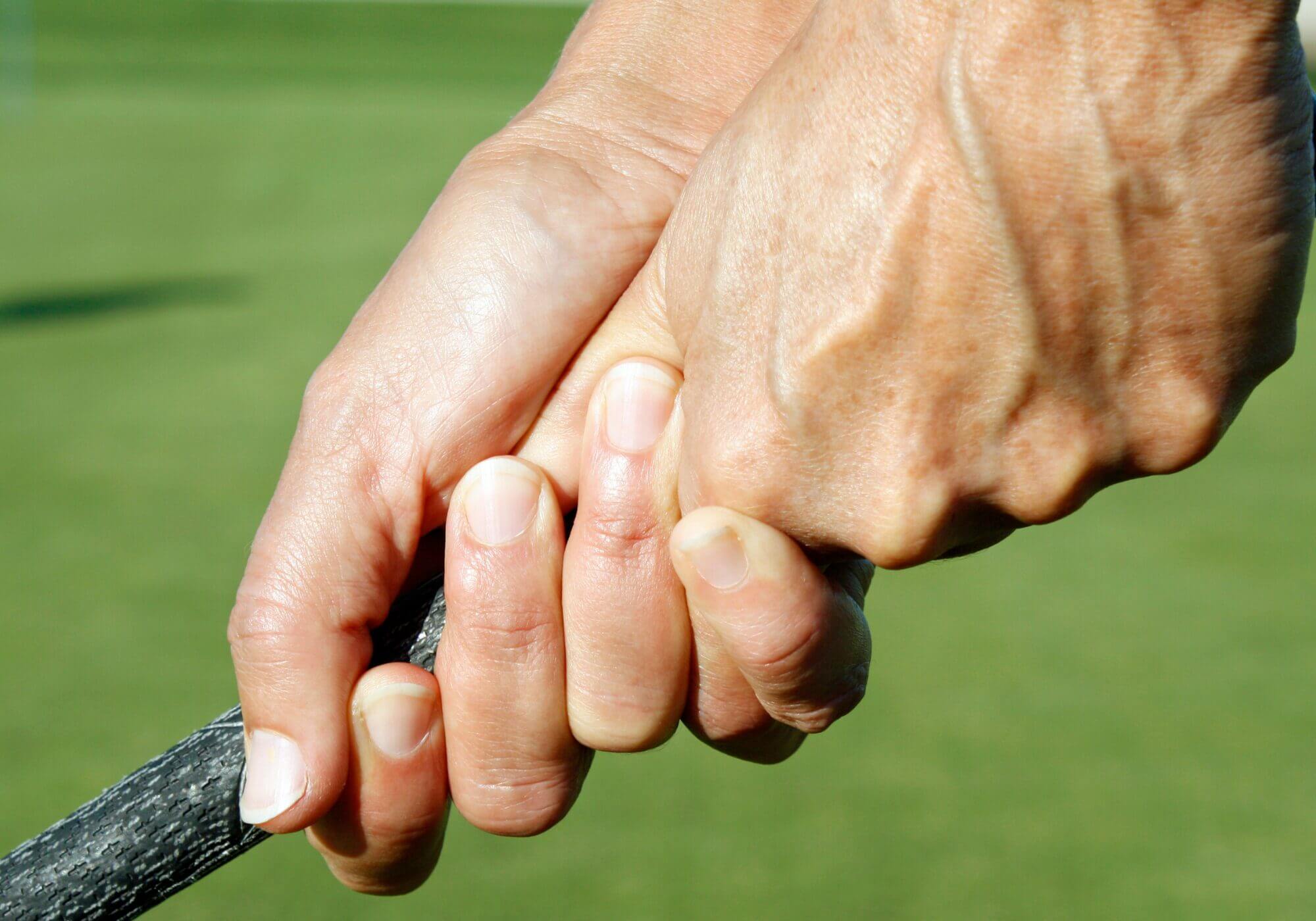
1) Grip down closer to the shaft (Easy 5–8 yards off)
Gripping down on the club shortens the effective club length. It should trim a little turn and speed. When you grip the club, you’ll also have to stand a bit closer. Most golfers see five to eight yards less carry when they do this with a wedge or short iron. The effects may be harder to see in long irons because of the accuracy of the strike.
2) Add loft (Open the face a consistent amount)
If you set the face of your iron slightly open before you grip it, you will add dynamic loft and spin. This will lower ball speed at impact and create higher launch and a softer landing. Keep your swing normal.
You may notice 10 to 25 yards less carry with wedges and a little less with mid irons. The key is to play around with this on the range because it typically only takes very subtle face adjustments to see big changes in distance.
3) Open face and swing a little left
If you have an open face and swing a little left of the target, it creates a less efficient impact position. You’ll feel like it’s more of a glancing than a pure ball strike. This lower speed adds spin, but you won’t have to swing slower.
The difficult part with this will be developing consistency in the feel, but sometimes the mental concept of swinging with an open face and going a little left can be enough to help you decrease distance. If you want the ball to stop quickly, this is a good way to get it done.

4) True three-quarter backswing
Many players say their “shorter” swing goes the same distance. That happens when they speed up the hit, deloft the face or strike it cleaner. For many players, anything in the swing that happens after that three-quarter point isn’t great so these shots are actually more efficient.
Try to use a clear checkpoint (e.g., lead arm parallel), then make a smooth swing. The typical result is
six to10 yards off if you keep your normal tempo. If it still flies full, pair it with gripping down or a touch of added loft to guarantee a reduction.
Range training that transfers to the course
The real key to distance control on the golf course is learning how to practice it and then transferring it to the golf course. One key step is to avoid block practice. Stop hitting 50 balls to one yardage. Train like you would play.
This is a range drill I’ve used for years. I usually use a rangefinder to ensure I have the correct distances. If you’re competitive or like to track your progress, award yourself a point each time you get your shot within a few yards of the intended target.
Setup:
- Choose one wedge or short iron.
- Pick three or four targets (e.g., 80, 100, 120 yards).
- Use range markers or a launch monitor if possible.
Round 1 – Baseline
- Hit one stock shot to each target.
- Record the carry distance for reference.
Round 2 – Grip down
- Hit the same shots again, this time gripping down to the metal.
- Note the average yardage loss (usually five to eight yards).
Round 3 – Open the face
- Repeat the ladder with the face slightly open.
- Notice how much carry you lose and how spin/height change.
Round 4 – Three-quarter swing
- Use the same targets with a shorter backswing (lead arm parallel).
- Record the difference compared to your stock swing.
The key is to change only one variable at a time, whether that’s gripping down, opening the face or shortening the backswing. Pay attention to which adjustment gives you the best mix of success, repeatability and comfort. Stick with what feels most reliable and you should be able to access more of those in between yardages on the course.
Troubleshooting
If you’re trying these things but still struggling to take distance off the shots, here are some ways to troubleshoot the issue:
- My three-quarter swing still flies full distance: You likely sped up or delofted at impact. Keep tempo smooth or pair with gripping down.
- Ball curved too much when I opened the face: Swing slightly more left or open the face less.
- I came up way short: Thin strikes with added loft kill carry. Focus on center contact and consistent setup.
- Chunking shots: Preset 60/40 weight forward and brush the turf ahead of the ball.
- Distance changes are inconsistent: Don’t mix variables. Practice one adjustment at a time.
- I lose confidence on the course: Practice with random targets to build trust under pressure.
Final thoughts
Distance control isn’t something you master overnight. It takes focused practice and a willingness to experiment. When I’m not playing much golf, it’s one of the first skills I notice starts to go. It’s a bit of feel mixed with the adjustment that will help you get really good at distance control.
Spend time learning how each adjustment changes your numbers and you’ll build confidence in every “in-between” yardage. It’s work worth doing.








Robin
1 year ago
I have such bad hands, I can’t go too the driving range and hit a bucket of balls.
I only hit wiffel balls or rubber ones in my net at home.
All thoughts I hit my irons well i ll never will be as good as I like…
I sure gave up alot of my body when I joined the marines.