




Hybrid clubs are meant to simplify the top end of the bag. Sometimes that’s not the case. Many golfers buy a hybrid with the same number as the iron they want to replace and assume the problem is solved.
I ran into this myself. I knew I needed to take a 4-iron out of the bag. It was inconsistent and punished slight misses. I replaced it with a 4-hybrid but the hybrid was too strong. It flew too far and created a new gap in my bag.
If you’ve struggled with the same thing, this information may help to clear things up and at least give you a starting point for replacing a fairway wood or an iron with a hybrid.
Continue Your Instruction Journey
Our instruction content combines insights from equipment testing, data analysis, and golf experts to help golfers improve with evidence-based advice. You’ve fixed one part of your game. These guides help you take the next step.
🎯 What tees should I play? Use this chart!
🛑 How should the driver sit at address? Many golfers still get this wrong!
🏌️ If you miss the center of the face, try THESE irons.
How hybrids replace irons
Iron numbers are not consistent across different iron sets. A 5-iron in a players set and a 5-iron in a game-improvement set can have noticeably different lofts and produce very different distances.
Because of that, choosing a hybrid based only on the number stamped on the club can lead to overlap or new gaps at the top of the bag. Loft gives you a better reference point than iron number, especially when replacing long irons.
The table below uses general loft ranges to show which hybrid lofts tend to fit best when replacing different types of irons. This is meant to provide direction, not an exact replacement.
Hybrids and irons are built differently so even when lofts look similar, ball flight and distance can still vary.
Hybrid replacement guide based on iron loft
| If your longest iron is roughly | That iron is often labeled | Hybrid loft that commonly fits |
|---|---|---|
| 19°–22° | 3-iron to strong 5-iron | 19° hybrid (often labeled 3H) |
| 22°–25° | 4-iron to strong 6-iron | 22° hybrid (often labeled 4H) |
| 25°–28° | 5-iron to strong 7-iron | 25–26° hybrid (often labeled 5H) |
| 28°–31° | 6-iron to strong 8-iron | 28–30° hybrid (often labeled 6H) |
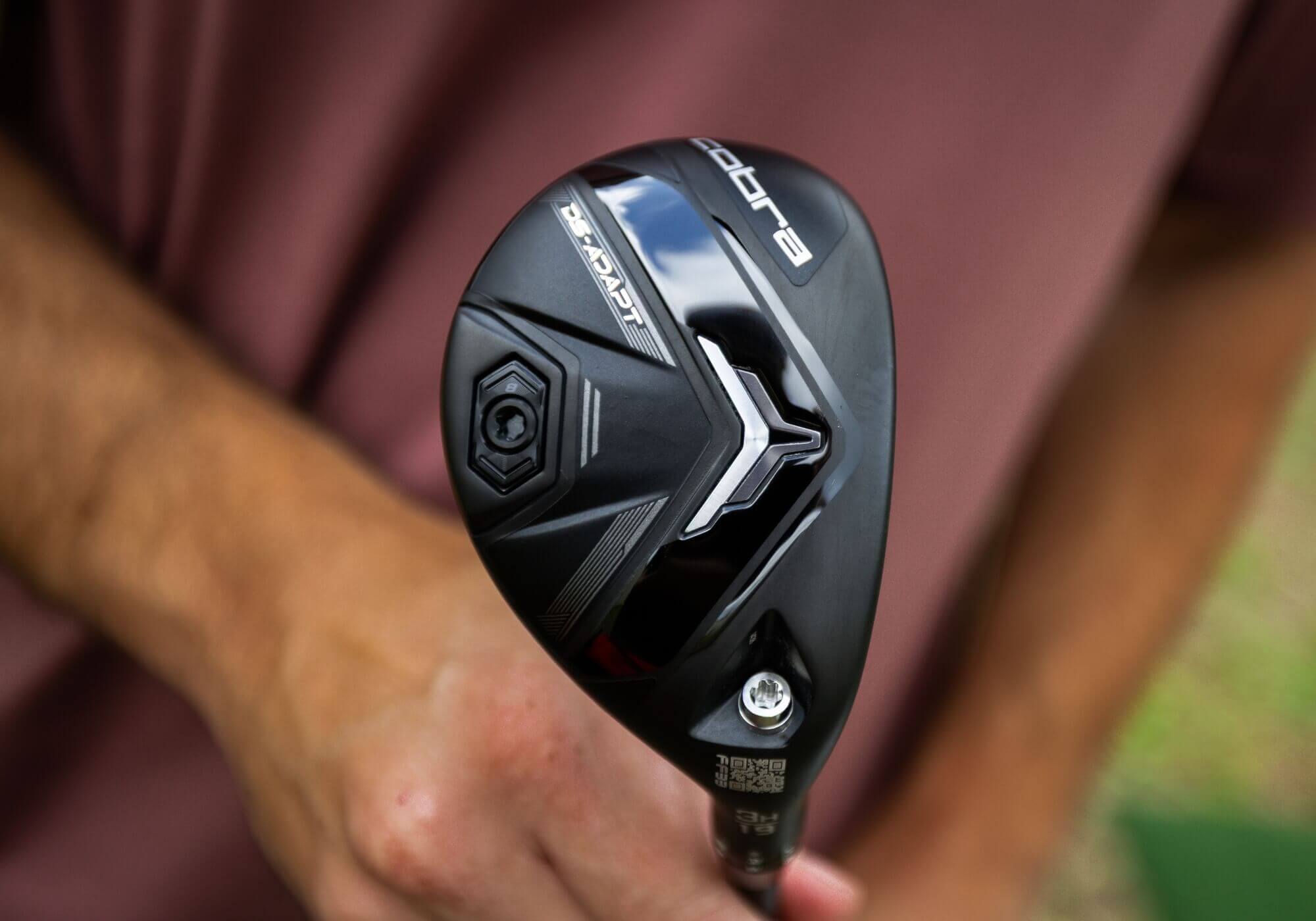
How hybrids overlap with fairway woods
While hybrids are designed primarily to replace irons, they often overlap with fairway woods at similar lofts. This overlap gives you options if a fairway wood is not best for your game.
Fairway woods typically have larger heads, longer shafts and a lower, deeper center of gravity. These design traits generally help fairway woods launch higher and spin more which often results in a steeper landing angle and softer stopping behavior. Hybrids are usually built more like irons and while they can carry a similar distance, their flight often stays a bit lower and some experience more rollout.
Hybrid and Fairway Wood Overlap Guide
| Hybrid Loft (Typical) | Closest Fairway Wood Overlap |
|---|---|
| 17° | 5-wood, can approach 4-wood for some players |
| 19° | Strong 5-wood |
| 22° | 7-wood |
| 25–26° | 9-wood |
Which one is better for your game?
Choose a fairway wood if you struggle to launch the ball high enough, need softer landings into greens or hit the club mostly from the fairway or tee.
Choose a hybrid if you play from rough or uneven lies often, prefer a more iron-like look or want a more penetrating flight. One thing to keep in mind is that scoring better comes down to choosing a club with the most playable miss, not necessarily the one that produces the cleanest gapping.
Here you go:
Why two clubs with the same loft can play very differently
Loft is the best starting point for finding a hybrid replacement, but it doesn’t tell the whole story. Several design variables affect how a hybrid performs, and understanding them helps explain why a 22-degree hybrid from one brand can play a full club longer or shorter than a 22-degree hybrid from another.
Shaft length. Hybrids are shorter than fairway woods at similar lofts. Less length means less swing speed, which is part of why a 5-wood and a same-loft hybrid don’t always match on carry distance.
Club head weight. Hybrid heads carry more mass than fairway wood heads at similar lofts. Combined with a shorter shaft, this shifts the feel closer to an iron and produces a flatter, more penetrating flight for most players.
Center of gravity. Fairway woods have larger heads with deeper, lower CG positions that promote higher launch and softer landings. Hybrid heads are more compact with CG closer to the face, which produces more rollout. Neither is better they serve different purposes.
Hosel and shaft specs. Most fairway woods use a .335 tip diameter. Most hybrids use .370. This matters if you’re reshafting or building a custom setup, and it affects which shaft options are available to you.
Adjustability. Not all hybrids offer loft adjustment, and the ones that do don’t all move the same way. If you’re between lofts or chasing a specific gap, an adjustable hosel gives you more room to dial things in before committing.
The practical takeaway: use the loft tables as a starting range, then confirm on a launch monitor. Carry distance and spin rate will tell you more about real-world fit than loft alone.
How to apply this to your bag
Use loft to narrow your options. Then confirm performance.
- Identify the iron or fairway wood you want to replace
- Check its loft
- Use the tables to find a logical hybrid range
- Test clubs on a launch monitor if possible
- Look at carry distance, launch and spin rather than just total distance
- Play around with adjustability on a hybrid to fine-tune performance
Every club in your bag has a job. You don’t want to replace yardage so much as you need to replace the performance you’re missing.





aerospace_ray
9 months ago
MGS Donor. Appreciate quality articles, testing and reviews. I would suggest an article/series is needed.
Further explaining the club head variables such as hosel ID of most woods (.335) versus most hybrids (.370) and the correlation to ball flight/launch might benefit many golf consumers.
Other variables may include club head weight (generally heavier/hybrid). Length most often is shorter with hybrids vs woods and this can contribute to distance gaps.
Many other variables such as club head cg, hosel off-set, loft, and shaft design are in play. So it’s easy for a golfer to question or get confused with their decisions for which to invest in.
Think it’s way past time for a good series on what specs, characteristics the consumer needs to be aware of while considering one (hybrid/fairway wood) versus another.
Ray
9 months ago
This ^^^