


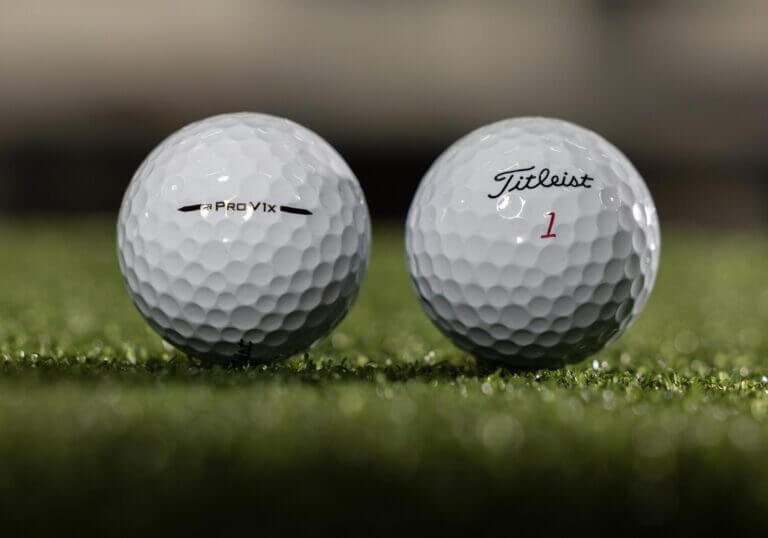
I’ve always found real-world golf situations and case studies interesting. Generic advice can be helpful but when you look at one golfer’s specific priorities, you often realize you have a lot more in common with some players than others.
That’s the idea behind this series. We’ll take situations from real golfers, see what other golfers recommend and then I’ll give you my take based on testing, data and what I’ve seen on the course.
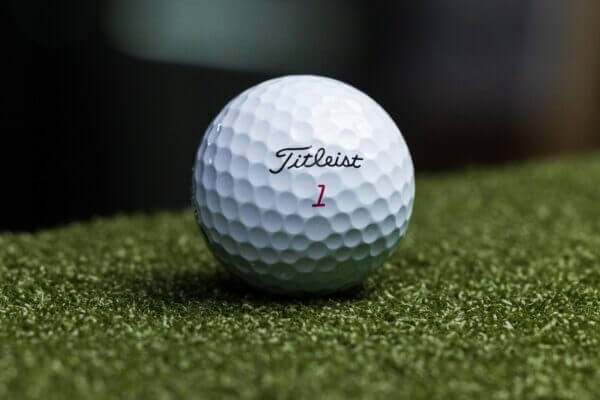
For the first one, we have a longtime Pro V1x player who is getting older, dealing with arthritis in his hands and starting to notice a loss of driver distance.
The situation
This golfer has played Titleist Pro V1x golf balls for 25 years. As he’s gotten older, arthritis in his hands has contributed to a noticeable loss of distance with the driver.
He isn’t overly concerned about losing iron distance. If he needs to take an extra club, he can live with that. His bigger concern is maintaining the spin and control he’s accustomed to on approach shots and around the green.
He was considering moving to a much softer, lower-compression ball, specifically the Callaway Supersoft or Wilson DUO Soft. The question was whether one of those could help him regain some driver distance without giving up too much short-game performance.
It’s a good question because the natural thought is that a golfer losing speed should simply move to a softer golf ball. It’s not that simple.
What the Forum had to say
The question went to the MyGolfSpy Forum first and there was a pretty clear theme in the responses. Most golfers thought moving directly from a Pro V1x to a Supersoft or DUO Soft was too big of a jump.
Instead, several suggested staying closer to the tour-ball category while moving toward something a little softer or lower spinning. Pro V1 was an obvious recommendation for someone loyal to Titleist. Maxfli Tour and Tour S came up, along with Bridgestone TOUR B RX and RXS, Vice Pro Air, TaylorMade Tour Response and Srixon Q-STAR Tour.
I think the Forum was on the right track. Wanting a golf ball that feels softer is different from assuming the lowest-compression ball will automatically give you the most distance. Compression is only part of the equation. Spin, launch and trajectory matter, too.
What I recommended
This golfer also reached out to me before our newest golf ball test results were available. My first thought was that I wouldn’t chase the lowest compression number hoping it would solve the driver-distance problem.
I suggested two balls to try: the Maxfli Tour X and Bridgestone TOUR B RXS. Those recommendations came partly from the testing I had seen and partly from my own experience with both.
Maxfli Tour X
The Tour X impressed me with its combination of distance and greenside control. It’s not a particularly soft golf ball so if reducing impact feel because of the arthritis is the main priority, it may not be the perfect fit.
However, if he’s trying to protect greenside performance while getting everything he can from the driver, I’d still want him to test it. The Tour X is a good example of why I wouldn’t make compression the starting point for this decision.
Bridgestone TOUR B RXS
The TOUR B RXS may be the better overall fit for what this golfer is asking for.
I’ve spent time with the RXS and liked the combination of softer feel, distance and control. It gives him the softer feel he’s looking for without feeling like such a dramatic departure from the premium ball he has played for years.
If the arthritis is a significant part of this decision, the RXS is probably where I’d start.
So what should he play?
I’d start with the Bridgestone TOUR B RXS if softer feel is a major priority and I’d test the Maxfli Tour X if the firmer feel doesn’t bother him. I also think the Forum made a good point with the standard Pro V1. Sometimes the answer isn’t moving from one end of the golf ball spectrum to the other. It may simply be moving one step away from what you already play.
The bigger lesson from this case is that “I’m losing speed so I need a softer golf ball” is too simple an equation. Softer feel can absolutely be part of the decision, especially with arthritis, but I’d still choose the golf ball that gives you the best combination of distance, flight and greenside control rather than simply reaching for the lowest compression number on the shelf.
Use the MyGolfSpy Golf Ball Selector to compare 48 golf balls using data from our 2026 robot test. Filter by swing speed and see how each ball performs from driver to wedge to find the best fit for your game.






Mo
2 months ago
Hate to be the bearer of bad tidings but a perfectly square face at impact does not guarantee a solid straight shot, because if you cut across the ball to any degree it’s a fade or a slice, and if you are too inside out you’re going to get a smother or a hook.