




Golf commentators don’t just describe golf; sometimes, they teach it. They talk about what a player “did with the hands,” how a swing “has changed,” why a chip “checked perfectly” or how the “bounce saved him there.”
And here’s the problem no one talks about.
A surprising amount of that commentary is flat-out wrong.
I love watching a commentator confidently predict what a Tour player is about to do, only for the exact opposite to happen. They’ll say things like, “He’ll throw the bounce under this” and then the player leans the shaft, traps it and rips a spinning chip with zero added bounce.
Does this make commentators bad? No. Their job is to fill the air, tell stories and give casual viewers a sense of what’s happening.
But if you are taking every swing comment as instruction?
It might be the reason your chipping is inconsistent, chunky, thin or completely unpredictable.
The problem: You’re copying Tour feels and TV narratives, not reality
This recent Alex Elliott Golf video featuring Justin Rose’s short-game coach, James Ridyard, is the perfect example.
Ridyard points out a few hard truths.
- People think shaft lean is bad around the greens but every elite chipper he works with delivers plenty of shaft lean, often 10 to 15 degrees on a stock shot.
- Tour players feel like they’re “taking shaft lean off” or “using the bounce more” but when you actually measure them, they still have forward lean and a fairly steep attack.
- Average golfers hear the commentary and copy the feel instead of the actual movement, so they end up
- adding loft
- exposing way too much bounce
- changing their low point every swing
In the video, Elliott even admits he spent years trying to “get rid of shaft lean” because of what he’d seen and heard watching Tour coverage and YouTube. The more he chased that soft, floaty, “use the bounce” feel, the worse his strike and spin got.
If your mental picture of a good chip is built on half-true commentary and tour player feel, no amount of practice will give you a consistent strike.
Tips you can steal from this short-game lesson
Here are the key ideas from Ridyard’s lesson that you can actually copy in your own chipping.
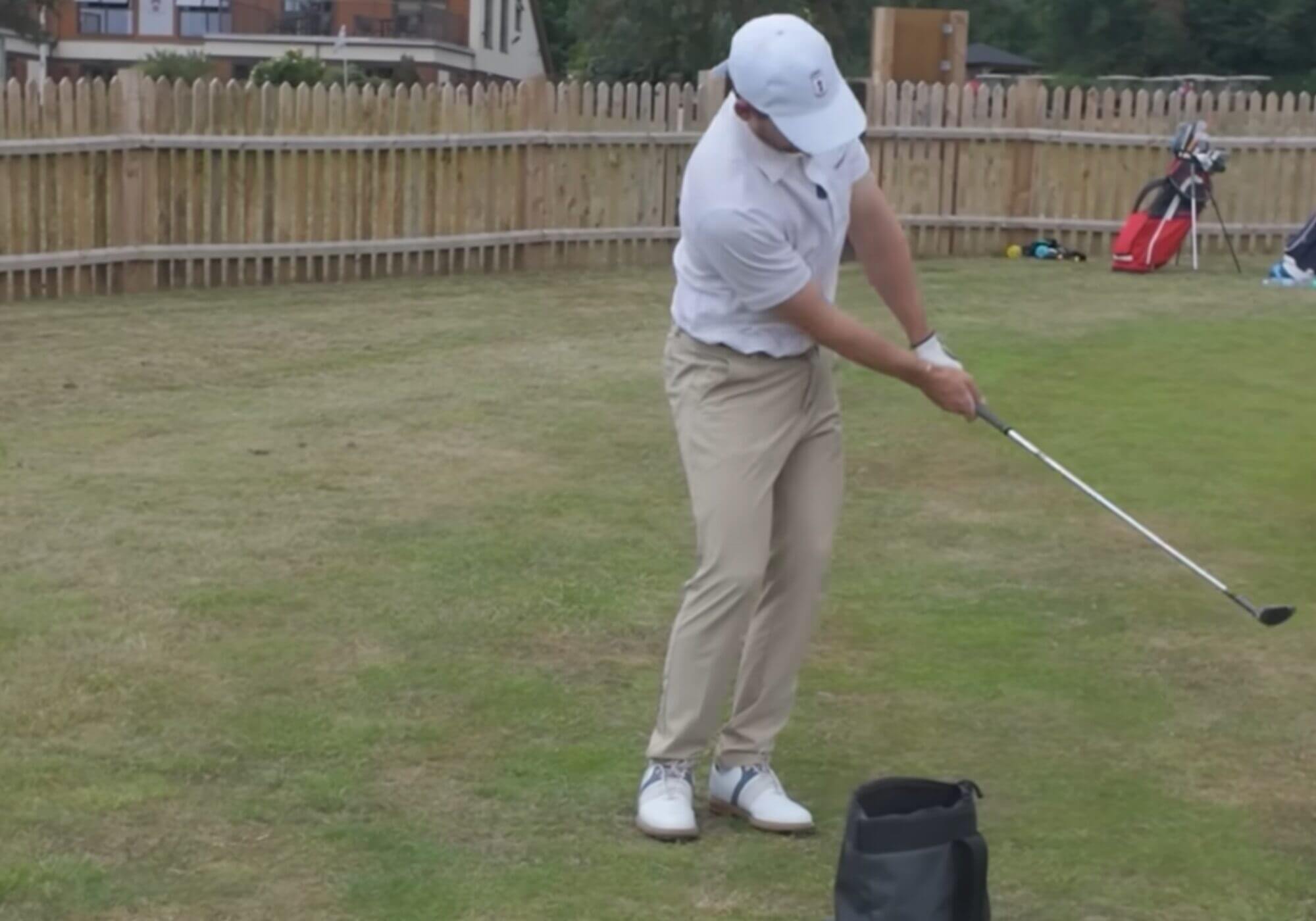
1. Stop fighting shaft lean (You actually need some)
Ridyard says every good chipper he sees delivers some shaft lean. You’ll see five degrees on the low end, 10 degrees normal and up to 15 on the high side. A stock, crisp chip with spin is almost never hit with the shaft perfectly vertical.
What to do:
- At address, let the butt of the club point somewhere between your belt buckle and your lead hip.
- Feel like your hands are slightly ahead of the ball, not stacked directly on top of it.
- Keep that feel through impact instead of trying to “release the club early” to add bounce.
You’re not trying to jab the shaft forward aggressively. Just remember that a forward lean is part of a solid, repeatable strike.
2. Stand taller and closer to the ball
One big change Ridyard makes with Elliott is the setup. He has him stand taller, move closer to the ball and let the shaft sit more upright. If you struggle with inconsistent low point (thin and fat shots), this setup could help you get more consistent.
Why it works:
- A taller, closer setup makes the club work more vertically, not way around your body.
- That steeper, more centered motion makes it easier to hit the ball first and avoid the club skimming too much into the ground early.
- It also helps control the low point and stops those drop-kick, behind-the-ball strikes.
3. Shift a little more weight forward (But don’t go crazy)
In the video, Ridyard doesn’t ask for 90 percent of the weight forward — he starts with something very normal and repeatable:
- 60/40 on the front foot as a baseline.
That small shift does a lot:
- It helps move your low point in front of the ball.
- It supports the forward shaft lean you just built in.
- It encourages that five- to 10-degree attack angle window most good chippers live in.
Try this and make sure you keep your chest slightly forward of the ball, not hanging back. You’ll maintain that extra pressure on the front foot through the ball and have confidence that these mechanics (combined with club loft) will get the ball in the air.
Final thoughts
If you’ve been quietly trying to “copy the bounce move” you heard about on TV, this lesson flips that concept:
- More shaft lean is not your enemy.
- A taller, closer setup makes crisp contact easier.
- A square face and a bit of forward weight give you spin and control.
It’s hard to argue with the technique a player like Justin Rose is using. Most importantly, have a little more awareness about what is being said while you watch golf. Some of it is used to enhance the broadcast but directly applying it to your golf game may be a mistake.

Google is changing how content is shown. Add MyGolfSpy as your preferred source to ensure you don’t miss the latest gear news, instructional tips and buying guides.









RJM Consulting
10 months ago
Ridyard gives The game away when he says it’s not the bounce. It’s the control of the bottom of the swing. Yes, of course! If you are practicing 5 days a week and your professional golfer who has a terrific control of the bottom of their swing then taking shaft. Lean forward probably does increase ball club face contact and adds spin. But, for your recreational golfer, they are ignoring the need for a margin of error. This is a terrible video for the recreational golfer. Following this advice is a highway to the chip yips.