


Welcome back to this MyGolfSpy series where I take a hard look at the golf clichés you have heard a thousand times and figure out if they hold up. The goal isn’t simply to label each one as true or false. It’s to figure out what has been oversimplified and get back to the lesson golfers were supposed to take from the advice.
Next up: “Practice like you play.”
What does “practice like you play” mean?
“Practice like you play” sounds like pretty straightforward advice. If you want your practice to transfer to the golf course, it makes sense that your practice should look at least a little like real golf. Pick a target, go through your pre-shot routine and give yourself a beat or two between shots instead of just firing away.
I agree with all of that. Where I think this gets misunderstood is when golfers take it to mean you should constantly switch clubs and try to simulate a round every time you go to the range.
If I’m trying to get better at hitting a 5-wood, I don’t want to hit a wedge, then one 5-wood, then a 7-iron and wait another five or six swings before I get the 5-wood back in my hands. I can’t really get anything figured out that way. Sometimes I need to keep the 5-wood in my hands for a bit.
There are different types of golf practice
Not every practice session has to look the same and not every type of practice is trying to accomplish the same thing.
There are times when you are trying to learn something. Maybe you’re working on contact with a 5-wood, trying to stop pulling your short irons or making a swing change. In those situations, repetition can be helpful because you need enough swings to see what is happening, make an adjustment and then see if that adjustment worked.
Keeping the same club in your hands doesn’t mean you have to start firing golf balls as quickly as you can. You can hit 15 5-woods and still pick a target, go through your pre-shot routine, step away between shots and pay attention to what the ball did before you hit another one.
There’s a big difference between hitting 15 5-woods with a purpose and hitting 15 5-woods as fast as you can.

Beating balls is probably the bigger problem
I don’t think repetitive practice is the problem. Mindless practice is.
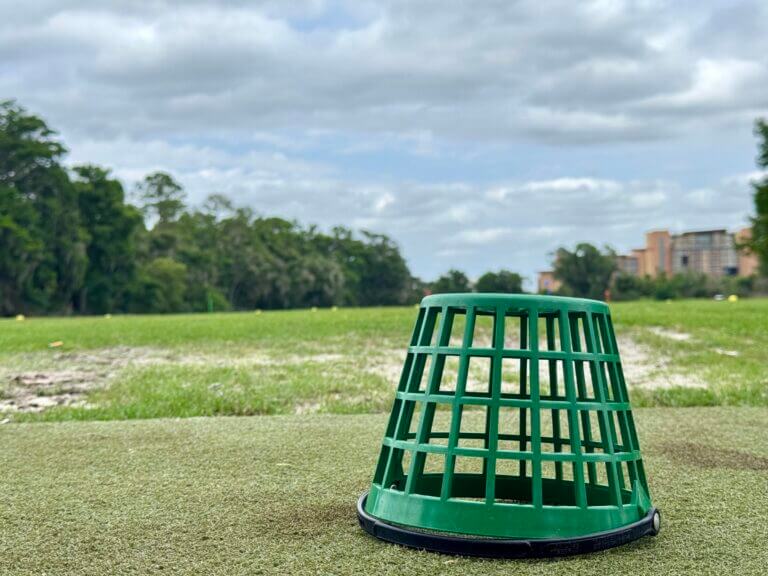
If you go to the range, dump out a bucket and start hitting without much of a plan. You may hit a few good shots and feel like you got some work in but if there was no target, no routine and no real thought behind what you were trying to accomplish, it becomes pretty easy to just beat balls.
This is where I think “practice like you play” has the most value. On the golf course, every shot requires at least some thought. You choose a club, pick a target, go through some version of a pre-shot routine and then hit the shot. You also have a little time between swings to process what happened.
Bringing some of that same intention into your practice makes sense even if you are hitting the same club for 15 or 20 minutes.
A better way to practice like you play
Instead of trying to perfectly recreate the golf course every time you practice, I’d take a few parts of “practice like you play” and use them almost every time you go to the range.
- Pick a target.
- Use your pre-shot routine.
- Give yourself a second between shots.
- Pay attention to what happened.
- Know what you are trying to work on before you start.
From there, decide what kind of practice you need that day.
Final thoughts
So, is “practice like you play” true? Yes, but I wouldn’t take it too literally.
There are different types of golf practice and they all have a place. If you can get away from just beating balls and start using those different types of practice over time, it will help your game.
Take a look at the other golf clichés we’ve tackled in this series:







Leave A Reply