


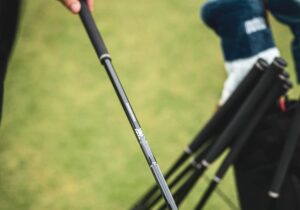
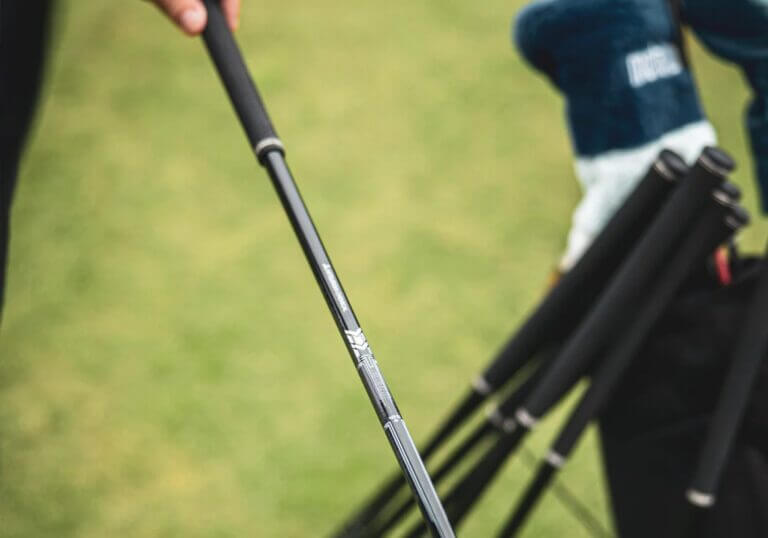
When I booked my iron fitting, I walked in with a completely closed mind. I’m a lower-handicap golfer with mid to high iron speed. I rely on ball flight control, not added height, and I’ve always shaped shots without needing extra launch help. In my mind, graphite shafts weren’t even part of the conversation.
Steel was for golfers who wanted precision. Graphite was for golfers who needed help getting the ball in the air.
That was the rulebook I’d been carrying around for years.

The rulebook we all grew up with
For decades, the steel-versus-graphite decision felt straightforward. Steel was heavier, lower-launching and ideal for players who wanted to work the ball or keep spin and trajectory under control. Graphite was generally positioned as lighter, higher-launching and better suited to players who needed help with speed, which reinforced the stereotype.
That mindset and understanding was based on real limitations with early graphite. Those shafts often had higher torque, thinner walls, limited weight choices and a softer feel although some models performed better than others, depending on the manufacturer and construction. If you had speed and you cared about shaping shots, steel was seen as the responsible choice.
And because that message was repeated for so long, many of us (myself included) never revisited it, even as the technology outgrew the stereotype.
The first big shift: Steelfiber rewrites the story
Graphite’s reputation started to change when Aerotech released Steelfiber. These shafts wrapped thousands of steel fiber strands around a graphite core, creating a profile that felt like steel through the ball but still offered graphite’s smoothness and vibration control.
SteelFiber wasn’t the first composite iron shaft ever made but it was the first widely adopted by better players because its steel-fiber wrap offered the stability traditional graphite lacked.
For a lot of better players, Steelfiber was the first time a composite shaft didn’t feel loose or vague. It felt structured and predictable. It proved graphite didn’t have to be whippy or built strictly for golfers who struggled with speed.
That opened the door for the next generation of composite designs.

Modern graphite isn’t the graphite you think it is
The graphite iron shafts produced today look nothing like the versions that shaped the old stereotypes. The biggest change is that their performance now mirrors, and in some cases exceeds, what better players expect from steel.
For starters, the weight range is no longer limited to ultra-light options. Today’s graphite/composite shafts are available in weights ranging from lightweight to steel-like 80– to 110-gram profiles, which were rare or inconsistent in earlier generations. Engineers have also gained the ability to fine-tune stiffness in very specific sections of the shaft which means torque, tip stability and overall bend profile aren’t just “similar to steel,” they’re intentionally engineered to behave that way.
Perhaps the most noticeable difference is consistency. Composite layups allow designers to control wall thickness, add reinforcement or soften transition zones in ways steel can’t. The result is often a tighter spin window and more predictable peak height. This doesn’t mean every graphite shaft is automatically more consistent but high-quality composite designs allow for precision tuning that steel can’t replicate using traditional manufacturing methods.
And then there’s feel. Graphite’s vibration control was once seen as a benefit for golfers with joint issues but the smoother impact profile matters for anyone who practices a lot. You get the sensation of a clean strike without the hand sting or the fatigue that can build up with heavy steel.
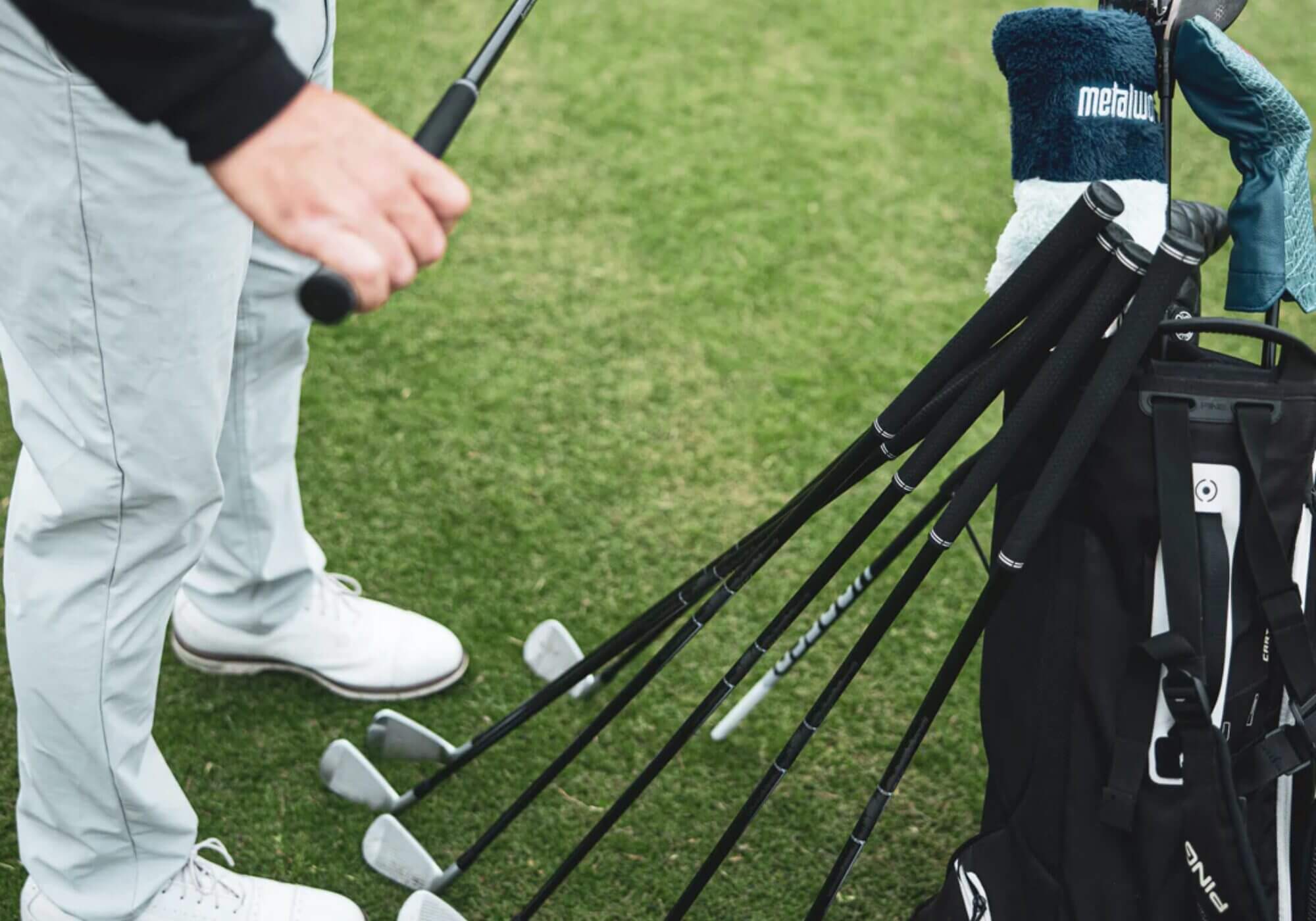
Why MMT works: A next-generation composite built for control
If Steelfiber was the first step in bringing better players into graphite, Mitsubishi’s MMT series is the next evolution. Instead of wrapping steel fibers on the outside, MMT embeds a 304 stainless steel mesh inside the graphite layup, specifically in the tip section where stability matters most.
The mesh gives the tip a denser, more controlled feel, keeping the clubface stable through impact. You get the crispness and stability you expect from a player’s steel shaft but without sacrificing the smoother feel that graphite naturally delivers.
This matters even more in modern iron designs. The Titleist T250, with its forged L-face, Max Impact technology and high-density heel/toe tungsten is built to be fast and stable. MMT pairs with it in a way that feels intentionally engineered.
And the feel is balanced in a way that surprised me. Instead of the disconnected, hollow sensation I expected, the MMT felt solid at impact but still smooth enough to give me feedback without the harshness of some heavier steel profiles.
My fitting: This wasn’t a small difference
I went into the fitting assuming graphite would balloon, lose spin control or feel too soft at the bottom. Instead, the opposite happened.
The launch didn’t get too high—it got more consistent.
The spin didn’t jump around—it tightened.
The face didn’t feel loose—the tip felt more stable and easier to control.
And the biggest test for me, shot shaping, never went away. I could hit the same low flights, high soft landings, controlled fades and small draws with the Titleist T250 without fighting the shaft. If anything, the repeatability made those shots easier to pull off.
Why better players undervalue graphite
If I’m being honest, the only reason I avoided graphite for so long is that I assumed I already knew how it performed. A lot of players do. We decided who should play what back when graphite was fundamentally different than it is now.
Meanwhile, the technology kept evolving.
- Multi-material shafts got more stable.
- Composite profiles started matching steel in weight and feel.
- Dispersion patterns improved.
- Iron heads became more complex and benefited from composite pairings.
Yes, it costs more
Graphite iron builds often add a meaningful amount over steel and that should always be part of the buying conversation. I don’t believe anyone should switch just because the technology has improved.
If the performance gain is real and it makes sense for your game, pay for it.
Graphite isn’t a guaranteed upgrade. It’s a category that deserves to be tested.
Who should be testing graphite right now
You don’t need to be losing speed or battling joint pain to benefit from modern graphite. Suppose you’re a lower-handicap golfer with decent speed who wants more consistency without giving up control, especially in a multi-material or player’s distance head. In that case, it should be part of your fitting.
Today’s composite shafts aren’t designed to replace steel. They’re designed to give skilled golfers another legitimate, high-performance option.
Final thoughts
I walked into my fitting ready to eliminate an entire category of equipment before ever picking it up. And in five swings, I realized how outdated that thinking was. Modern graphite, especially next-generation designs like MMT, doesn’t ask better players to give up control. It gives you a smoother, more consistent way to get it.
If you haven’t hit graphite irons in years, your opinion is probably based on technology that’s long gone. Test the new stuff. Let the data speak. You might be just as surprised as I was.






Dean D
5 months ago
At 66 my mental arithmetic has changed & I don’t like it much. I want my 8 iron to be 150 yards.& don’t want to swing a 7 iron to get that distance. Newer flatter clubs & a graphite shaft should make that a realistic goal. Mentally 125 yard wedge 150 yard 8 iron & 165 yard 7 iron are my long calibrated distances. The driver is still 150-160 mph but I don’t want to have to kill the irons to get the distance.
Njrp
5 days ago
Can the author use the phrase “better player” a few more times in the post/article. Ps..if it was so great post some data. There’s something called trackman. I found a deal on a set of irons with graphite shafts. I noticed I would hit the green, but tend to be farther from the hole than what I was used to. I went out and bought the exact same irons but with dynamic gold steel shafts and now I am right by the hole not somewhere on the green with the graphites and they are just as long distance wise because they go straighter..right at the flag. Tiger said the greatest part of his game was that he was always hole high with his irons. Ps…steel shafts also don’t flex/torque hitting out of the rough which has helped me tremendously. Fit yourself.