




Breaking 100 is about fixing the shots that cost you the most strokes. Using millions of rounds of on-course data from Shot Scope, we can see exactly where male golfers lose ground to the next scoring tier. And the answer isn’t complicated.
For players trying to move from the 100s into the 90s, three shot types separate those who break 100 from those who don’t. Master these and the rest of your game can fall into place.
Shot #1: The 225-yard drive that stays in play
The single biggest difference maker between shooting in the 100s and shooting in the 90s is the tee shot. Shot Scope data shows players who shoot in the 100s lose roughly 1.5 strokes per round off the tee compared to those breaking 90.
Too many of the drives don’t find the fairway. Unfortunately, it’s not just finding the fairway that makes the difference.
Distance helps. Golfers who can consistently reach or exceed 225 yards off the tee are far more likely to break 100.
How to improve:
- Prioritize contact. Center-face strikes produce distance and accuracy.
- Set up for success. Tee the ball high enough to hit up on it with the ball inside your lead heel and your trail shoulder slightly lower.
- Commit to your swing. A confident swing through impact creates better contact than a tentative “steer.”
- Track your driver data. Know your average carry, fairways hit and miss patterns.
Shot #2: The 150-yard hybrid that actually advances the ball
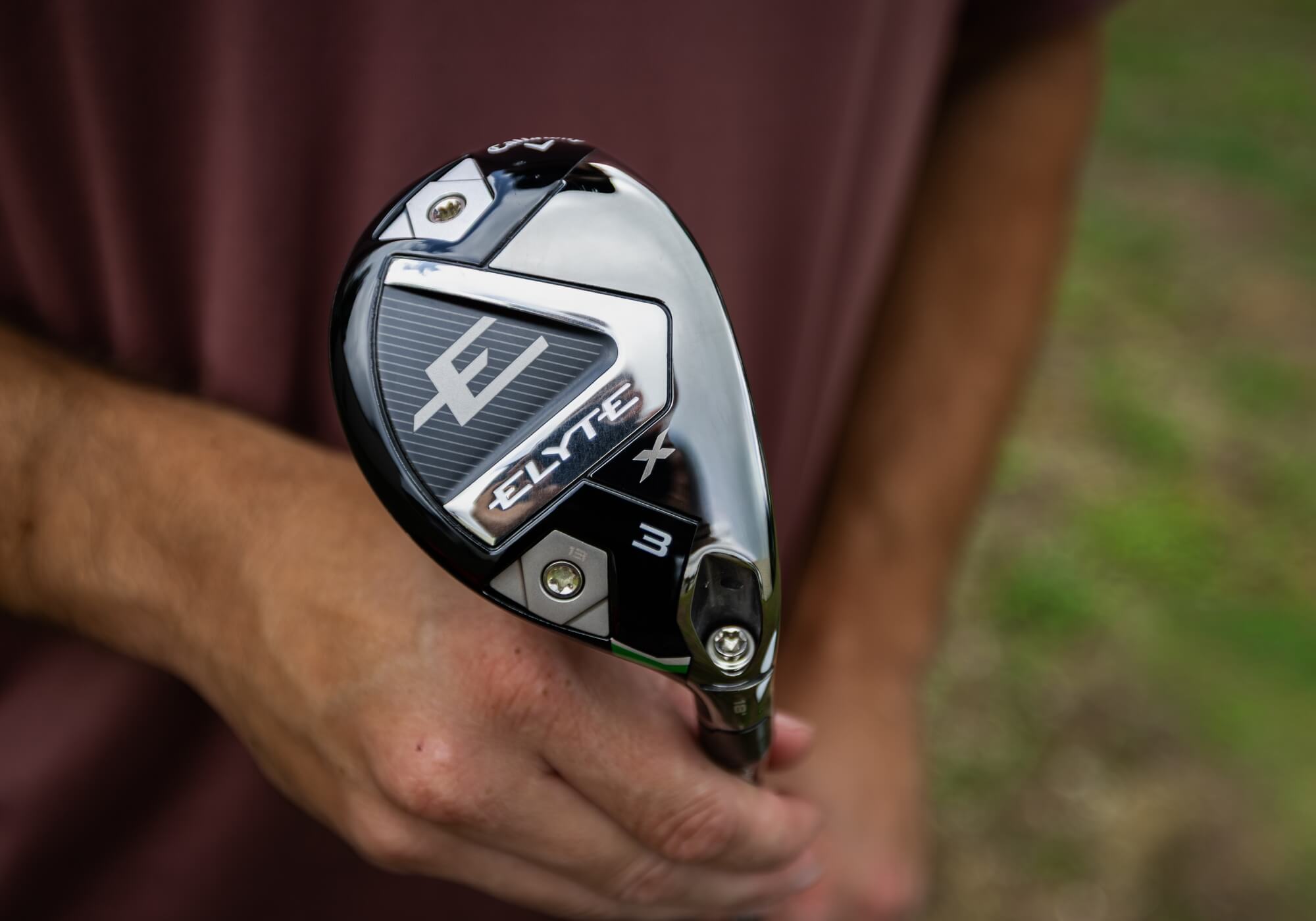
The next big stroke drain comes from long approach shots, especially from the rough or fairway from more than 130 yards. Golfers who struggle to break 100 often fail to advance the ball far enough down the hole with each swing. Every topped hybrid or chunked long iron adds unnecessary strokes.
How to improve:
- Play for clean contact. Ball first, then turf. Avoid digging or flipping at impact.
- Choose the right club for the lie. From the rough, use a hybrid or higher-lofted fairway wood to guarantee launch.
- Simplify your swing thought. Focus on one cue and rehearse it on the range so you are confident with it.
- Work on low-point control. Use alignment sticks or a divot board to train the club’s impact point.
Shot #3: The 8-iron that finds the green
Once you’re 130 to 160 yards out, the next separator is accuracy into the green. Golfers breaking 100 hit more greens in regulation from this range, often by simply avoiding fat and thin contact.
You don’t need to attack the flag. You just need to hit the green somewhere. A simple 8-iron that lands safely on the putting surface saves strokes.
How to improve:
- Aim for the center of the green. Forget flag-hunting; pick the largest safe target.
- Check your setup. Ball position too far forward or back often causes mishits.
- Stay smooth. Rushing transition kills contact. Focus on tempo.
- Know your yardages. Learn your stock 8-iron distance and trust it.
Final thoughts
If you’re trying to break 100, stop chasing swing perfection. Focus on three shots: a 225-yard drive that stays in play, a 150-yard hybrid that advances the ball and an 8-iron that finds the green.
The Shot Scope data shows that fixing these three areas accounts for the vast majority of the stroke difference between 100s and 90s. Shot Scope data has helped turn breaking 100 into a math problem. With more centered contact, you should be well on your way to more rounds in the 90s.






Rob
11 months ago
Good stuff, Before reading the article, I had these 3 gueess
1) Being in play off the tee at least 12/14 times. I didn’t put a distance, but I’d say 225 is fair
2) Able to consistently hit a 7 iron in the air (that’s close to your number 3)
3) Ability to hit the green on every wedge shot inside 30 yards the first time. –eliminating chunks and skulls that add up quickly