


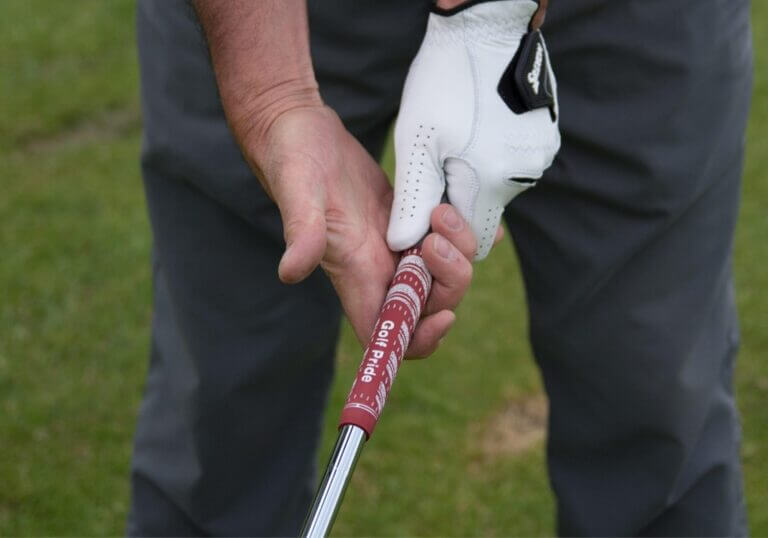
While I was coaching recently, I watched this guy on the range next to me and my student stripe several 7-irons 160 yards dead straight. Then he picked up his driver and sliced five balls into the fairway of the ninth hole, adjacent to the range. When I walked over to help quickly, the problem was obvious — his grip looked like he was strangling the club.
I’ve taught golf for more than 20 years and during this time I’ve found that a significant percentage of swing problems originate with the hands. Yet golfers obsess over backswing plane or hip rotation while ignoring how they hold the club.
These grip mistakes are fixable. Not in six months or after expensive lessons — by the time you tee it up in your next round or two.
The death grip is killing your distance
Standing over a 220-yard water carry? Your hands automatically tighten. It’s human nature but it’s ruining your swing.
I tell students to think of grip pressure on a one-to-10 scale. Most golfers grip at an eight when they should be at a four. Sam Snead said it was like holding a small bird — tight enough it won’t fly away, loose enough you won’t hurt it.
Here’s a drill: At the range, make your grip so loose it feels like the club might fly out. Hit a few balls. They’ll probably go farther than your normal swing because power comes from speed, not tension.
Kathryn, one of my long-time regular students, picked up 25 yards on her driver just by loosening her grip. She’d fought a slice for three years. Her death grip was the culprit.
The slice-producing weak grip
Hitting banana balls right? Your grip is probably too weak — both hands rotated too far left on the handle.
Look down at your left hand. Can you see your knuckles? If you see one or none, you’ve found your problem. You need to see two to three knuckles at address.
The checkpoint: Those Vs between your thumbs and forefingers should point toward your right shoulder. Both of them. When they point at your chin or left shoulder, you’re set up for slices.
I had a student last month who’d taken lessons for two years trying to fix his slice. Three pros worked on his swing plane, hip turn and shoulder position. Ten minutes into our first lesson, I adjusted his grip and he started hitting draws.

When your hands fight each other
This drives me crazy because it’s easy to spot yet gets missed constantly: one hand strong, the other weak. It’s like having your left foot pointing north and right foot pointing east.
Your hands need to work as a team. When they don’t, every swing becomes a negotiation instead of smooth motion. You’ll hit it solid one swing, chunk it the next.
The fix: Get both Vs pointing the same direction. Make your hands feel unified on the grip, not competing for control.
The reality about grip changes
When you change your grip, it’s going to feel awful. You might hit some of the worst shots of your life in those first practice sessions.
But here’s something interesting: Even when a new grip feels completely wrong, students often see immediate ball flight improvements. That slice might reduce from 40 yards to 20 yards right away, even though the grip feels backward.
Stick with it for a month. That’s how long muscle memory takes to adapt. I’ve seen golfers drop five to seven strokes just from grip changes but only those who fought through the awkward adjustment period.
Work on this at the range, not during your Saturday foursome. Nothing ruins a good round like experimenting with fundamentals on the course.
Your grip is free to fix, completely under your control and affects every shot you hit. Start there.








Gary
1 year ago
Jon Sherman has Tube video about a study in Canada with Tour Pros thru 15+ Ams. Pros start with a fairly firm grip especially lead hand and slightly less with trail. Maintaining through swing with trail hand firmer on the downswing. Ams start light and grip very firm through the swing. Study shows firm grip is better. Gone are the days of “like holding a bird”.