

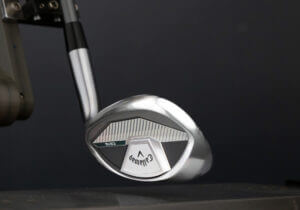
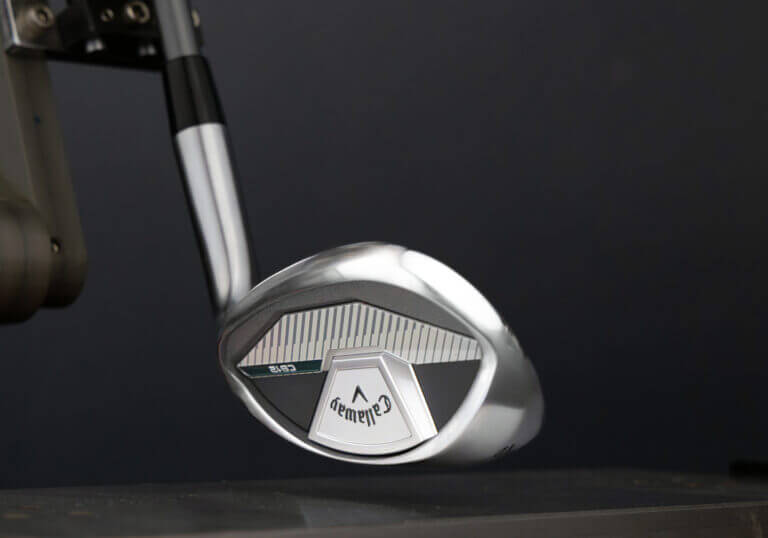
The One Rule I Have For Buying Used Golf Clubs
Instruction

The One Rule I Have For Buying Used Golf Clubs

Support our Mission. We independently test each product we recommend. When you buy through our links, we may earn a commission.

The One Rule I Have For Buying Used Golf Clubs

I’m generally a fan of buying used golf equipment. I’ve put together some great sets of clubs at a fair price this way over the years. But there’s one category where I draw a hard line.

I don’t buy used wedges.

That’s the rule.

I’ve found there’s no reliable way to know how much performance is left in a wedge before it starts costing you shots.

Why wedges are different

If you buy a used driver that doesn’t fit your game, you’ll figure it out quickly. Launch, spin and dispersion issues become obvious after a few range sessions or a couple of rounds.

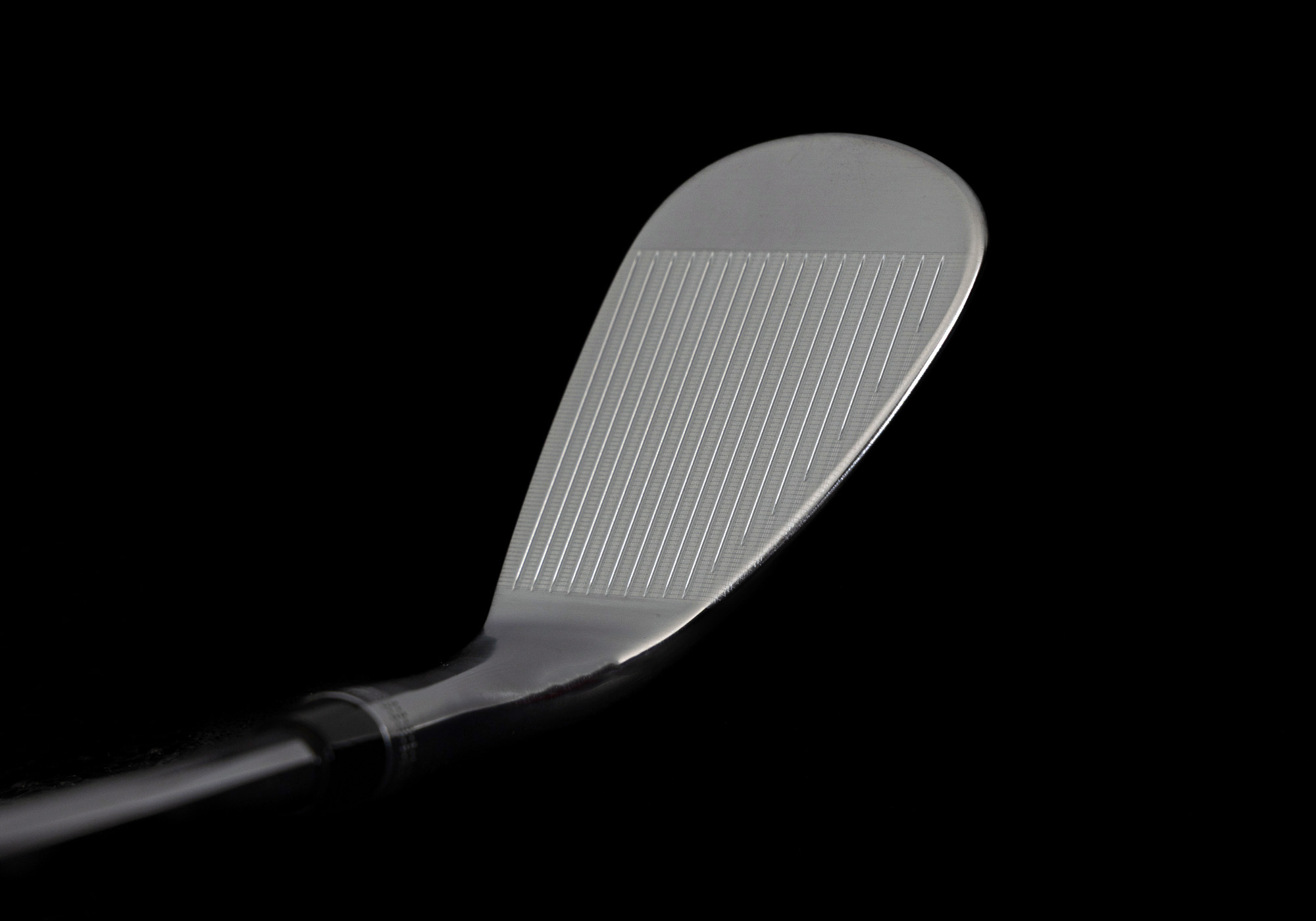
With wedges, the issue is more about groove wear.

Wedge grooves fade gradually with increased use. When wedge grooves are worn, launch increases, spin decreases and shots that used to check release. One of the biggest problems players have is that distance control becomes less predictable.

That is what makes used wedges risky.
Groove wear is hard to see, easy to miss

The biggest problem with buying used wedges is that meaningful groove wear does not show up in photos.

Testing from Titleist along with independent MyGolfSpy data shows that wedge performance begins to fall off around 75 rounds. If you practice your short game often or spend a lot of time in bunkers, that may happen even sooner.

In controlled testing, wedges with simulated 75 rounds of wear lost nearly half their spin on 50-yard shots. Consistency suffered just as much. Standard deviation increased sharply for spin and carry distance which means outcomes were unpredictable.

When you’re looking at used wedges to purchase, it’s nearly impossible to tell how much they have been used.

Why “lightly used” means very little with wedges

When you look at wedge listings, you’ll probably see descriptions like “only played one season” or “great condition.”

Those phrases do not tell you how many bunker shots the wedge has seen. They do not tell you how much short-game practice it has endured or how rounded the grooves are.

Unless a seller can accurately account for usage, you are guessing. Unlike a driver or iron, there is no quick fitting tweak that restores wedge grooves once they are worn.
The cost math rarely works

A used premium wedge at $90 to $110 may sound reasonable until you factor in:

  • The likelihood of replacing the grip
  • The risk of worn grooves
  • The lack of meaningful resale value

At that point, you are often close to the price of a brand-new wedge on sale or a more affordable new wedge with fresh grooves.

If you’re trying to replace wedges that are worn, consider purchasing something on sale, getting last year’s model or settling for a slightly less expensive wedge. Some mint-condition used wedges with a solid return window can be a good choice.

Final thoughts

I am not against used equipment overall but wedges are different.

They live and die by groove condition and that’s one of the hardest things to verify in the used market. Reliable scoring clubs will help you become a better player. This is just one of those areas where investing a little more money is smart.


For You

For You

News
Jun 5, 2026
Three Reasons Your Handicap Is Lower Than It Should Be
First Look
Jun 4, 2026
How Much Larger Is The New TaylorMade Spider ZT Max?
First Look
Jun 4, 2026
Can The New Odyssey Ai-DUAL Jailbird Cruiser Fix Your Putting Problems?
Brittany Olizarowicz

Brittany Olizarowicz

Brittany Olizarowicz

Britt Olizarowicz is a scratch golfer, former teaching professional and one of MyGolfSpy’s leading voices on equipment testing and golf performance. She has spent more than 15 years working at private clubs in New York and Florida and now specializes in translating test data and swing mechanics into practical advice for everyday golfers. Britt began playing at age 7 and has never left the game. When she’s not writing, you’ll find her on the course, playing pickleball, cooking, running or out on the boat with her family.

Brittany Olizarowicz

Brittany Olizarowicz

Brittany Olizarowicz


    This site is protected by reCAPTCHA and the Google Privacy Policy and Terms of Service apply.

      Royce

      5 months ago

      Hmm, My ping glide 2 wedges are about 8 years old and I constantly put 9,500 to 10,500 rpm on my 50 degree gap wedge. I got old enough that I don’t use the 60 any more, so I don’t know the spin on it.
      And I think the 75 round thing is complete sellout marketing by MGS.
      75 rounds, lets say by a miracle you hit that wedge on half the holes. That 75×9 = 695 shots. Most of those would be half or quarter shots.
      That would be the equivalent amount of practice wedge shots I take in three weeks of practice in the spring. So they are saying I need 3 new 50 degree wedges a year! My ping is 8 years old and still draws back !
      And I am a fairly average golfer.

      Reply

      Will Rowland

      5 months ago

      What about sharpening wedge grooves on our own? I bought a wedge groove sharpener at the beginning of last season and had good results. Has there been an MGS test on this?

      Reply

      Duffer1

      5 months ago

      I also would like to know this. I sharpen 2/year. Not sure how good they do, or how how long it lasts, but its something. Rick Shield has a video on them.

      Reply

      BR549

      5 months ago

      The market for used wedges is the same for used toothbrushes.

      Reply

      Daric

      5 months ago

      There are ‘used’ marketplaces that provide ‘new’ or ‘like new’ products at fairly steep discounts. You have to be the ‘right’ fit for the club you are buying because shaft and grip may be just as important as that shiny ‘like new’ clubhead. I purchased a JAWS RAW 60 last fall it was new to the point of still having the protective vinyl over the clubface… just a comment for thought.

      Reply

      Gary

      5 months ago

      Isn’t it about wear on the face and not just the grooves? We think our wedges are ”fine” until we play a new one. I wonder how this impacts other irons? Not the grooves but face wear? Any data on iron wear and diminishing results? I know we don’t hit the 9i as frequently as say a 56° wedge, but wouldn’t the theory hold true? Always been a big fan of used clubs, but I’ve seen the difference in wedge play and I’m sticking with new.

      Reply

      Dr Tee

      5 months ago

      Seems like a lot of trouble to avoid simply buying new product, at the very least, get last years’ “new” model.

      Reply

      Dean D

      5 months ago

      It has resulted in a savings $35 for a 59 degree sand wedge that’s lasted 4 years very good out of the sand & not bad for flop shots about the green. About the same for the 53 * primary chipping wedge. 4 new wedges maybe $6-700.

      Reply

      Dean D

      5 months ago

      So that’s the problem with my short game – it’s the old used wedges not my lack of talent.

      I’m at the other end of your used equipment spectrum- I like used wedges & have been using them for decades. My ancient Cobra is still in one of my relatives bags & gets out of the sand effortlessly.

      Multiple Vokeys, Mizuno, even old Checkmate wedges all have given good service. Granted my problem with wedges is usually too much spin – I tend to hit down on them fairly steeply on full shots & really never play the hop & stop shot intentionally.

      I’ve been playing Bridgestone XS for years & I backed my 50 degree Mizuno into the water so often on my most often played par 3 I bent the wedge a degree flatter & keep it on the surface
      More often.

      I have bought a few lemons – really old Ping Zing wedges have absolutely no feel at all & some old Titleist wedge are nearly as bad. An old black faced McGregor 10 iron in my buddy’s cross hand grip was incredibly effective for many years.

      So if you’re hitting low spinning darts regularly the grooves might wear too much but my blacksmith touch can’t tell the difference.

      Reply

      Dave

      5 months ago

      I bought a “like new” Opus Platinum from Callaway Pre-Owned and it is great. Visually, I only saw one slight indentation. You had to really look to find it. Since it’s a newer model wedge, you have to think it was decent and I’m sure “refurbished” by Callaway enough to sell it. In using it for several months, it’s apparent that my wear marks are much worse than the day it arrived to my door.

      I would purchase this way over eBay or Marketplace any day.

      Reply

      Chux13

      5 months ago

      I feel there are very rare instances in which a used wedge could be a godsend. I was lucky enough to come across a pair of used but slightly dinged up Sugar Daddy III wedges for $80 each. Face was in stellar condition, sole had quite a few but shallow rock dents and scrapes. Clubs were also 1″ longer and once i checked turned out D8 swingweights. Shafts were TT Elevate shafts which already launch and spin high. Whoever had em hated them and I could see why. Once i reshafted and got it back to manageable SW, they played beautifully. Totally agree with the article, but a blind squirrel finds a nut every so often 😉

      Reply

    Leave A Reply

    required
    required
    required (your email address will not be published)

    This site uses Akismet to reduce spam. Learn how your comment data is processed.

    News
    Jun 5, 2026
    Three Reasons Your Handicap Is Lower Than It Should Be
    First Look
    Jun 4, 2026
    How Much Larger Is The New TaylorMade Spider ZT Max?
    First Look
    Jun 4, 2026
    Can The New Odyssey Ai-DUAL Jailbird Cruiser Fix Your Putting Problems?