


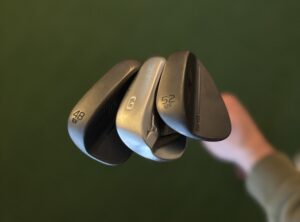
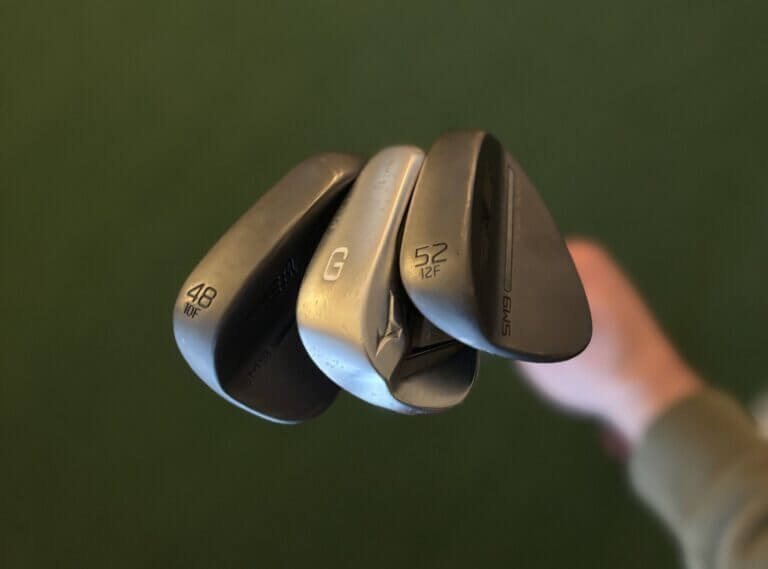
Many golfers believe they have a decent short game. They expect to hit wedge shots relatively close, recover often enough when greens are missed and limit damage with solid touch around the green.
Those expectations are understandable. Short shots feel controllable compared to big swings with the driver from the tee.
The swing is smaller. The target is closer. The margin for error seems larger.
However, looking at Shot Scope short-game performance data from five, 15 and 25 handicappers, a clear pattern emerges: there’s plenty of room for improvement.
“I’ve got a wedge. Get it close.”
From 50 to 100 yards, the expectation is simple: put the ball inside 15 feet and give yourself a real chance to score.
In practice, that expectation rarely holds up. Even when the shot feels solid, most wedge shots finish far enough away to shift the focus from making putts to just trying to save bogey and get out of there.
Wedge Proximity From 50–100 Yards
| Handicap | Avg Proximity | Inside 15 feet | Outside 30 feet |
|---|---|---|---|
| 5 | 32–39 feet | 11% | 40% |
| 15 | 42–53 feet | 7% | 59% |
| 25 | 47–67 feet | 6% | 72% |

“I just barely missed the green. That’s fine.”
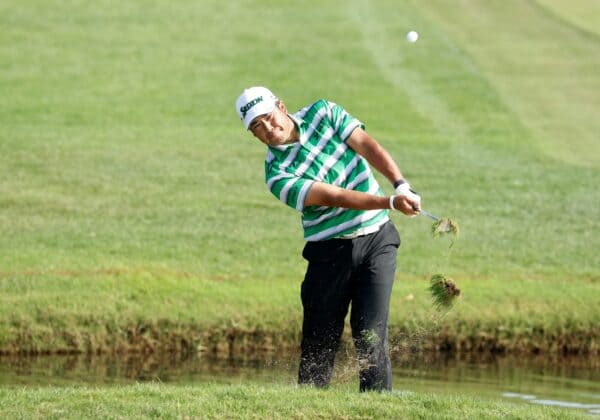
Missing a green is commonplace for players at every level. When the ball finishes close to the putting surface, there is often an assumption that the recovery will be simple.
Even from inside 25 yards, getting up and down is not automatic. For the majority of players, the success rate remains below 50 percent. Many recovery shots fail to finish close enough to remove pressure from the putt that follows.
Up and down rates
| Handicap | Overall | Under 25 yards | 25–50 yards |
|---|---|---|---|
| 5 | 47% | 56% | 25% |
| 15 | 34% | 43% | 16% |
| 25 | 25% | 35% | 9% |
“This is a simple chip.”
Shots inside 25 yards still have unpredictable outcomes. For a five-handicap golfer, the average proximity is 10 feet and 15 percent of shots finish outside 20 feet. From 10 feet, that same player makes the putt less than half the time.
As your handicap gets lower, these close chip shots end up closer to the hole but nobody is guaranteeing themselves an up-and-down.
Chip Shots Under 25 Yards
| Handicap | Avg Proximity | Inside 5 feet | Outside 20 feet |
|---|---|---|---|
| 5 | 10 feet | 45% | 15% |
| 15 | 13 feet | 37% | 23% |
| 25 | 15 feet | 31% | 27% |
“At least I’ve got a par putt.”
A short-game shot that finishes inside 15 feet often feels successful. However, most putts from this range are missed. A 25-handicap golfer only makes 12 percent of putts from 12 to 18 feet. That one stat should put just a little extra emphasis on the importance of your wedge shot proximity. From the six- to nine-foot range, the make percentage nearly triples.
For me, that’s one of the most important takeaways when looking at what to practice and how to apply this information. Chipping the ball on the green isn’t enough and getting it within 15 feet still isn’t enough. To get better, you’ve got to get it close.
Putting Make Rates
| Distance | 5 Handicap | 15 Handicap | 25 Handicap |
|---|---|---|---|
| 6–9 feet | 44% | 36% | 30% |
| 9–12 feet | 34% | 22% | 17% |
| 12–18 feet | 19% | 16% | 12% |

My take on how to apply these insights to your practice
Improving your short game starts with adjusting expectations and practicing to match reality. Now that you’ve got a better idea as to where some of these weaknesses or misconceptions may lie, here is a good way to target this type of practice.
- Practice landing areas, not hole locations: Pick a landing spot and adjust for green speed and slope rather than aiming directly at the pin.
- Alternate between two targets when you practice: Switch landing areas or pins every other shot to better simulate on-course decision making.
- Judge practice by your average result: Ignore the chip-in and the one that flies over the green. Hit 10 to 20 balls and focus on how close most of them finish.
- Track the length of your first putt on every hole: You do not need exact numbers. A general sense of whether you face more eight-footers or 35-footers will tell you what to practice.
- Practice putts from the distances you actually face: For some golfers that means distance control from 50 feet; for others, it means learning to convert more one-putts under 15 feet.
- Build a short-game technique that is simple and repeatable: The goal is a motion that holds up under pressure, not something that works once in a while. When you create that, you’ll start to notice more consistency in your stats and have even more insight as to what will help you improve.
Final thoughts
I have made many of these assumptions on the course, expecting an easy chip to lead to a routine up-and-down. It doesn’t always work out that way. The most effective practice for me has been focusing on distance control on shorter shots. When I control the landing area, the results come much closer to my expectations.







Scobie
8 months ago
Great recommendations. Gonna take it to the course once the snow melts.