


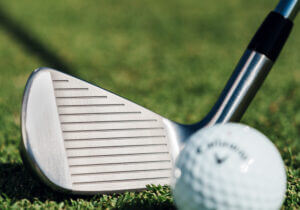
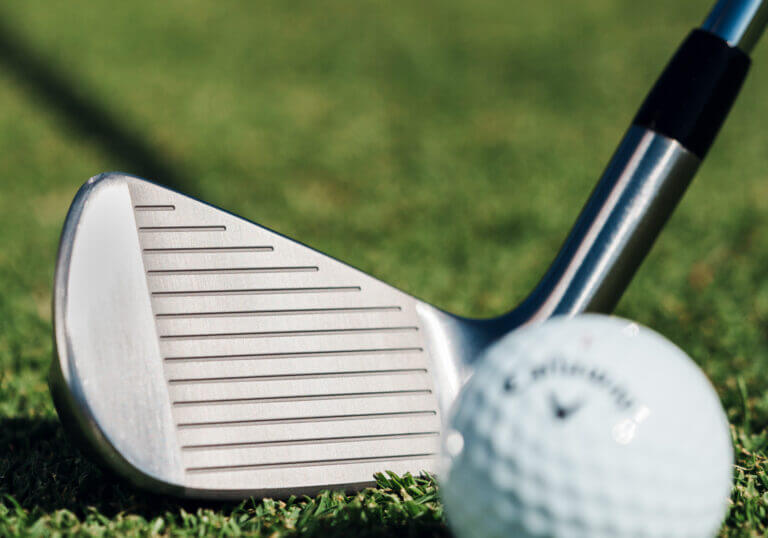
How is it possible to struggle with thin irons and fat wedges at the same time?
It’s more common than you may think.
The two misses look like complete opposites. With the wedge, the club hits the ground before the ball. With the iron, the club barely reaches the ground at all.
They aren’t always caused by the exact same swing flaw. However, they can be related.
The common problem is often that your arms, body and club stop working together. You react differently depending on which club is in your hands.
With a wedge, you may become too careful and stop moving your body. With an iron, you may add too much effort, lose your posture and pull away from the ball.
Continue Your Instruction Journey
Our instruction content combines insights from equipment testing, data analysis, and golf experts to help golfers improve with evidence-based advice. You’ve fixed one part of your game. These guides help you take the next step.
🎯 What tees should I play? Use this chart!
🛑 How should the driver sit at address? Many golfers still get this wrong!
🏌️ If you miss the center of the face, try THESE irons.
You may be making two different swings
Most golfers don’t approach a wedge and a mid-iron with the same intention.
The wedge feels like a touch shot. You shorten the swing, reduce your speed and try to guide the club into the ball.
The iron feels like a distance club. You make a longer swing, add speed and try to help the ball into the air.
Neither intention is necessarily wrong. The problem starts when the wedge swing becomes all arms and the iron swing becomes too aggressive. In both cases, your arms and body are no longer arriving at the ball together.
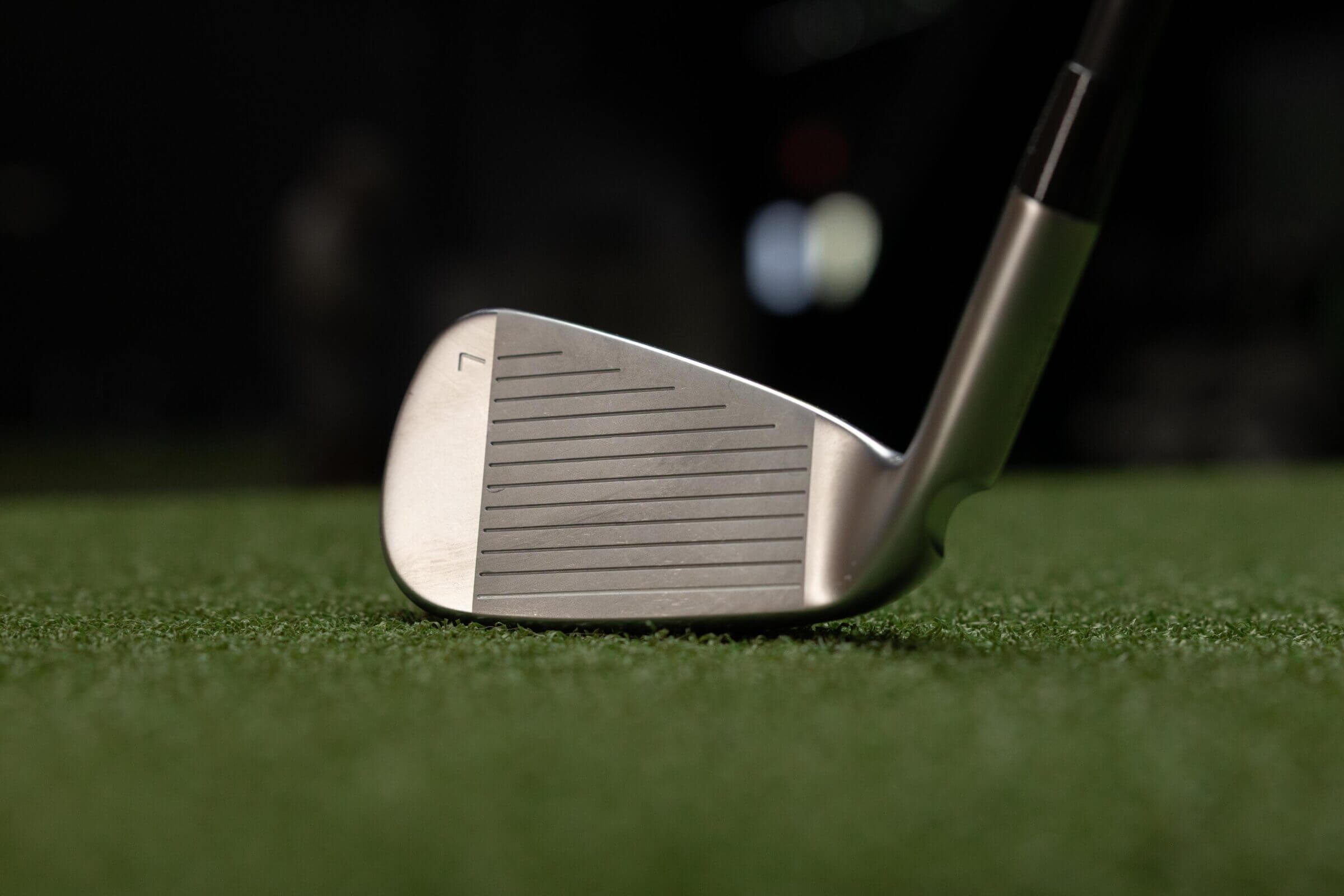
Why you hit your wedges fat
A smaller wedge swing still needs some body movement.
When your chest and lower body stop turning, your hands and arms continue swinging. The clubhead can pass your hands too early and hit the ground behind the ball.
The answer is not to fire your hips aggressively.
Instead, feel like your arms, chest and body continue moving together. Feel like you are one connected unit.
Try hitting waist-high wedge shots with these checkpoints:
- Use a narrow stance.
- Start with slightly more pressure on your lead foot.
- Move your arms and chest back together.
- Let your chest continue turning through impact.
- Finish with your hands in front of your chest.
Think of it as a small pivot rather than a powerful lower-body move. Your body does not need to do much but it cannot stop while your arms keep swinging.
Why you hit your irons thin
With an iron swing, golfers know they need more distance so they add effort. The hips move toward the ball, the chest lifts and proper posture is lost.
As the body rises, the handle and clubhead rise with it. Instead of reaching the bottom of the ball, the club catches it thin. You lose your low point because you are putting too much effort into the shot.
Some golfers also try to help the iron into the air. They hang back and scoop through impact, even though the loft on the club is already designed to launch the ball.
Hit half iron shots
Use a 7- or 8-iron and make a series of half swings.
- Take the club back until your hands are around hip height.
- Swing at about 60 percent effort.
- Keep your chest down through impact.
- Finish balanced with pressure on your lead foot.
- Focus on contact rather than distance.
The ball will not go as far as it does with your full swing but it will likely go further than you think. Less effort applied correctly is very effective in golf.
Half swings help you learn that solid iron contact does not require maximum effort. Once you can strike the ball cleanly, gradually lengthen the swing without adding unnecessary speed.
Check your ball position
Before you make any big swing changes, make sure ball position is not causing all of your issues.
A wedge that is excessively far back can encourage too much shaft lean and a steep, digging strike. A mid-iron that has moved too far forward can make it harder to reach the ball before the club begins moving upward.
For a standard wedge shot, start near the middle of your stance. A mid-iron should be slightly forward of center.
Final thoughts
If you hit the wedges fat and the irons thin, do less with your irons and more with your wedges.
For your wedges, keep a small amount of body movement in the swing.
For your irons, take out some speed and build your contact with half shots.







Tom Marvin
2 months ago
Because your a in consistent sweeper of the golf ball ,like 90 % of golfers. You need to pull the PGA flag stick out of your aXX, get humble,work it only takes two weeks, and learn to take a divot/ball first contact,join the 10 % club, now put PGA flag stick back.. Get a dense rug, draw a line, draw another line 4 inchs away, cut half inch cardboard squares, address one line put cardboad square .4 inchs away at other line, before you start back look at the card board square, now hit the cardboard square , sole hit anywhere from the back of the ball is a good miss, if you look at the ball you will hit behind it, I dont know why,wait AI knows everything. Golf is very simple once you know, apparently 90% dont,weird add short game your a lost sole drifting at sea until drug dealers save you like jimmy buffet, Where did that come from?. this is a very disturbing fact/stat. Next disturbing fact/stat, 25 hcp hits shorter than 20HCP, 20 less than 15, 15 less than10 10 less than 5, 5 less than scratch, ? What does this tell us? There’s hope, only 48% of scratch golfers can not hit a green at only150 yds WTF, next 150 yd green pull out your 7 wood and stick it. Not on the Medicare tour grab your 9 wood there so easy to hit straight. Skim/ watch you tube videos until you get it, If your rich you can buy your golf swing. , how its called a launch launch monitor, questions go to AI . Good luck, stay humble and help as many golfers as you can, thats what Grant told me.