



You have to be a next-level kind of weird to rifle through an annual corporate sales report, especially when you have zero financial stake in that company.
Weird goes to another level, however, when you do it over 10 days for two separate companies in which you have no stake.
That, friends, takes a special kind of weird.
And that’s the extent we at MyGolfSpy will go for you, my dear friends, because that’s the kind of website we are.
You’re welcome.
Anyhoo, Callaway and Acushnet – golf’s two biggest companies – have issued their 2025 financial results over the past week (Callaway last week, Acushnet yesterday). Being the golf industry dorks that we are, we just had to dig in and share the most salient tidbits with you.
But before we do that, corporate wants me to remind you of our standard quarterly CYA disclaimer:
We are not, nor do we claim to be, financial experts, investment counselors or Wall Street-level business analysts. We’re simply golf industry geeks who like to read.
Presuming that you’ve read this far, we can count you as a brother or sister in the golf industry dork community. Therefore, brothers and sisters, let’s dork out with six reasons why the Callaway and Acushnet 2025 financial reports matter.
#1: Callaway is now free and clear of Topgolf
Man, the Callaway-Topgolf merger seemed like such a great idea at the time, didn’t it? Putting together two multi-billion-dollar golf-centric companies under one roof seemed like a no-brainer and the synergy should have been off the charts.
That synergy, however, never synergized.
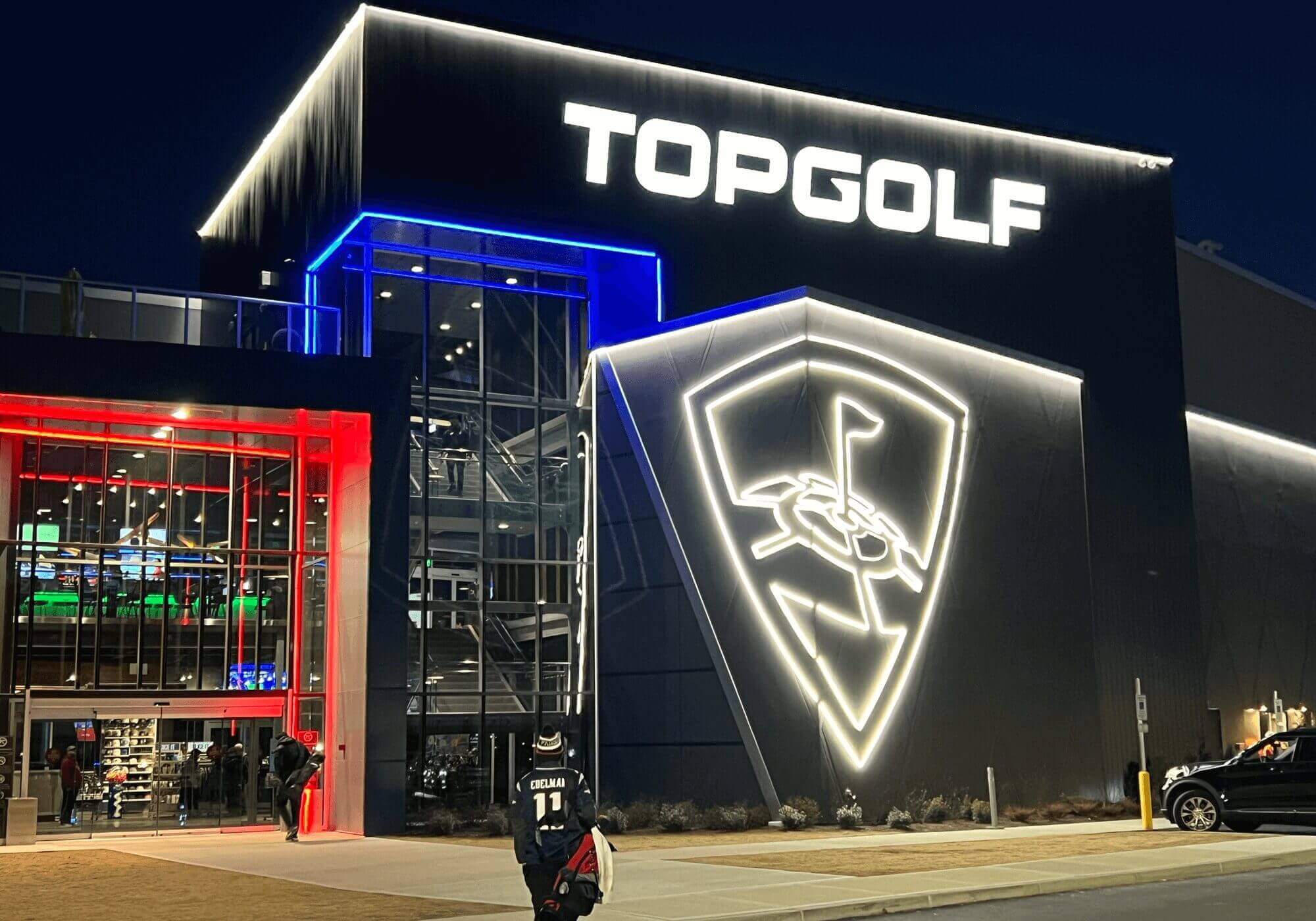
Callaway sold 60 percent of Topgolf to a private equity firm last November for $1.1 billion. After five years under the same umbrella, Callaway is fully out of the golf entertainment business and back to its roots as a golf equipment and lifestyle brand.
No one is happier about it than Callaway’s corporate leadership.
“We successfully completed our 2025 strategic initiative, which was to return Callaway to a pure play golf equipment company and strengthen our balance sheet,” CEO Chip Brewer told investors last week. “(We’ve) simplified our portfolio, generated significant cash, eliminated our liability for any Topgolf venue financing and operating leases and have paid down $1 billion of term debt.”
Yeah, that’s enough to make any investor get all limp and giggly.
With the sale finalized, Callaway removed all Topgolf and Jack Wolfskin (sold off earlier in the year) revenue from its report. For the year, core Callaway business sales totaled $2.06 billion. That’s down so slightly from the previous year that sales can be considered flat.
Core business profits took a hit, however, at $38.8 million. That’s down 58 percent from 2024. Callaway cites several factors, not least of which is $34 million in additional tariff expenses not passed on to consumers.
The drop in both profit and Adjusted EBITDA, however, was better than what Callaway was expecting.
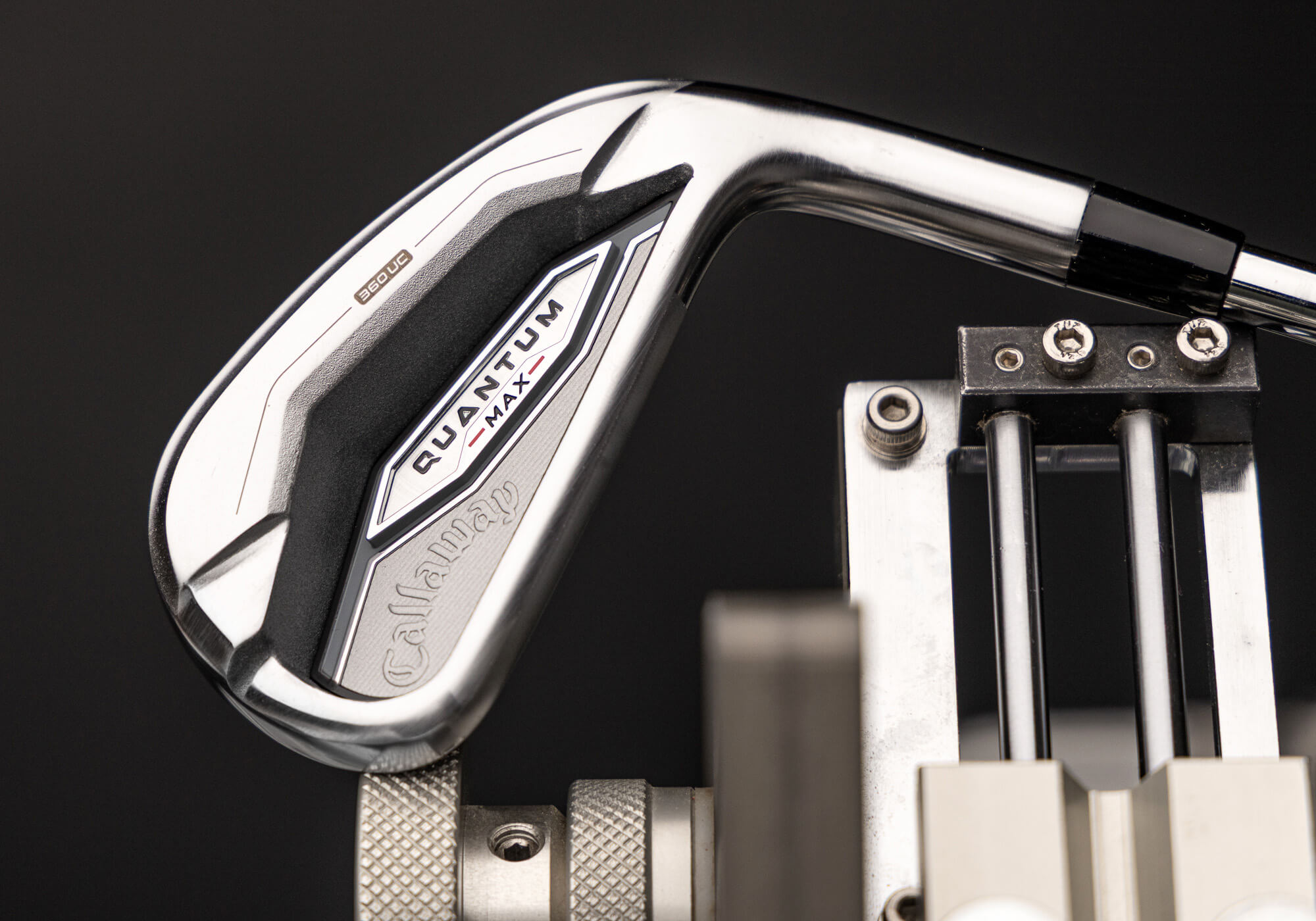
#2: Acushnet keeps Acushnet-ing along
Yes, I know that’s a neologistic verb formed from a proper noun but in this case it fits perfectly.
Acushnet’s reports are always simpler to dissect, simply because of how Acushnet operates. It’s a straightforward golf company whose financial highs are never too high and lows are never too low. It simply Acushnets along.
With Topgolf out of the Callaway picture, Acushnet is back to being the biggest company in golf. The company is reporting $2.56 billion in 2025 sales, up over four percent from 2024. Its 2025 net profit of $188.5 million, however, is down 12 percent (nearly $26 million) from the prior year.
Before you get nervous, there’s a reason. There’s always a reason.
Acushnet says a portion of that decrease is due to higher interest expenses and lower income from operations, which is a nice way of saying tariffs. However, the biggest single contributor is a $17-million loss due to – checks notes – a debt extinguishment related to 2025 debt refinancing.
Yeah, I had to look that one up.
A debt extinguishment is what happens when a company pays off, retires or otherwise eliminates a debt before its scheduled maturity. It becomes a loss when the cash paid out is greater than the carrying amount of that debt. Acushnet chose to refinance that debt and any unamortized amount had to be written off immediately instead of being amortized over the life of the debt.
Yes, that’s wonky, but it’s one of those things that gets taken out when calculating EBITDA (Earnings Before Interest, Taxes, Depreciation and Amortization). Acushnet’s 2025 EBITDA hit $410 million, a 1.5-percent increase over 2024.

#3: Acushnet sells a lot of balls, Callaway sells a lot of clubs
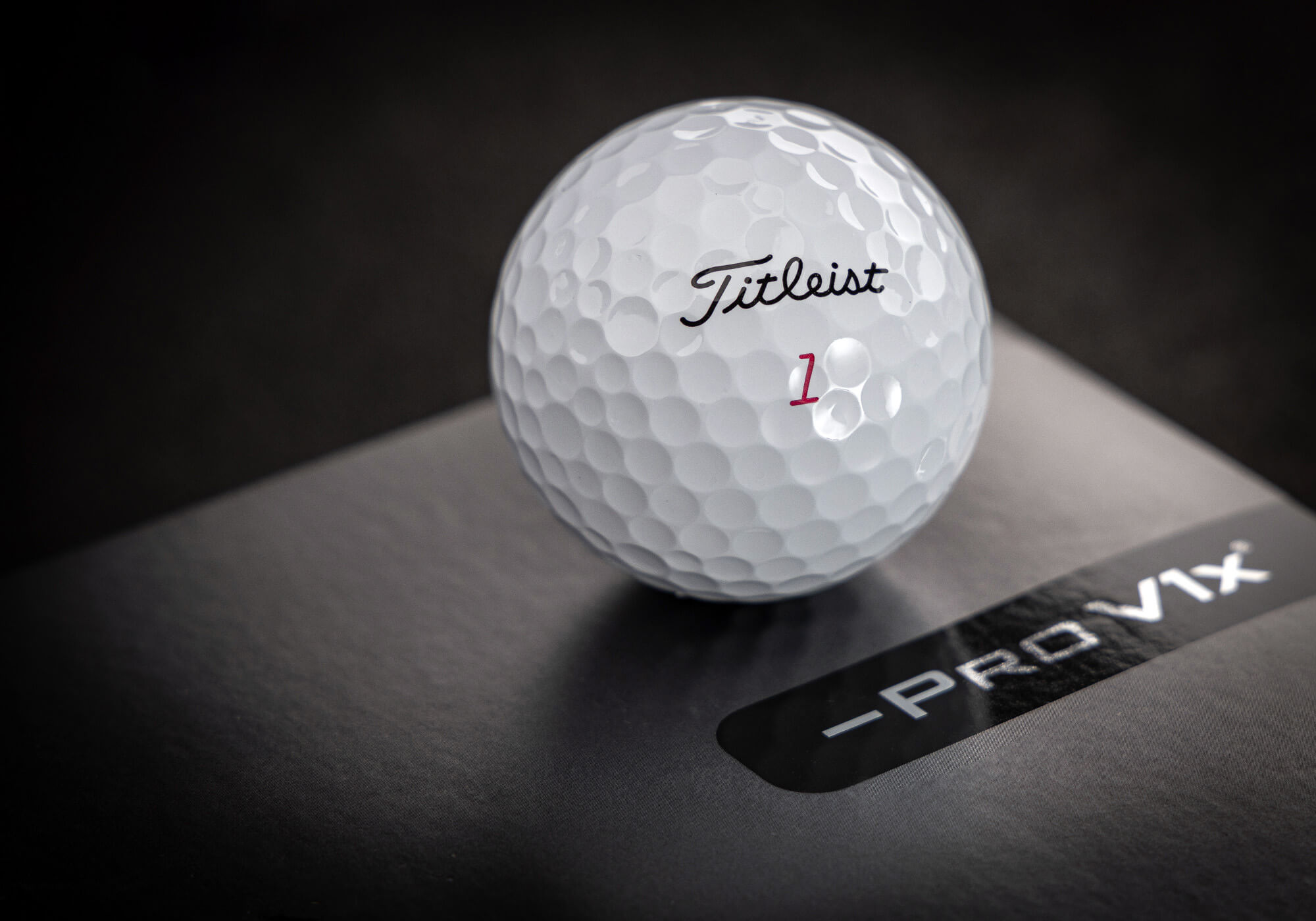
We all know Titleist is No. 1 in golf ball sales but it’s always startling to see by how much. Acushnet is reporting 2025 ball sales at $831 million, a 4.4-percent increase over 2024. Callaway, the clear-cut No. 2 in ball sales, reports $322 million, which is essentially flat compared to 2024. Acushnet, says the math, sells over 2.5 times more golf balls than its nearest competitor.
That’s what you call market dominance.
The script flips a little when it comes to golf clubs, though. Callaway reports $1.053 billion in club sales for the year (down less than one percent from ’24) while Acushnet’s club sales topped $775 million. That’s a 7.4-percent increase over the previous year which Acushnet attributes to the new T-Series irons and GT hybrids.
Titleist’s recent GT metal woods discounts come at a strategic time. With 2026 model pricing being what it is, closeouts should provide a nice bump for Acushnet’s Q1 and Q2 sales. Additionally, Titleist’s decision to accelerate its new driver launch into June instead of August should also spark mid-quarter numbers.
Both companies sell a boatload of apparel, golf gear and accessories. Callaway’s apparel sales were down slightly in 2025, at $399 million, as were its Gear, Accessories and Other sales at $286 million.
Acushnet’s Golf Gear sales were up 5.5 percent last year to nearly $245 million while FootJoy sales hit nearly $570 million.
That FootJoy number sounds like a lot. Heck, it is a lot. But we still say Acushnet has a FootJoy problem.
#4: The FootJoy conundrum
If it seems like we always say Acushnet has a FootJoy problem, it’s because we do. As mentioned, FootJoy sales were nearly $570 million in 2025. I don’t care who you are, that’s a metric crap-tonne of shoes, shirts and quarter-zips.

The problem, however, is that sales number has been stagnant, if not declining, for the past four years. We reported last November that FootJoy has posted sales declines in nine out of the previous 12 financial quarters. Well, FootJoy enjoyed a five-percent increase in Q4 sales in 2025. The problem is the increase was due solely to higher average selling prices across all FootJoy product segments which offset declining volumes.
For the year, FootJoy sales were down just under one percent from 2024. Volumes were down across the board, most notably in footwear. As mentioned, that decline was offset by higher prices.
In his address to shareholders, Acushnet CEO David Maher said FootJoy has been going through a post-COVID correction period. Initial demand during and just after the pandemic prompted FootJoy to increase supply. Demand eventually normalized, but supply didn’t, leaving FootJoy in the midst of a lengthy closeout process. Maher says the process is just about complete, although FootJoy has been hit harder by tariffs than other Acushnet business units.

FootJoy still holds a strong market share, but is facing more and varied competition in both footwear and apparel. With more brands fighting for your dollars, their collective market share has to come out of someone’s backside. The numbers tell us that at least some of it is coming courtesy of FootJoy and Callaway.
#5: Fundamental changes coming for Callaway
Callaway (now CALY on the NYSE) came out of the Topgolf divorce in pretty good shape. Even though it still owns a 40-percent stake in Topgolf, Callaway left the marriage with no responsibilities for operations, lease payments or any future debts.

Further, Callaway was able to pay off $1 billion in outstanding debt. As of last week, the company reported $680 million in cash on hand compared to only $480 million in actual debt. Callaway says it expects to hold on to its 40-percent stake in Topgolf for another four or five years.
As the company gets back to its roots, you can expect some changes. Callaway is planning for flat gross margins in 2026, largely due to an anticipated $75 million tariff impact. It says it will work to expand margins by shifting out of some lower-margin businesses which the company didn’t specify.
Maybe most significantly, Callaway says it will lengthen certain golf equipment life cycles. That means fewer annual product launches and changing launch cadences. That may or may not mean Callaway will go to two-year life cycles for drivers but it may very likely go that route for its core game-improvement irons.
The company also hears your pain when it comes to pricing. It says it will continue to “monitor the impact of historically high price points, coupled with softer consumer confidence.”
Make what you will of that little nugget.
#6: Two ships, different seas
Reading the financial reports of Callaway and Acushnet is a lesson in contrasts.
Acushnet’s reports read like a well-written instruction manual. They’re clear, logical and tell the story Acushnet wants told in precise language.

Callaway’s quarterly and yearly financials tend to read like mystery novels. For the longest time, the press releases would read like tabloid headlines, touting record sales numbers, huge profits and ever-expanding global domination. Once Topgolf’s same-venue revenues started going haywire, however, the headlines became murkier. The most recent release features bullet points that started with the company returning to its roots followed by its net cash position, Q4 and Full Year 2025 Net Revenue and Adjusted EBITDA exceeding expectations and 2026 adjusted guidance.
Not sexy stuff.
Quarterly and yearly sales and net profits weren’t shown until a fourth-paragraph chart and not discussed until further down the page.
Acushnet, on the other hand, lays it all out right away. Sales, profit and EBITDA are all in the headline bullet points followed by in-depth commentary. Callaway also provides commentary but the contrast is stark.
Callaway’s stock price has been a roller coaster ride over the past five years. After peaking at $37.47 in May of 2021 (just after the Topgolf merger), it went on a long, bumpy decline. The stock cratered at $5.43 last April. It’s been on a slow rise since then, closing at $13.99 yesterday.
Acushnet stock, on the other hand, has been on the rise over the past 10 months. It hit $55.31 last April but closed yesterday at $103.07. In fact, Acushnet stock has increased in value nearly 30 percent in the past month alone.

Callaway and Acushnet financials: Final thoughts
Not to beat the proverbial dead horse but Callaway is clearly thrilled to be a golf-centric company again. On one level, the Topgolf marriage should have worked. Yeah, it was a golf-adjacent entertainment venue, but it could have been a nationwide chain of direct-to-consumer fitting centers. That Callaway couldn’t pull that off will make for a great business school case study.
However, the company came out of the divorce with no responsibilities, much lower debt and a nice pile of cash. It also still owns 40 percent of Topgolf, a handy little asset it can unload whenever it might need some mad money. That Callaway is looking to restructure its product launch cadence and get out of low-margin business are also positive cost-saving moves.
Some analysts are bullish on the new Callaway, citing the clean balance sheet and strong cash position. Others, however, remain wary of relatively weak profitability and margin concerns. Most put it in the “Hold” category until near-term risks get sorted out.
Acushnet, on the other hand, keeps Acushnet-ing. Despite the recent upswing in stock value, analysts think the stock has limited upside after breaking the $100 per share barrier. They expect the price to backslide a little and have also put it in the “Hold” category.

Regardless, it’s still impressive to see how Acushnet stock has fared since its IPO a decade ago. A share that sold for $17 in April of 2016 now goes for over $100. That’s an increase of more than 500 percent.
I don’t care who you are, that doesn’t suck.









Julius
7 months ago
As a retired CPA this article hit close to my sweet spot. I was surprised when Callaway decided to exit TopGolf, several reasons could exist for that, my own is that they probably realized that there were limited synergies there and the “experience” of playing golf with their equipment vs the “experience” of TopGolf are 2 very different things. TopGolf is more of an evening out and depending on who is going, may or may not end up with some ancillary equipment sales. My guess is that between the capital intensive nature of the business (not good for their overall debt), the longer lag time to monetize the investment and shrinking household budgets for entertainment it was a good time to exit. The fact they continue to have a 40% equity stake would probably mean they have some preferance for equipment inroads into those arenas. And if the new owners are able to expand TopGolf and general interest in the game then their 40% will grow in value. Acushnet (GOLF) has always advertised itself as a “premium” brand, given that it had a fling with FilaKorea I am not surprised that it is more toned down and performance based in its financial reporting vs Callaway, which is the typical US financial market gibberish you will hear (and you should be skeptical obviously). There is an interesting question raised about FootJoy. My own 2 cents here – the golf shoe market has been under huge competion now for some years – UnderArmour makes a much better shoe in my view. FootJoy has some attractive shoes but I find them not as comfortable as UA or New Balance. There are so many good golf shoes to choose from today that it will be hard for FJ to really get out of that spot in my view unless someone stops their golf line, or they acquire someone or there is some huge spike in golf. The ProV1 is dominant so will offer annuity type revenues for a while.