


What keeps you awake at night?
For me, it’s wondering how golf’s two biggest publicly traded companies are doing on a quarterly basis. Instead of counting sheep, I’m counting revenue, profit and loss, earnings per share and basis points.
Anyway, both Callaway and Acushnet released their Q2 financial reports last week. After digesting both reports for a few days, we’d like to share some thoughts on what it all means to you, the golfer as opposed to you, the investor.
There’s a reason for that, and you can find it in our standard disclaimer that corporate makes us disclaim:
We are not, nor do we claim to be, financial experts, investment counselors or Wall Street-level business analysts. We’re simply golf industry geeks who like to read.
As we’ve said before, the very fact you’ve read this far tells us you, too, are a golf industry geek. So, let’s proudly let our geek flag fly, and dive in with both feet, shall we?
#1. Both companies are doing quite nicely, thank you very much
As we said in our Q1 review, no one is happier that Callaway and Topgolf have split than Callaway CEO Chip Brewer. Callaway is posting Q2 sales of $612.2 million, up two percent from Q2 of 2025. That may not sound like much, and price increases probably account for much of it. Sales for the first six months, however, are at $1.299 billion. That’s up nearly six percent over last year.
The good news lies in the bottom line. Quarterly profit hit $75.2 million. That’s up from $20.3 million last year. Year-to-date profits are $168.3 million. There are a few reasons for increased profits, which we’ll tackle in the next section.
“We’re pleased with our second quarter results,” Brewer told investors last week. “While there is more opportunity ahead, we’re pleased with the significant progress we have made, both operationally and financially, only six months into our return as a pure play golf company.”

Acushnet’s quarterly numbers are even more impressive. Q2 sales hit $820 million, a nearly 14 percent increase over 2025. Year-to-date sales are $1.573 billion. That’s up 10.5 percent over last year.
Q2 profits were nearly $125 million. That’s up an unworldly 65 percent over last year. (Again, there’s a reason. There’s always a reason). Year-to-date profits stand at $206 million, up 18 percent year-over-year.
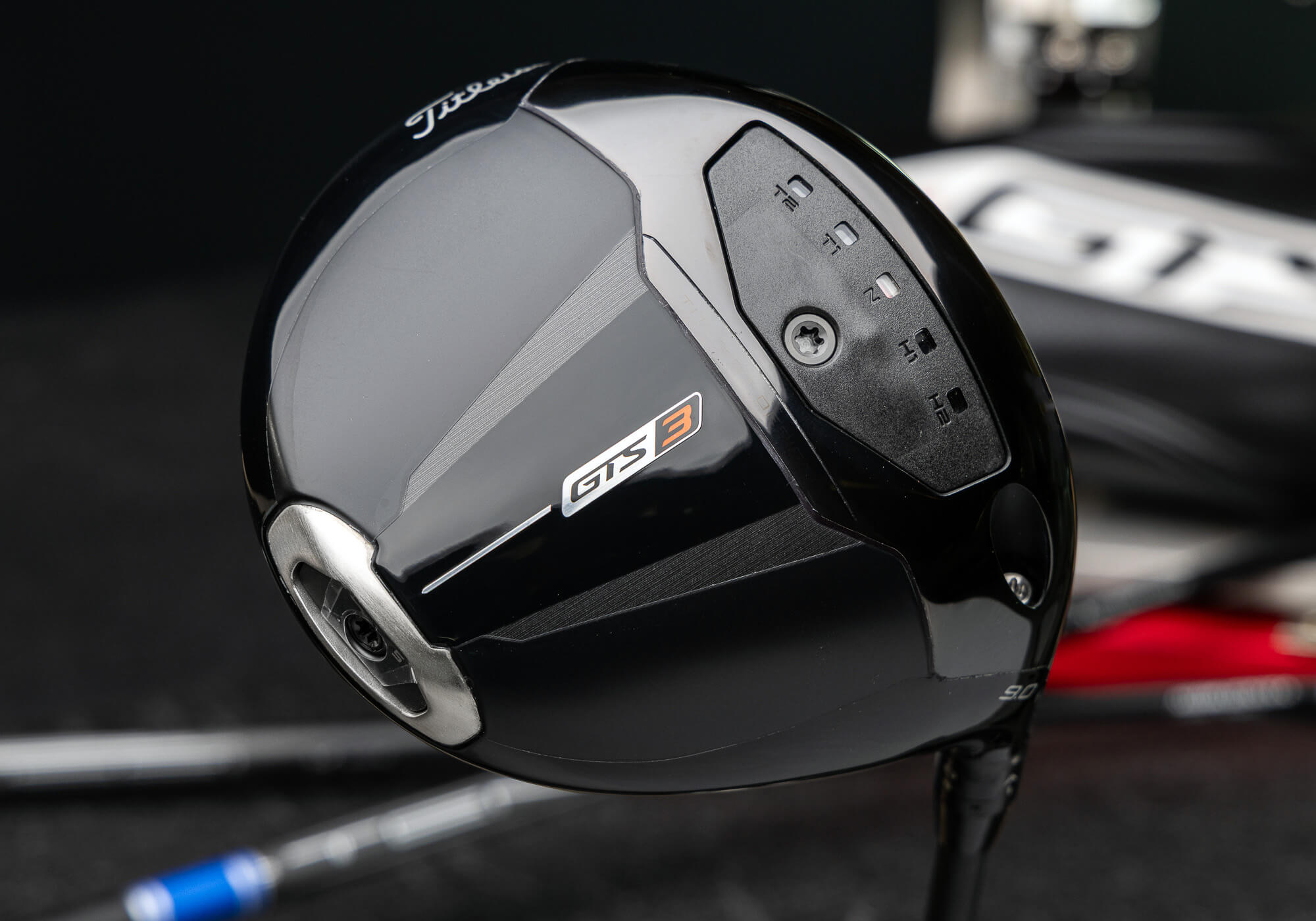
“Acushnet delivered strong results in the second quarter,” CEO David Maher told investors. “Our results benefitted from the launch of the new Titleist GTS drivers and fairways, which occurred earlier in the year than our typical third-quarter metalwoods launch.”
#2: Those reasons profits were up?
Both companies cite tariff refunds as key drivers to Q2’s profit performance. Acushnet reports it received approximately $38 million in tariff refunds, which led to a 46-percent increase in adjusted EBITDA (Earnings Before Interest, Taxes, Depreciation and Amortization). Without that refund, the company says, profit growth would have been meaningfully lower.
Callaway also benefitted from tariff refunds to the tune of nearly $11 million. It expects to recoup up to $50 million in tariff refunds by the end of the year. That refund definitely helped Callaway’s quarterly bottom line.
Callaway also reaped the benefits of its ongoing gross margin improvement efforts. In fact, Callaway’s top bullet point in its press release cited gross margin improvement as a major accomplishment for the quarter (we’ll get into how the company expressed that increase momentarily). The primary drivers for gross margin improvement, according to the company, were cost reduction programs combined with select price increases and rationalizing (i.e., eliminating) lower margin business.
Gross margin, of course, is sales minus cost of goods sold (materials and labor). Net profit is what’s left over after all the other expenses associated with running a global business are subtracted.
#3 What the heck is a “basis point?”
As we’ve said before, Callaway’s quarterly financial press statements are weird. Where Acushnet’s lead bullet points are straightforward, leading with sales and profit numbers, Callaway gives you this as its top bullet point:
Q2 GAAP and Non-GAAP Gross Margin increased 620 basis points and 420 basis points year over year respectively.
I had to look that one up.
A basis point is a business reporting unit used to express percentage-point increases or decreases. One hundred basis points equals one percentage point of change. When Callaway says it’s GAAP (Generally Accepted Accounting Principles) gross margin increased by 620 basis points, it’s telling us its gross margin increased 6.2 percentage points in Q2 to 50.1 percent. That’s significant, in that last year’s Q2 gross margin was 43.9 percent. The improvement gives Callaway significantly more room to pay its people, fund R&D and enhance sales and marketing programs. It also means more is left over for net profit.
Callaway also reports its golf ball market share rose 250 basis points in June alone. That equates to an increase of 2.5 percentage points. Overall, Callaway’s golf ball market share as of June 30 stood at 22 percent. It ended 2025 at 21 percent. Callaway golf ball sales for Q2 were up 15 percent over last year, at $113.8 million. Ball sales for the first half of the year topped $219 million, up 7.4 percent over 2025.
By comparison, Acushnet sold nearly $274-million worth of golf balls in Q2 and over a half a billion dollars’ worth year-to-date.
That’s a lot of basis points, right there.
#4 Callaway is putting its Topgolf money to good use
When Callaway sold controlling interest in Topgolf for a little over $1 billion last year, it said it planned to use the proceeds to pay off debt. Welp, it’s doing just that. Callaway reports it paid off $421 million in debt in Q2. Specifically, it settled $163 million in long-term bank loans while repaying $258 million in convertible notes.
Both are important as both lower interest payments (the “I” in EBITDA) and strengthen the balance sheet. Paying off the convertible notes is perhaps more significant as it avoids the possibility that those notes could be converted into stock shares which would dilute existing share value.
Additionally, Callaway announced it repurchased $84 million in common stock so far this year including $42 million in Q2 alone. The company still has $120 million left to fund additional stock repurchase.
Why would a company buy back its own stock, you may ask? Usually, there are two reasons.
First, there may be a tax advantage (the “T” in EBITDA) to buying back stock as opposed to paying dividends. The second reason might be the more important one: it can increase EPS, or earnings per outstanding share.
Which leads us to the final thing you need to know.
#5: Wall Street Loves It Some EPS
By all accounts, both companies had very solid second-quarters. I don’t care who you are, $820 million in sales by Acushnet and $612 million by Callaway ain’t chicken feed.
Both companies posted healthy profits, as well.
So, why then, in the days after both companies released their Q2 reports, did Callaway stock stumble a little and Acushnet stock tumble a little more? The answer can be found in EPS (earnings per share), expectations and outlook.
Acushnet stock peaked at $118,71 per share in June. When Q2 numbers were released last Thursday, Acushnet opened at $108.31 but closed at $93.85, with more than 1.1 million shares traded. Apparently, even though revenue beat analysts’ expectations, Acushnet’s earnings per share fell short.
If you divide net profit by the number of outstanding shares, you get earnings per share. Analysts expected Acushnet EPS to be in the $1.33 range. Instead, it came in at $1.28. That doesn’t sound like a lot but it was enough to give analysts the heebie-jeebies. That says margins were tighter or expenses were higher than expected. When combined with management’s cautious outlook for the remainder of the year, Acushnet’s stock took a hit.

A different story for Callaway
Even though Callaway’s sales and earnings weren’t even in the same ballpark as Acushnet’s, its stock rallied after its report was released Aug. 4. Its EPS for Q2 reached $0.40 (40 cents) per share, up 67 percent from Q2 last year. For the first half of 2026, EPS was $0.78 per share, up nearly 40vpercent over 2025.
Callaway stock hit $19.85 per share on Aug.4 before closing at $19.57. By Friday, Aug. 7, it was down to $17.59. Despite the EPS performance, analysts cited Callaway’s conservative third-quarter estimates for dampening market enthusiasm.

In the big picture, though, Callaway’s stock has, for the most part, rallied in 2026. On Jan. 1, when the Topgolf split became official, Callaway stock stood at $11.72 per share. One year ago, it was around $8 per share.
So, even though Acushnet earned more money per share than Callaway, sold more golf stuff than Callaway and made more profit dollars than Callaway, it took a Wall Street hit because its EPS was eight cents lower than what analysts were expecting.
On the other hand, even though sales and profits were lower, Callaway’s increasing margins and its stock buyback program had analysts slightly more bullish on its prospects. The stock lost a little steam, but the company still has $120 million left to buy back shares. Less outstanding stock means earnings per share will likely continue to increase.








Leave A Reply