


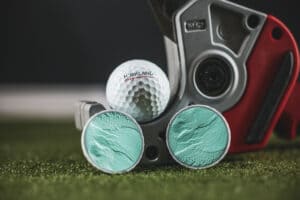
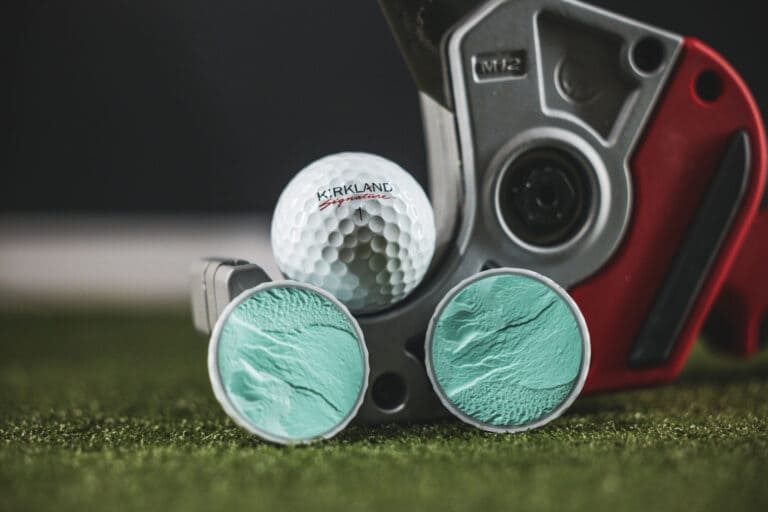
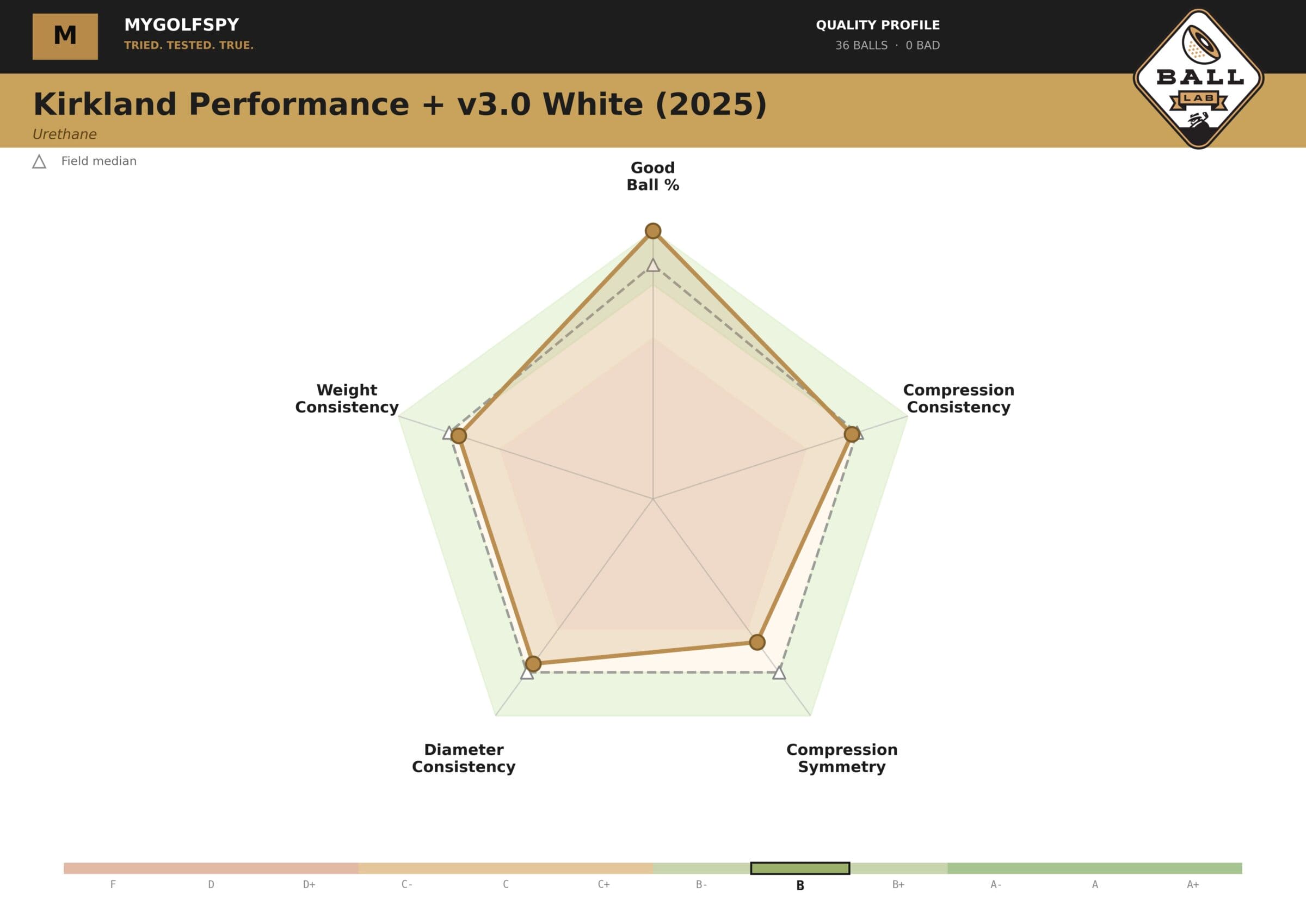
The 2025 Kirkland Performance + v3.0 ($19.99/dozen) scored 85/100 (B grade, Conditionally Recommended). It posted a perfect good ball rate with zero critical defects, impressive at this price. Compression consistency graded C+ and compression symmetry graded D, meaning ball-to-ball and within-ball variation are the primary weaknesses. It’s made at SM Global which also produces the PXG Xtreme balls as well as the Amazon Basics. For the price, it’s a competitive result but consistency gaps keep it from a full recommendation.
The Kirkland Performance + v3.0 is a urethane, three-piece golf ball that sells for US$19.99 per dozen exclusively at Costco, less than a third of what most “tour-level” balls cost. It’s the most affordable ball we’ve tested in this series by a significant margin and the question Ball Lab can answer is whether the manufacturing holds up at that price. We measured weight, diameter, compression, roundness and balance across 36 balls and three boxes to give you the manufacturing side of that picture.
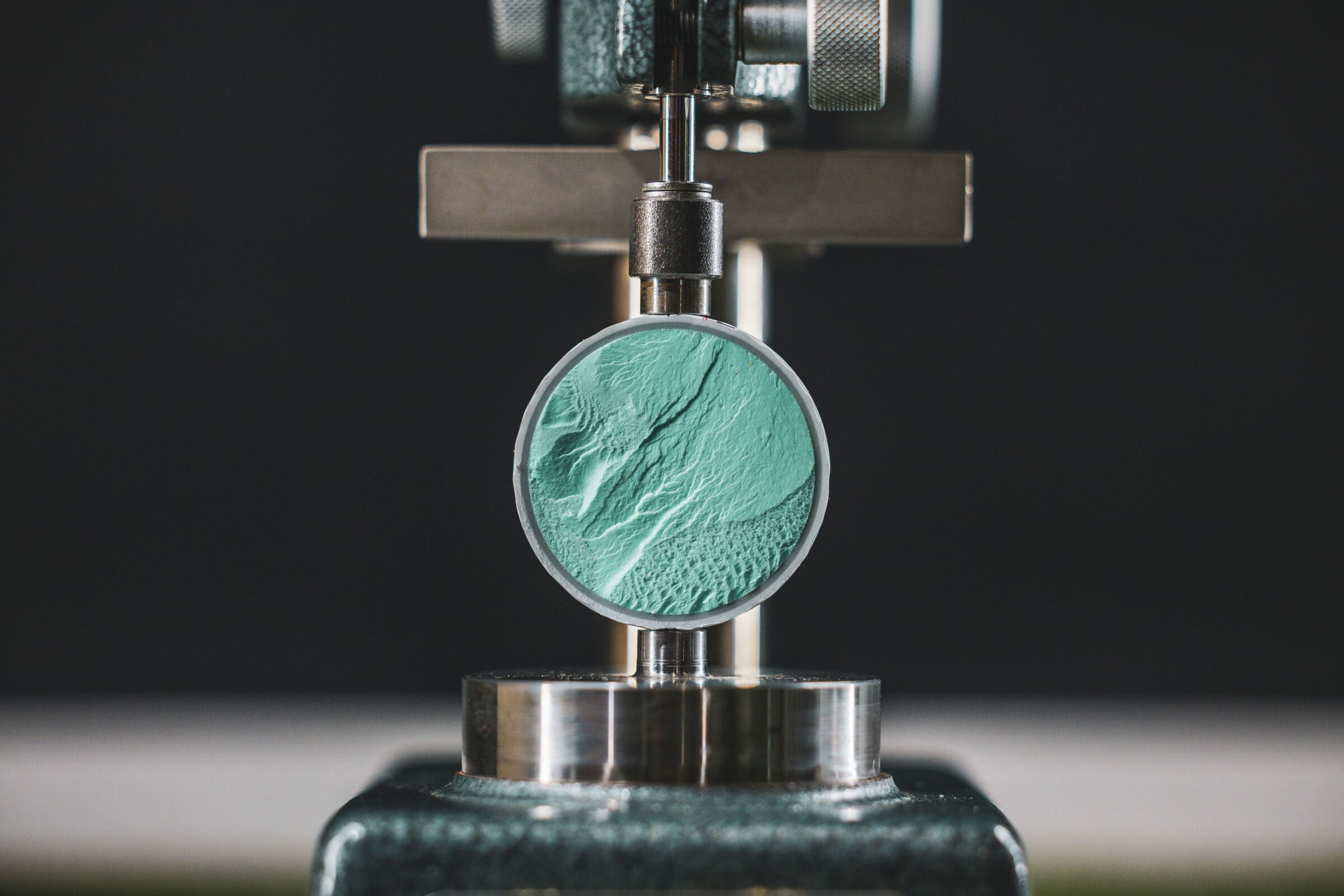
Here’s what the 2025 Kirkland Performance + v3.0 looks like under the microscope.
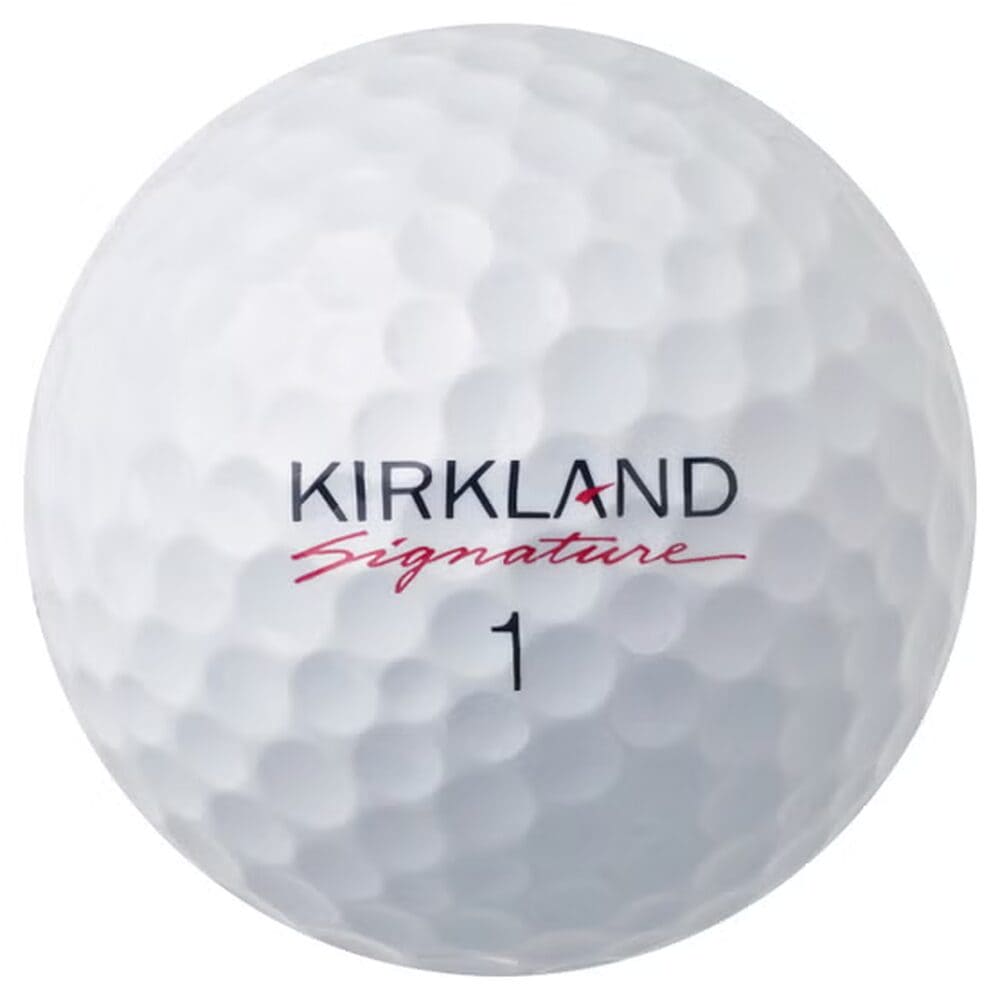
Kirkland Performance + v3.0
 Pros
Pros
 Pros
Pros - Perfect quality control — 100% good ball rate across all 36 balls, zero defects
- Urethane construction at $19.99 per dozen
Cons
 Cons
Cons - Compression symmetry graded D — a median of 3.0 points against a field average of 1.9
- Compression consistency graded C+ with a delta of 10.5 points — wider than the database average
Our Verdict
 Our Verdict
 The 2025 Kirkland Performance + v3.0 earns a Quality Score of 85 and a B grade: Conditionally Recommended. Good Ball Rate came in at 100 percent with zero defects across all 36 balls, a meaningful result at this price point. What holds the score back is compression symmetry which graded at D with a median of 3.0 points against a field average of 1.9 and compression consistency at C+ with a delta of 10.5 points. At $19.99 per dozen, the Kirkland delivers a manufacturing profile that is genuinely competitive for the price even if it doesn’t match the consistency of the tour-level balls in this test series.

Google is changing how content is shown. Add MyGolfSpy as your preferred source to ensure you don’t miss the latest gear news, instructional tips and buying guides.
Product details
- Price: $19.99/dozen
- Construction: 3-piece urethane
- Compression: 92 (Firm)
- Factory: SM Global Vietnam
- Diameter: 1.6831 in.
- Weight: 1.6097 oz.
- Bad Balls: 0 of 36
Test results
The 2025 Kirkland Performance + v3.0 scored 85 and earned a B grade: Conditionally Recommended. The score is built on a perfect critical defect record and a manufacturing profile that competes well for the price with consistency metrics that are held back by compression variation across and within each ball.
Good Ball Rate came in at 100 percent. All 36 balls passed inspection with zero flagged defects across cores, layers and covers. For a ball at $19.99 per dozen, that’s a result that would hold up against balls costing three times as much.
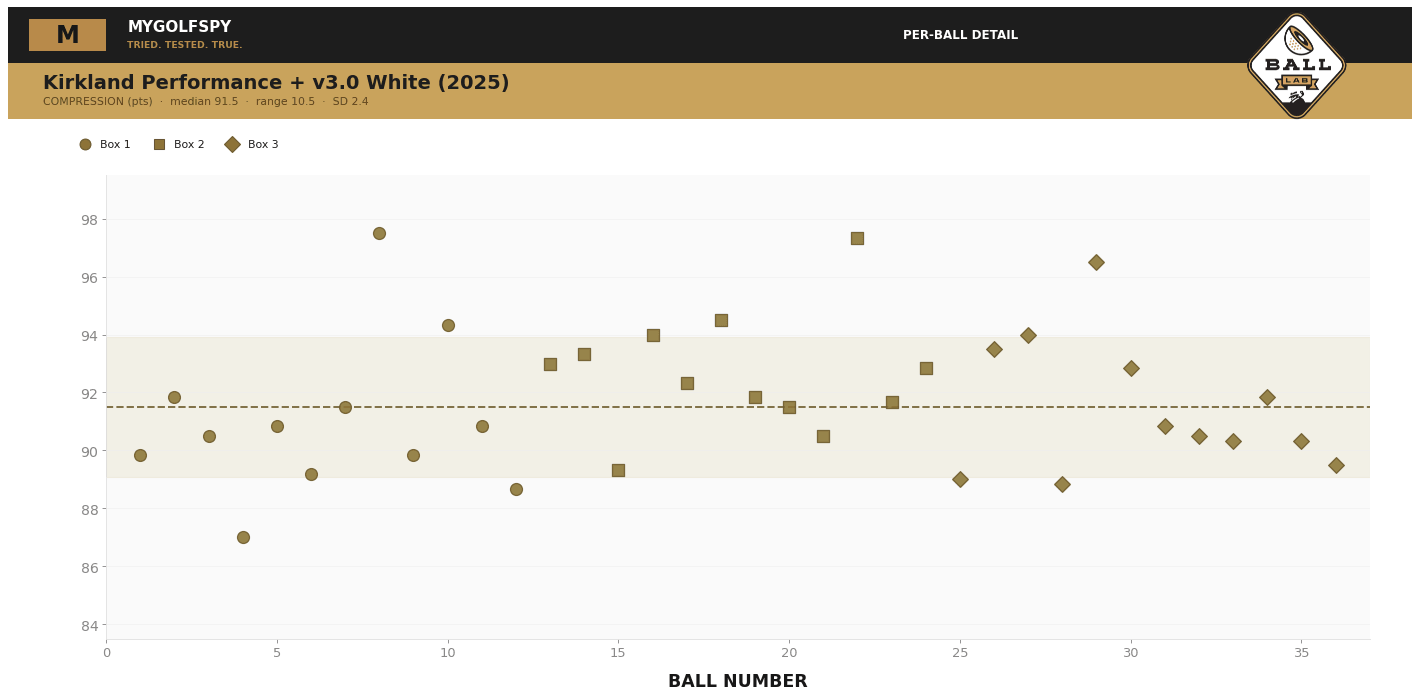
Compression consistency graded at C+ with a delta of 10.5 points and a spread running from 87.0 to 97.5, slightly worse than the database average of 9.6. Ball-to-ball speed variation is possible across the sample.
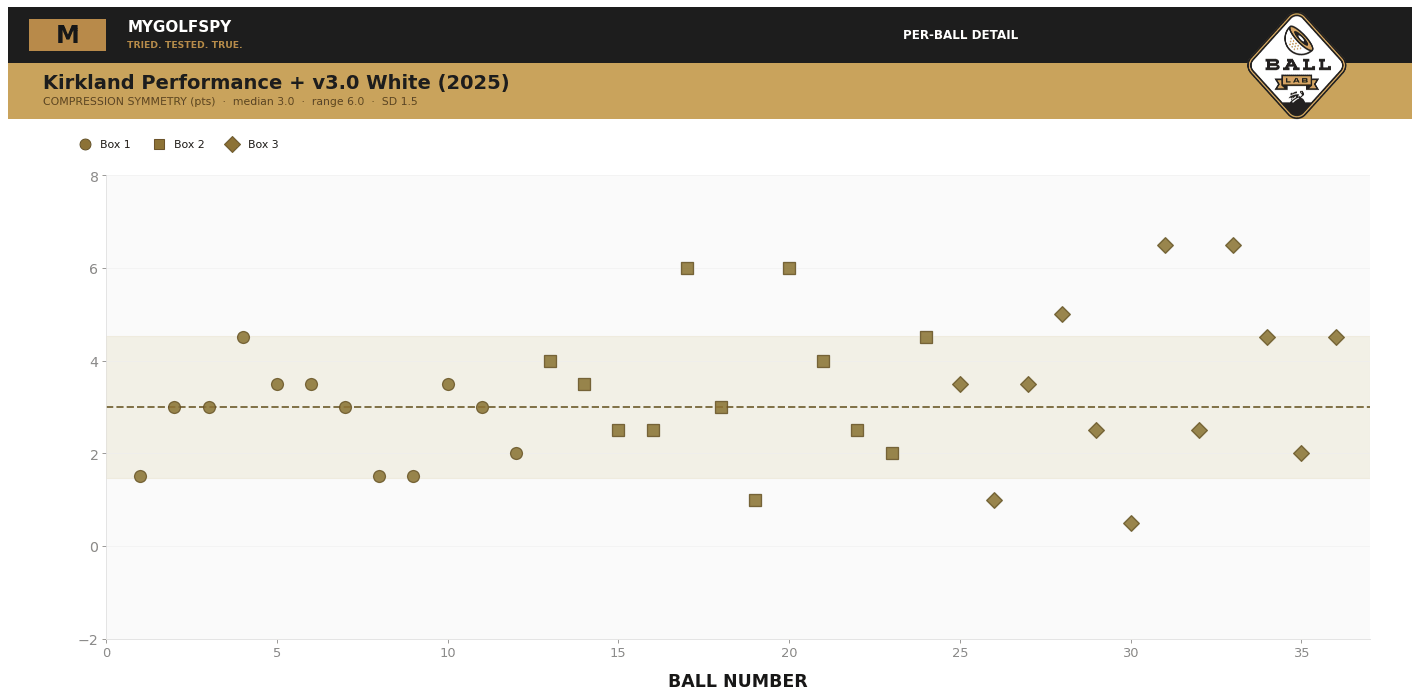
Compression symmetry graded at D with a median of 3.0 points against a field average of 1.9. Individual balls show more internal compression variation than we’d like to see.
Diameter consistency graded at C. The sample showed a seam bias with 29 of 36 balls measuring consistently thicker through the seam than at the poles. Weight consistency also graded at C with a range running from 1.6018 to 1.6201 ounces and no balls exceeding the USGA limit.
At $19.99 per dozen, the Kirkland Performance + v3.0 earns a conditional recommendation. The perfect defect record is the headline. The compression metrics are where the price shows up in the data.
Use the MyGolfSpy Golf Ball Selector to compare 48 golf balls using data from our 2026 robot test. Filter by swing speed and see how each ball performs from driver to wedge to find the best fit for your game.

Compression
Compression is a measure of how much force is required to deform a golf ball. The higher the number, the firmer the ball. Consistency matters because a ball that compresses differently from shot to shot produces different results from shot to shot. Ball Lab measures every ball individually and tracks both the average and the spread across the sample.
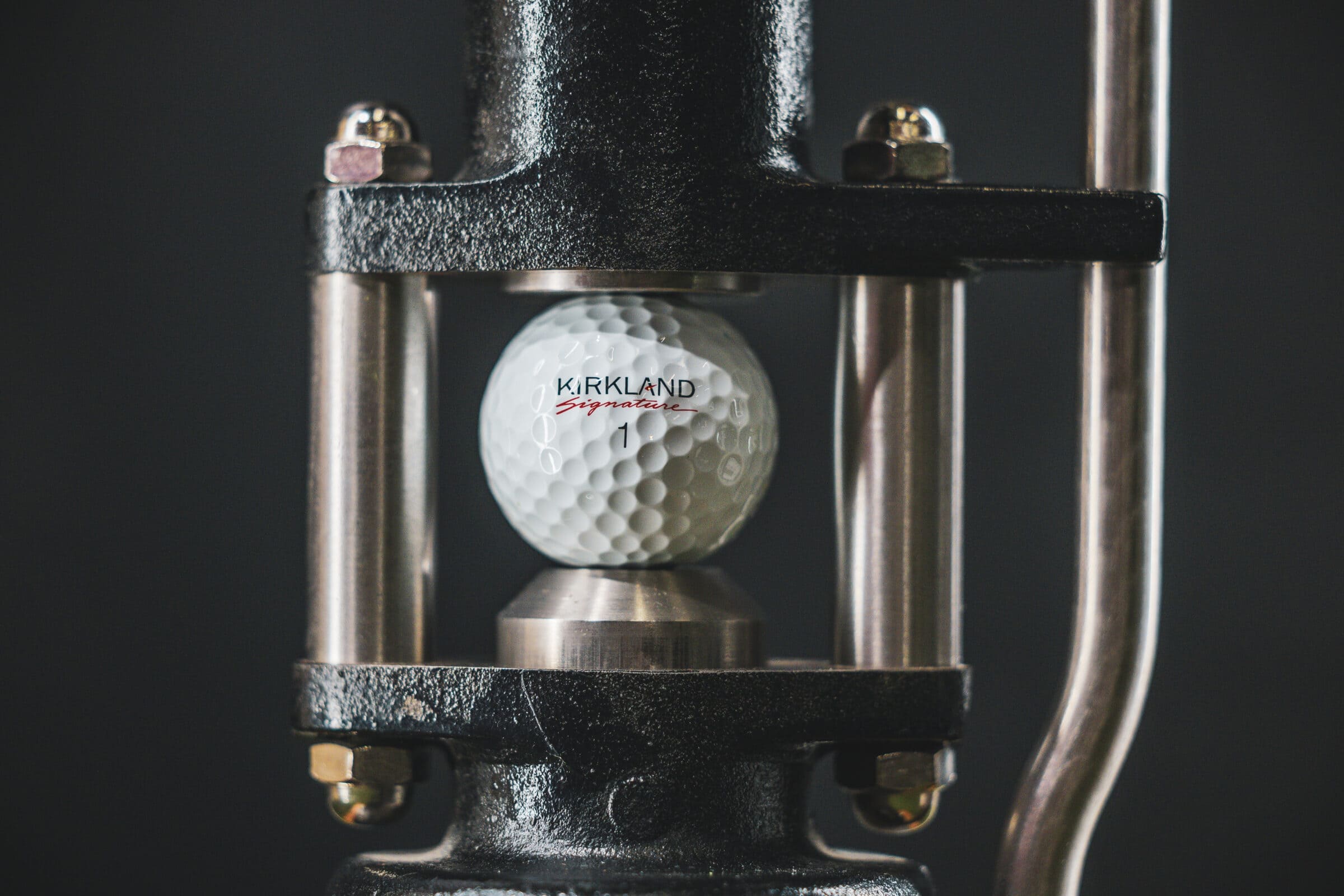
The 2025 Kirkland Performance + v3.0 averaged 92, in the firm range of our database and comparable in compression to the Callaway Chrome Tour and TaylorMade TP5. Compression consistency graded at C+ with a delta of 10.5 points and a spread running from 87.0 to 97.5, slightly wider than the database average of 9.6. Ball-to-ball speed variation is possible across that range.
Ball Lab also measures compression symmetry which tracks how evenly compression is distributed across three points on each individual ball. Is each ball consistent within itself? The Kirkland averaged 3.0 points of deviation against a field average of 1.9, grading at D. Individual balls show more internal compression variation than most of the balls in this test series, meaning the three measurement points on a single ball don’t always agree.
The charts below detail the compression measurements in our sample.
Weight
Weight consistency is another metric Ball Lab tracks. Even small differences across a dozen balls can translate to inconsistent ball flight. Ball Lab weighs every ball to four decimal places.
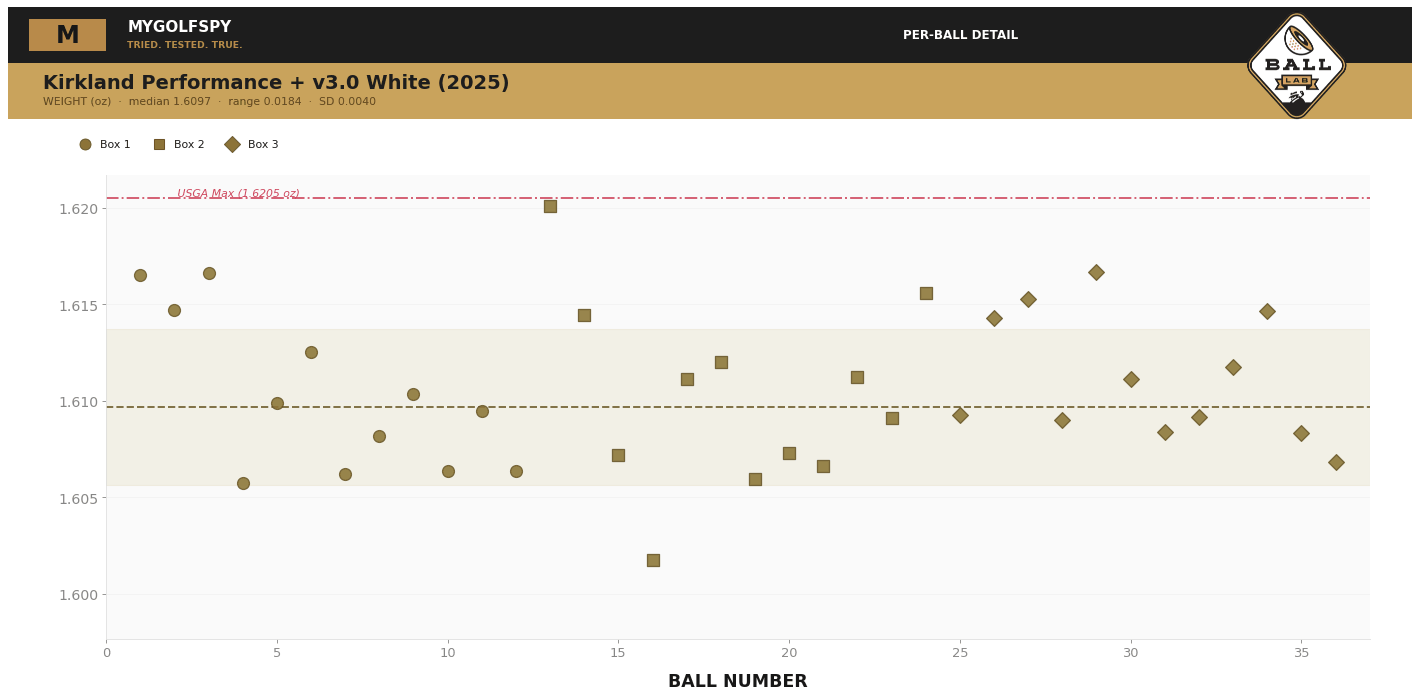
The 2025 Kirkland Performance + v3.0 averaged 1.6097 ounces across 36 balls, in the average range of the database. Every ball cleared the USGA maximum of 1.6205 ounces with a range running from 1.6018 to 1.6201 and a standard deviation of 0.0040. The ball that came in at 1.6201 cleared the limit but left essentially no margin. Box 1 showed the most variation of the three.
Weight consistency grades out at C.
The charts below detail the weight measurements in our sample.
Diameter
A ball that isn’t uniform in shape can move offline on the putting green or produce inconsistent flight in the air. Ball Lab measures each ball across multiple axes to get a true picture of its shape.
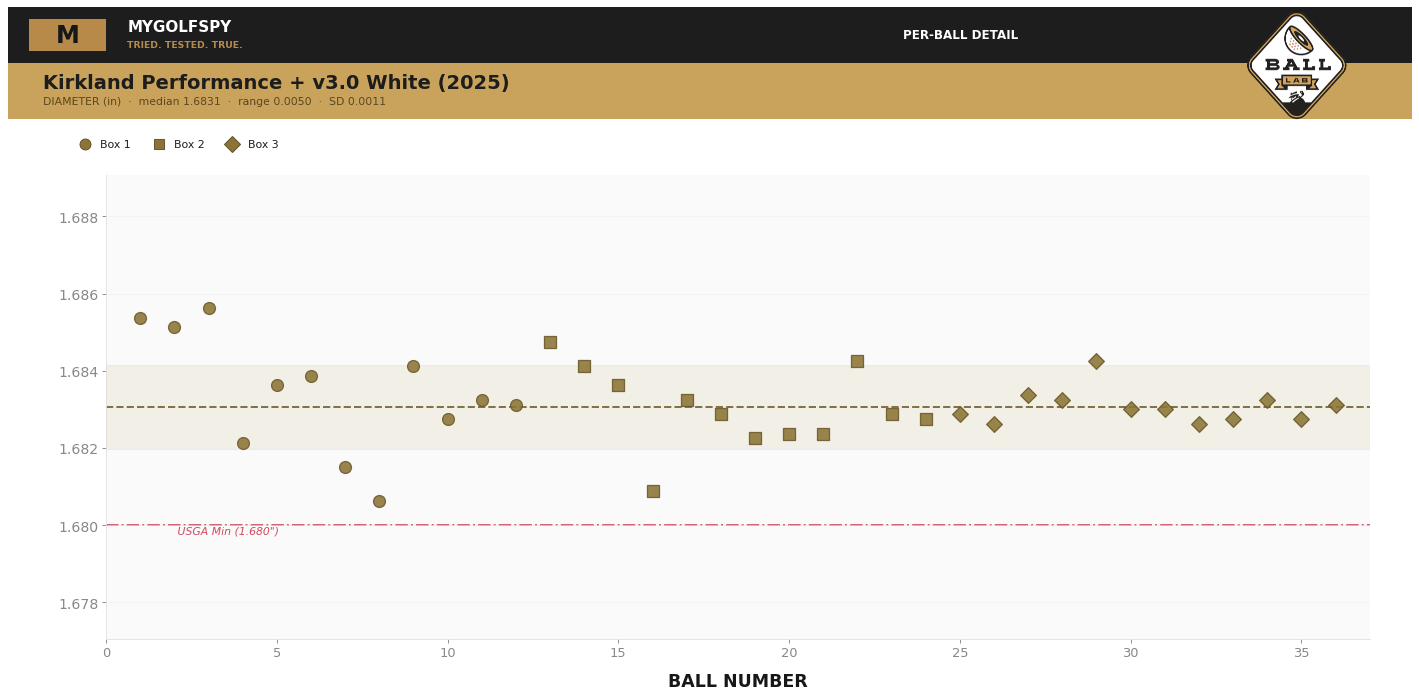
The 2025 Kirkland Performance + v3.0 averaged 1.6831 inches, above the USGA minimum of 1.680, with a roundness deviation of 0.0019 inches. Every ball cleared the minimum. The diameter data does show a shape bias but in the opposite direction from what we saw in the Snell PR4: 29 of 36 Kirkland balls measured consistently thicker through the seam than at the poles. Box 1 was the least consistent of the three at an SD of 0.00147 while Box 3 was the tightest at 0.00043.
Diameter consistency graded out at C.
The charts below detail the diameter measurements in our sample.
Ball Test Results 2026
In the 2026 MyGolfSpy Golf Ball Test, the Kirkland Performance+ v3.0 White showed up as one of the more interesting data points in the field. Off the driver at high swing speed, it finished inside the top 20 for ball speed, but fell toward the bottom third for total distance. It points to a flight profile that doesn’t fully capitalize on the speed it generates.
The white version also behaved noticeably differently from its yellow counterpart throughout the test, trailing the yellow Kirkland by 10 or more places in five of the six driver and iron conditions tested.
Off the driver at low swing speed, the white version was the standout, finishing ninth highest-spinning in the test and the most spin available at its price point. Around the green, though, greenside spin has dipped compared to earlier versions of the Kirkland. For $19.99 per dozen, the performance picture is competitive but uneven depending on the condition.
Ball Lab report card
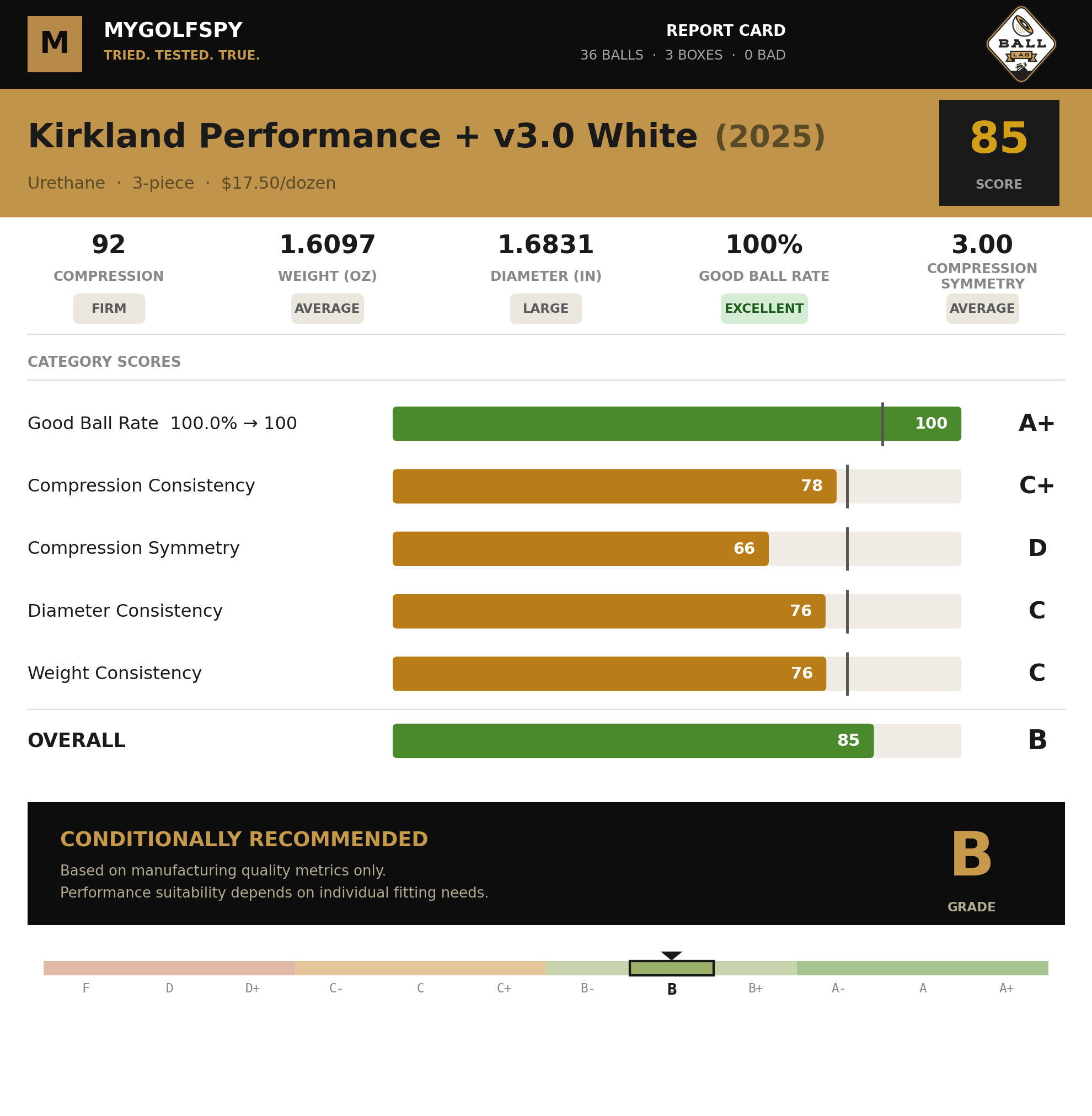
Each Quality Score is a weighted average of five grades: good ball rate, compression consistency, compression symmetry, diameter consistency, weight consistency. Our scoring system punishes defective balls more severely while giving greater weight to compression metrics than to weight and diameter.








Bill Hoyle
4 hours ago
I heard the yellow balls come from a different factory and have very different numbers. Anyone know for sure?