



Editor’s Note: On Thursday afternoon, Callaway announced that it has parted ways with Good Good. Good Good later released another statement saying they were stepping away from their sponsorship partnership with the PGA Tour. On Thursday evening, Golf Channel released a statement saying that the Big Break will not be held in 2026.
It’s been quite a week in the golf news cycle.
Incredibly, this Good Good-Callaway ad debacle has sustained life for almost a full week, an eternity by internet standards. Everyone involved with those companies must be begging for some incendiary LIV update to wash away the stink of a video that has captured everyone’s attention and reached front page news.
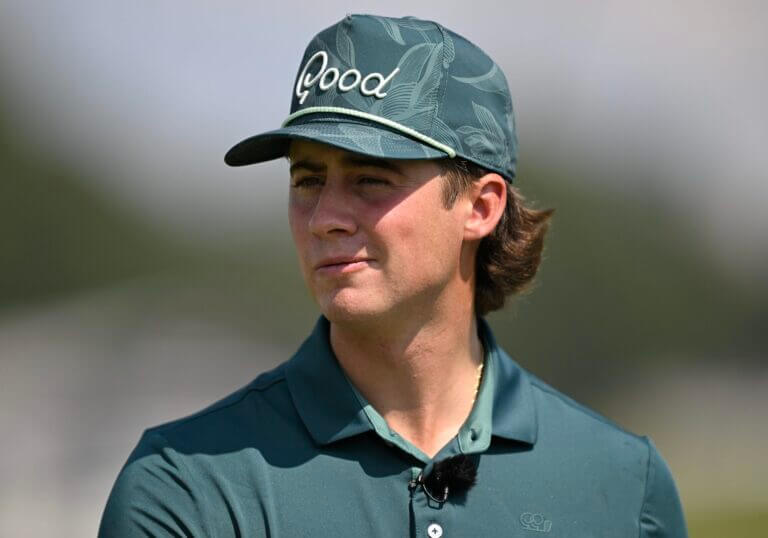
For those who missed it, Good Good, the immensely popular YouTube golf group, released an ad for a special-edition Callaway driver. It was apparently a poorly executed parody of the movie Obsession (shoulder shrug). The problematic part of the ad is that the face of Good Good, Garrett Clark, tackles a woman (Alexis Miestowski of Good Good Girls) and then ominously says “Do not touch my new driver!”
This led to plenty of reaction, including my Monday column calling out Good Good for being tone deaf.
Good Good has since sunk into even more trouble than I anticipated. Their merchandise and gear is being pulled from places like DICK’S, Target and Golf Galaxy. The Telegraph is reporting that the PGA Tour is going to strip Good Good of its title sponsorship for the new Austin-based Tour event in the fall. And the Big Break, which Good Good was helping to revive, has been delayed due to Golf Galaxy dropping out as a sponsor.
On Wednesday night, Clark posted a lengthy video on social media in which he talked about his role in the “terrible” ad that made him “cringe” immediately after seeing it. He reiterated that Good Good is against domestic violence and also defended Miestowski who has been receiving a lot of hate online.
Clark threw the Good Good marketing team under the bus immediately in his apology, skirted around taking full responsibility for it happening and did a lot of deflecting but his video was the first genuine effort at publicly addressing the ad.
My goodness, this is a real mess.
Now we’ve reached the stage of the controversy where we have backlash to the backlash … and subsequent fighting back of people who believe their initial reaction was validated (honestly, me included, we could all use a little more Dolly Parton spirit at the moment).
There is a lot to unpack here. It’s a complicated controversy with so many tentacles. Here are five thoughts on the situation.
1. This is a severe price for Good Good to pay
Listen, the video is egregious. It’s remarkably dumb and I can’t believe it was published.
I stand by what I wrote earlier this week. It was a little emotional and harsh, but we have to swiftly shoot down any notion that this kind of content is acceptable, whether it comes in an attempted joke format or not. I think the passionate reaction has confirmed that people are upset, and justifiably so.
However, this is a brutally steep price for Good Good to pay.
In a perfect world, this would be a learning moment. Good Good and Callaway would each make significant changes, both individually and together in their partnership. Good Good would invest heavily in women’s golf to make amends. They would do some soul searching and figure out why they thought this kind of video was funny. They would never make a similar mistake again and every YouTube golf creator would take copious notes on what not to do when it comes to their own branding and relationships with OEMs. We would all rally together to support women’s golf and hold this up as an example of what can’t happen anymore in our game.
That would be a pretty meaningful consequence on its own.
What we’re seeing now? It seems a little extreme. Are we trying to burn this business to the ground over one terrible moment? It feels like it.
I think the more positive impact on golf would be if Good Good learned from this and made real changes.
I’m not a Good Good fan and have reservations about them. I also don’t think they are bad people just because of this video.
2. Good Good’s PR team let them down almost as much as the video did
For as bad as the video was, Good Good could have managed this aftermath a million times better.
The first step for anyone in their position is to genuinely apologize and explain what happened. Tell everyone you were trying to be funny and it backfired spectacularly. Explain how it got approved. Explain what is changing so it can’t happen again. Then actually do something meaningful.
Maybe that means personnel changes. Maybe it means a substantial commitment to women’s golf. Maybe a portion of Good Good merchandise revenue goes toward organizations supporting victims of domestic violence.
Instead, they issued the weakest statement possible before going radio silent until Clark’s video. He left a ton of questions unanswered and didn’t really take personal accountability for a brand he co-founded.
One of the first rules of crisis PR is that you get out ahead of the story. You earnestly apologize, act swiftly and beg for forgiveness. People will generally be understanding if you show real contrition.
Good Good allowed an information vacuum to develop, and everyone else filled it for them.
3. Callaway’s outsourcing of marketing is now a cautionary tale
Reading between the lines, it seems like Callaway got caught with their pants down when it comes to their marketing strategy.
Good Good wasn’t supposed to be an in-house creative agency for an OEM but this situation gives the appearance that Callaway used them as such. They handed a bunch of young content creators the keys to the mansion and trusted them implicitly with the Callaway brand.
They might be experts at producing videos but that doesn’t necessarily mean they are advertising experts. Nike has professional creatives producing its memorable golf commercials. Given the planning and execution of this ad, it’s clear Good Good didn’t have enough guardrails in place.
Callaway entrusted Good Good to be brand ambassadors, essentially outsourcing one prominent arm of their marketing strategy to a group of influencers. It’s a risky bet to take when you don’t have full creative control.
Betting on influencers has a lot of potential upside but there is also a lack of control. You don’t want to rely on them too heavily.
Everyone in the industry should be taking notes. Influencers can amplify your brand but they can’t replace your brand’s own marketing judgment.
4. There is an anti-YouTube golf faction that is pouring gas on the fire
I’ve been thinking about this one a lot.
Good Good is kind of like the MrBeast of golf. The content is geared toward young people. The “nutritional value” is intentionally low. It’s the candy store of golf content. Young guys acting silly on a golf course. Some find it fun; others find it cringey. Generally speaking, the further you are from its target demographic, the harder it is to understand why Good Good is so effective.
I’m not in their demographic but I respect the business and entrepreneurial spirit of the founders. Good Good is a behemoth.
The point I’m building to is that Good Good is also an easy target. There is a segment of golf that is fed up with the YouTube golf scene, particularly when creators like Clark have become enormously successful simply by playing golf on camera.
If you’re a 14-year-old golfer, there is a legitimate chance Good Good has more influence over what you watch, wear and buy than Tiger Woods does.
I’m not saying that’s right or wrong. It’s simply a reflection of how golf media has changed.
And a sizable portion of traditional golf culture doesn’t like that change. Some people have been waiting for an opportunity to revolt against YouTube golf (or at least against what they believe it represents).
Good Good’s mistake opened the door, and those critics came charging through it.
I think that’s one reason this story has sustained so much attention.
5. Live by viral content, die by viral content
Good Good’s entire business formed because of viral content. They leveraged the Internet—all of the good, bad and ugly parts of it—to create this brand.
Well, that cuts both ways.
When you’re a company built around personalities and viral moments, you have tremendous influence. You also carry risks that more traditional companies don’t.
The premise of your company is built around on-camera personalities. You have some editing control over what those personalities say and do on camera but the video evidence of any misstep is damning and has potential to go viral.
This ad hit that mark. People had a visceral reaction seeing a guy tackle a woman in an advertisement. There was nothing ambiguous about this. You could see it happen just like you could see a Good Good member make a hole-in-one on a par-4.
The same machine that helped turn a group of guys playing golf on YouTube into a multimillion-dollar brand can turn against them in an instant.
The question now is what Good Good does with this moment. The ad was indefensible but the response from here matters more than another round of internet outrage. If the company actually learns something from this (and proves it through its actions), maybe something productive can come from an otherwise miserable week.
So those are my thoughts. What do you think? Let me know in the comments.
Top Photo Caption: Garrett Clark has responded to criticism about a Good Good ad gone wrong. (GETTY IMAGES/Ben C. Jared)
Get more from MyGolfSpy
Create a free account to build your golfer profile and get personalized recommendations from our testing (coming soon!)
[uwp_register]







Mike Brown
1 month ago
The problem is not the commercial but the double standard hypocritical thinking of people today. Lighten up folks. Everyday Hollywood offers up movies where woman, minorities, and even the handicapped are abused, made fun of or depreciated and that’s ok because they are paid entertainers. Hundreds of Hip Hop songs are filled with horrible lines that degrade women or support harming police and that’s ok because its entertainment. I’ve lived long enough to see our culture shift into a direction that puzzles me and at times even frightens me. Some of it makes totally no sense