



Three Reasons Your Handicap Is Lower Than It Should Be
News

Three Reasons Your Handicap Is Lower Than It Should Be

Support our Mission. We independently test each product we recommend. When you buy through our links, we may earn a commission.

Three Reasons Your Handicap Is Lower Than It Should Be

Everybody knows someone in their inner circle with a vanity handicap.

It’s the player who claims to be a single-digit—but rarely breaks 85 when you play with them.

In golf, we often talk about sandbagging but vanity handicaps might be just as common.

You’ll usually notice it in a few ways:

  • They play better alone
  • Gimmes are generous
  • Mulligans are plentiful

Is this you? Here are three signs your handicap is lower than it should be.

You don’t log your worst rounds
This is one of the most obvious ways that a golfer is carrying a vanity handicap.

If you post only the good rounds, that’s all your handicap is based on. The recipe for handicap calculation depends on accurate scoring for all rounds meeting the official handicapping criteria. (For more insight into how to correctly post scores for an accurate handicap index, check out your local or national golf association’s website.)

If you play a few rounds of golf throughout the week, your handicap index will look drastically different if you omit your “blow-up round” of 93. Too many golfers end up six holes deep and decide “this one isn’t getting posted.” If you’re looking for accuracy, post the bad rounds, too.

Too many gimmes
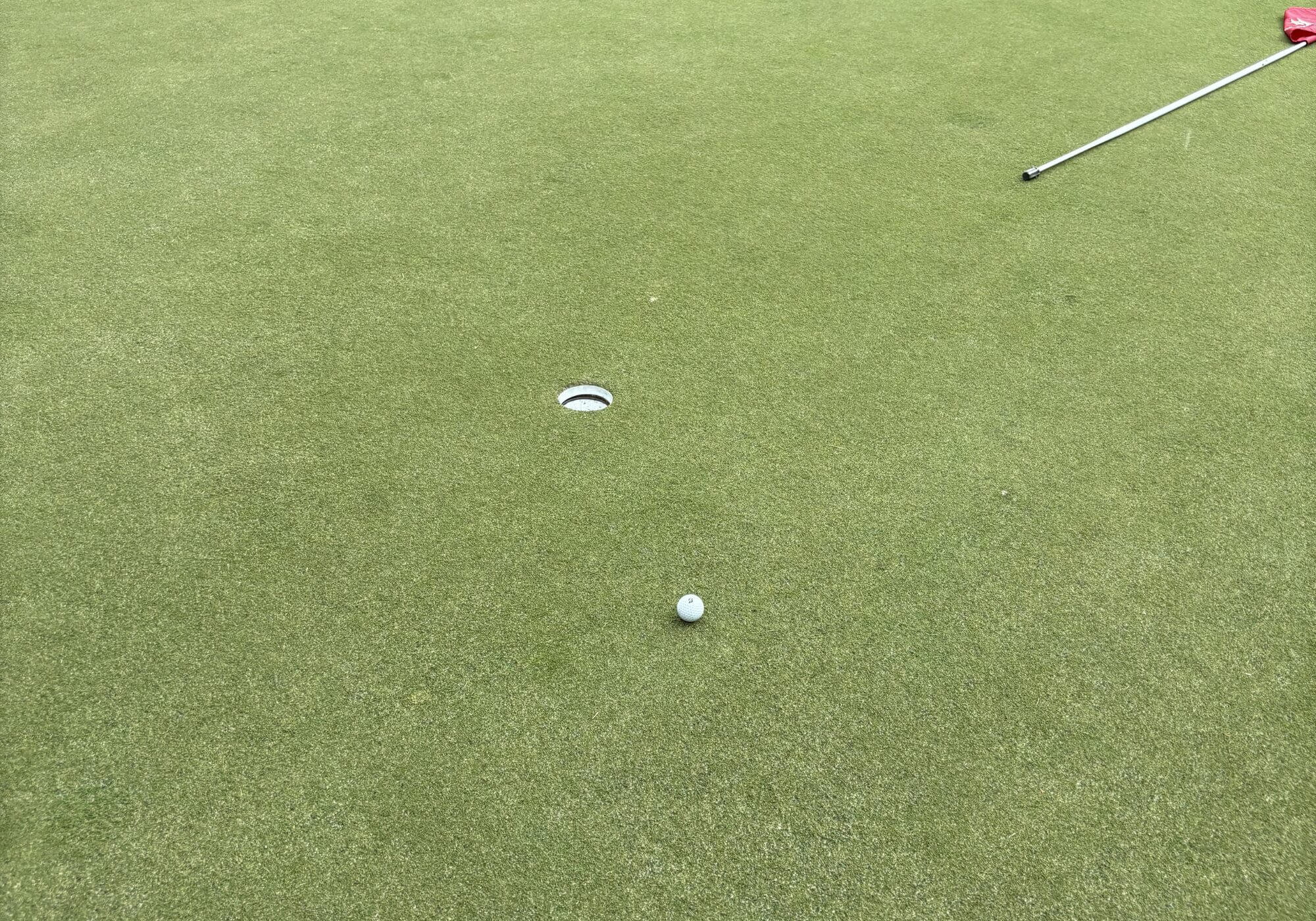
This is the silent killer in terms of a legitimate handicap.

PGA Tour players make just over 90 percent of their four-footers. If a Tour player misses one in10 putts from this distance, imagine how many you (an amateur) would miss if you putted out every single one.

I take gimmes inside three feet once in a while. However, anything outside of three feet is an absolute “must putt.” You’re not good enough to consider a four-footer automatic. Respect the game and putt it out.

Just as bad as taking too many gimmes is the oh-so-familiar “re-putt.”

This is defined as:

(a) Missing your first putt from inside about eight feet
(b) Then putting it again with claims such as:

  • “I didn’t line it up.”
  • “I needed to clean my ball.”
  • “I rushed that.”
  • “I usually make those.”

Excuses aside, you missed the putt. Tap it in for bogey and move on to the next hole.

My childhood best friend put it perfectly: “If you need to take a gimme, you were nervous about missing the putt.”

Too many “unplayable” shots or too many mulligans
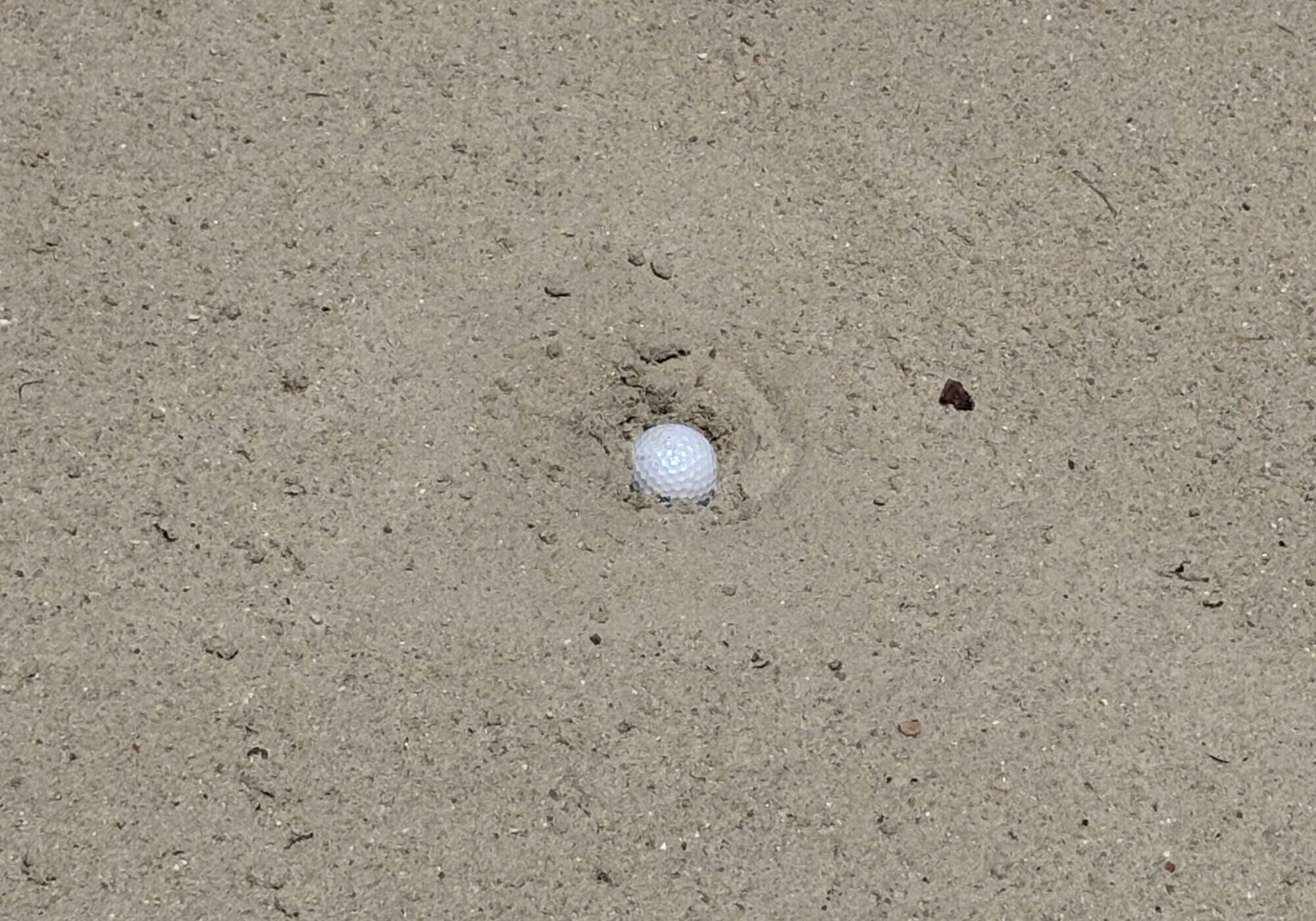
Now this is a nasty fried-egg lie. I took a picture and then started mentally preparing for what was sure to be a blow-up hole.

My wife asked if I was going to move it. I shook my head and said, “Nope, gotta play it as it lies.”

If you’re playing for fun and not keeping score, go ahead and move it. If you’re grinding every day with the goal of becoming a single-digit handicap or a scratch golfer, play it as it lies. You’re only hurting yourself by wimping out on the tough shots, not to mention maintaining an accurate handicap index.

Mulligans are the last thing we’ll focus on that negatively affects handicap calculation.

If you hit a bad shot, a mulligan might seem like the logical move. If you’re focused on maintaining an accurate handicap, it’s the worst move possible.

That mulligan might only make a difference of one stroke on the scorecard but there’s a high likelihood that it will positively affect you much more than you think.

You see, if you hit your tee shot into the water, you’re not just saving one stroke, but potentially two or three because you have to avoid the pressure of having to hit that same shot again, potentially with the same disastrous result.

I’m all for a breakfast ball on the first tee (if you didn’t warm up on the range) in a friendly game but I discourage any mulligans outside of that. Mulligans are a major problem when it comes to having an accurate handicap.

Final thoughts

If you’ve made it this far, you’re probably rethinking some of the ways you play golf.

You don’t have to change—but don’t be surprised if it feels a little uncomfortable showing up to a money match or tournament wearing a vanity handicap like a badge of honor. You will inevitably pay the price.

If you track your handicap accurately, you might find yourself winning more money, avoiding being embarrassed, and maybe even sleep a little better. Don’t be the guy who claims to be a 5 handicap on the first tee and ends up firing an 89.


For You

For You

Instruction
Jun 9, 2026
If You Still Play Long Irons, Copy This Thought From Ludvig Åberg
PLM 2025_Most Wanted_Foresight GC3 PLM 2025_Most Wanted_Foresight GC3
News
Jun 9, 2026
College Golf Tournament Prep Looks Nothing Like It Did When I Played
News
Jun 9, 2026
The Best Father’s Day Golf Gifts That Won’t Break the Bank
Tyler Allred

Tyler Allred

Tyler Allred

Tyler Allred

Tyler Allred

Tyler Allred

Tyler Allred

Tyler Allred

Tyler Allred


    This site is protected by reCAPTCHA and the Google Privacy Policy and Terms of Service apply.

      Pete

      5 days ago

      I think there’s plenty of fudging of handicaps both up and down, yet the system seems to work amazingly well. My club holds an annual member-member net match play over the course of the season. There’s a bit of grumbling about certain players’ handicaps, yet typically very few matches end in fewer than 15 holes and about a third end up going to extras. It’s a great format and the handicap system makes it possible.

      Reply

      Rolla

      5 days ago

      As an Aussie club golfer. The competitive landscape is different. We play stroke or modified stroke (stableford etc) in comp almost exclusively. No one ever takes gimmes or mulligans. If your playing socially do what you want. I think handicapping rounds played without a marker or not in a competition setting changes your mental dynamic that makes it easier to score well and shouldn’t be allowed. I personally would never play golf for money with someone with a US based handicap because of the generally relaxed attitude to handicaps. Handicaps exist not for your ego but the sporting integrity of the amateur game.

      Reply

      Lee

      3 days ago

      Bang on. The Scottish approach is very similar to the Aussie approach. Gimme only applies in matchplay. Mulligans are unheard of unless playing a bounce game which is just for fun but anything handicap related it’s hit it, find it, hole it out, as it should be. Surprising the number of times you’ll see 2/3 feet putts missed.

      Reply

      DaVe

      5 days ago

      One bad round will not affect your index because it is calculated based on your best 8 of 20. Conversely, one abnormally low round will affect your index because it will be one of your best 8.

      Reply

      Andrew the Great!

      5 days ago

      Not necessarily, or not directly. But if the oldest round of 20 is being used for your index calculation and there’s a higher but unused differential in your recent-20 than that one, then the bad round will knock off the oldest round and a worse round will be used. So your index *can* go up, even if your most-recent bad round isn’t used in the calculation.

      Reply

      Todd Early

      5 days ago

      What I want to know is this: all my scores are on my home course from the same tees. Why is my course handicap 1 stroke lower than my regular handicap? This costs me in our regular Saturday game…

      Reply

      Alex

      5 days ago

      It’s because your home course is too easy. Your handicap index is absolute; it only changes after you post a score. Your on-course handicap, on the other hand, is relative. It moves up or down depending on the difficulty of the course, as measured by the course’s rating and slope. My on-course handicap goes down a tick on easy courses and up on harder ones.

      Reply

      Andrew the Great!

      5 days ago

      That would apply if he played *different* courses. But *all* of his scores are from *one* course, and his index based ONLY on that course is X, but his course handicap on THAT course where ALL of his scores are posted, is X-1. Why would his course handicap be less than his handicap index if ALL of his scores only come from that one course? That’s what seems odd.

      Chuck Ferrell

      3 days ago

      Because Course Rating is based on a scratch golfer (not necessarily you).

      Reply

      Joe

      1 day ago

      Your index (what you referred to as your regular handicap) is based on a course of average difficulty. The tees that you play from on your home course play one stroke easier than an average course for a player with your handicap, so your course handicap there is one stroke less than your index. It doesn’t cost you anything in your Saturday game, since everyone that you’re playing with has a handicap that is calculated the same way. Indexes are meant to be portable- you can take it anywhere on Earth that uses the World Handicap System, adjust it based on the slope and rating of that course and tees, and get a course handicap that you can use to compete against anyone else with a handicap.

      Reply

      Philly Ray in MN

      5 days ago

      Thanks for the article. I’m all for enjoying a nice round with friends. However, I am related to golfers who claim to be a 15 handicap and they haven’t posted a score in 2 years even though they play twice a week. Then we play in a league and instead of getting strokes, he’s giving strokes to his opponent and we lose the match. Having an honest handicap is the best way to tell if you’re improving. If you fluff your lie or use a “foot wedge” like Judge Schmales in Caddyshack, you’ll really never know if you’re getting better, worse or staying the same.

      Reply

      Keith Oswalt

      5 days ago

      Who cares? If you have a vanity handicap (slightly guilty), when you play a game where handicap is used, you have set yourself up to fail. If you never actually play competitive handicap games, who cares. Why even have a handicap other than to judge yourself. Golfers are notorious for telling tall tales. This is just another one. Let people believe they are better than they are.

      Reply

      Rayan

      5 days ago

      I agree with you, who cares? I don’t care what your handicap is, it has no bearing on my handicap or scores. I’ve played with golfers who profess to be single-digit players or who hit their drivers 300+ yards. At the end of the round you know they lied but it doesn’t affect my game, score or handicap. If living in a dream world makes you feel better, then do it. Cheers.

      Reply

      Allan Chandler

      5 days ago

      Do you mean to tell me there are actual people who use mulligans in the middle of the round and then record their score? Wow.

      A breakfast ball on the first hole is the only thing that “might” be OK, and that’s if you are hustling from the parking lot.

      Reply

      athalonius

      5 days ago

      I work to keep my score as accurately as possible because I want my handicap to reflect my actual game and track real improvement. I’m currently a 19.7 GHIN.

      This week I had a rough nine-hole round and shot a 65. It definitely hurt to enter that score, but an accurate handicap only works if you post the good rounds and the bad ones. Accurate is accurate.

      Reply

      UpstateNewYork

      5 days ago

      I agree with all this – there’s a reason I’m an HONEST 29 hcp, and they’re all listed here.

      Reply

    Leave A Reply

    required
    required
    required (your email address will not be published)

    This site uses Akismet to reduce spam. Learn how your comment data is processed.

    Instruction
    Jun 9, 2026
    If You Still Play Long Irons, Copy This Thought From Ludvig Åberg
    PLM 2025_Most Wanted_Foresight GC3 PLM 2025_Most Wanted_Foresight GC3
    News
    Jun 9, 2026
    College Golf Tournament Prep Looks Nothing Like It Did When I Played
    News
    Jun 9, 2026
    The Best Father’s Day Golf Gifts That Won’t Break the Bank