


Golf equipment marketing tends to simplify complex concepts.
For example, this oversimplification creates a tidy equation in the minds of most golfers:
Low spin driver = better player driver = faster swing speed driver
But what if this conventional wisdom misses a whole lot of nuance? What if, for many golfers, the math doesn’t work?
In years of Most Wanted testing, we’ve frequently seen “low spin” models rise to the top of rankings, even for our slower swing speed players. This contradicts the standard fitting advice which habitually suggests that slower swingers need more spin and forgiveness.
So what’s really happening here?

From effect to cause
The language of golf equipment often begins with the effect with little regard for the cause – and that effect is almost always framed in the most positive way possible.
Have you ever noticed that nearly every manufacturer offers a “low-spin” driver but none explicitly advertises a “high-spin” driver? It’s not that high-spin models don’t exist; it’s that they’re typically described as “high MOI” or “more forgiving” instead.
To understand why we might want to buck conventional wisdom, we need to understand what “low spin” really means from an engineering standpoint.
It all begins with center of gravity
Whether it’s low spin, high MOI, draw biased or any other marketing description, everything starts with one fundamental design element: center of gravity (CG).
A quick refresher:
The center of gravity is the point in space (in this case, inside a driver head) around which all mass is evenly distributed. While the true CG is rarely at the absolute geometric center of a golf club, it’s typically not far from it.

What truly matters is the CG location relative to what engineers call the “neutral axis” or “impulse line” – an imaginary line perpendicular to the center of the driver face (parallel to the loft) that extends through the rear of the club.
This relationship between the center of gravity and the neutral axis dictates performance in ways that might surprise you.
The physics of low spin
Some generalizations about CG location:
- The closer the CG is to the neutral axis, the more efficient the transfer of energy
- As CG moves closer to neutral (and occasionally below it), spin rates decrease
- This happens because it increases the surface area of the face above the CG, creating more opportunity for low-spin impact conditions
- Moving the CG closer to the neutral axis often requires positioning it more forward in the head
- A more forward CG typically creates more ball speed than a rearward CG – albeit at the expense of MOI

Reframing the conversation
Taking all of that into account, what if we framed our descriptions differently? The conventional wisdom positions the difference between driver models as low spin versus high MOI (typically generalized as “forgiveness”).
While the MOI aspect is broadly true, we could more accurately describe these design differences as:
- Forward CG (traditional “low spin”): Higher efficiency, more ball speed, lower spin
- Rearward CG (traditional “forgiving”): Lower efficiency, less ball speed, higher spin
In other words, what if we considered driver performance not in terms of spin and forgiveness but rather high speed (forward CG) versus lower speed (back CG)?
When you reframe the question as “Can slower swing speed players benefit from faster drivers?”, the answer seems obvious: of course they could, and our testing shows they often do.
The trade-offs
None of this is meant to suggest that everyone should play a low-spin (forward CG) driver. As with everything in golf equipment, there are trade-offs.
While MOI isn‘t the totality of forgiveness (as we discussed in our previous article), there is an MOI penalty to be paid for more speed. With forward CG drivers, spin rates may not be high enough for all players, potentially reducing carry distance and consistency.
Mitigating factors
Several factors can help mitigate the potential downsides of low-spin drivers:
Loft adjustability

We sometimes forget that nearly every driver described as “low spin” is available in 10-10.5 degrees of loft. With today’s adjustable hosels, you can typically increase the loft to 11.5-12.5 degrees, depending on the model.
It’s important to clarify two different aspects of loft and CG:
- Because of the relationship between loft and the neutral axis, higher-lofted heads (e.g., a 12-degree head versus nine degrees) inherently have the CG positioned farther from the neutral axis
- Adjusting loft at the hosel doesn’t change the CG properties of the head itself
Higher loft gives you higher launch and more spin. Even when using a forward CG driver with added loft via the hosel adjustment, you still get the speed benefit of the forward CG position while gaining some of the launch and spin benefits of higher loft.
Impact location
A critical piece of the low-spin driver equation is where you make impact on the face:
- Low face impact: A forward, low CG creates what TaylorMade calls a “greater area of opportunity” – more face area above the CG that works to reduce spin. You’re a great candidate for a forward CG driver (regardless of your swing speed)
- High face impact: You might already produce too little spin. A low-spin (fast) driver may not be right for you unless you can somehow create higher launch and more spin
- All over the face: You would likely benefit most from high-MOI designs
Two important points here:
- “All over the face” isn’t the same as a consistent miss pattern (like always hitting the toe).
- While high-MOI drivers are often recommended for slower swing speed players, it’s actually higher speed players who benefit more in terms of actual yards preserved on off-center hits. This happens because the penalty for an off-center hit increases proportionally with swing speed—a five percent loss of efficiency costs a 110-mph swinger more actual yards than a 90-mph swinger.

Weight configurations
Many low-spin models have adjustable weighting that can put some spin (and forgiveness) back into the head. While placing the heavy weight in the rear often doesn’t match the spin of a mid-market model, it can provide the right trade-off between speed and spin for many players.
Shaft selection
While shafts don’t directly create spin, they do influence delivery and impact location. The right shaft can help put some spin back into a lower-spinning head by promoting a delivery that increases dynamic loft or changes impact patterns.
Who should consider a low-spin driver?
We’re not saying slower swing speed players absolutely should play low-spin drivers. Every player is different so there’s no one-size-fits-all solution.
What we are saying is that slower swingers shouldn’t dismiss these models out of hand. They may not need as much “forgiveness” as conventional wisdom suggests and could benefit significantly from the additional speed.

The takeaway
The perception that low-spin drivers are only for better players or faster players and that higher MOI (higher spin) models are for slow players is an oversimplification that doesn’t match our testing results.
When selecting a driver, consider your typical impact location, swing characteristics and performance goals rather than simply following conventional wisdom about what “type” of player you are.
The right driver isn’t necessarily the one marketing suggests is for you; it’s the one that delivers the best combination of speed, launch and dispersion for your individual swing.
Considering a low-spin driver?
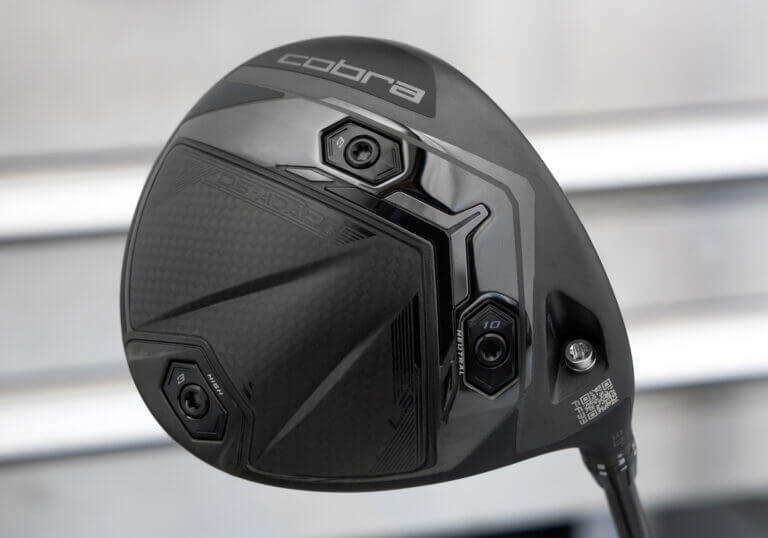
As with other drivers in the marketplace, there is plenty of variety to be had in what’s generally called the low-spin category. Options to consider include the Callaway Elyte Triple Diamond, TaylorMade Qi35 LS, Titleist GT4 (and GT3 for a little bit more spin) and the COBRA DS-ADAPT LS. PING G440 LST, while the lowest-spinning PING driver, tends to be a bit higher spinning than other LS models.








Patrick
1 year ago
How bout we just rate them as beginner, intermediate and advanced? Would make it a hell of a lot easier