


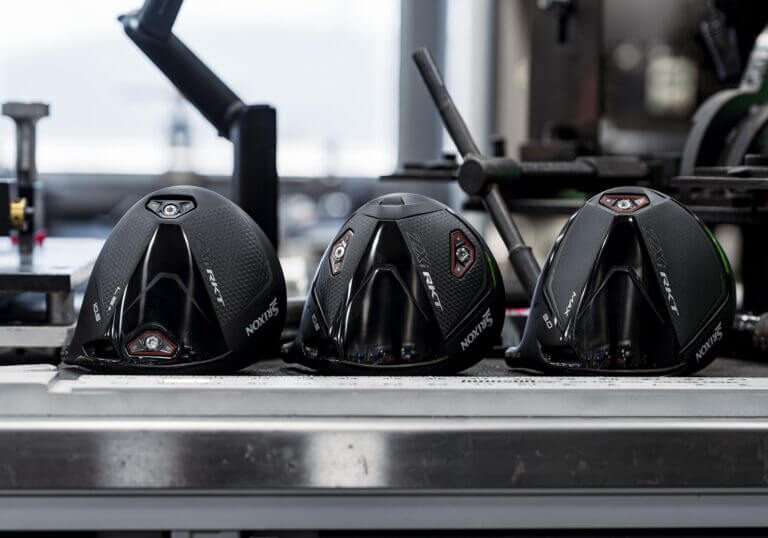
I have watched golfers make this change for years, usually without much planning. They hit a few crooked drives, slide their hands down the grip and suddenly find the middle of the face.
The next ball starts closer to the target. The swing looks calmer. They finish in balance and immediately ask the obvious question: “Why don’t I just do that all the time?”
Maybe you should.
Choking down does not magically repair a golf swing. What it often does is make the driver easier to manage. You have effectively shortened the club, changed how it feels in your hands and removed a little of the excess motion that can show up when golfers try to hit the longest club in the bag.
That small change may be telling you something important about the driver you are using and how you swing it.
A shorter club is easier to control
Driver length gives golfers the potential to create speed but it also makes it harder to return the clubhead to the same place consistently.
The farther the clubhead sits from your hands, the more a small mistake can affect the strike. A little extra reach at address, a long backswing or a rushed change of direction may not look severe but the contact can move quickly toward the heel or toe.
Slide your hands down the grip and the club becomes slightly shorter. You may stand a touch closer to the ball. Your arms can hang more naturally and the clubhead does not feel as far away.
For many golfers, that creates an immediate sense of control.
The swing has not suddenly become perfect. There is simply less club to manage.
You may stop trying to hit it so hard
The driver brings out a different mindset than the rest of the bag. Golfers who make perfectly reasonable swings with a 7-iron often stand over a driver and decide it is time to produce something special.
The backswing gets longer. Grip pressure increases. The transition becomes quicker and balance starts disappearing before the club ever reaches impact.
Choking down can interrupt that pattern.
A golfer who grips down often feels as though the shot requires control rather than maximum effort. The club feels more connected to the hands and the swing becomes more compact without the player consciously trying to shorten anything.
That is one reason a choked-down drive can feel solid almost immediately. The benefit may have less to do with hand position and more to do with the swing you make because of it.
Centered contact can make up for lost speed
Golfers sometimes avoid choking down because they assume they will lose too much distance.
You might lose a little clubhead speed. But you might not notice much difference at all. The real question is what happens to the strike.
A driver swung at full length is not helping if contact is scattered across the face. A slightly shorter swing that finds a more centered area can produce better ball speed, a more predictable launch and a drive that stays in play.
The longest drive in a range session should not decide which setup works best. Pay attention to the average result.
A golfer who gives up three or four yards but removes the wildest miss has probably made a good trade. A golfer who strikes the ball better and loses no meaningful distance has made an even easier decision.
This is where understanding strike location becomes more useful than chasing one impressive number.
Do not ignore the setup change
When you move your hands down the grip, you have changed the effective length of the club. Your address position needs to respond.
Do not grip down and then keep reaching for the ball from the same distance. Let yourself move slightly closer until your arms hang comfortably.
Keep the rest of the setup familiar at first. Use the same ball position and tee height. Maintain the same stance width and spine tilt you would normally use with the driver.
The goal is to test one change, not create a completely different swing.
This driver setup guide is a useful reference if your address position has gradually drifted.
Test it without guessing
The next time you practice, hit a small series of drives from three hand positions:
- Your normal grip position
- About half an inch down
- About one inch down
Do not hit six balls from one position and then six from another. Rotate through the three positions so fatigue, rhythm and warm-up do not influence one group more than the others.
Use face spray or impact tape and track three things:
- Where the ball contacts the face
- Whether the drive finishes inside your intended corridor
- Whether the distance loss, if any, matters
You do not need a launch monitor to learn something. A tighter strike pattern and fewer large misses are meaningful.
The best position is not automatically the one that produces the longest ball. It is the one that gives you the most playable combination of contact, distance and direction.
It may be telling you the driver is too long
If choking down consistently improves the strike, your driver’s playing length may not suit you.
That does not mean you should immediately cut the shaft. Shortening a driver permanently can affect how the club feels and balances. A qualified fitter can help determine whether a shorter build, a different shaft configuration or a change in head weight would preserve the feel you prefer.
You may also decide to keep the driver exactly as it is and use the choked-down position when the hole demands more control. It can become a reliable fairway-finder option without requiring a second swing.
Golfers are often reluctant to choke down because it looks like they are giving up something. In reality, they may finally be using a length that allows them to return the club to the ball consistently.
The driver is supposed to help you advance the ball, not test how much club you can hold. If moving your hands down improves contact, balance and dispersion, pay attention. The club may be giving you a very clear answer.







Simon
3 weeks ago
I just started to choke down last week, as I’ve been avoiding the driver as its my big miss. However, my coach said find a safety shot. So a 3/4 length swing, choked down an inch to 1.5 inches and mostly, they’re in play.
After practicing in the bay choked down, I have started to find the middle of the face more when not choking down – like I needed to shorten it to be able to find the middle, and now having found it, can start to grip normally.
I used a 5w shaft (I have FF33 hosel) at 42.5inches in my Driver, speed was down 2mph 119mph vs 121mph and strike average moved from severe heel to slightly toe. I’m at 45 inches already, albeit I havent ruled out trimming it, but am waiting for some swing changes to imbed themselves before I make any wteaks