

Why Is My Driver Distance So Inconsistent? (3 Common Causes)
News

Why Is My Driver Distance So Inconsistent? (3 Common Causes)

Support our Mission. We independently test each product we recommend. When you buy through our links, we may earn a commission.

Why Is My Driver Distance So Inconsistent? (3 Common Causes)

You hit one drive 240 yards down the middle. The next hole, same swing, same club, and the ball goes 190 yards into the trees. Two holes later, you absolutely flush one 270 yards. Your driver distance is all over the place and it’s making course management impossible. The inconsistency is maddening but it’s not random. There are specific reasons your driver distance varies so much and they almost always come down to three things.

You’re not hitting the center of the face

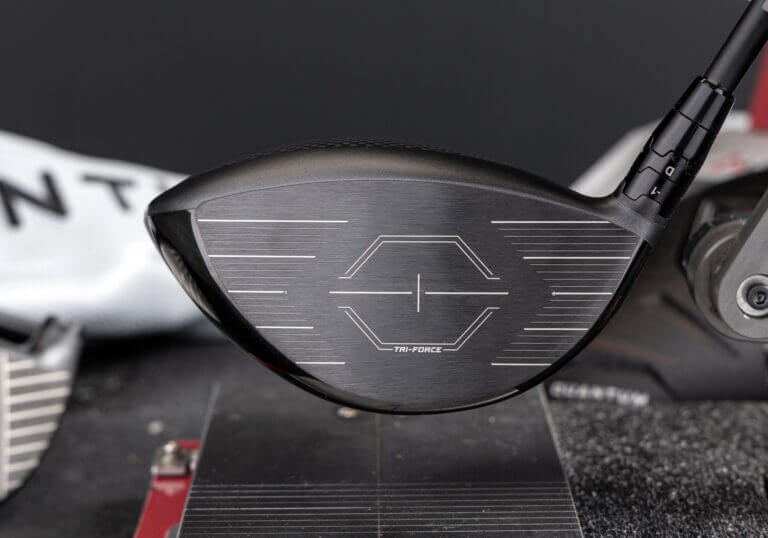
This is the biggest culprit and most golfers don’t realize how much it matters. A drive hit on the sweet spot will go significantly farther than one hit toward the toe or heel, even if the swing speed is identical. We’re talking about 15 to 25 yards of difference just because of where the ball makes contact on the face.

When you miss the center, you lose ball speed. The face twists at impact, energy gets wasted and the ball comes off slower. Toe hits tend to fade or slice. Heel hits tend to hook. Both lose distance. The ball might look like it’s flying OK but it’s not carrying as far as it should.

Here’s the problem: you can’t always feel the difference. A slightly off-center hit might feel fine, especially if you’re not paying attention. You think you made good contact so when the ball only goes 210 instead of 245, you blame your swing or the wind. But the real issue was that you caught it half an inch toward the toe.

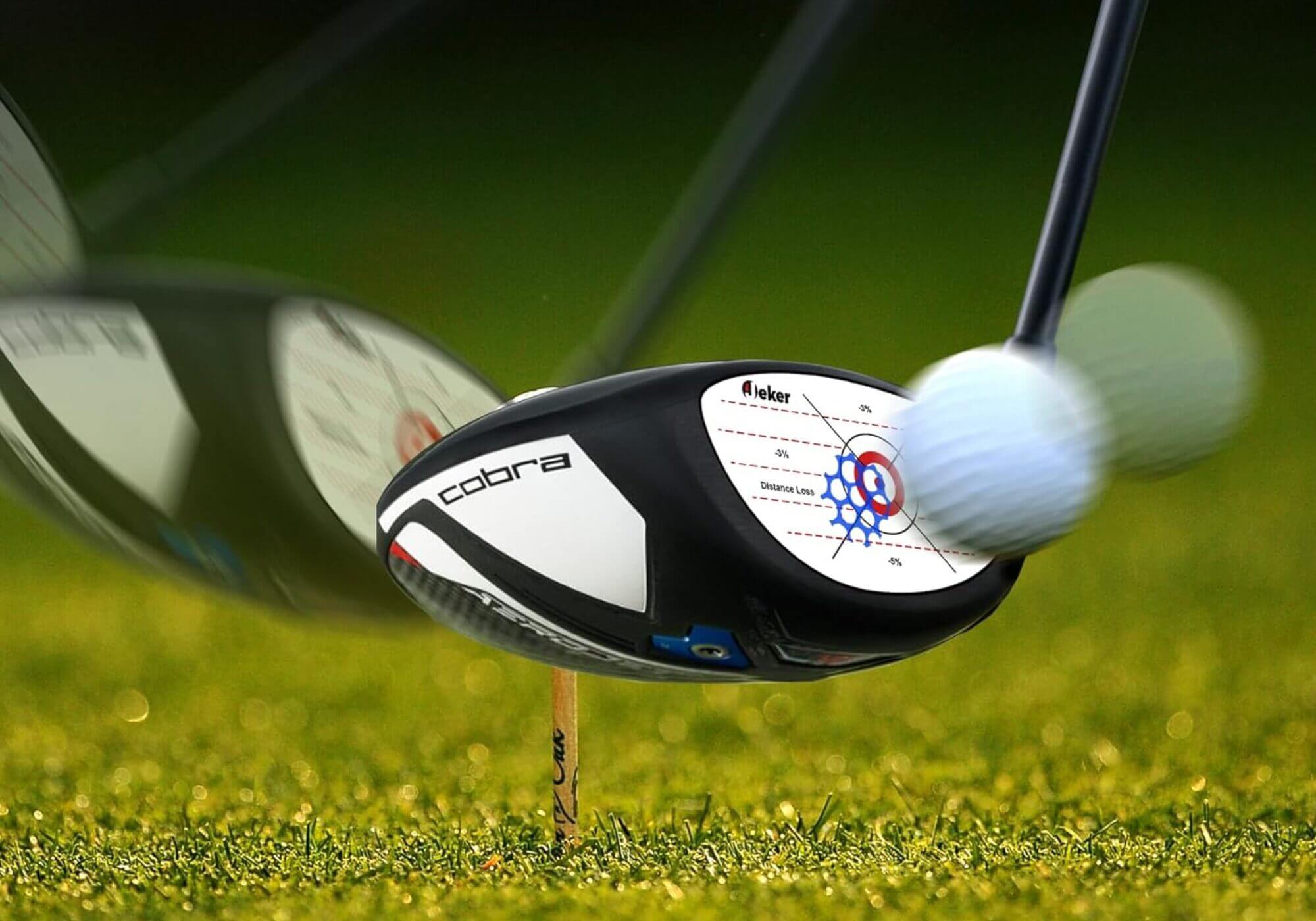
Start tracking your contact. Get some impact tape or use foot spray on the face. Hit 10 drives on the range and see where you’re making contact. If your hits are scattered all over the face, that’s your distance problem right there. Work on centering your contact before you worry about anything else.

Your swing speed is varying wildly

The second cause is inconsistent tempo and effort. Some swings, you’re smooth and controlled. Other swings, you’re trying to kill it. Your swing speed is bouncing around and so is your distance.

This happens when you don’t have a consistent rhythm. You get to a long par-4 and decide you need to swing harder. You grip it tighter, you speed up your transition and you end up making worse contact at a speed that’s not actually faster than your normal swing. Or you get to a tight hole and try to steer it, slowing everything down, and you lose distance because you decelerate through impact.

The other version is when your tempo falls apart mid-round. You start smoothly but after a few bad shots, you rush. Your backswing gets quick. Your transition gets jerky. Your swing speed becomes erratic and so does your distance.

Better players swing at a controlled effort level, not maximum speed, on most drives but something they can repeat over and over without losing their rhythm or balance. When they need more distance, they don’t swing harder. They make better contact or they optimize their launch conditions. The swing itself stays smooth.

If your distance is all over the map, film yourself hitting five drives in a row. Watch the tempo. If some swings look fast and some look slow, if your finish position is different every time, that’s a tempo problem. Work on making the same smooth swing regardless of the situation. Pick an effort level you can repeat and stick with it.
Your angle of attack is inconsistent

The third cause is that you’re hitting up on some drives and down on others or you’re varying how much you hit up. With a driver, you want to hit slightly up on the ball to maximize distance. But if that angle of attack changes from swing to swing, your distance will change, too.

When you hit down on a driver, you add spin and lose distance. The ball balloons and doesn’t carry as far. When you hit too much up, you can lose distance too, especially if you’re also adding loft by flipping your wrists through impact.

What causes an inconsistent angle of attack? Usually, it’s ball position and weight shift. If your ball position moves around in your stance, your low point moves with it. Sometimes, you’re catching it on the upswing, sometimes on the downswing. If your weight shift is inconsistent, it’s the same problem. Some swings you hang back and hit up. In other swings, you slide forward and hit down.

The fix is to nail down your setup. Put the ball in the same spot every time, just inside your front heel. Make sure your weight favors your back foot at address and then shift forward through impact while still allowing the club to release upward into the ball. That consistent setup produces a consistent angle of attack.

The pattern you need to see

Inconsistent driver distance isn’t bad luck. It’s not the equipment (although it could be in some cases and that is an article for another day). It’s one of these three things: contact, swing speed, angle of attack. Usually, it’s contact. Sometimes, it’s tempo. Occasionally, it’s setup.

The good news is that all three are fixable. You can learn to hit the center of the face more often. You can develop a repeatable tempo. You can dial in your ball position and weight shift. Once you do, your driver distance will tighten up. You’ll know what number to expect off the tee and you’ll be able to plan your approach shots accordingly. That’s when driving becomes a weapon instead of a guessing game.

For You

For You

Bridgestone e6 SOFT TReadline golf ball Bridgestone e6 SOFT TReadline golf ball
Golf Balls
Jun 23, 2026
This Bridgestone Golf Limited-Edition Ball Might Just Have Some Traction
Drivers
Jun 22, 2026
Four More Srixon ZXi RKT Drivers Hit USGA List, Bringing The Day’s Total To Seven
Golf Balls
Jun 22, 2026
Now Serving: Callaway’s Chrome Tour Hot Dogs. One Of Them Is Flat Wrong
Brendon Elliott

Brendon Elliott

Brendon Elliott

PGA of America Golf Professional Brendon Elliott is an award-winning coach and golf writer. Check out his weekly Monday column on RG.org, and to learn more about Brendon, visit OneMoreRollGolf.com.

Brendon Elliott

Brendon Elliott

Brendon Elliott

Driver Srixon ZXi Max Fairway Woods Srixon ZXi
Hybrids Srixon ZXi Irons Srixon ZXi4
Wedges Cleveland RTZ Putter Heavy Putter
Ball Z-Star XV  
Brendon Elliott

Brendon Elliott

Brendon Elliott


    This site is protected by reCAPTCHA and the Google Privacy Policy and Terms of Service apply.

      Mark

      4 months ago

      #4, we are amateurs.

      Reply

      pineneedlespro

      4 months ago

      Don’t forget tee height can also make a difference in distance also.

      Reply

      Al

      4 months ago

      First of all the majority of golfers are low double digit players with a SS of below 100 mph. Therefore their drives have absolutely no similarities to a PGA tour player with a high speed swing and a dime sized wear mark on their driver’s face.
      You know and I know the ball reacts quite differently for us and for them!! The improvement of results is not a smooth progression but more like a logarithmic scale.
      That is the truth/physics of a golf swing.
      Yes, you can work on hitting driver more consistently, you can try to increase swing speed, you can even get the latest and greatest new driver but all these efforts will only take you so far.
      As for the equipment, I am sorry to say that MyGolfSpy, has fallen into the marketing trap of the manufacturers!! Sure, every year a little longer….. if that were reality then over the past 5 to 8 years (let’s just say for this example) you should have gained at least 25 yards more total distance!!!

      Ah, but you have not! The ugly truth is again golf science and rules based. The COR/ CT of a conforming driver is capped at 0.83. So a 2026 driver and a five year old 2021 driver can only put the same amount of energy into the back of a ball at a given swing speed.
      Sure, there have been advancements to increase the size of the sweet spot and other teaks to improve forgiveness (reducing errant spin) and moving adjustable weights around to influence COG,
      But there isn’t much more that can be done!!
      Sometimes, replacing the old shaft with a new model that better supports your swing characteristics, is all you need to make a significant change/improvement.
      And of course, experimenting with different golf balls is also a key to being a better driver. Just because the majority of of pros play a Pro V1 does NOT necessarily mean you should.
      Ok, I am done pontificating and hope my sermon results in some discussion!!!!!!

      Reply

      pineneedlespro

      4 months ago

      AI has a lot of good information. For sure changing graphite shafts in a golfers driver can make a difference if it helps to get more distance and accuracy and is a better fit for their swing. There is a lot of shafts that offer high launch and low spin now days.
      And changing golf balls is also a help. Especially if the golfer can narrow down which compression and soft/firm feel gives the most distance.

      Reply

      Patrick Young

      4 months ago

      Actually, I like the advice AI gives for how to improve distance and consistency. Very logical, to me. I would like to remember its advice next time I’m at the driving range or on the course.

      Reply

      John

      4 months ago

      Inconsistent setup and routine is a very big thing too.

      Reply

      Pat Renaud

      4 months ago

      I read your description of an inexpensive zero-torque putter that stood-up to pretty well to the OEM versions. Can you remind me of the name of the putter?

      Reply

      Fake

      4 months ago

      Was it the LAZRUS?

      Reply

      Jeff

      4 months ago

      All of the above.

      Reply

      Patrick Patterson

      4 months ago

      You said toe hits fade and heel hots draw thats backwards toe hits draw heel hits fade

      Reply

      Patrick Young

      4 months ago

      Your advice seems illogical to me. A toe hit should open the face, giving the ball clockwise rotation (for a right handed player) resulting in a curve to the right, a fade, while a heal hit would close the face giving the ball a counterclockwise spin resulting in a curve to the left–a draw.

      Reply

      SuperDave3673

      4 months ago

      It seems counterintuitive, but in my experience, Patrick Patterson is correct, generally. Obviously, some toe hits will fade/slice depending on the swing path and if the face is open, and vice versa for heel hits. For me, toe hits tend to be a much draw/hook, and heel hits are a pull fade/slice.

      Minke

      4 months ago

      It’s called the gear effect and is one of the main factors used by OEMs to improve shot distribution.
      Think of it like this: even with those few inches across the clubface, the toe is moving further and faster than the heel. It is also moving in an arc, whereby, as the toe makes contact with the ball, it is already starting to rotate around your body, not away from it. So the energy exerted on the ball is primarily following the arc of your swing. To make it even more confusing, the club head is also designed with a positive camber. This means there is a gentle curve towards the outside top edge tip of the face.

    Leave A Reply

    required
    required
    required (your email address will not be published)

    This site uses Akismet to reduce spam. Learn how your comment data is processed.

    Bridgestone e6 SOFT TReadline golf ball Bridgestone e6 SOFT TReadline golf ball
    Golf Balls
    Jun 23, 2026
    This Bridgestone Golf Limited-Edition Ball Might Just Have Some Traction
    Drivers
    Jun 22, 2026
    Four More Srixon ZXi RKT Drivers Hit USGA List, Bringing The Day’s Total To Seven
    Golf Balls
    Jun 22, 2026
    Now Serving: Callaway’s Chrome Tour Hot Dogs. One Of Them Is Flat Wrong