

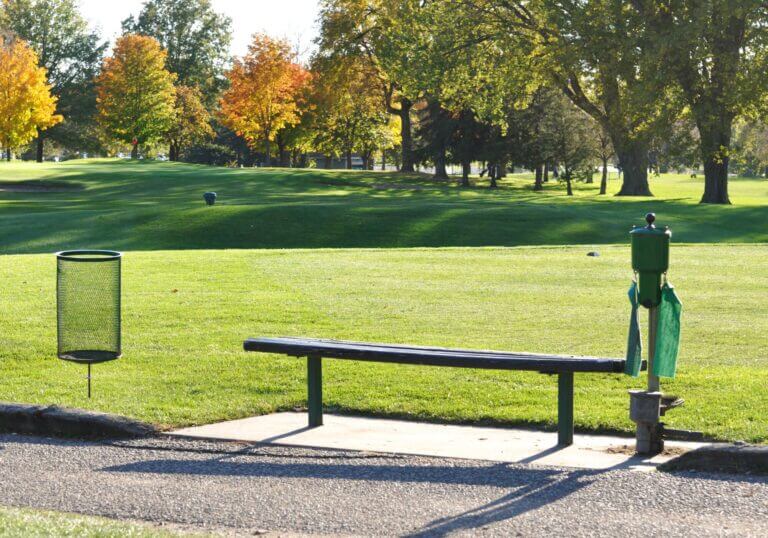
Golf Tee Box Rules Every Golfer Should Know
Uncategorized

Golf Tee Box Rules Every Golfer Should Know

Support our Mission. We independently test each product we recommend. When you buy through our links, we may earn a commission.

Golf Tee Box Rules Every Golfer Should Know

Most golfers don’t actually know the teeing area rules. They wing it, make assumptions or follow what they think they remember from years ago.

This creates problems. Slow play. Confusion. Arguments that could be avoided. And penalty strokes that golfers don’t even realize they’re taking.

The teeing area (or tee box as it’s commonly referred to) isn’t just a starting point — it’s a defined area with specific rules that can help or hurt your score. Master these basics and you’ll avoid penalties and know what you’re doing.

The teeing area: Bigger than you think

The teeing area extends two club-lengths back from the tee markers and stretches across the full width between them.

You can tee up your ball anywhere within this rectangle, even if it means standing outside it. Just your ball needs to be inside the boundaries; your feet can be wherever feels comfortable. This gives you options.

Playing into a strong crosswind? Tee up on the side that helps you aim into the wind and let it blow your ball back to center. Trying to work the ball around a tree? Use the full width to create the angle you need. The tee box is your friend if you know how to use it.

Didn’t intend to hit it? No penalty, just re-tee

If your ball falls off the tee before you intend to hit it, there’s no penalty. None. Just put it back on the tee and try again. The same applies if you accidentally hit it while making a practice swing. (This also applies if you make contact with the ball with your practice swing on the putting green. But if it happens anywhere else on the course, it’s a one-stroke penalty and you must replace the ball to its original position.)

However, once you address the ball on the tee with the intention to hit it, swing and make contact (even if you barely graze it and it falls off the tee), that counts as a stroke. The ball is now in play wherever it ends up, even if it’s sitting right next to your feet.

This is why you see pros take their time setting up. They’d rather spend an extra few seconds getting comfortable than risk a mishit that puts them in an awkward spot.
Tee markers are immovable: Don’t even think about it

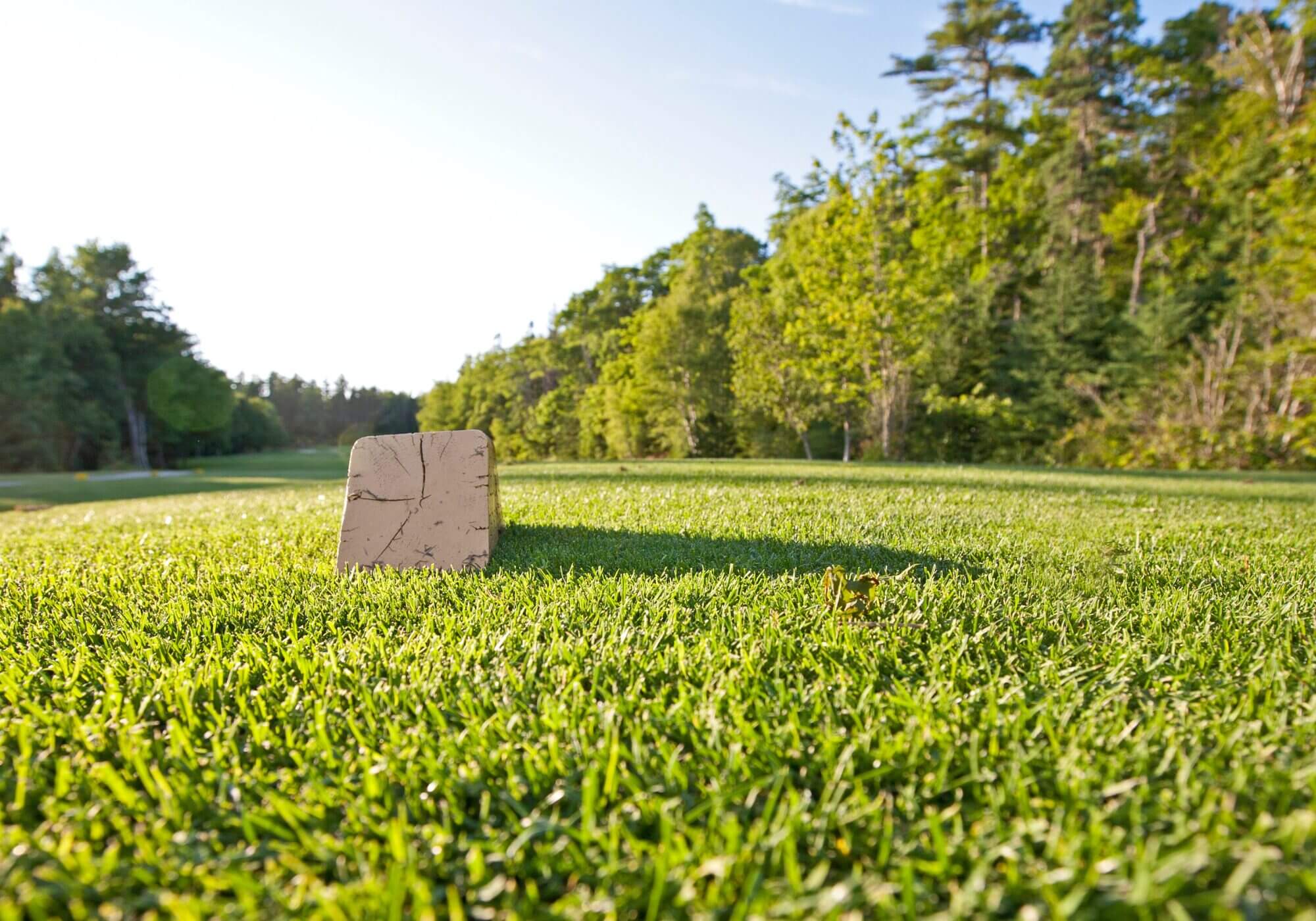
Tee markers stay put. Period. You can’t move them. Work around it or find another spot in the teeing area.

The two club-length rule: Your safety net

The two club-length area extending back behind the tee markers isn’t just extra space — it’s your backup plan. If the main teeing area is damaged, waterlogged or unplayable, you can tee up anywhere in this extended zone without penalty.

The same rule applies when the tee markers are missing. As long as you’re within two club-lengths of where they should be according to the scorecard, you’re good to go.

Playing from the wrong tees: Know before you go

Playing from the wrong set of tee markers is a two-stroke penalty in stroke play. In match play, your opponent can make you replay the shot from the correct tees. This seems obvious but it happens more than you’d think, especially on courses where tee markers aren’t clearly marked or when groups get mixed up.

Why these rules matter

Like all the Rules of Golf, teeing area rules are intended to keep the game fair.

More importantly, these rules give you options. That extra space behind the markers might save you when you need a comfortable stance. The full width of the teeing area could create the perfect angle for your next shot.

Golf is hard enough without basic rule confusion. Know the teeing area rules and you’ll start every hole with confidence.

For You

For You

Instruction
Jun 9, 2026
If You Still Play Long Irons, Copy This Thought From Ludvig Åberg
PLM 2025_Most Wanted_Foresight GC3 PLM 2025_Most Wanted_Foresight GC3
News
Jun 9, 2026
College Golf Tournament Prep Looks Nothing Like It Did When I Played
News
Jun 9, 2026
The Best Father’s Day Golf Gifts That Won’t Break the Bank
Brendon Elliott

Brendon Elliott

Brendon Elliott

PGA of America Golf Professional Brendon Elliott is an award-winning coach and golf writer. Check out his weekly Monday column on RG.org, and to learn more about Brendon, visit OneMoreRollGolf.com.

Brendon Elliott

Brendon Elliott

Brendon Elliott

Driver Srixon ZXi Max Fairway Woods Srixon ZXi
Hybrids Srixon ZXi Irons Srixon ZXi4
Wedges Cleveland RTZ Putter Heavy Putter
Ball Z-Star XV  
Brendon Elliott

Brendon Elliott

Brendon Elliott


    This site is protected by reCAPTCHA and the Google Privacy Policy and Terms of Service apply.

      Tim

      10 months ago

      This information, although nothing new is helpful, But! I’m a 70 year old,10 handicap. I moved up to the white T’s about 2 years ago (I just don’t have the length to be home in 2 from the blue) One of the leagues I play on allows us to move to the “senior T’s” when we turn 70. When I played in a tournament in Mesquite earlier this year, they said i should be hitting from the blue T’s because of my handicap. What is the ‘official’ ruling.

      Reply

      Brian

      10 months ago

      What if in the tee box the tee are so far back there isn’t a two club area maybe one and your feet are on sloping edge

      Reply

      SuperDave3673

      5 months ago

      The Rules recommend the tee markers not be that far back, but it’s not a requirement. You still have up to 2 club lengths, but there’s no guarantee that the full 2 club lengths will be usable. Similar to taking relief in other situations such as PA or ACC relief.

      Reply

      Jim L

      11 months ago

      One more to add to this list: the entire ball has to be outside the tee box to be a violation. So for example if only part of the ball is ahead off the tee markers you are ok.

      Reply

      Will

      11 months ago

      I’m really curious whether some of the slanted and domed abominations I have to play off of are even legal tee boxes. I know people know about the two club lengths rule, because when there’s only a couple feet of level ground across the whole width of the tee box, and they haven’t moved it all week, that’s about the depth of the patch with no grass.

      Reply

      Wilson Player

      11 months ago

      My favorite is the retee rule.
      If your ball is still in the Teeing area after your swing, you can retee without penalty. You hit it 2′ or hits a tree and bounces back, it can be reteed if it stops in your teeing area.

      Reply

      OpMan

      11 months ago

      No you can’t. If you took an actual swing at the ball, the ball is in play. You’re hitting your 2nd.
      Only when it’s unintentional such as the ball falls off the tee when addressing or you’re just taking easy brush swings in prep for your real swing, then are you allowed to re-tee without penalty.
      If you took a real swing it’s a stoke

      Reply

      Andrew the Great!

      11 months ago

      Wilson Player is right. He said “you can retee without penalty”. Without “penalty”. That is correct. He didn’t say the first stroke doesn’t count, and he didn’t say you’re hitting 1 if that happens and you re-tee. He only said that you don’t get assessed a *penalty* stroke. And that is correct.

      albatrossx4

      10 months ago

      Read the rule before you make an idiot of yourself, as long as the ball remains in the teeing area you can tee it up.

      Eric

      10 months ago

      It is a stroke but can be re-teed without penalty

      KMurr

      10 months ago

      If you intended to hit a ball and it remains in the teeing area you cannot re-tee it, as it has to be played where it lies which is on the ground.

      Reply

      SuperDave3673

      5 months ago

      Wrong. ANYTIME the ball is in the “teeing area” (whether your 1st shot, or it bounced off a tree, or you’re taking Stroke & Distance relief) you can re-tee, or even MOVE the ball anywhere else within the teeing area.

      Mike T

      11 months ago

      One time a partner took two clubs to the tee box. He laid the unused club inside the tee markers. A competitor called him on using an “alignment aid”. Is this a true rule? That is, no clubs inside the teeing area except the one in your hands- even if perhaps they are behind your back?

      Reply

      Will Rowland

      11 months ago

      My understanding of the rules is that you can use a club as an alignment aid in the tee box and in the general area. But you must remove the club prior to the stroke.

      Reply

      Alex

      10 months ago

      Sounds like you need new people to play with personally

      Reply

      Albatrosssx4

      10 months ago

      No, you can not use an artificial aid anywhere, but you can take a second club, as long as you dont place it to use to help alignment

      Reply

    Leave A Reply

    required
    required
    required (your email address will not be published)

    This site uses Akismet to reduce spam. Learn how your comment data is processed.

    Instruction
    Jun 9, 2026
    If You Still Play Long Irons, Copy This Thought From Ludvig Åberg
    PLM 2025_Most Wanted_Foresight GC3 PLM 2025_Most Wanted_Foresight GC3
    News
    Jun 9, 2026
    College Golf Tournament Prep Looks Nothing Like It Did When I Played
    News
    Jun 9, 2026
    The Best Father’s Day Golf Gifts That Won’t Break the Bank