


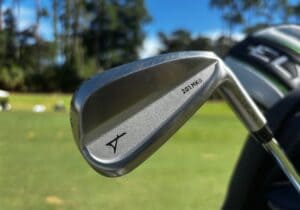
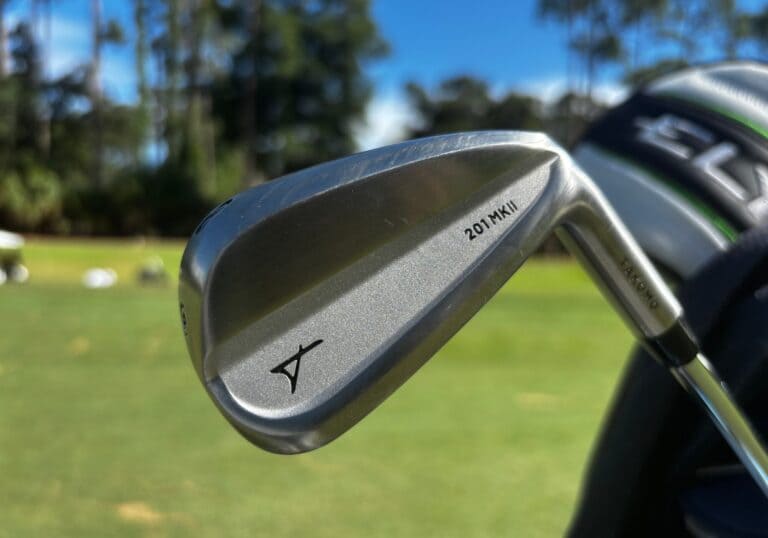
Takomo got our attention in 2026 testing.
The 101 MKII won our game -mprovement iron test with a 9.2 MGS Score including a category-leading 9.5 for accuracy and a 9.1 for forgiveness. The 201 MKII also performed well in the player’s distance category, earning an 8.6 overall score with a 9.0 for forgiveness and an 8.8 for accuracy.
MyGolfSpy employees Ty Allred and Britt Olizarowicz put the Takomo irons in the bag for 30 days. Ty took the 101 MKII game-improvement irons. Britt took the 201 MKII player’s distance set.
Neither of us had spent meaningful time playing a set of Takomo irons before this. With both models coming in well below the price of many mainstream iron sets, we wanted to know what those test results looked like once we put them in our own bags.
Since the irons performed so well in testing the goal was to help share things like how they look behind the ball? How they feel? How quickly can you put them into play? And, at this price, where do you notice the difference?
Ty: The 101 MKII was better on the course than I expected
I normally play PING i525 irons and I’ve also been working through a grip change so my swing wasn’t exactly sitting in one perfectly predictable place when the Takomos showed up.
My first impression was that the 101 MKII looked clean and fairly sleek for a game-improvement iron. I could see some places where the finish and overall design didn’t look quite as premium as my PINGs but there was nothing at address that bothered me.
Once I started hitting them, consistency was what stood out.
They felt hot off the face, launched easily and flew a little lower than my PINGs. My initial impression was that they leaned slightly more toward distance than accuracy.
Interestingly, our 2026 test suggests accuracy is probably the bigger story and the more I had them in play that’s what I noticed as well.
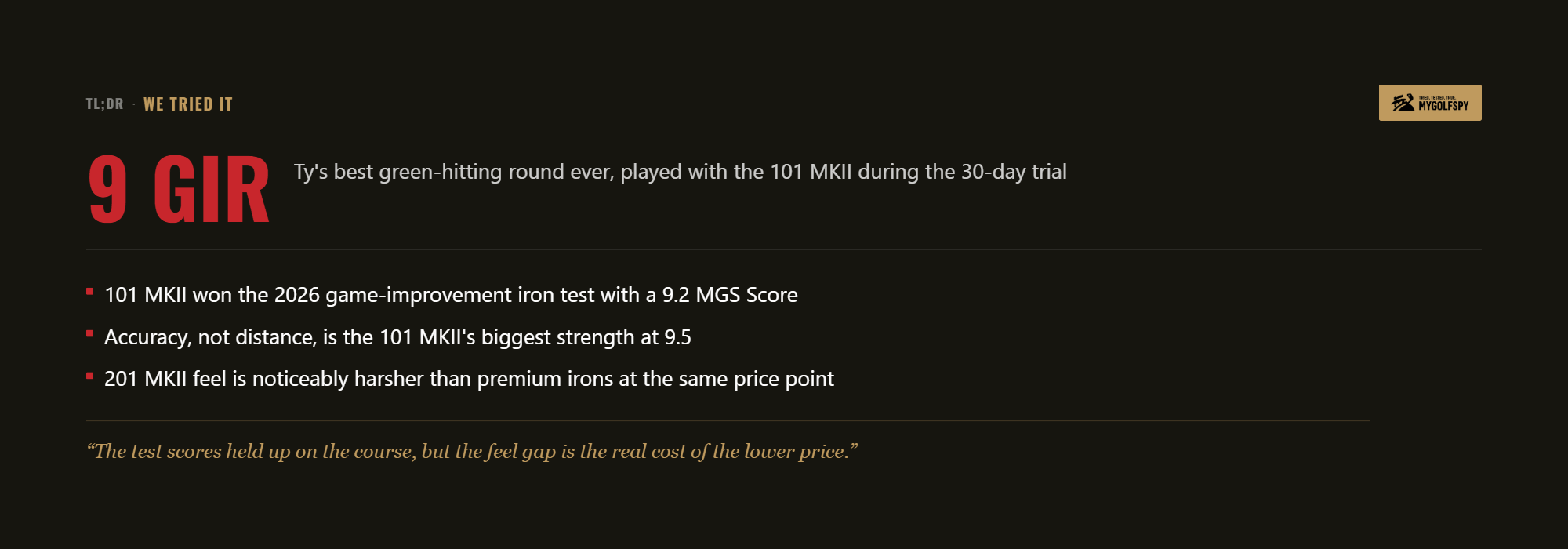
The 101 MKII earned the highest accuracy score in the game-improvement category at 9.5. Its 8.6 distance score was solid but distance wasn’t why it won.
After a few weeks with the irons in play, I had one of my best rounds.
I hit nine greens in one round. As far as I can remember, my previous best was six. I also shot in the 70s.
I’m not going to say the irons caused that. There are too many other variables in a round of golf. But the fact that our larger test identified accuracy as the 101 MKII’s biggest strength and then I had my best green-hitting round with them was hard to ignore.
I also did some additional GCQuad work against my PINGs. The builds weren’t identical so I wouldn’t treat those numbers as a true head-to-head test. What was interesting was that some of the same tendencies showed up again, particularly tighter patterns in the scoring clubs.
The 5-iron was a little different. It flew lower and spun less which is something I’d pay attention to if you already struggle to get enough height from your long irons.
My biggest takeaway was pretty simple: for my game, the 101 MKII didn’t feel like an iron I needed to make excuses for because of the price.
Britt: The 201 MKII made the trade-offs pretty clear
I play Titleist T250 irons. I came into this with a pretty good idea of what I expect from a player’s distance iron.
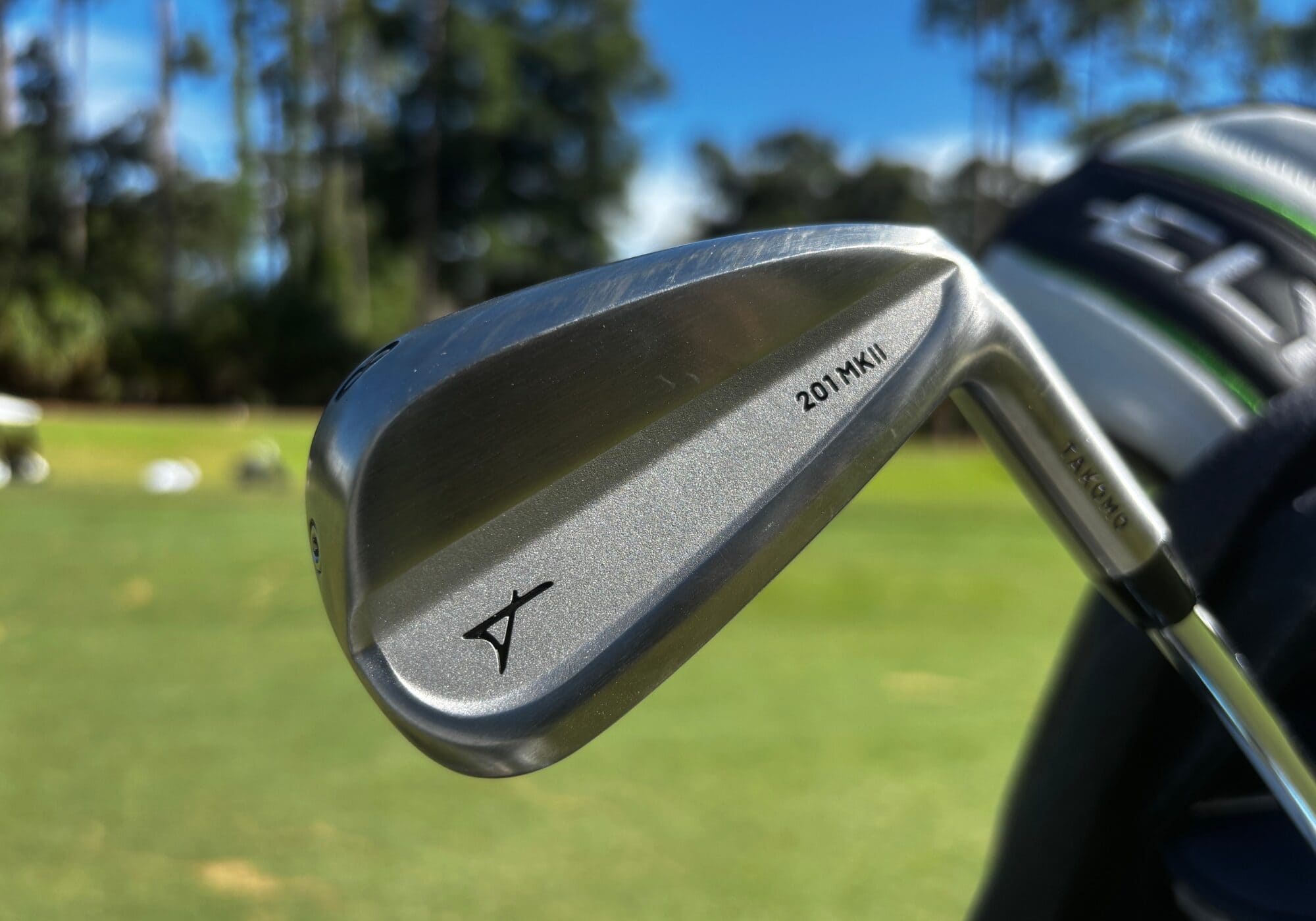
The 201 MKII is bulkier at address than I expected. I like the overall design and think they look good in the bag. From the top, they don’t have quite the same refined player’s distance look I was hoping for.
The bigger profile has a benefit, though. They are easy to hit.
I put the Takomos in my bag and went to the range and out for a quick nine. I played well with them immediately and didn’t notice big changes in performance from one hole to the next. They are consistent and there was no real pressure to hit the center of the face to see a decent result.
That consistency lines up pretty well with our testing.
The 201 MKII earned a 9.0 forgiveness score.
Where my current irons had the clear advantage was distance. The Takomo had a slightly lower flight and I couldn’t quite maximize the distance that I normally do with iron shots. For me, it was a few yards less. If you have some speed and are looking for consistency, I don’t think the distance penalty is enough to worry about.
I also saw a tendency for the ball to work slightly left. Again, that could be related to differences in shaft and overall set makeup so I wouldn’t pin that on the 201 MKII itself.
While the distance performance and overall accuracy were not glaring issues, the feel is probably the most obvious thing you’ll notice when comparing the 201 MKII to a premium iron.
The 201 MKII feels harsher at impact than my T250. If you handed me both sets without telling me what they cost and asked which was more expensive, I could tell you.
That doesn’t mean the Takomo feels bad. It means there is a level of refinement in the more premium irons that you are paying for. If that matters to you it’s something to be aware of.
There will always be somebody who says you can’t pick irons based on feel you have to choose performance and I understand that viewpoint. The on-course performance of the Takomo irons was not better than the Titleist T250 irons for me and with the feel and look differences, there would be no reason to make the switch to Takomo.
Where we both noticed the price difference
This was probably the most interesting part of trying two different Takomo models.
We both noticed areas where these irons felt less expensive than what we normally play. For Ty, some of that showed up in the cosmetics.
For Britt, it was more obvious in the feel at impact and the look from address.
Neither of us came away thinking Takomo somehow found a way to give you every part of a premium $1,200-plus iron set for half the money.
There are differences.
The question is whether those differences show up in the performance that matters. Our 2026 game-improvement iron testing suggests they often don’t.
The 101 MKII won the game-improvement category outright. The 201 MKII finished with an 8.6 overall score and was particularly strong for forgiveness.
Who should play Takomo?
We both ended up in a similar place.
Think about the golfer who has been playing the same irons for years. Their game has improved. Their grooves have seen better days and maybe the set they bought five or 10 years ago doesn’t suit them anymore.
They want something new but spending $1,200 or more on irons isn’t realistic or simply isn’t a priority.
Takomo fits that space very well. It’s also a great option for new players who want a set they can use while they figure out the game and make their way to the iron category they will stay in for years to come.
There are more refined irons that feel better, have polished shaping and, sometimes, more distance. But neither of us felt like we had to fight the equipment once we put these clubs in play.
Our 2026 testing had already shown us that Takomo could perform. Playing them ourselves helped answer the other question.
What are you giving up for the lower price?







Leave A Reply