


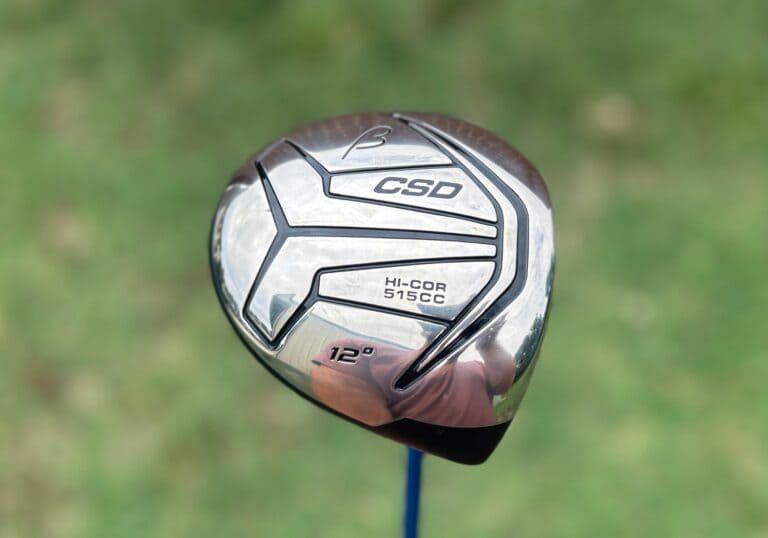
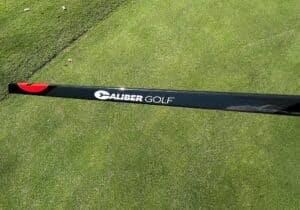
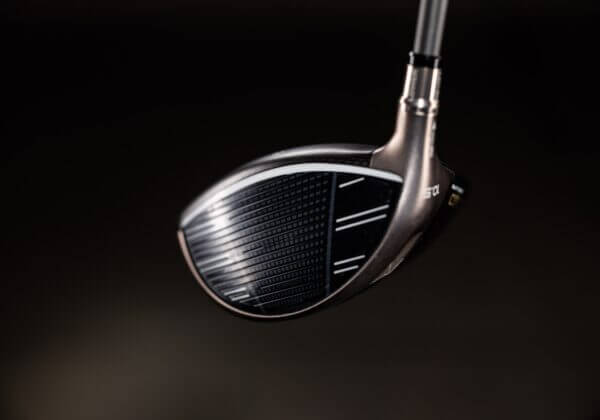
In 2025, we teased a center-shafted driver as satire. Much to our surprise, an actual center-shafted driver made an appearance at the 2026 PGA Show.
Naturally, we had to test it.
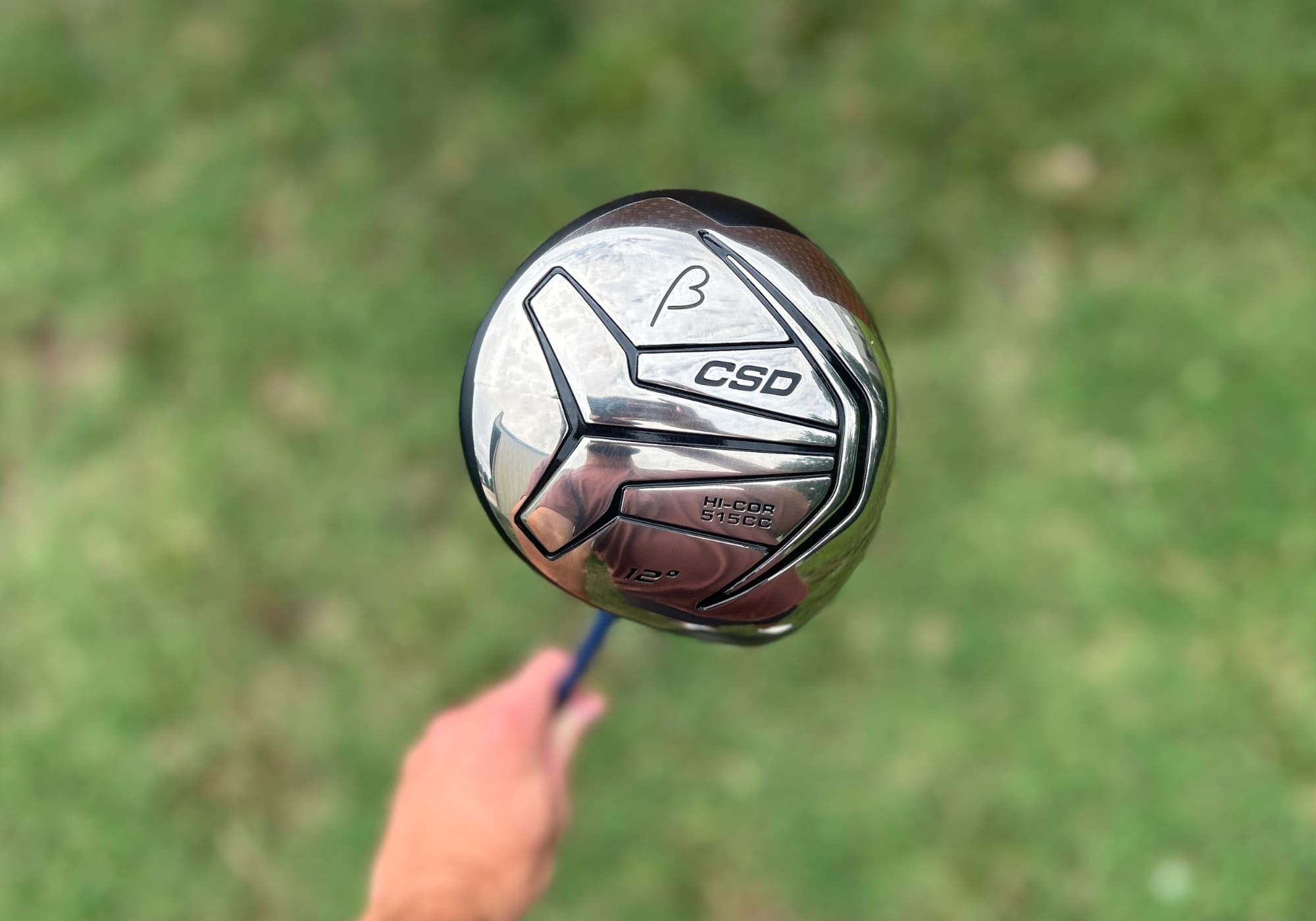
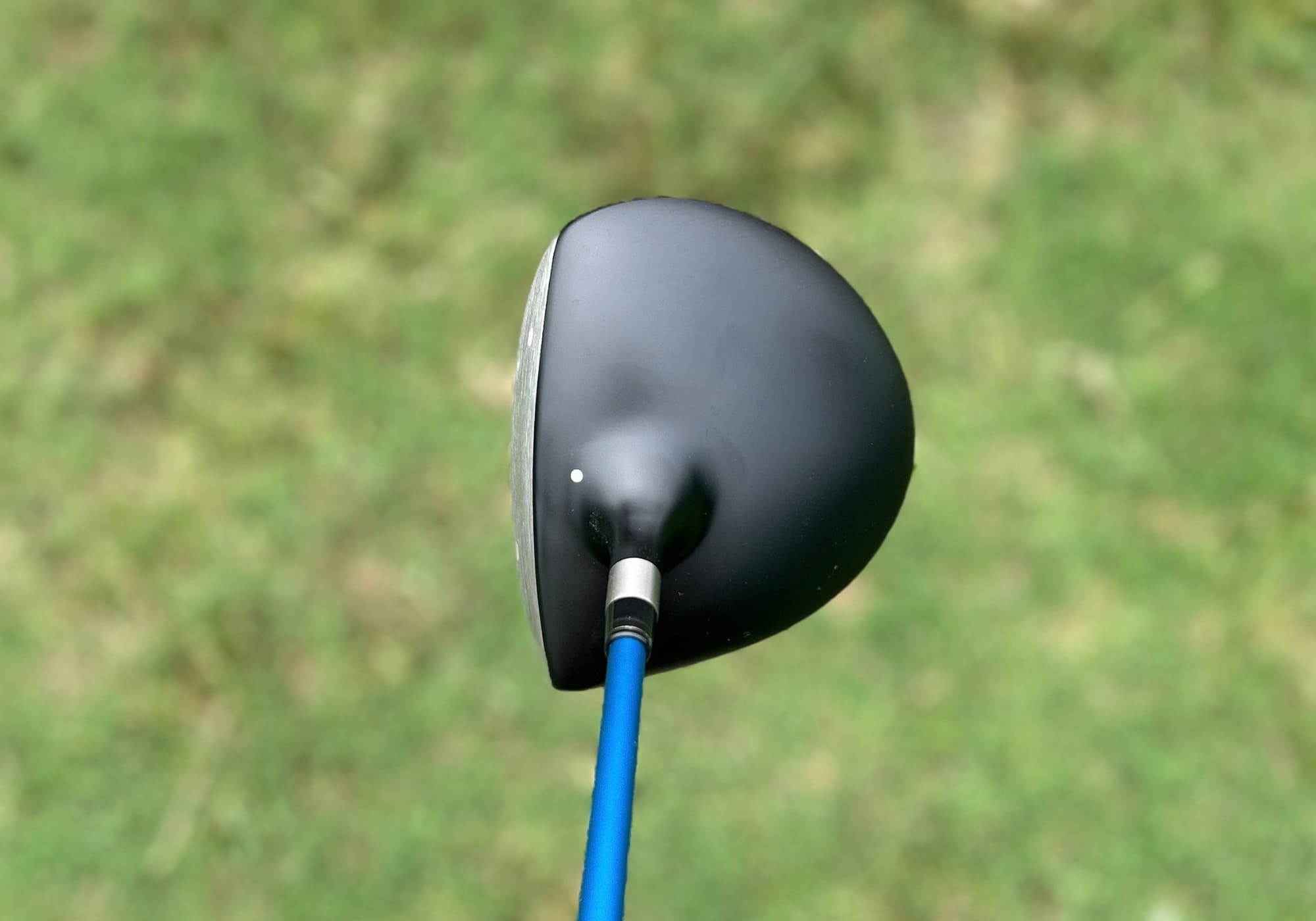
The purpose of a center-shafted driver
There is a BIG catch with this driver. It is nonconforming in accordance with the USGA and R&A. But being conforming isn’t the goal of this driver. The center-shafted driver is marketed to beginning, recreational and higher-handicap golfers. In other words, those likely not playing in organized events or interested in maintaining an official handicap index.
The goal is simple with the center-shafted driver: Make golf easier.
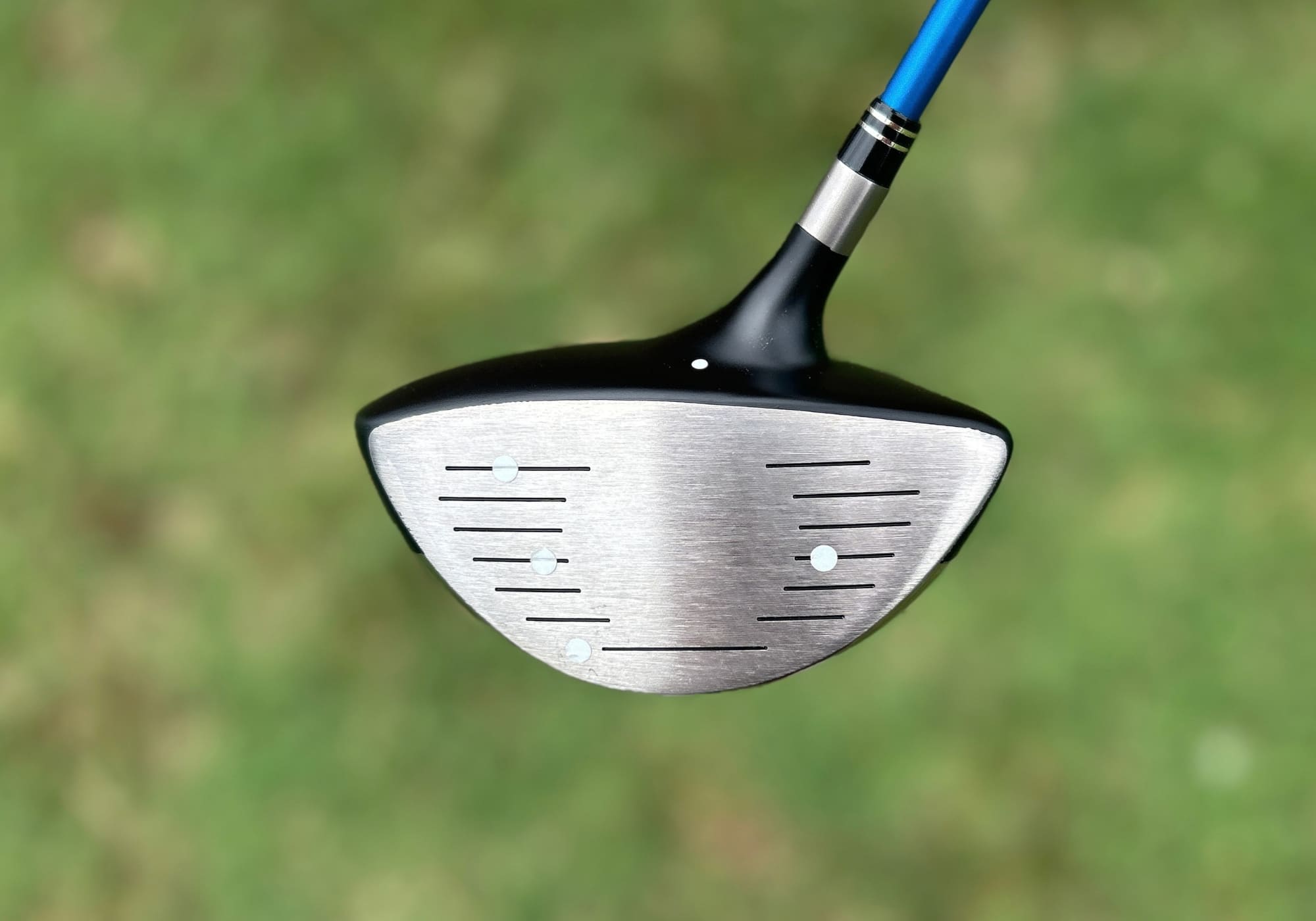
How does the Center-Shafted Driver achieve this? The main engineering goal is to help the club resist unwanted twisting and allow for more consistent face delivery even when contact is poor.
In a way, this is similar to the approach behind “zero-torque” putters, which have become undeniably popular.
Does the Center-Shafted Driver make golf easier? Let’s take a look.
Key takeaways
We had nine testers of various skill levels and swing speeds hit their current driver against the Center-Shafted Driver.
Spoiler alert: We found performance metrics that suggest the CSD can help its target demographic: beginners, recreational golfers and high-handicap golfers.
Center-Shafted Driver is forgiving
In our performance analyses, especially driver testing, we assess how consistent a driver is shot-to-shot. We define this as forgiveness.
Forgiveness looks at ball metrics, specifically, ball speed deltas, carry distance deltas, backspin deltas and shot area (dispersion). Forgiveness is a performance metric that can fly under the radar. Accuracy and distance take precedence. Always.
Forgiveness is where the CSD thrives.
The CSD has a smaller shot area relative to the average of our testers’ drivers. It produces tighter deltas for ball speed and carry distance as well. Backspin delta is the one performance metric that is a weakness of the CSD. However, it isn’t enough to refute the fact that the CSD is forgiving in accordance with our standards.
Center-Shafted Driver produces helpful launch conditions
This second point piggybacks on the first, that CSD is forgiving. It also produces playable launch conditions.
Even in our driver testing, we see drivers that aren’t the best for certain golfers, especially beginners, recreational golfers or higher-handicap players. A driver that produces playable launch conditions is very appealing.
Why?
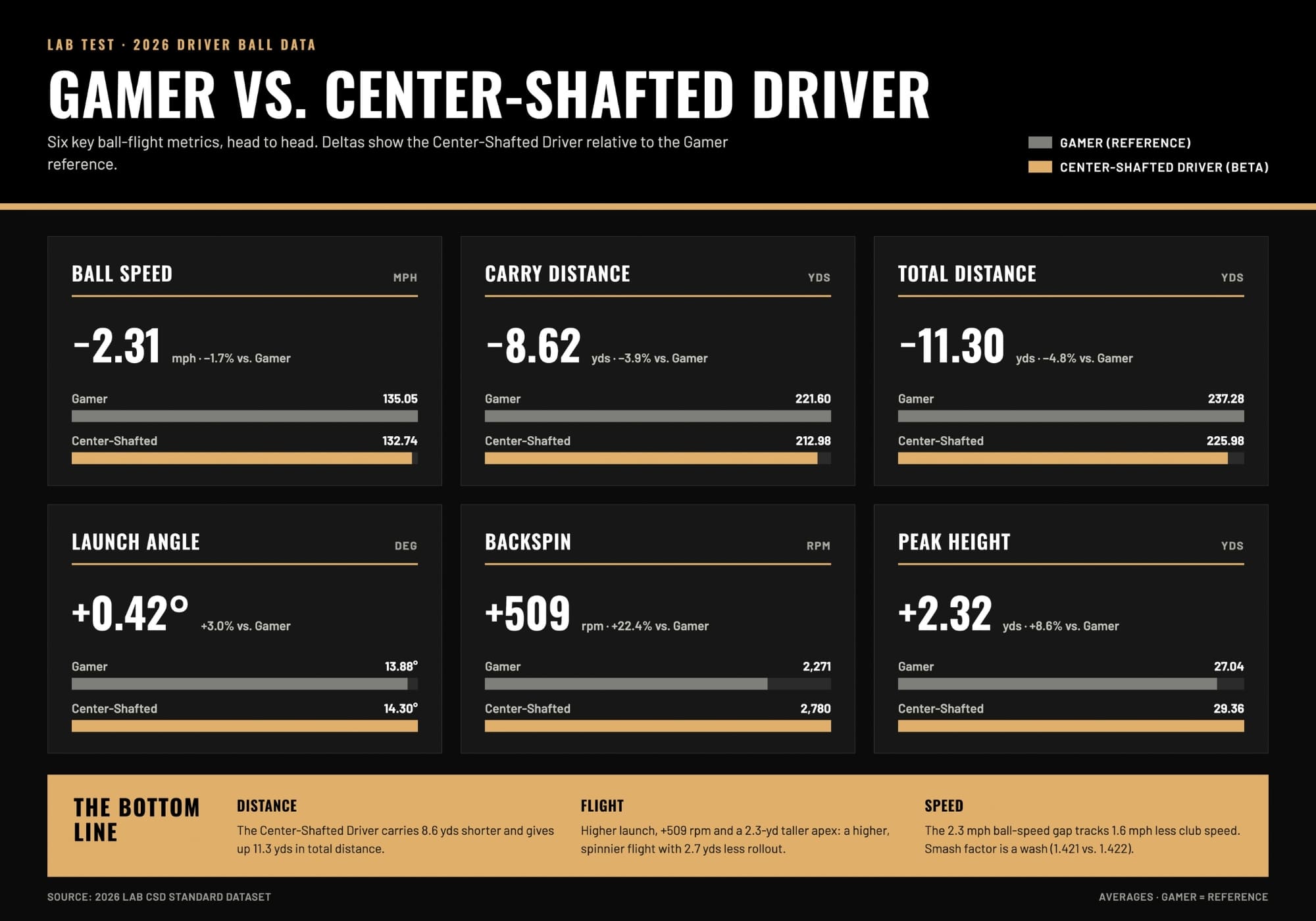
For golfers struggling to generate sufficient backspin, the CSD promotes higher launch angles, increased spin rates and elevated peak height. Because speed generally dictates spin, players with slower swing speeds often struggle with low spin—making the CSD an advantageous option across various swing speeds to foster more predictable tee-shot performance.
Center-Shafted Driver is not primed for distance
Unfortunately, it is not all sunshine and rainbows for the CSD. Yes, it is forgiving and helpful with launch conditions. However, it is slow off the face. Ball speed is a key ingredient in the distance equation.
In our testing, the CSD averaged 2.31 mph lower ball speed compared to the testers’ own drivers. When paired with its higher spin profile, this drop in ball speed directly translates to a loss of yardage.
On average, the CSD fell short by 8.62 yards in carry distance and 11.3 yards in overall distance when measured against the baseline averages of our testers’ drivers.
Should you buy a Center-Shafted Driver?
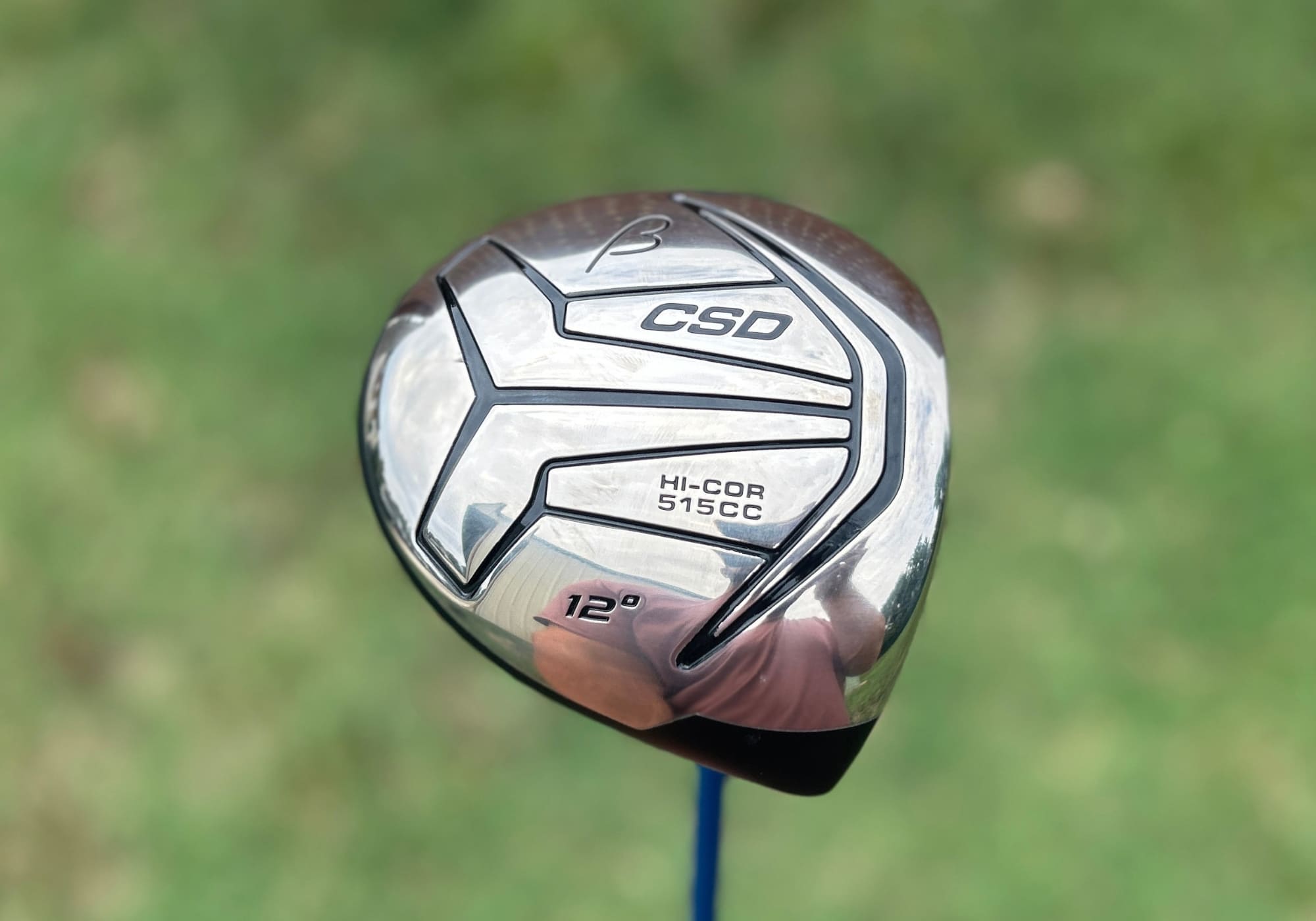
If you aren’t competing in organized golf events or playing golf with people who are anal about the rules, then the Center-Shafted Driver makes sense for certain golfers. A better golfer isn’t going to play this nonconforming driver. The looks of this driver are not appealing and could deter golfers who might benefit from it.
But, yes, this illegal driver is legitimate and, as our testing revealed, the performance isn’t terrible.






Coletrain
3 weeks ago
its non conforming because “it’s not a conformist, You just wouldn’t understand dad!” That said, make it legal, so i can make fun of you. Yes, even if you beat me with +10 strokes gained off the tee… Still laughing at your watermelon stick.