
Persimmon Woods Tested: Nostalgia vs Pure Performance
Drivers

Persimmon Woods Tested: Nostalgia vs Pure Performance

Support our Mission. We independently test each product we recommend. When you buy through our links, we may earn a commission.

Persimmon Woods Tested: Nostalgia vs Pure Performance

Up until 50 years ago, the unmistakable crack of a persimmon wood echoed across every professional tee box. Today, it’s a relic of a bygone era.

For nearly a century, these golf clubs dominated the golf industry. They hold an iconic role in golf’s rich history. An entire article can be dedicated to the history surrounding persimmoms, which dates back to the late 1890s. 

However, that isn’t the purpose of this evaluation. The purpose is simple:

How does a persimmon wood fare against the modern golf driver? 
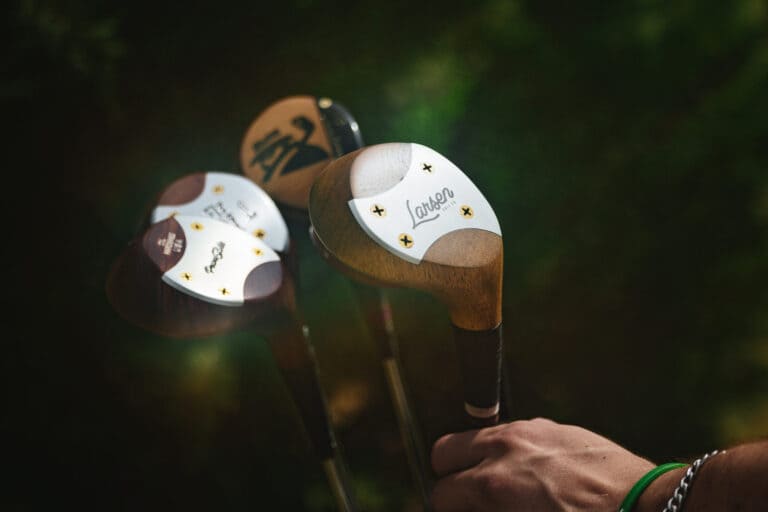
persimmon woods performance review

Nothing survives Father Time

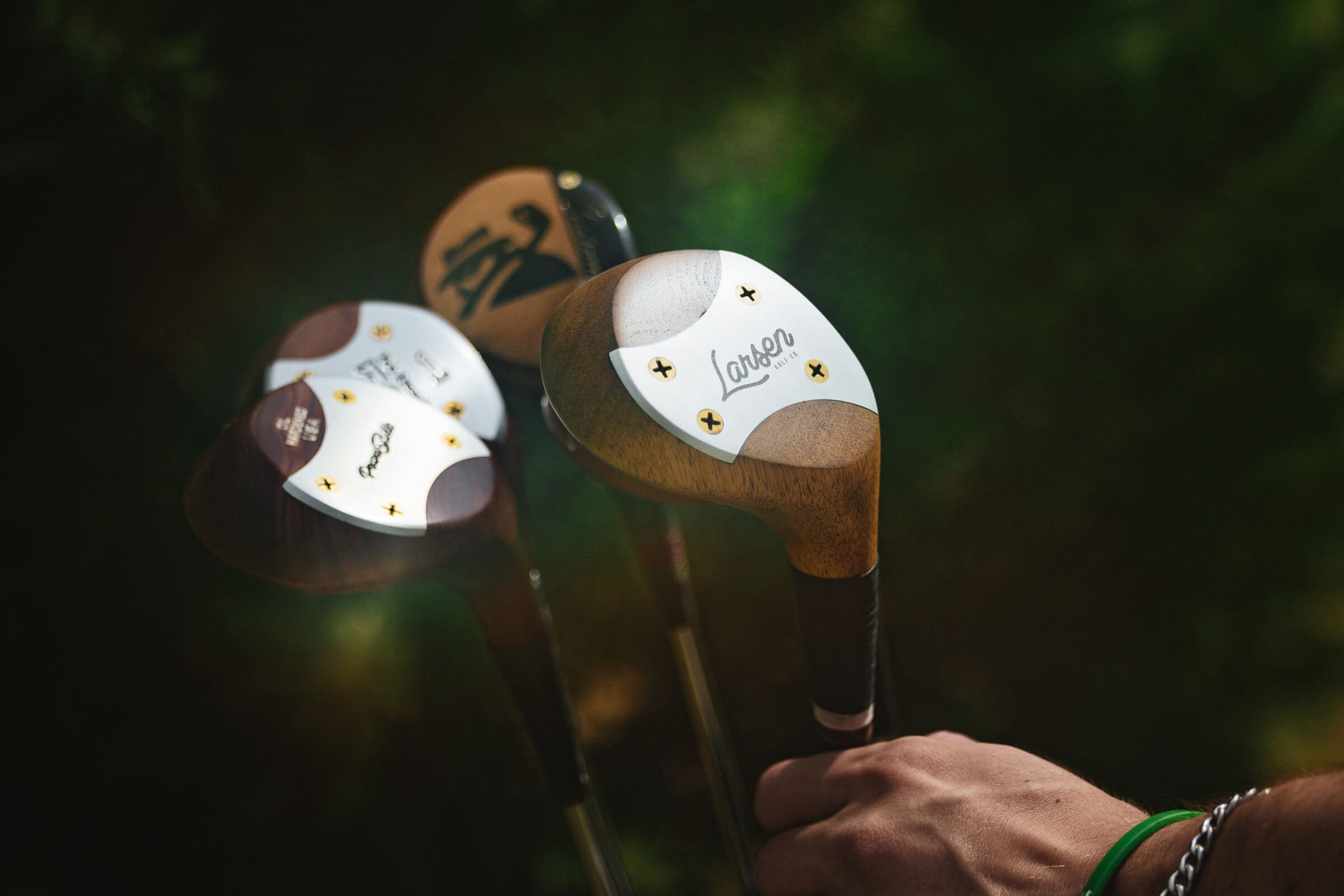
We took five current persimmon wood manufacturers and tested them head-to-head against each other. And, we added a twist – a modern day driver, TaylorMade Qi4D. 

In our testing, 10 golfers participated, registering a 101.5 mph mean club head speed across all persimmon models. In comparison, they reached a higher average of 105.5 mph when swinging the modern TaylorMade Qi4D.
The beauty of persimmon woods

There has been a resurgence in the persimmon wood space. You have craftsmen today who dedicate themselves to these artisan pieces of golf history. Golf is a game of honor and there is nothing more praise worthy than individuals seeking to uphold the traditions of the game, and persimmon woods are a prime example.  

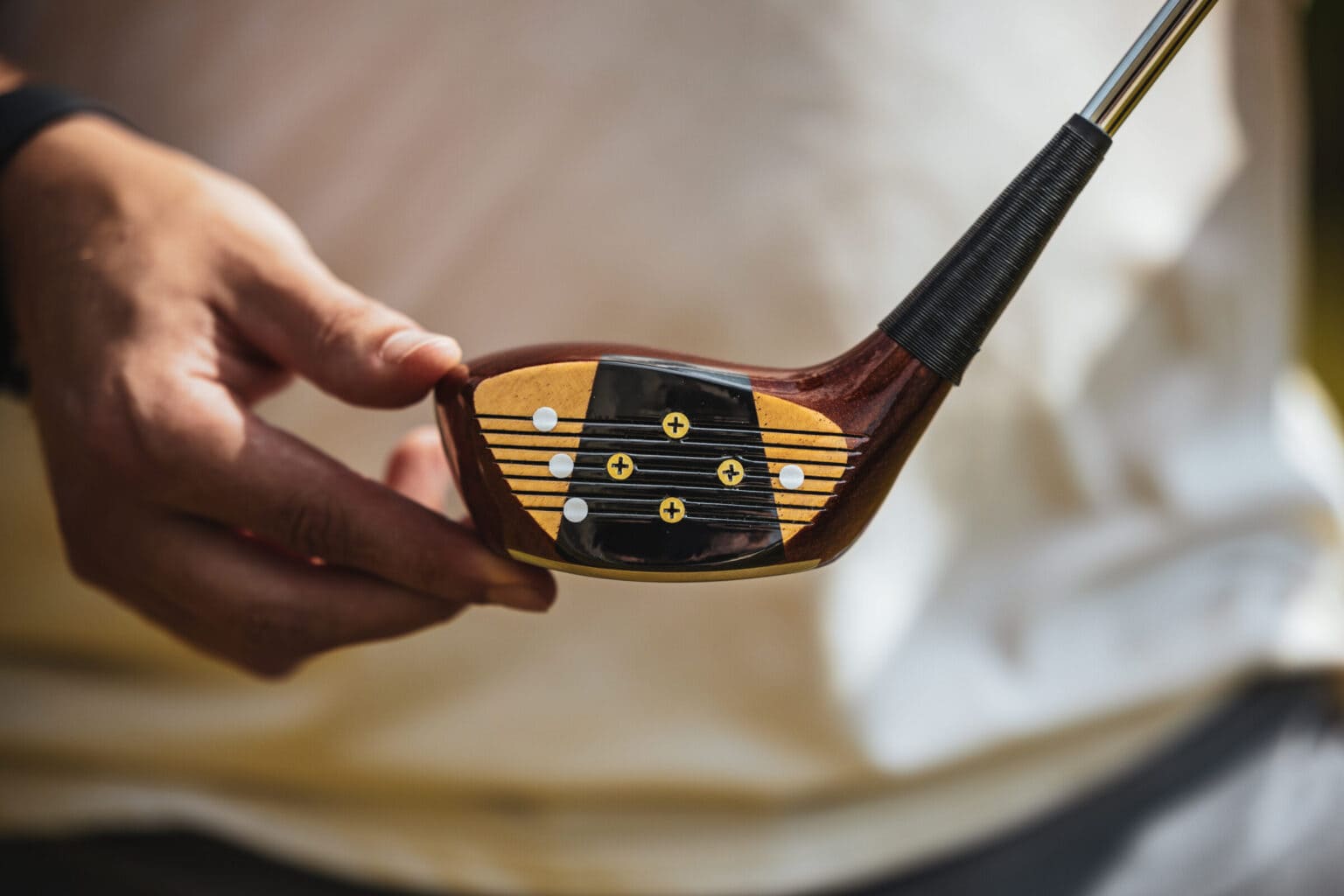
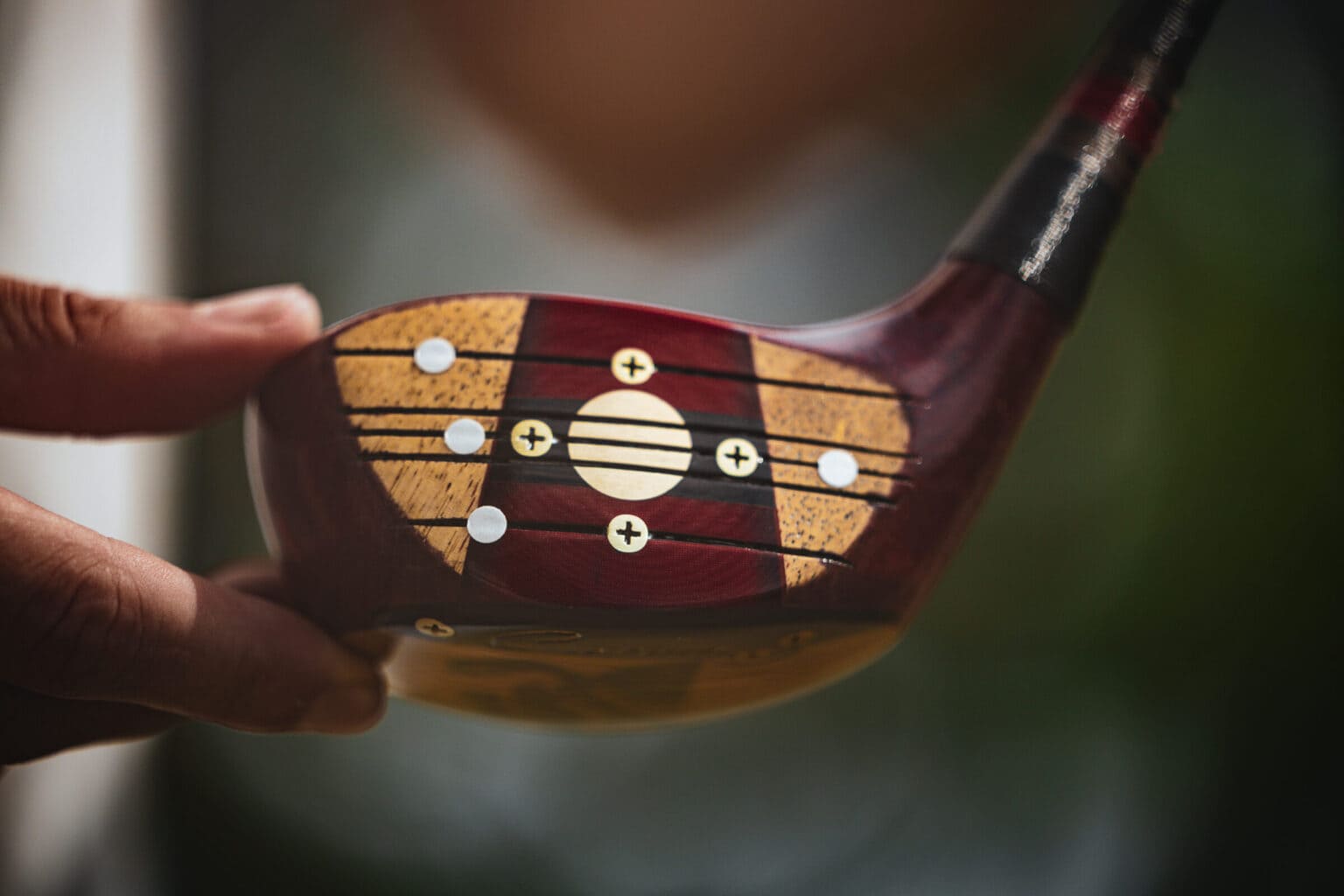
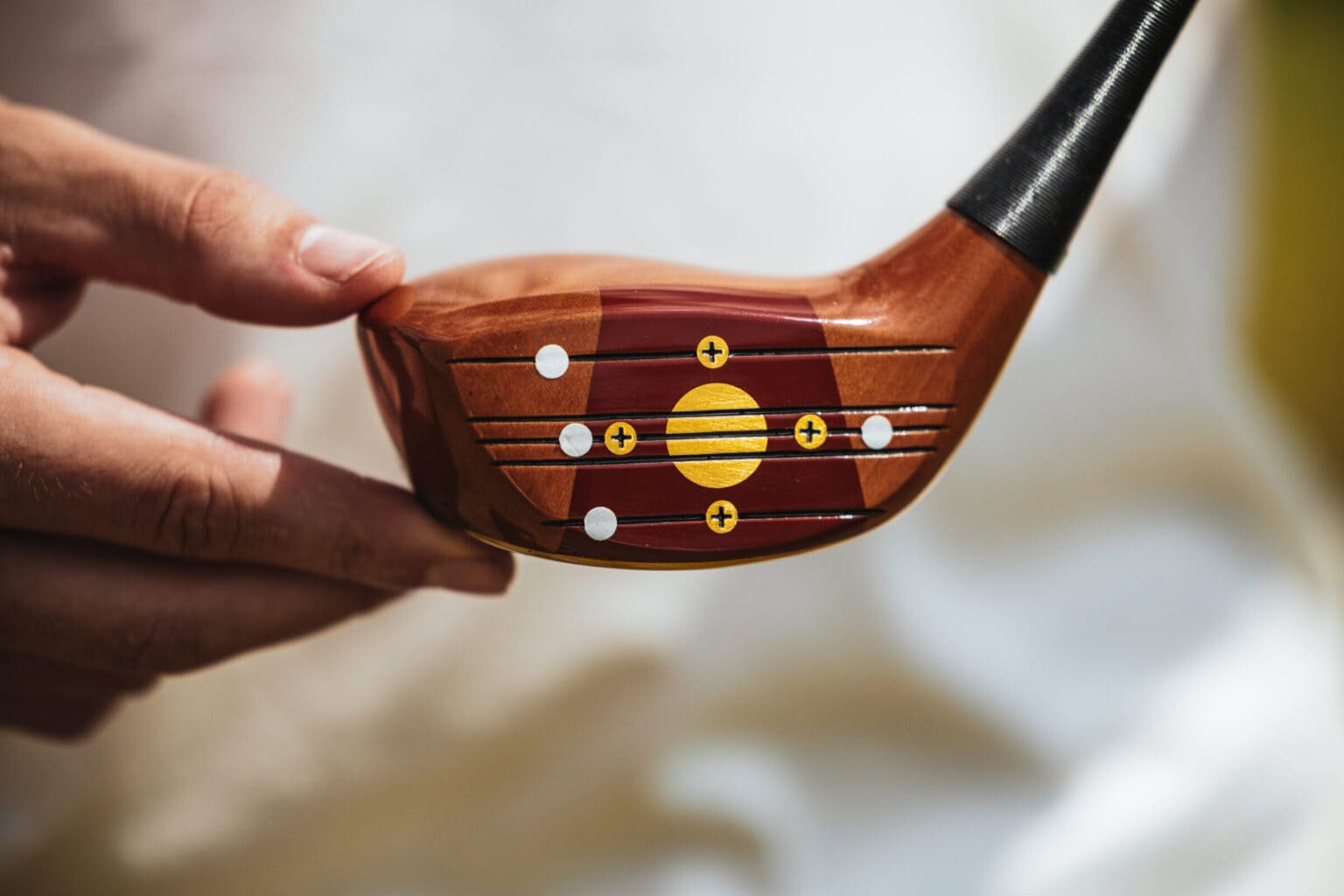
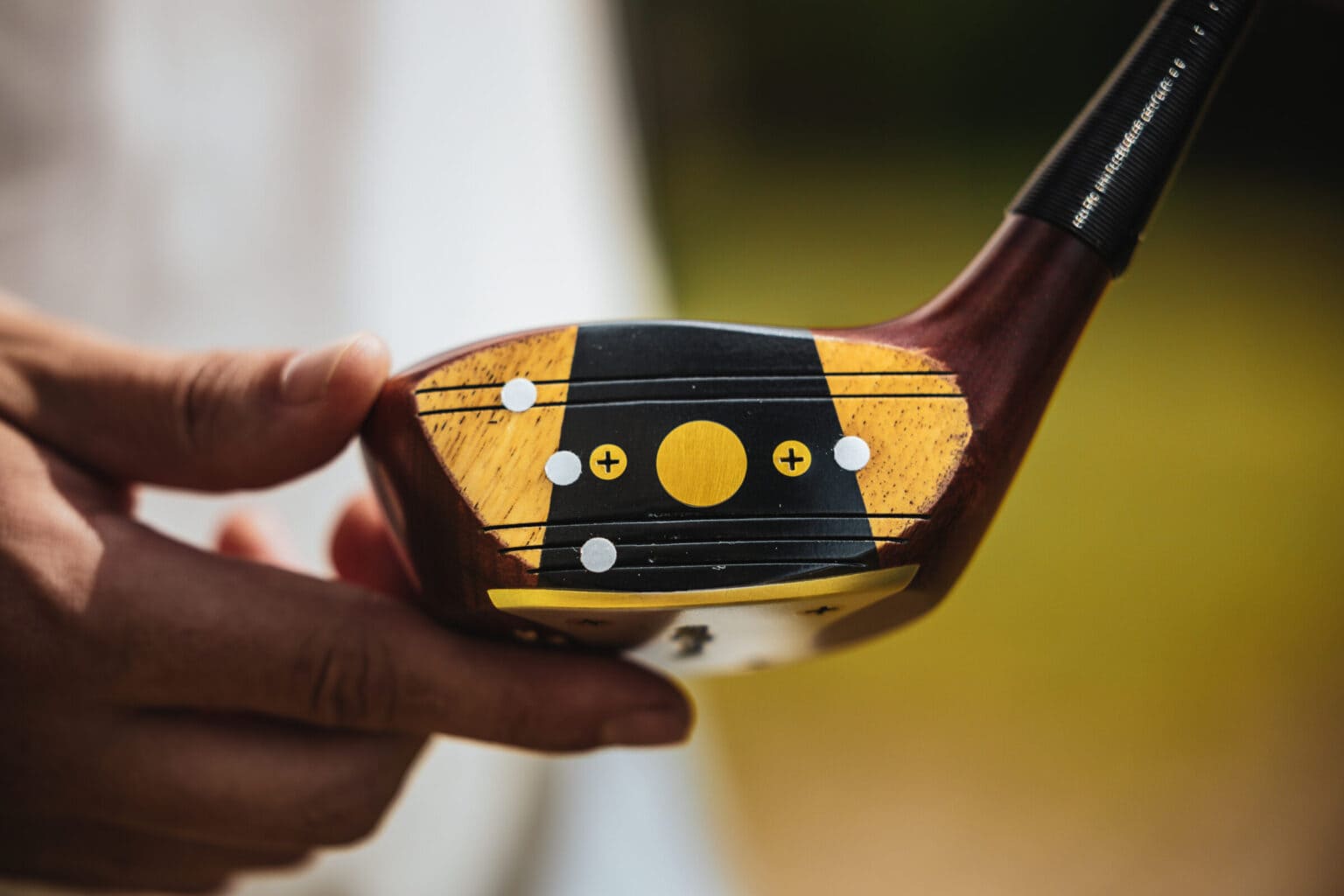
The allure of persimmon woods begins with their elegance. Every single club is meticulously hand-carved out of a single block of timber, showcasing remarkable craftsmanship. Looking at the test models, the level of precision is striking—a true testament to the extraordinary skill required by classic clubmakers to shape these wooden heads by hand. They are, without question, works of art.  
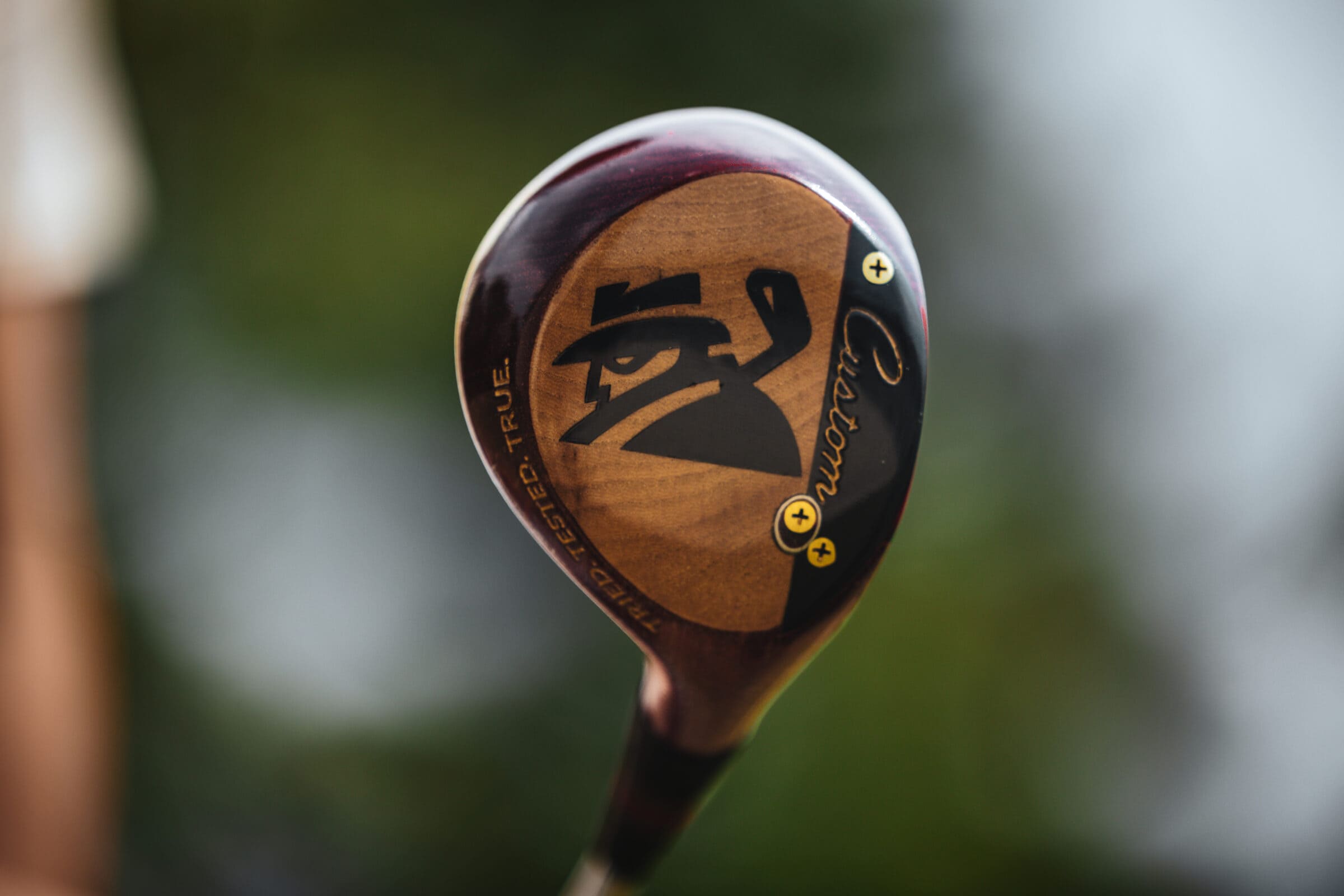
persimmon wood art

The sheer fact that the likes of Jack Nicklaus, Ben Hogan, Arnold Palmer, Sam Snead, and Gary Player all won numerous events with persimmon woods is outstanding. Every golfer in those eras excelled using persimmon woods. Jack Nicklaus alone won 17 of his 18 majors with a persimmon wood. Who knows how those golfers would fare with today’s modern technology? 

Who stands out as a top performer? Let’s take a look. 

Persimmon wood data

No one expects a persimmon wood to outperform a modern day driver. If you do, well, I don’t think we can help you there. But, head-to-head performance between persimmon woods is eye-catching. 

Louisville Golf’s The Classic claims the title of best for distance among the persimmon wood contenders. It also produces the fastest ball speed at 143.4 mph. This is 1.85 mph faster than the slowest persimmon wood for ball speed (Larsen Golf Persimmon Wood). 
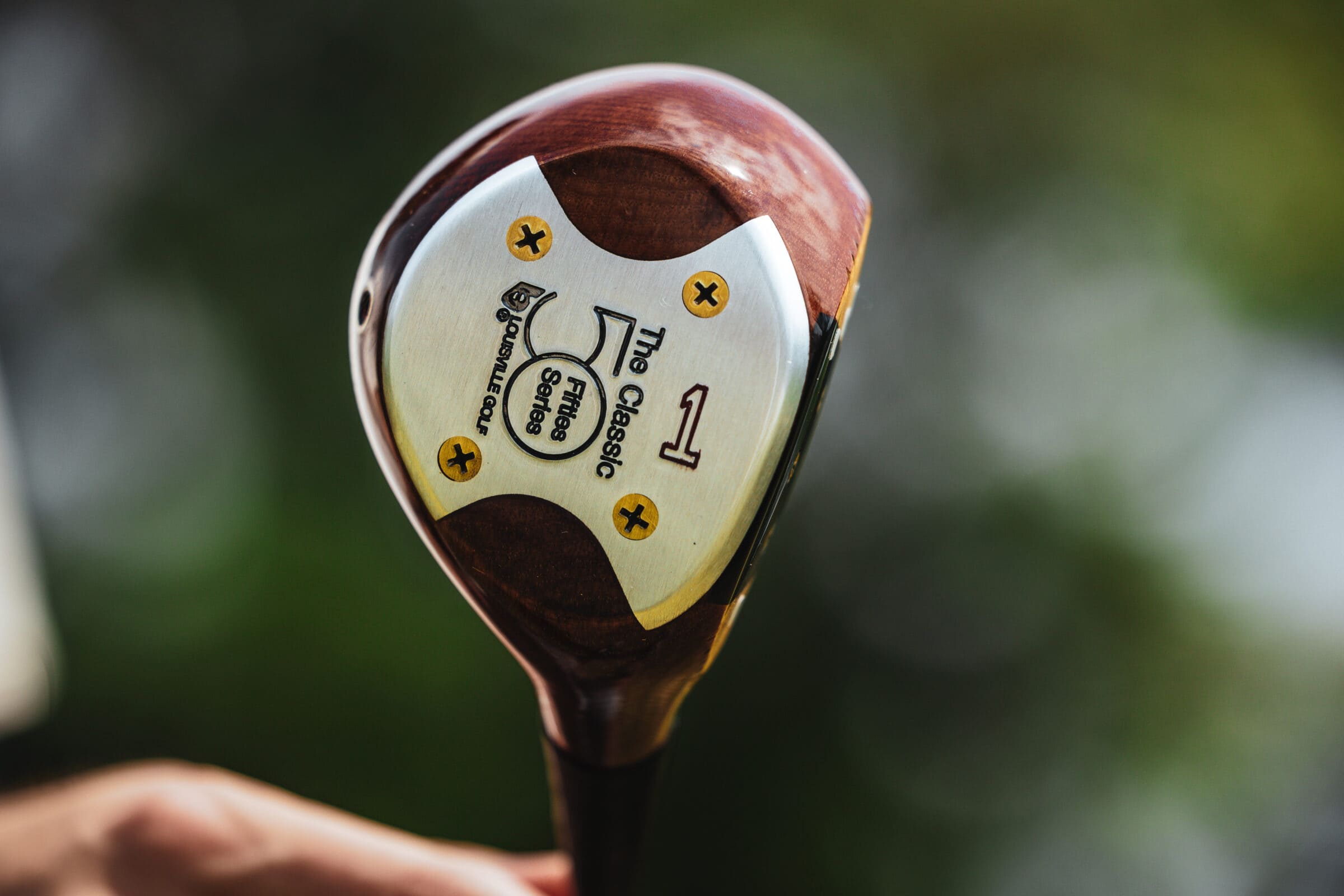
Louisville Golf persimmon wood

Similar gaps in performance show up in our Most Wanted Driver testing. During the 2026 test, ball speeds varied by 3.45 mph from the fastest model to the slowest. This variation proves that even persimmon woods exhibit distinct performance differences. Evaluating equipment highlights these nuances—no two persimmon woods behave identically, just as no two modern drivers perform the same.

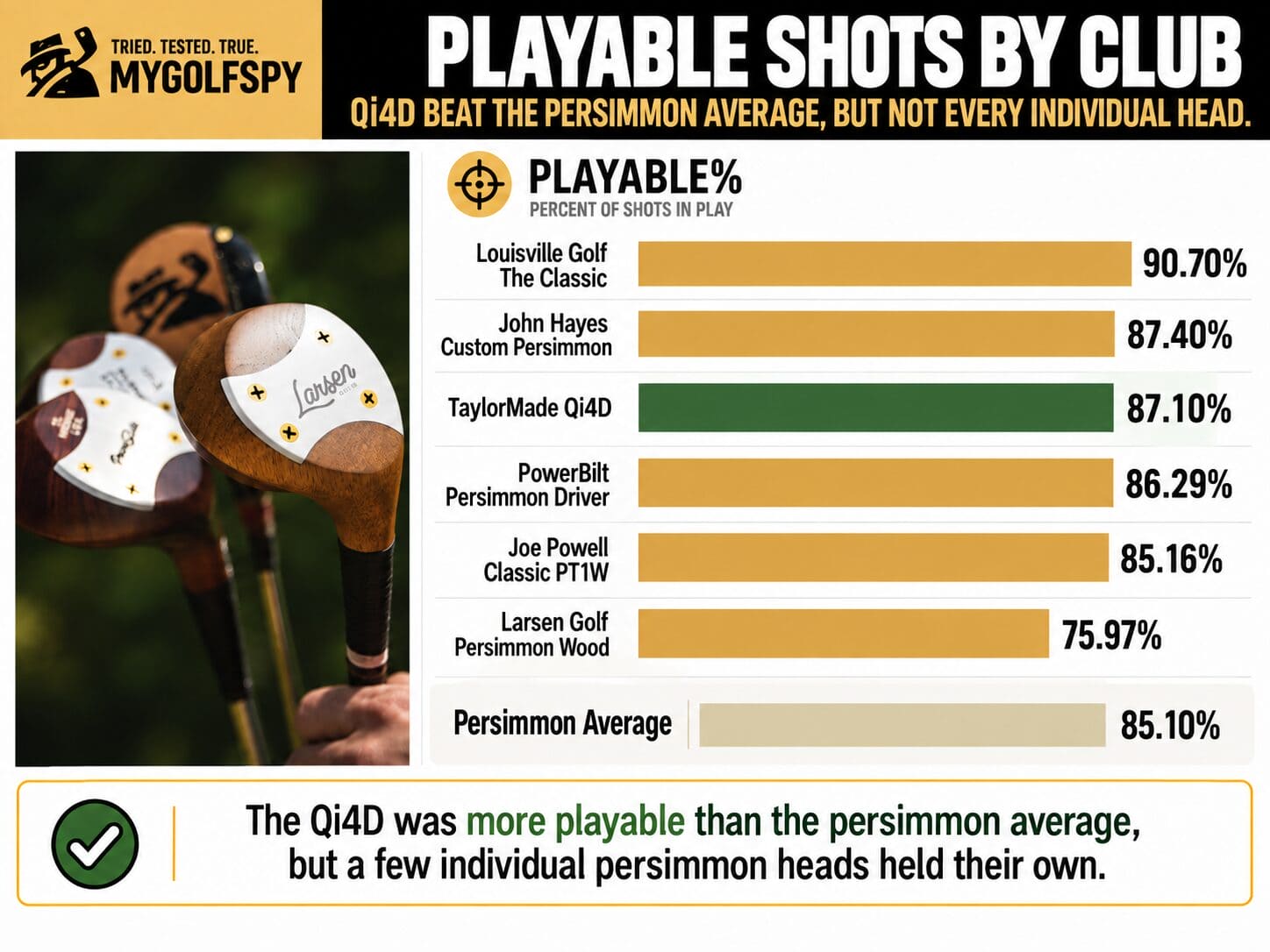
OEMModelClub SpdBall SpdLaunchSpinPeak HtDescentCarryTotalStraight%Playable%Shot Area
TaylorMadeQi4D105.45151.5312.39271732.9738.99253.51266.9354.8487.103429
Louisville GolfThe Classic101.99143.429.77270121.7431.20227.00244.1450.3990.704260
PowerBiltPersimmon Driver101.94142.5210.59277823.8933.26226.81242.3250.8186.292894
Joe PowellClassic PT1W101.64141.5711.61283825.7334.75225.53241.1754.6985.164296
John HayesCustom Persimmon101.46141.8610.87297525.1034.78225.14239.6058.2787.403928
Larsen GolfPersimmon Wood100.47142.309.56271221.0230.87224.30238.9537.9875.974105

Modern engineering is superior

There are glaring differences between a persimmon wood driver and the modern driver. It doesn’t take a rocket scientist to make this determination. Yet, it does attest to the advancements in technology and the processing capabilities of manufacturers. These advancements by R&D are evident. 
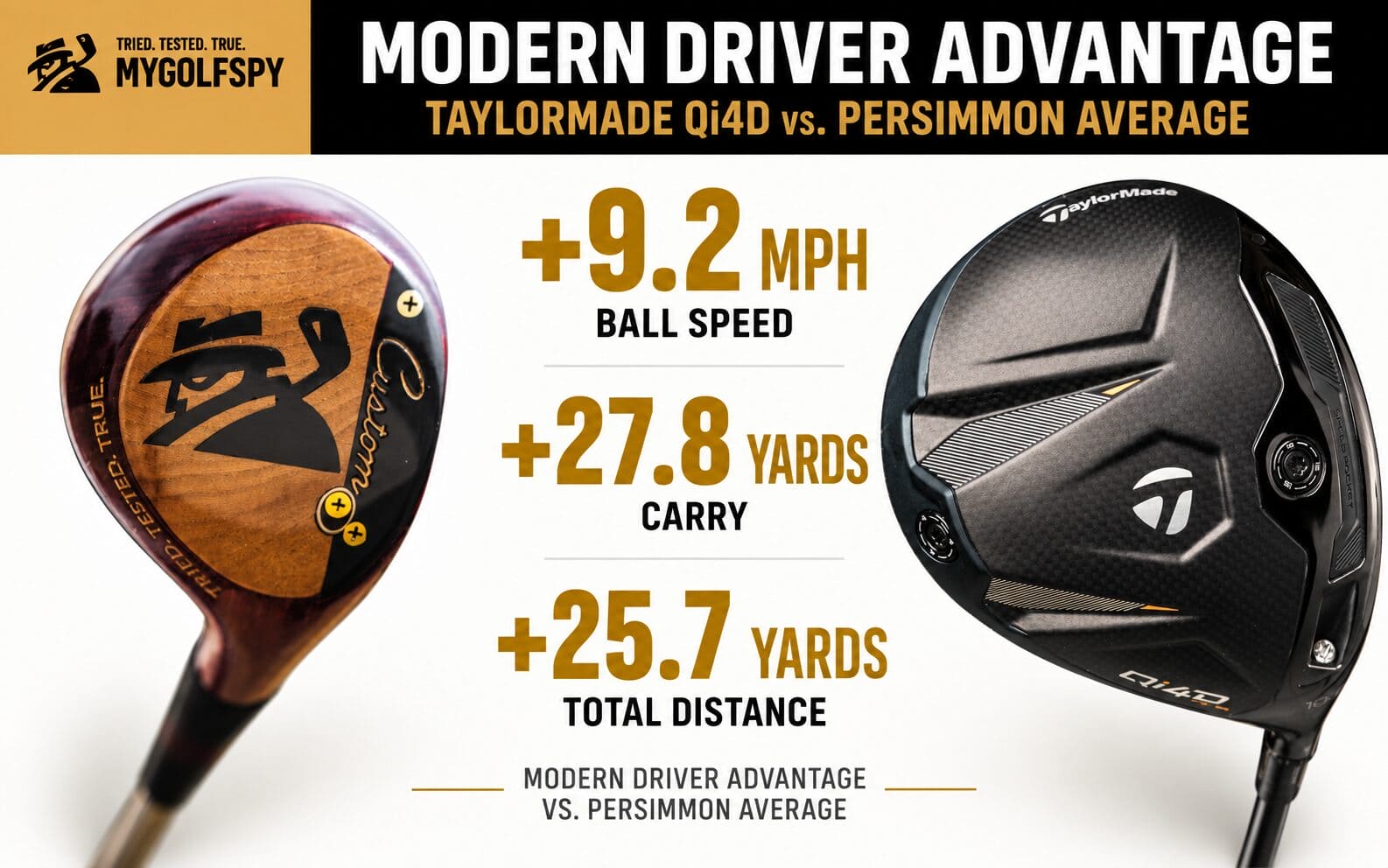
In this case, the modern driver, TaylorMade Qi4D is exponentially faster and longer than all of the persimmon woods. Here are key ball data metrics:

  • 9.20 mph faster ball speed vs the persimmon wood average
  • 27.8 yards longer carry vs the persimmon wood average
  • 25.7 yards longer total distance vs the persimmon wood average

Ultimately, persimmon wood technology cannot keep pace with a modern driver. A whopping 27.8 yards shorter carry distance on average for the persimmon wood is the glaring metric.

Modern drivers hold a distinct edge over traditional persimmon woods, much like modern race cars compared to classic models. In high-performance racing—whether NASCAR or Formula 1—engineering and design advancements have dramatically evolved. Motorsport engineers meticulously analyze every measurable variable, eagerly capitalizing on even a 1% gain in performance.
Golf equipment R&D operates on the very same principle. Today’s club designers continuously refine technologies to unlock faster ball speeds and maximize forgiveness across the entire clubface. When measured against classic persimmon woods, the performance benefits of modern engineering are unmistakably clear.

Do people still play with persimmon woods?

Nostalgia is intoxicating. Of course, there is a subculture of persimmon wood fanatics. For example, every single one of the persimmon woods we tested are pieces of exquisite art. They’re masterpieces expertly crafted. Each of these craftsmen takes absolute pride in their work. 
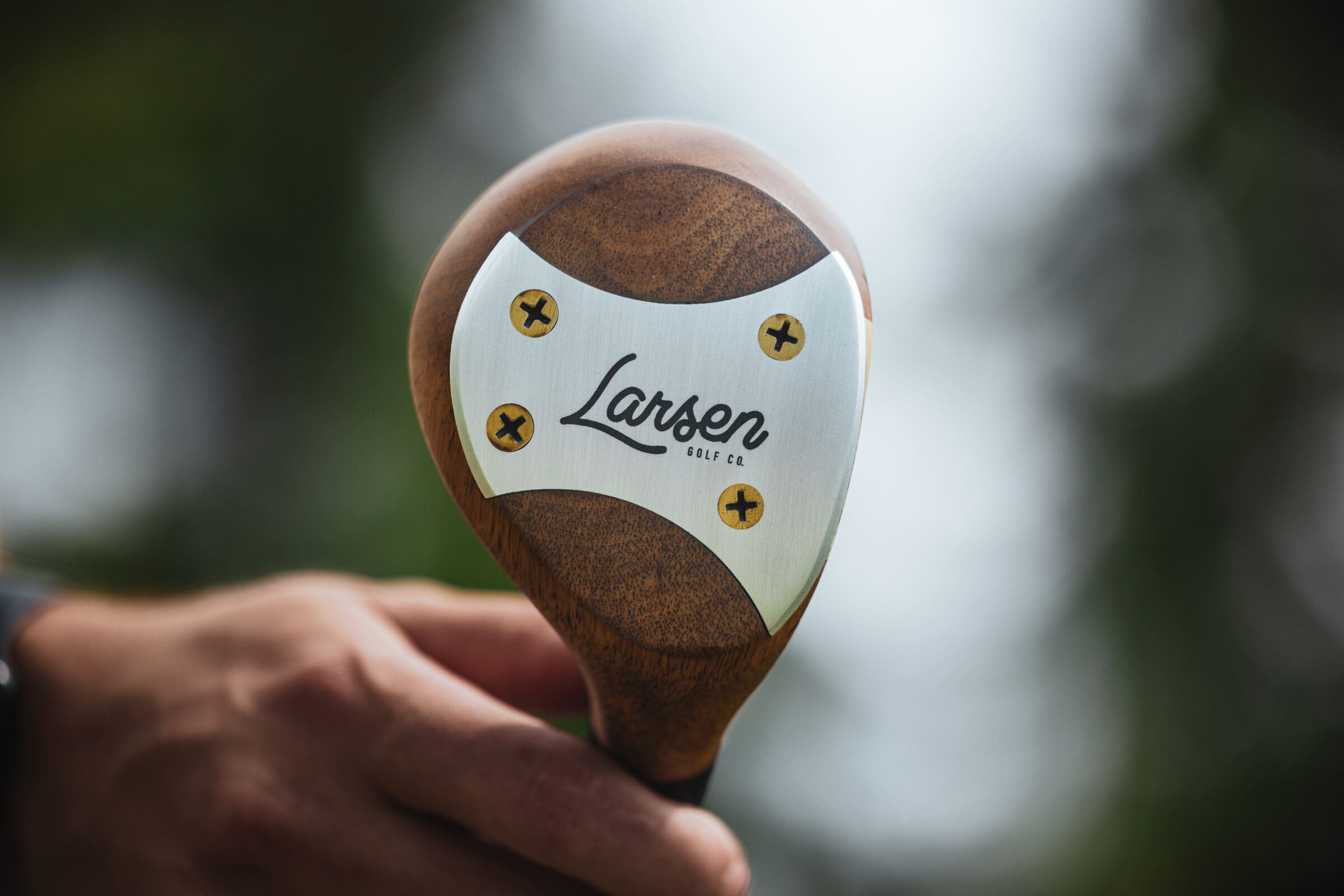
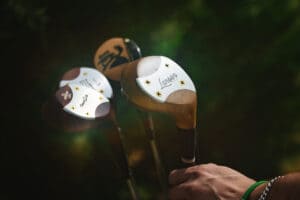
Larson Golf Persimmon wood

You can find a few organizations who honor the game by coordinating competitive events. Two specific ones are: Persimmon Brotherhood & Golf Heritage Society. 

For those of you who have hit a persimmon, you can attest to the feel and feedback they offer versus the modern day driver. This is arguably one of the underlying reasons why golfers will use them to this day.  
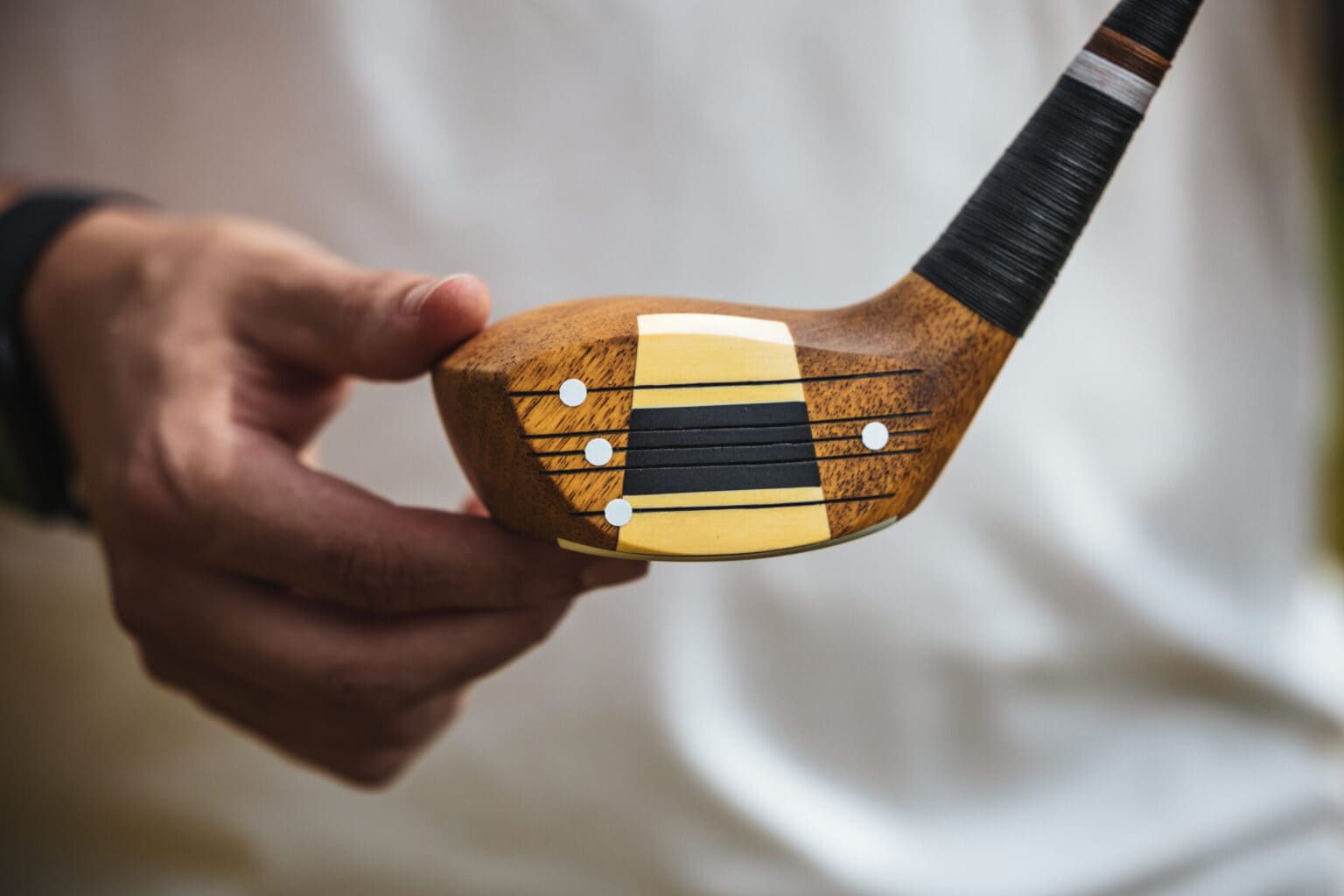
Here are a few comments from our testers specific to each persimmon wood:

  • “This is a fantastic club. Gorgeous, the best of the group by far in looks, sound and performance.” – Joe Powell Classic
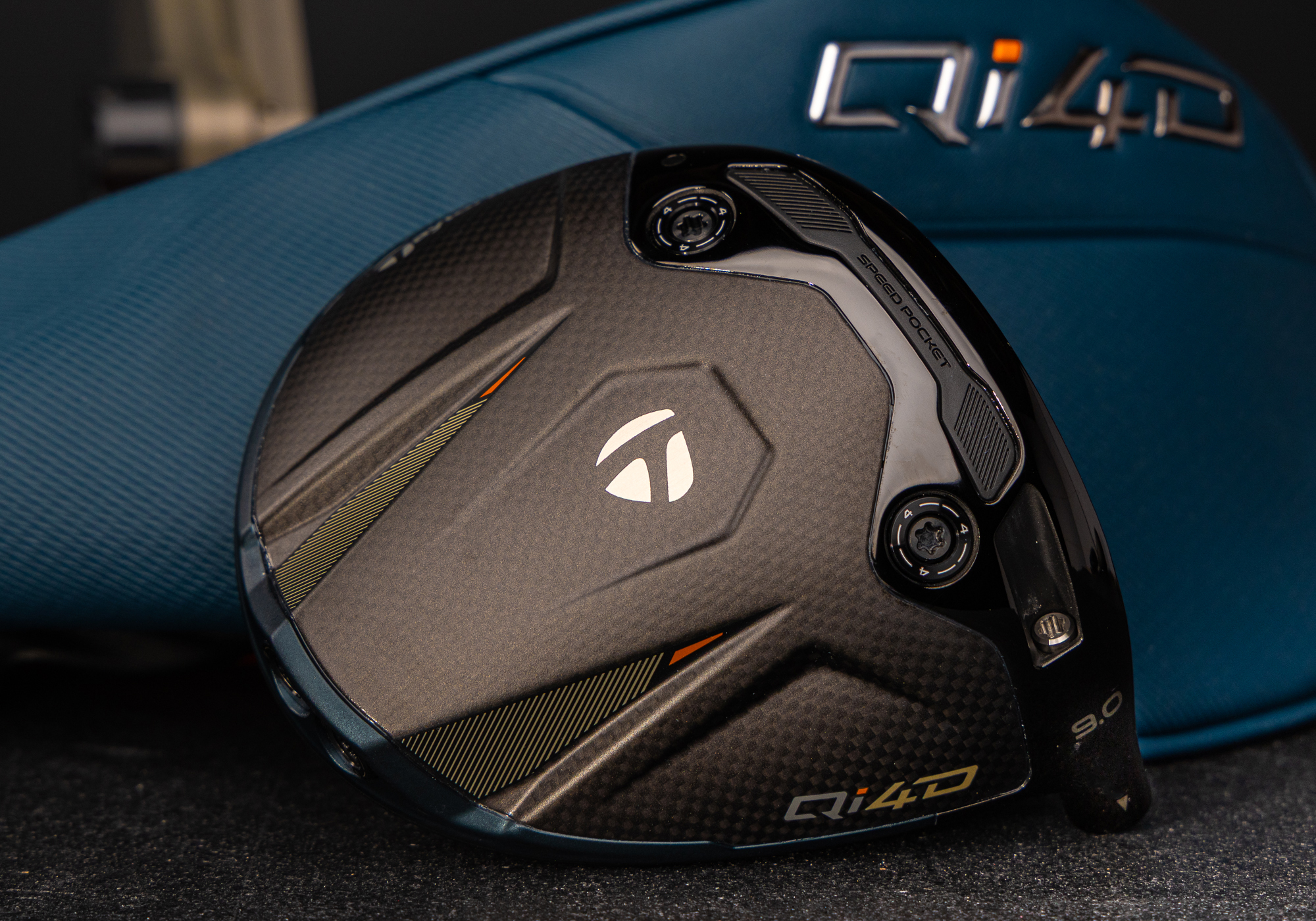
  • “I love the custom design with MyGolfSpy. Special thank you to John Hayes. It is GORGEOUS. Performance is decent. Hit some solid shots with it.” – John Hayes Persimmon Wood
  • “I can get accustomed to this persimmon wood. LOVE the looks. It is SLICK.” – Larsen Golf Persimmon Wood
  • “Classic throughout and easy to hit and control. The glossy finish is a bit bright, but not horrible. The dark wood finish was nice compared to others.” – Louisville Golf The Classic
  • “This is decent across the board and the sweet spot was hot, while off-center shots still performed but showed decrease in data.” – PowerBilt Persimmon
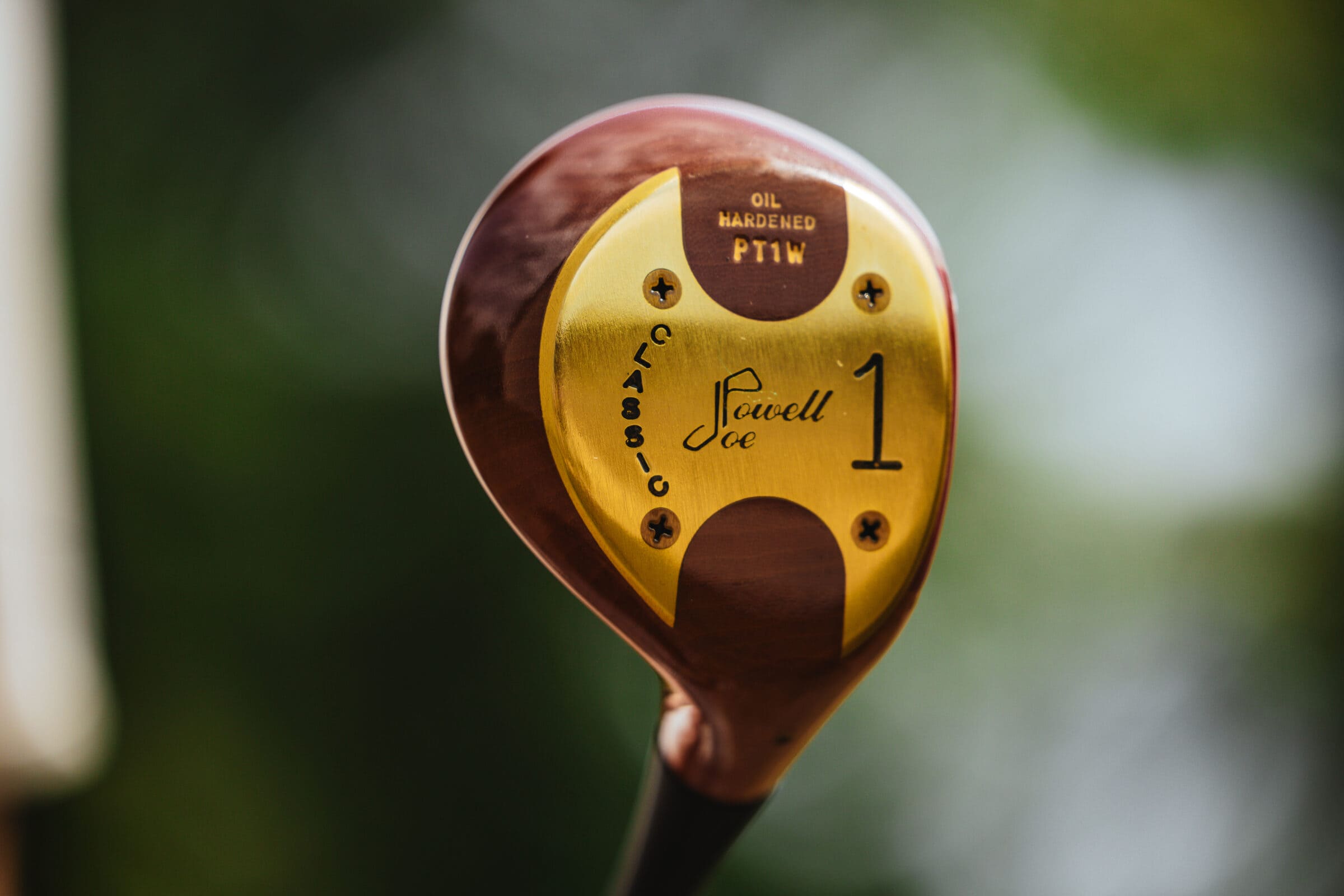
Joe Powell Persimmon Wood

History is worth respecting, but newer is better

“Is newer better?” serves as a foundational question for MyGolfSpy. There is zero question that a modern day driver is better for your golf game versus a persimmon wood. The data is undeniable. 

Persimmon woods and their heritage nevertheless command immense respect. As golfers, acknowledging their undeniable role in the sport’s history is essential. They established the groundwork upon which contemporary drivers are designed, leaving manufacturers with a lasting debt of gratitude to those pioneering artisans who shaped golf equipment for more than a century.
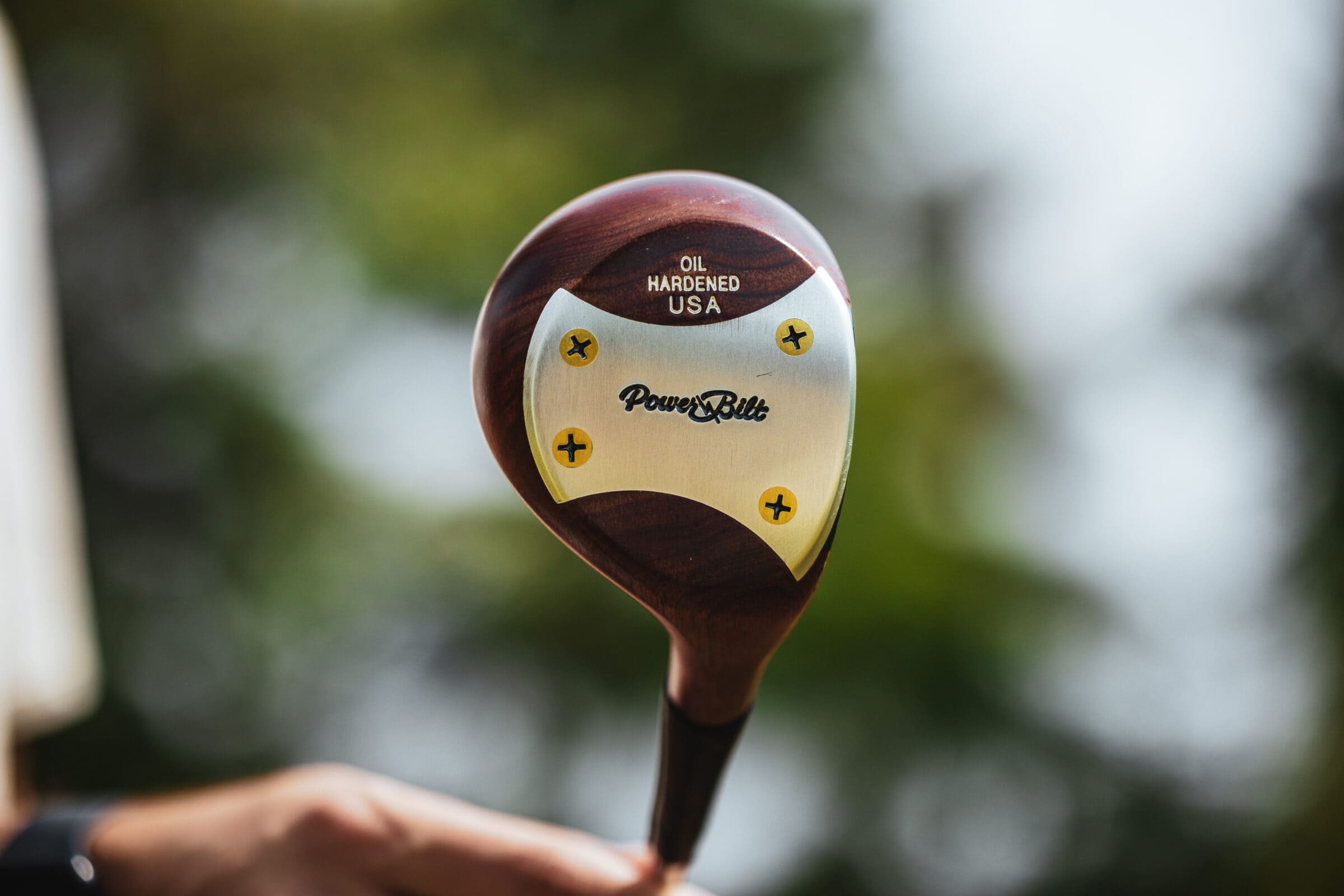
PowerBilt Persimmon Wood

Tell us about your experience with persimmon woods in the comments!!

For You

For You

Underrated Golf Tour x L.A.B. Golf limited editon Underrated Golf Tour x L.A.B. Golf limited editon
First Look
Sep 25, 2026
This L.A.B. Golf Collab With Steph Curry’s Underrated Golf League Is Nothing But Net
News
Sep 25, 2026
I Tried Golf VX’s Quantum Simulator. It Ruined Regular Sim Golf For Me.
Overrated Golf Experiences Overrated Golf Experiences
Golf Talk
Sep 25, 2026
The 10 Most Overrated Golf Experiences
Preferred Source
Phillip Bishop

Phillip Bishop

Phillip Bishop

Cancer Survivor. Amputee Golfer. Essentially, a OneLeggedBoss. When he isn't facilitating testing or analyzing data, Phillip enjoys his family time, practicing and playing golf, unwinding with video games, capturing photos of nature, or devouring pretzels.

Phillip Bishop

Phillip Bishop

Phillip Bishop

Driver Titleist GT3 3 Wood Titleist GT3
7 Wood Callaway Elyte Triple Diamond Irons (5-PW) Srixon ZXi5
Wedges (46, 50, 54, 58) Titleist Vokey SM10 Putter L.A.B. MEZZ.1 MAX
Ball Titleist Pro V1x  
Phillip Bishop

Phillip Bishop

Phillip Bishop


      Dave Carnley

      34 minutes ago

      I grew up playing golf in the 60s and 70s with these persimmon words. When we had a good shot would often say he hit it on the screws and meant quite literally the screws as often times for small screws held the acrylic type insert in place. I was like 16 year-old I cut lawns and save enough money to buy set of four titles persimmon Woods. They were truly a work of art and beautiful. Even today nothing quite beats the feel and that click of a solid drive on a persimmon wood.

      Reply

      Bob Giolitto

      50 minutes ago

      Were the persimmon drivers shafted with the traditional steel shaft at 43″? Does the Taylormade have a 45″+ graphite shaft? That would account for half the distance loss. Agree with those who say limit the clubs, not the ball. When Tiger played his 43″ steel shafted Titleist driver with a 280cc head he wasn’t consistently driving it 300 yds.

      Reply

      Scott S

      54 minutes ago

      I would not call this bad or faulty, but there are some issues with the comparison being apples to cucumbers rather than apples to apples. The Louisville shaft length is 43.5 steel/44 graphite (maybe I missed it, but I didn’t see the spec on that) the Qi40 shaft length is 45.75 providing (as noted by others) a club head speed advantage (degree of advantage ?) While ball speed is undeniably a factor, the loft and launch of the persimmon woods differs quite a bit between the two classes, which is are often discussed elements of carry and total distance. I agree with others, to truly assess any quantifiable advantage that technology provides this needs to at least be done on a robot with equivalent swing speeds; or shorten the Qi40 shaft to 43.5 inches (or equivalent for each competing persimmon driver) to determine what affect that has on swing speed and other dynamic elements of distance. Then we would truly know if we can just lengthen the shaft of a quality presimmon head driver and still keep up with “technology” or if Cyberdine Systems has truly evolved beyond human control.

      Reply

      TacSKS

      1 hour ago

      Yes 25yd total distance is huge, but it’s really only about 10% improvement – not exactly “exponentially faster and longer”.

      Reply

      Joe Cronin

      2 hours ago

      I still have my Tommy Armour drive, 2 and 3 woods. There is still nothing like the feel of well struck ball with those clubs. However, I worry about using them with the new balls.

      Reply

      Rick

      2 hours ago

      should’ve tested with a robot, and made sure the swing speed was the same. The reason why the Taylor made was swung faster was because the longer shaft. To really compare apples to apples, they should’ve made sure the SS was the same. Would’ve been interesting to see.

      Reply

      Tad Moore

      2 hours ago

      We did not get the specs of the persimmon heads. Loft, lie , bulge and roll, shaft, length, swing weight

      Reply

      Eric

      2 hours ago

      Jack won all 20 of his majors with a persimmon driver.

      Reply

      stylin19

      2 hours ago

      I started with persimmons. Went to a polymer\acrylic northwestern driver and never looked back.
      My dad – (a bricklayer who would play 9 after work) – had a love affair with persimmons…after every round he would wash and wax them…would take toothpicks to get the crap out of the screw heads. We had old fashioned golf shoes with the flaps and metal spikes. He would take out the spikes and toothbrush out the crap and corruption on the spikes and the spike holes.. He would take out the shoe laces and proceed to clean then shoe polish the shoes and the flaps. He loved and respected the game. When I’m on the green I still hear his voice “Fix your ball mark, then one more”. What if i didn’t leave a ball mark ? “Fix one then one more”. Life took a toll and he stopped playing before metals came around from other than driving ranges. I’d love to have one more round with him…playing persimmons, (hitting his pretty little fade to the middle of the fairway) of course.

      Reply

      Michael Allan

      2 hours ago

      I still have my Titleist Tour Persimmons, driver, 3 and 5 wood, the driver out of the screws was a rocket and i could shape the 3 and 5 both with a fade or a draw, now i just hit them straight, my father who played off of 2 drove the 18th green at the Old Course in 1970 when i was a lad, my brother still says my best ever bunker shot was that day out of Hell bunker to 6 feet and i made the putt, thanks for the article brings back some very good memories.

      Reply

      Vas

      2 hours ago

      Great work here. The unintended conclusion is just how much of the distance problem IS the golf ball.

      Reply

      Richard Andreachuk

      2 hours ago

      played Lynx persimmons, beautiful clubs, paired with Titleist balata, you had to hit it pure!

      Reply

      Scott

      2 hours ago

      … and just like BITD, no one makes lefties. No nostalgia needed!

      Reply

      Darren

      2 hours ago

      Haven’t read all the comments, but the article didn’t mention the length of the drivers. I’m certain the Taylor Made is at least 2 inches longer and that equates to increase in clubhead speed. Not an apples to apples comparison in a relatively important part of test.

      Reply

      Heyweb

      2 hours ago

      I also grew up playing Persimmon wood drivers. For my 30th birthday I received a Cleveland Classic Blonde Persimmon driver. One of the most beautiful clubs I’ve ever owned. Loved the sound of impact, especially when trees guarded the tee box! Nothing like it in golf anymore. I couldn’t hit that club to save my life. All me, not the club. But I loved it. It would be fun to tee one up again at my home course to see how different it is. Biggest difference I remember is a tee shot would start lower and climb. Such a sight. Current drivers now start high and fly higher. They still feel like they “balloon” for me, because of those memories! Thanks for the article!

      Reply

      Joe Domill

      3 hours ago

      Hi I played persimmon wood when I started to play golf, I had driver,three wood and five wood . I learned how to play golf with them

      Reply

      Ernie NOT Els

      3 hours ago

      I started playing golf in the late 1960’s at the age of 9. Yes, persimmon woods are a big part of my past. Well actually, my first set of cut-down clubs had those awful laminated woods. But I soon upgraded to true persimmon woods when I was able to swing adult size clubs, and I loved them. Back then “forgiveness” was not a word you ever heard on the course, mostly only at church and when you got in trouble with your parents. So, what I remember was the solid, center-of-face, hits. Those were awesome. The toe and heel misses were just kind of forgotten as part of the game. By the time I was a teenager I could shape my drives at will and it was great. The persimmon woods were quite responsive – no different than today’s metal woods. By the mid-1970’s persimmon woods were getting harder and harder to find and then eventually TaylorMade and Callaway took the game by storm. A lot of local/independent golf shops offered restoration services of old beat up drivers and fairway woods. For a sizeable fee they would take a prized old MacGregor, Spalding, or Wilson persimmon heads that were commonly found in pawn shops and refinish, re-shaft, and re-grip them and they were beautiful. I couldn’t afford that with what I would earn at my summer jobs so I purchased new a Titleist driver and matching 3-wood that was on sale. They were a sexy blonde color with deep red inserts. That driver was a bomber, and the three wood produced a mid-trajectory, penetrating flight. I used that set for the next 20 years – even though I bought a TaylorMade Tour Burner 9.5° driver in 1983. I alternated drivers but I mostly stuck with the Titleist as I found it to be more “forgiving”. Ironic isn’t it.

      Reply

      Robert G

      3 hours ago

      Many years ago, I purchased a MacGregor M09T “Jumbo” Driver (hybrid size by comparison) with today’s drivers. I currently it resides on a wall mounted Plack in my office. This club was a piece of moder art of the time. I never wanted to hit a ball with it, so I never did. It’s part of my golf art collection.

      Reply

      Jeff

      3 hours ago

      I grew up playing Powerbilt Citations, Persimmon 1-3-5 woods. That 5 wood was the size of a quarter. The sounds they made was so smooth. I still have them. Also the Black Ping 1-3 woods, beautiful clubs (laminated maple). They look good in my golf room. That’s where they will stay.

      Reply

      Matty J

      3 hours ago

      Great test and th results are surprising that the persimmons are as close as they are. Particularly
      thought the spin numbers were interesting. Would really like to see this repeated with a persimmon head built to close to the same dimensions of our 460cc heads of today.

      Reply

      Brock Meyers

      3 hours ago

      The SWING SPEED differential between persimmon and metalwoods has nothing to do with the head itself. It is purely a product of shaft type and loading. I did not see any indication of shaft type and length of club in the mygolfspy testing. I am the former owner of a manufacturing company that made persimmon woods for 22 years; all handcrafted from a raw block up.

      Reply

      Sonoma Valley Tom

      36 minutes ago

      Yes, I second the question. As the wooden heads in the article are new bespoke made were the shafts modern graphite? Or were steel shafts installed? What length shafts?

      Reply

      Ben Davis

      3 hours ago

      I love this article and wonder if it really starts to ask the question about the significant distance gains we have seen in recent years. Would be curious to find out which has had a bigger impact on distance gains: The ball or Club tech.

      Reply

      ArchieBunker

      3 hours ago

      Persimmon can be pretty unforgiving. Several tour pros (Tiger, Ricky Fowler, etc) do occasionally practice with a persimmon driver to sharpen their ball striking skills. Hitting one “on the screws” with a solid head persimmon club rewards you with a feeling that no modern day club can duplicate. You are not going to hit it as far, so move up a tee. Regarding the test results, there is no mention of the type of shaft used. Steel? Graphite? Flex? Length? This alone can explain the differences.

      Reply

      Ed Franks

      3 hours ago

      Great Article- Fun Experiment. Did you have any Tour Balata’s with slight damage tested? that would then be a real test

      Reply

      Terry Northup

      3 hours ago

      How much do the persimmon drivers cost compared to the new ones?

      Reply

      Bob Lamoureux

      3 hours ago

      Can I assume the persimmon woods had modern graphite shafts?
      If they did, it would be very interesting to compare persimmon steel shafted drivers to the Taylor Made Qi4D driver.

      Reply

      Al Jamieson

      3 hours ago

      As an old guy of 80 and club geek, I had many persimmon drivers and worked on many as an assistant pro in the early 70’s. The typical driver was 43″ and weighed 13 oz. It was imperative to swing with control to make contact with a small sweet spot. With the development of graphite and titanium, drivers could be 45″ and 11 oz with a sweet spot the size of a toaster.
      As my old friend and great teacher Chuck Hogan said, “Fit influences form”. Subsequent generations of kids were taught to swing full throttle and we see the result of that in today’s game.
      For this test, were the persimmons fitted with graphite shafts and at what length?

      Reply

      albatrossx4

      3 hours ago

      Well how can you accurately compare when the club speeds are different? I used to have persimmon and even maple woods that I could easily carry 250+ and occasionally hit over 300, with one time reaching a 520 par 5 with driver 6 iron (ok the wood was on a 54 inch shaft but I also only hit a 6 iron 170 at the time) but I get it, for someone new to swinging the small head, it is hard to go after it, and you could get or build persimmon woods with graphite shafts, but you need to test at the same swing speeds, you would be amazed on center hits PHYSICS can not be trumped by technology. So in the end your test is rather inconclusive.

      Reply

      Greg B

      3 hours ago

      So add the driver distance change due to technology to the ball distance change and you probably have 50-60 yards, which is exactly why the old storied courses have been desecrated beyond recognition. All this so that manufacturers can sell more and more, and the environmental impact of golf can keep going up and up. Such a sad state of affairs.

      Reply

      Michael Wright

      3 hours ago

      Yeah but you could have said the same thing about hickory shafts and featheries. It’s not a new phenomenon.

      Reply

      Mike

      5 hours ago

      I started playing golf w/ persimmon woods & steel shafts. Probably why I didn’t stick w/ the game & didn’t pick it up until my forties. Keep them in a museum, no happy nostalgia memories for me!

      Reply

      mg

      5 hours ago

      Thanks for bringing back great memories. Sawed off wood shafts and persimmon is how my dad started me.

      Reply

      KJC

      5 hours ago

      Bifurcate the bats not the balls. Wood bats for the Major League and metal bats for the minors. Solves that problem of pros driving the ball too far and too straight.

      Reply

      Scott

      3 hours ago

      Agree 100%. The PGA should move back to persimmon woods the way MLB holds onto wood bats. Sure there are different types of wood and MLB players use different brands and types of wood in their bats per their preference. But I fear the major OEMs have too much power because they can’t convince us to buy the latest driver every two years because the guy who won the Hanes Jock Strap Open was gaming it and then we believe its inherently better than the driver another guy used to win the Gold Bond Invitational back in 2024.

      Reply

      Justin Mateer

      6 hours ago

      To think what Jack could have done with the modern driver and ball as opposed to playing a steel shafted 43 inch wood driver and balata.

      Reply

      Tom S.

      4 hours ago

      He would have done exactly what he did then. He was playing against guys with the same equipment as he had, and he dominated. Today, with a modern driver, he’d be playing against guys with the same equipment as he has, and he’d still dominate. No difference.

      Reply

      Objective reviewer 1

      4 hours ago

      Would also solve the “problem” of people tuning in to golf tournaments.

      It would also have the effect of favoring bombers even more than now.
      But mostly it would reduce golf tournaments to chipping contests rather than driving and putting contests. And I’m not sure that will more exciting. It will be less exciting actually.

      Reply

      Al Jamieson

      2 hours ago

      Justin,
      Some people have also speculated that Jack would have won even more had he not played the MacGregor ball. The rubber wound balata balls could be very inconsistent. Most serious players carried a metal ring in their bag to test the ball for roundness. Some balls could get notice noticeably egg shaped in the trunk of your car on a hot day! Tour players would get six dozen per week which , we all suspected, were hand picked. However, they all carried the measuring ring in the bag.

      Reply

      Daddy

      7 hours ago

      I actually expected the distance gap to be way further. What would be more interesting and where I think the difference will be huge is in forgiveness.

      Reply

      Clay Rouse

      3 hours ago

      I assume the shots were all hit with the same, modern ball. Use a balata ball with the persimmon drivers would undoubtedly result in a bigger difference vs the current driver and a modern ball. I have a Louisville persimmon that I occasionally hit into a net in my yard. It’s a lovely sound.

      Reply

    Leave A Reply

    required
    required
    required (your email address will not be published)

    This site uses Akismet to reduce spam. Learn how your comment data is processed.

    Underrated Golf Tour x L.A.B. Golf limited editon Underrated Golf Tour x L.A.B. Golf limited editon
    First Look
    Sep 25, 2026
    This L.A.B. Golf Collab With Steph Curry’s Underrated Golf League Is Nothing But Net
    News
    Sep 25, 2026
    I Tried Golf VX’s Quantum Simulator. It Ruined Regular Sim Golf For Me.
    Overrated Golf Experiences Overrated Golf Experiences
    Golf Talk
    Sep 25, 2026
    The 10 Most Overrated Golf Experiences