


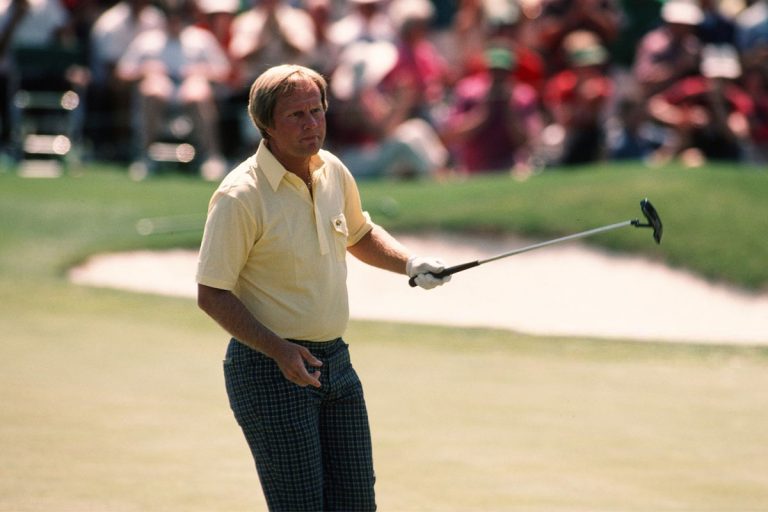
Jim Flick spent decades teaching some of the best golfers in the world including Jack Nicklaus. After all that time watching great players hit golf balls, his assessment of the game wasn’t particularly flattering to the physical side.
“Golf is 90-percent mental,” Flick said, “and the other 10 percent is mental, too.”
You’ll also see the quote “golf is 90-percent mental” credited to Nicklaus but, despite that, Flick’s version may be the better way to start this discussion.
Because the longer you play, the easier it is to understand what he meant.
The better you get, the more you notice it
I think the mental side of golf becomes much more obvious as you move up in competitive golf.
You can be one of the best players at your local course, in your town or on your school team and start to think you are pretty good. Then you travel to a bigger event and realize there are a lot of golfers who can do exactly what you can do with a golf club.
And plenty who can do more.
At that level, everyone can hit good drives. Everyone can flight an iron, control a wedge and make putts. The separation starts becoming less about whether you are capable of hitting the shot and more about whether you can hit it when you need it.
We’ve all experienced a smaller version of this.
You stripe it on the driving range and then hit a completely different shot on the first tee. You miss a six-footer, rake another ball over to the same spot and knock it right in.
Your ability didn’t change in 10 seconds. The situation did.
PGA Tour data shows what pressure can do
Researchers used PGA Tour ShotLink data from 2004 through 2012 to study putting on the final hole of tournaments. They calculated how much money was riding on whether each putt was made or missed.
As the financial stakes increased, the likelihood of making the putt decreased. The effect was also greater among less experienced players.
That’s what makes this study so interesting.
These were PGA Tour players. We aren’t talking about golfers who lacked the physical ability to make the putt. The same player had made that distance plenty of times before.
What changed was what happened if the putt went in.
Your skill doesn’t disappear
This is the part of the cliché I think golfers understand better as they improve.
You don’t suddenly lose the ability to hit a five-foot putt because it’s for your career round. You don’t forget how to hit a driver because there is trouble on both sides of the fairway.
The physical skill is still there.
What changes is everything surrounding the shot. Now there is a consequence. You start thinking about what happens if you miss. You question the club, the line or the swing you were completely comfortable with 10 minutes earlier.
That’s why the ShotLink study is so interesting. These were PGA Tour players. They had already proven they could make these putts. Yet, as more money was riding on the outcome, make percentage went down.
To me, that is what people are really getting at when they say golf is “90-percent mental.” At a certain level, the question is no longer just “Can you hit the shot?”
It becomes “Can you still hit it when you really care what happens next?”
Final thoughts
Is golf really 90-percent mental?
I don’t think there is any useful way to assign a percentage to it but I understand why Flick felt so strongly about the mental side of the game. At some point, being capable of hitting the shot isn’t enough. You have to be able to produce it when you only get one chance and the outcome matters.








Leave A Reply