


Welcome back to this MyGolfSpy series where I take a hard look at the golf clichés you have heard a thousand times and figure out if they hold up.
The goal isn’t simply to label each one as true or false. It’s to figure out what has been oversimplified and get back to the lesson golfers were supposed to take from the advice.
Next up: “Hit it thin to win.”
What does “hit it thin to win” mean?
Nobody is suggesting you should stand over an iron shot and try to blade it.
The idea is that if you’re going to miss the strike, a little thin is usually better than a little fat. We’ve all hit the iron that feels terrible, comes out low and somehow keeps traveling until it ends up somewhere near the front of the green.
Compare that to hitting six inches behind the ball and watching it come up 40 yards short.
That’s the “win” part. I’ve been known to hit thin shots and prefer them to chunky but not all thin shots work out the same.
Is it true?
For the most part, hitting it thin is better than hitting it fat.
A thin iron shot generally launches lower and spins less than a solid strike. Thin contact can produce the combination of lower launch and lower spin while still sending the ball a decent distance.
With a fat shot, the club hits the ground before it gets to the ball. By the time you make contact, you’ve already lost speed and energy to the turf.
This isn’t new information. Cleveland Golf talked about it when developing its Launcher Halo Hybrid years ago. Dustin Brekke, Cleveland’s Engineering and R&D chief, explained that preventing fat shots was the bigger performance advantage because thin shots for the target golfer “often have a good outcome.”
That sounds a lot like “thin to win.”
Slightly thin and bladed are not the same thing
This is where the cliché needs some clarification.
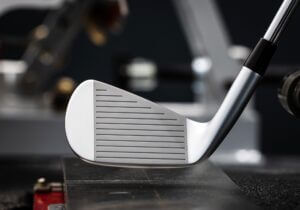
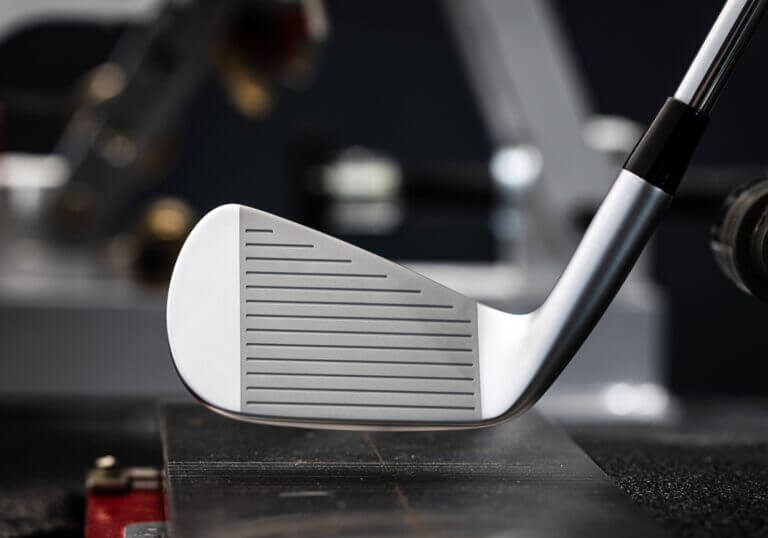
Catching an iron half a groove low on the face and hitting the middle of the golf ball with the leading edge are two very different misses.
The first can produce a lower flight, less spin and enough distance to leave you with a reasonable result. The second can send the ball screaming across a green.
This doesn’t change when you get closer to the green and have to hit a wedge shot. A slightly thin wedge from a tight lie can sometimes be useful. There are players who intentionally use that type of contact to produce a lower shot that comes out faster and rolls more.
Blade one when you’re trying to carry a bunker or are just a few yards from the pin and you probably won’t be saying “thin to win.”
Final thoughts
So, is “hit it thin to win” true?
As a goal, no. Solid contact is still better. As a miss, there’s quite a bit of truth to it.
Golf isn’t a game of perfect strikes. If my choices are catching an iron a little low on the face and getting most of the distance I wanted or hitting the ground first and coming up well short, I’ll take the thin one.
Which would you rather see when you miss an iron: a little thin or a little heavy?
Read more “Is That Even True?” golf clichés
- “You Can’t Buy A Golf Game.” Is That Even True? Read it here
- “Practice Like You Play.” Is That Even True? Read it here
- “Fairways And Greens.” Is That Even True? Read it here
- “Let The Club Do The Work.” Is That Even True? Read it here
- “Never Up, Never In.” Is That Even True? Read it here
- “Drive For Show, Putt For Dough.” Is That Even True? Read it here








ctg44
3 weeks ago
I definitely prefer thin to fat, and that’s why, even at 6’4″ with long legs and normal length arms, I play irons that are no more than 1/4″ over “standard” length. If I focus properly, I hit a nice high shot with plenty of spin, and if I don’t, well, it’s a stinger that rolls out forever…