


I’ve always played fast. I do my thinking walking to the shot and, once I’m there, I’m ready. Either you know how to do it or you don’t.
I know fast play is not always that simple and I’ll get into some of the reasons why.
So I was thrilled to watch Ryan Fox win the Open Championship at Royal Birkdale. Why? Because he did it playing golf the way I wish more people played it. Fast.
Fox’s pace of play may be the fastest on any tour right now. Is a fast pace of play something all amateurs can do? Should you?
Why Ryan Fox plays this fast
Fox’s speed isn’t a strategy. It’s just who he is.
“I was always that way as a kid,” Fox said after his win. “I see things fast. I was the same when I was playing cricket growing up … It’s not that difficult to pick a shot and pick a club. I get in there and it all happens quick.”
Fox comes from an athletic family. His grandfather played cricket for New Zealand and his father Grant is one of the best rugby players the country has produced. Fox played nearly every sport growing up before settling on golf and the same instinct that let him react on a cricket pitch is the one that lets him stand over a ball, pick a club and go.
The line that stuck with me most: “I was never methodical at anything, to be honest, and it just carried over into golf. The less time I have to think about it, the less bad stuff can creep in there.”
That’s the whole philosophy in two sentences.
Our instruction content combines insights from equipment testing, data analysis, and golf experts to help golfers improve with evidence-based advice. You’ve fixed one part of your game. These guides help you take the next step.
🎯 What tees should I play? Use this chart!
🛑 How should the driver sit at address? Many golfers still get this wrong!

Playing fast and rushing your swing are not the same thing
Fast play doesn’t mean a fast swing. Fox still walked into every shot with a plan. He was deciding quickly and committing completely.
Rushing is different. Rushing is what happens when you’re still uncertain and you swing anyway because you’re embarrassed to be standing there. That’s not speed, that’s panic, and it produces exactly the bad golf you’d expect. Fox’s speed comes before the swing, in how fast he commits to a decision. Once he commits, the swing itself isn’t sped up at all.
The speed won him the tournament
Royal Birkdale gave players options everywhere: off the tee and around the greens. That kind of course rewards commitment and punishes hesitation. The more options a player weighs, the more room there is for doubt.
His caddie, Dean Smith, called him probably the fastest player in the world and the moment that will define this Open Championship backs that up.
It took Fox 22 seconds to step in and strike his winning birdie putt on 18. Sam Burns finished and then, just 22 seconds later, we had our 2026 Champion Golfer of the Year. Fox walked in and hit it and it wasn’t a tap-in by any means. About 12 feet!
Even down the stretch, he didn’t slow down to manage the pressure. He made bogey on 15 after an unlucky bunker break and didn’t stew about it. He stepped to 18 needing birdie to win outright, pulled driver, and hit a perfect approach without hesitation.
Even his peers can’t quite figure it out. Fox recalled playing with Scottie Scheffler at the WM Phoenix Open when Scheffler told him, “It doesn’t even feel like you’re in the group. It just feels like we’re playing in a two-ball, you hit it so fast. It’s just in the air.” Fox still isn’t sure if that was a compliment or a burn.
Does this translate to your game?
The lesson from Fox isn’t “play faster and you’ll play better.” The lesson is to figure out what you’re doing with the extra time when you play slow and whether any of it is helping your game.
If you’re a slow player, ask what’s happening in those extra seconds. Are you visualizing the shot? Or are you sorting through a dozen swing thoughts? Are you taking three practice swings because none of the first two felt right?
None of that is thinking. It’s stalling and the longer it goes on, the more room it gives doubt to grow.
Watch any great athlete and you’ll see the same pattern. Nobody who stands still and thinks for a long time before moving is about to do something good. A tennis player doesn’t freeze before a serve. Athletic movement works because the decision gets made before the movement starts. Golf is no different. Golf is a game of movement and a body asked to stand still and think is a body about to get tense, careless or both.
You don’t need Fox’s internal clock to take something from this. Do your thinking on the walk into the shot so that by the time you arrive at the ball there’s nothing left to decide. Pick the shot. Pick the club. Then pull the trigger.
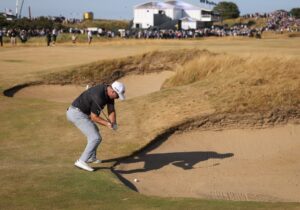
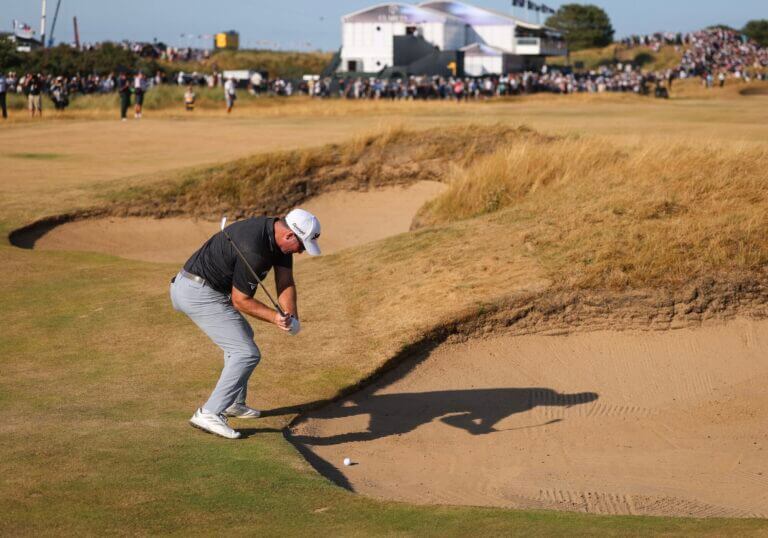
Top Photo Caption: Ryan Fox plays his second shot on No. 17 during the final round of the Open Championship. (GETTY IMAGES/Warren Little)



Mike
3 months ago
Fox would still have a 4:30 hour round on my course because he, like all of us, would still be at the mercy of the group in front of him. And the group in front of them.