


Some wedge shots land and stop quickly, others release. I like to look at this in two ways: the ingredients and the recipe. The ingredients are the ball and the wedge. The recipe is your technique and delivery.
If you want your wedge shots to stop on the green, here’s what you should know.
The golf ball controls how much spin is available
When you look at the results of our 2025 Golf Ball Test from 35 yards with a sand wedge, the spin gap between balls is significant.
Tour urethane balls:
- TaylorMade TP5: 6,009 rpm
- Bridgestone TOUR B XS: 5,989 rpm
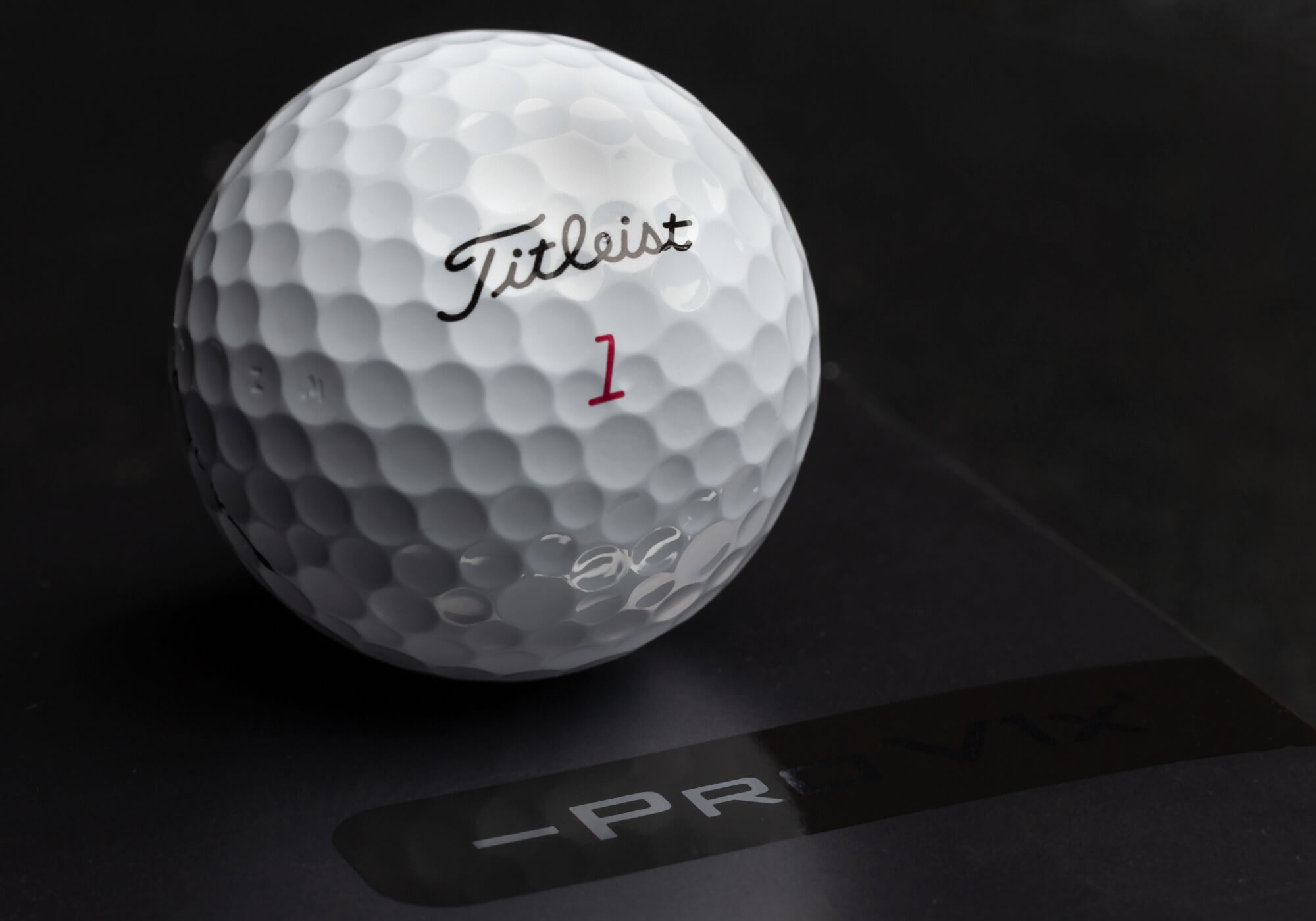
- Titleist Pro V1x: 5,866 rpm
Distance and “soft feel” balls:
- Titleist Velocity: 2,058 rpm
- TaylorMade SpeedSoft: 3,148 rpm
- Pinnacle Rush: 3,283 rpm
That’s a difference of nearly 4,000 rpm at the same distance. Spin is the primary braking force on a wedge shot. Less spin means less friction with the green which means more rollout. If you have the wrong ball in play, you’re already at a disadvantage.
Height helps but it’s not the separator
A common belief is that higher wedge shots stop faster. In testing, you’ll quickly find out that isn’t true.
- Spin: 2,058 rpm
- Descent angle: 40.9 degrees
- Peak height: 22 feet
- Spin: 6,009 rpm
- Descent angle: 34.5 degrees
- Peak height: 17 feet
The Velocity launches higher and lands steeper but it still rolls out more. When a wedge shot lands, the ball is still moving forward. Spin creates the horizontal braking force that resists the forward momentum. Height changes the angle but it doesn’t put on the brakes in the same way.
Tour players frequently flight wedges down. A lower-flighted wedge with high spin often stops faster and more predictably than a high, floating shot.
The wedge determines whether spin survives
Spin also has to survive real conditions. This is where we can look at wedge testing and pull numbers on 50-yard spin conditions from dry and wet grass. You’ll notice that some wedges can’t hang on to spin when the friction is lost.
Strong spin retention:
- Cleveland RTZ: 105 percent
- Fourteen FRZ: 98 percent
- Mizuno Pro T-3: 97 percent
Significant spin loss:
- Takomo Sky Forger: 52 percent
- Orka OD: 39 percent
When moisture reduces friction, some wedges lose half their spin. That dramatically increases rollout even if launch and height stay similar.

What your technique adds
Equipment gives you the potential to spin a wedge shot. The technique determines whether you unlock it. Even with a high-spin ball and a strong wedge, rollout increases if delivery breaks down.
- No ability to flight it down: Higher isn’t always better. Pros often lower trajectory to control spin and speed.
- Trying to lift instead of compressing: Wedges already have loft. Scooping adds launch but reduces friction. Let the loft on the club do the work.
- Poor strike quality: Grass or moisture between the face and ball kills spin. Prioritize ball-first contact.
- Too much added loft at impact: Flipping increases height but often lowers effective spin. Keep the handle slightly ahead through impact.
Final thoughts
Stopping power isn’t about hitting it higher. It isn’t about playing a “softer” ball. And it isn’t just about “hitting down on it.”
It’s about friction and forward momentum.
Spin creates the friction. Ball design determines how much spin is available. Wedge design and technology determine whether that spin survives, especially in moisture. Your technique will decide whether you can capitalize on it and stop your shot on the green.









Andrew Graham
7 months ago
In the height is not the separator section you didn’t tell us how much roll out each ball had, unless the peak height was supposed to be roll out