


Let’s be honest: golfers are one of the most judgmental groups on the planet. And few things trigger that collective eye-roll faster than seeing a set of iron covers walk across the range.
We’ve all done it: the side-glance, the internal monologue, the “must be a newbie” assumption.
Drivers get a pass. Putters? No problem. Even fairway woods and hybrids don’t seem to bother anyone. But for whatever reason, iron covers have always been the accessory golfers love to hate.
So, naturally, you assume no self-respecting tour professional would ever go near them.
And that’s where that assumption will get you in trouble.
Enter Aaron Rai

Aaron Rai isn’t some rookie trying to find his footing. He’s made more than $11 million on the PGA Tour, won the 2024 Wyndham Championship and just added a DP World Tour win about a week ago. He’s also instantly recognizable for two things:
- Two black gloves
- A full set of iron covers
Rai has heard all the jokes. He’s lived through the comments. But when he explained why he uses them, the entire conversation shifts.
In an interview on SiriusXM PGA Tour Radio, Rai shared that he grew up in a working-class family. Money was tight. His dad paid for his equipment, memberships and entry fees, even when it wasn’t easy to do.
And when Rai finally had a set of good clubs, his father treated them like they were irreplaceable. Cleaned every groove. Wiped them down. Protected them. The iron covers weren’t about fashion; they were about respect.
Rai kept the habit as a reminder of where he came from.
That’s it. Nothing flashy. Nothing gimmicky. Just gratitude.
I’ll be honest—I felt this one
Rai’s explanation hit home in a way I didn’t expect.
When I was a kid, new equipment wasn’t something my family could just go out and buy. I built my early sets from used clubs, a few demos and the occasional hand-me-down from someone who knew I’d appreciate them.
After years of saving, I bought a custom set of Titleist irons. When I carried them into the house, my mom—who ran a tight ship where golf equipment definitely didn’t belong inside—looked at me and said:
“Where are you going with those?”
My answer was simple: “They’ll stay in my room.”
Those irons sure as hell weren’t going to sit in a garage. And that’s really the point: when something costs you time, sacrifice and everything you’ve got to earn it, you take care of it.
Which is exactly why Rai’s story feels so wholesome.
Final thoughts
This isn’t really about iron covers.
It’s about remembering where we came from. Back when equipment wasn’t about chasing the latest “want” but saving up for the one club you actually needed. It’s about gratitude disguised as a golf accessory.
Rai could replace his irons weekly if he wanted to. He doesn’t. He remembers the value of a set of clubs because he remembers what it took to get them.
Honestly? That’s a perspective golf could use a little more of.
I’m not heading out to buy iron covers. But I’ll follow Aaron Rai’s career a little more closely. There’s something refreshing about someone at the top of the sport who hasn’t forgotten where they started.
Iron covers or not, that’s a golfer worth rooting for.
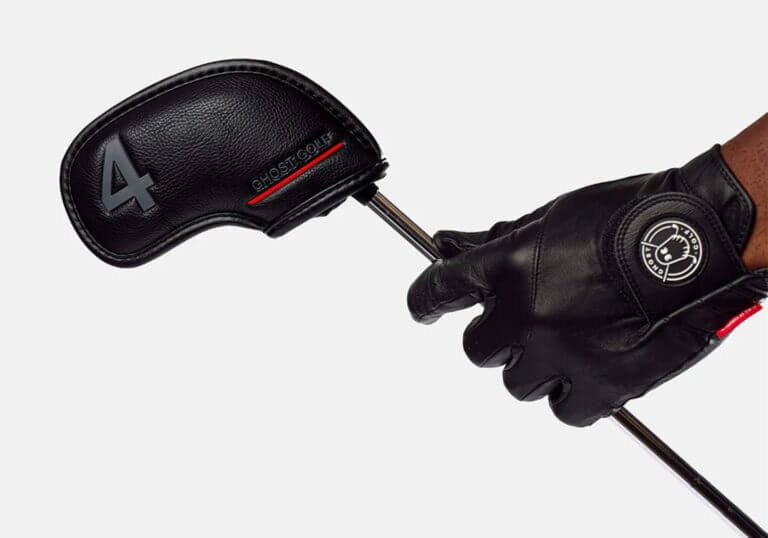
P.S. If you’re going to go buy iron covers now, at least get good ones like these from Ghost Golf.






League Golfer
11 months ago
I use iron covers when my clubs are riding in my car and the handful of times I am in a riding cart on the course. The irons get bounced around quite a bit in those circumstances. When I am walking and using my push cart, the irons don’t get bounced or rocked back and forth very heavily, so I leave the iron covers in the trunk of the car. I am always mindful of the extra time that iron covers take up before and after your shot. Put the iron covers back on while waiting for the next person to take their shot, or at the green if you are not the first person to be putting.
Regarding music on the course, no matter what people playing music think, yes, the rest of us in the group in front of you and in the group behind you hear your music for most of our round, as does every group that goes by on parallel fairways. Please lower the volume of your music. I feel a little badly for you that you can’t live four hours without music. Try listening to the wind and the birds for four hours. You have 20 other hours to listen to music, but you probably don’t have 20 other hours to listen to nature.