



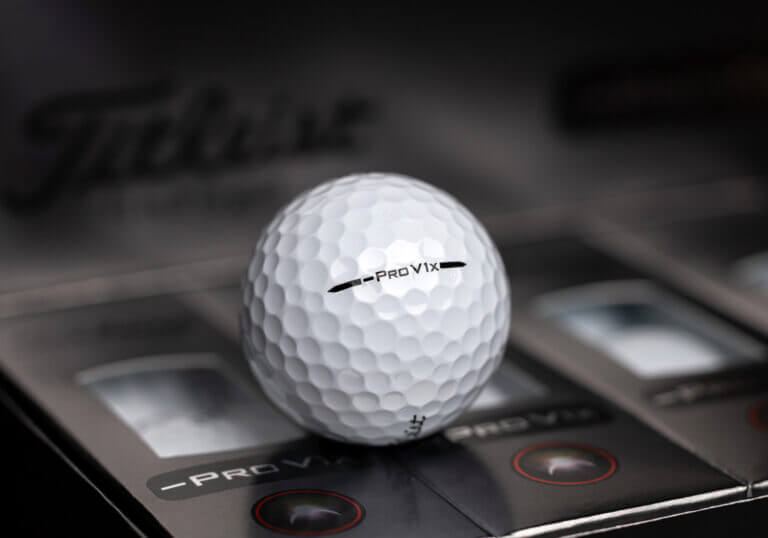
How a niche tour-only prototype became the most interesting and, arguably, most influential golf ball of the last decade, the near-miss that almost derailed it, and where it goes from here.
I was a Left Dash guy before almost anybody outside of Titleist’s ball team knew it existed.
Somewhere around 2018, I found myself in a Titleist ball fitting, rolling through the usual menu of Pro V1, Pro V1x and AVX. I was struggling to find anything close to optimized when, after some whispering between the fitter and the VP of Marketing at the time, I was tossed a ball that wasn’t part of the original consideration set. It was what Titleist calls a CPO (Custom Performance Option) built for tour players with high speed and too much spin. Even if you happened to know it existed, you couldn’t buy it and I think it’s fair to assume it wasn’t designed with me in mind.

Not knowing anything about the ball, my first impression was that it was noticeably longer. I’ve always been a higher-spin player off the driver. That’s the result of a neutral to negative attack angle and often low-face contact. For me, the mystery ball performed better across the board. And given the love of distance common to most of the golfing population, for the life of me, I couldn’t understand why it wasn’t available.
Frankly, a distance-centric ball with tour-level construction struck me as the most obvious golf product ever.
That ball was Pro V1x Left Dash. And from the time it finally went retail in 2019 to the updated version that launched this past January, the story behind it is one of the more interesting equipment stories nobody’s really told.
Where it started

The origins of Left Dash go back further than most people realize, to 2013 and 2014 when Fordie Pitts (Titleist’s Director of Tour Research and Validation) and his team started documenting an emerging trend: a wave of players, particularly on the Korn Ferry Tour and at the collegiate level, generating high speed but also high spin. These weren’t guys looking to maximize spin for control. They already had that. Instead, they wanted to reduce it or at least harness it and create more distance in the process.
The prototyping started there. By 2017, Left Dash had found its way onto tour as a CPO, a ball designed for a narrow slice of players who wanted the absolute fastest, longest ball Titleist could build and were willing to accept trade-offs to get it. Firmer feel. Less spin around the greens. In terms of all-around performance, Left Dash is not for the masses. It’s not trying to be.
In any given week, two to four players might have it in play. More on the Korn Ferry Tour than the PGA Tour, largely because KFT venues tended to feature softer conditions where the spin reduction was more valuable. The PGA Tour, with its firmer, faster greens, still rewarded stopping power.
That KFT detail, by the way, is worth filing away. In a world where governing bodies seem increasingly interested in dictating how far a golf ball should fly, the players and conditions that gave birth to Left Dash are the same ones most directly impacted by those conversations.
From tour secret to retail product

The decision to bring Left Dash to retail was, by Titleist standards, a bit unusual. CPOs are the R&D sandbox: proving grounds for new construction dimensions, materials and aerodynamics that might eventually filter into Pro V1 or Pro V1x. The high-flex modulus casing layer, for example, debuted on Left Dash before becoming a staple of the retail lineup. That’s the normal CPO contribution: test small, scale what works. Standalone CPOs becoming permanent retail products is uncommon although not without precedent. Pro V1x its started life as a CPO before becoming a pillar of the lineup and, as it happens, the golf ball that rises to the top most often in Titleist’s consumer fittings.
And then came Left Dash. As we covered in the January launch piece, consumer fittings kept pointing in the same direction: roughly 10 percent of golfers fitted by Titleist landed in Left Dash. Not huge numbers but consistent and persistent enough that Titleist determined that wider availability made sense.
The initial rollout was deliberately quiet. No splashy launch. Titleist introduced it through fittings and then gradually expanded access as demand built. For a company that moves at its own pace on everything—including, apparently, acknowledging that golfers like hitting the ball farther—it was about as aggressive as Titleist gets.
I’d argue Left Dash was the first truly distance-centric tour ball to hit the market since the NIKE RZN Black. And unlike that ball, this one stuck around. However, it’s probably true that the majority of golfers still don’t know it exists.
A quick aside: I was playing a round last year and struck up a conversation with a playing partner about Left Dash. He’d never heard of it. Intrigued, sure, but happy with the ball he was playing. Pro V1x, he said. When I glanced at the balls snapped into the console of his push cart, every single one was a Left Dash. Turns out he hadn’t looked closely enough at the box. He had never heard of Left Dash but was playing it. I wouldn’t be surprised if that’s where Left Dash awareness sits for the average golfer.
The Red 16 was so close
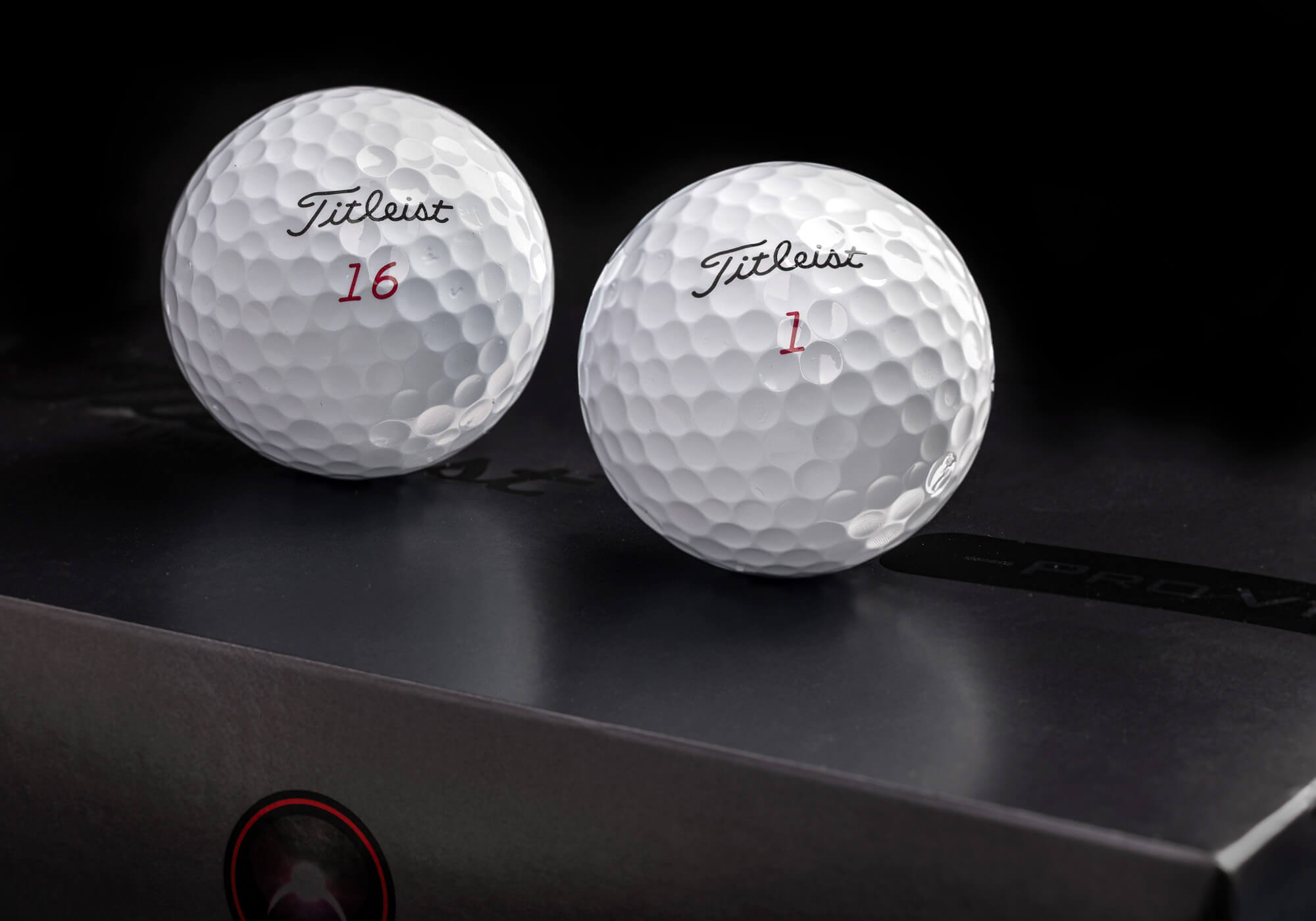
After years of Left Dash doing its thing largely unchanged, Titleist decided it was time for an update. New technologies had emerged in the 2021 Pro V1 and Pro V1x cycle. Aerodynamic improvements were available. And then there was the persistent feedback from tour players: the ball is too firm and we’d like more greenside spin.
So the team went to work. Dozens of iterations through machine learning. A handful of physical prototypes built for robot and player testing. New cover materials, new aero patterns, new core constructions. Eventually, the process converged on a prototype Titleist internally called “Red 16.”
Red 16 addressed both criticisms head-on. Softer feel. More greenside spin. On the robot, it accomplished every goal. By any reasonable measure, I’m told it was a really good golf ball.
It made it deep into the pipeline. Past the point where most companies would have just shipped it. From what I’ve gathered, those Red 16 balls came dangerously close to production-ready. Titleist thought they had a new Left Dash for the first time in six years. 2024. Energy was high.
Then Dash players on staff took a closer look and what they found effectively doomed Red 16.
The irons spun too much. It didn’t flight into the wind the way Dash is supposed to. It climbed and stalled in ways the original Dash didn’t. The things that had been “improved” were the exact things that made Left Dash what it was. By fixing the weaknesses, Titleist had inadvertently erased its identity.
Tour players’ feedback was direct: it’s not Dash anymore. Given the choice, they’d play the old one.
There’s something almost philosophical about that. The very things people criticized about Left Dash—the firmness, the lack of greenside spin—turned out to be inseparable from what made it valuable. You couldn’t soften one without diluting the other. The imperfections, if you want to call them that, were the product.
Titleist walked away from it. Scrapped a marketable, finished golf ball because the players it was built for said it wasn’t theirs anymore. Most companies would have shipped it and kept the original around for the tour staff. Titleist started over.
A dashier Dash
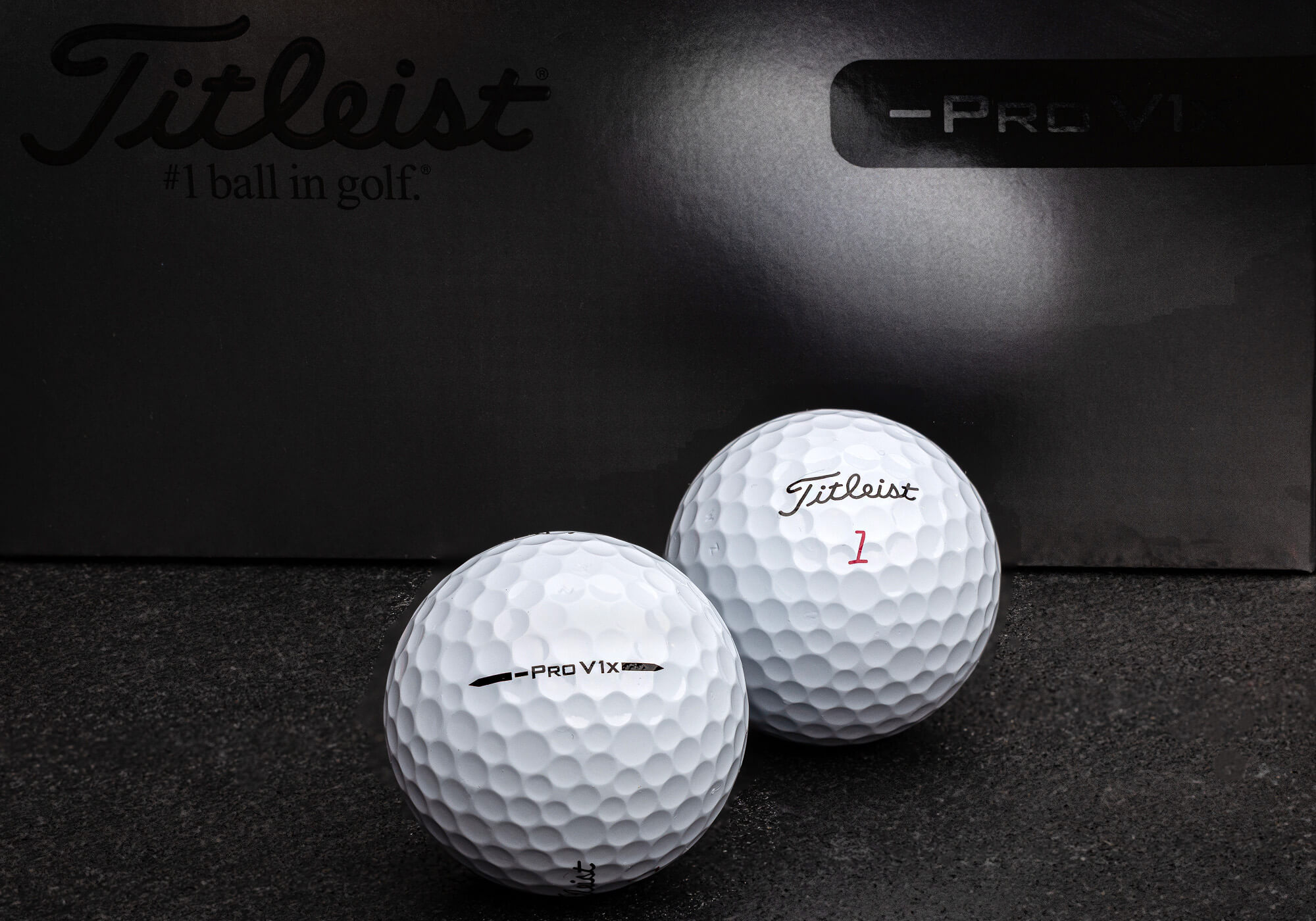
The reset question was deceptively simple: Instead of trying to fix what people don’t love about Dash, what if we just doubled down on what they do?
“We are no longer trying to fix the weaknesses,” said Mike Madson, Senior Vice President, Golf Ball R&D. “We are strengthening strengths.”
That became the design brief for the ball that launched this January. Faster. Longer. More of what made Dash, Dash.
The technical details are worth understanding, particularly because they speak to a broader reality about how golf balls gain distance within the rules. The USGA’s current Overall Distance Standard tests balls under a single set of conditions: 120-mph clubhead speed, 10-degree launch angle, 2520 rpm of spin. The limit is 317 yards (with a three-yard tolerance). But distance isn’t exclusively a product of speed. Flight and spin are critical components and when you optimize for conditions outside that narrowly defined test window, there’s room to find yards without bumping up against the limit.
Left Dash lives in that space.
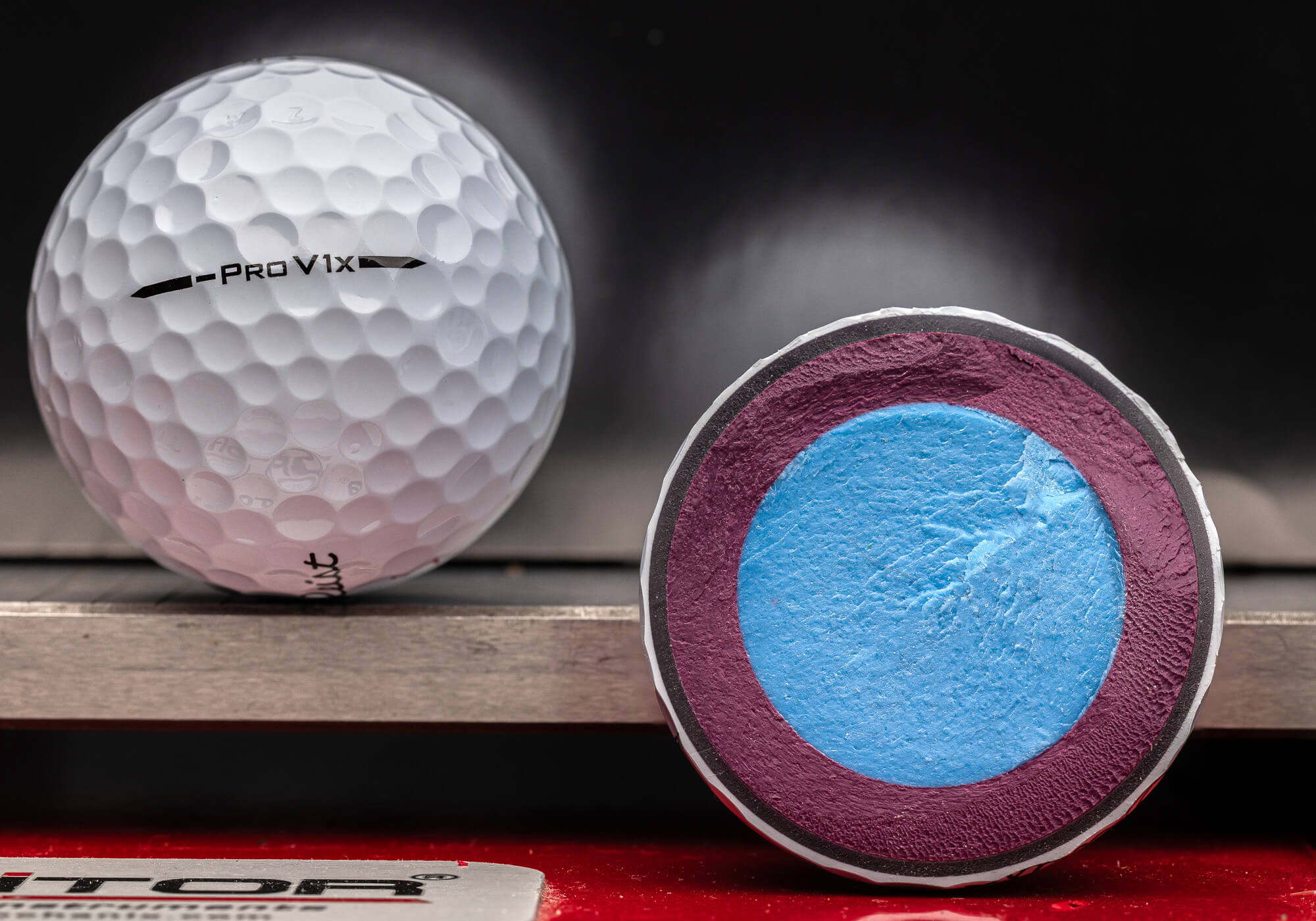
The construction details aren’t entirely unfamiliar. Titleist reformulated the dual core for more ball speed. They thickened the casing layer which is all but invariably the firmest, fastest material in the construction. To offset the thicker casing layer, they thinned the urethane cover, the slowest material in the golf ball. Simplified, the tweaked design gives you more of what gives you speed. Less of what robs it. A new 348-tetrahedral dimple pattern nudges flight slightly lower while tightening dispersion.
A good bit of the speed story also comes down to manufacturing tolerances. As production consistency improves, you can set targets closer to conformance limits without risk of exceeding them. It’s a theme that repeats across the equipment industry and across categories: tighter tolerances create room for more performance, even when the rules haven’t changed.
I was fitted into the 2025 Pro V1 when that ball launched and, while it performed well, I’d be lying if I said I didn’t miss the little bit of extra distance I got from Left Dash off the tee. When I had a chance to test the new Dash at Titleist’s Manchester Lane facility in Massachusetts, we found that Dash was the better option.
I’m back, baby!
Honestly, the numbers were close. A push by most measures. What tipped it for me was the flatter flight I saw on partial wedge shots. That’s the nuance of ball fitting: sometimes the deciding factor isn’t what shows up in the averages or at least not where most golfers look.
What Dash built
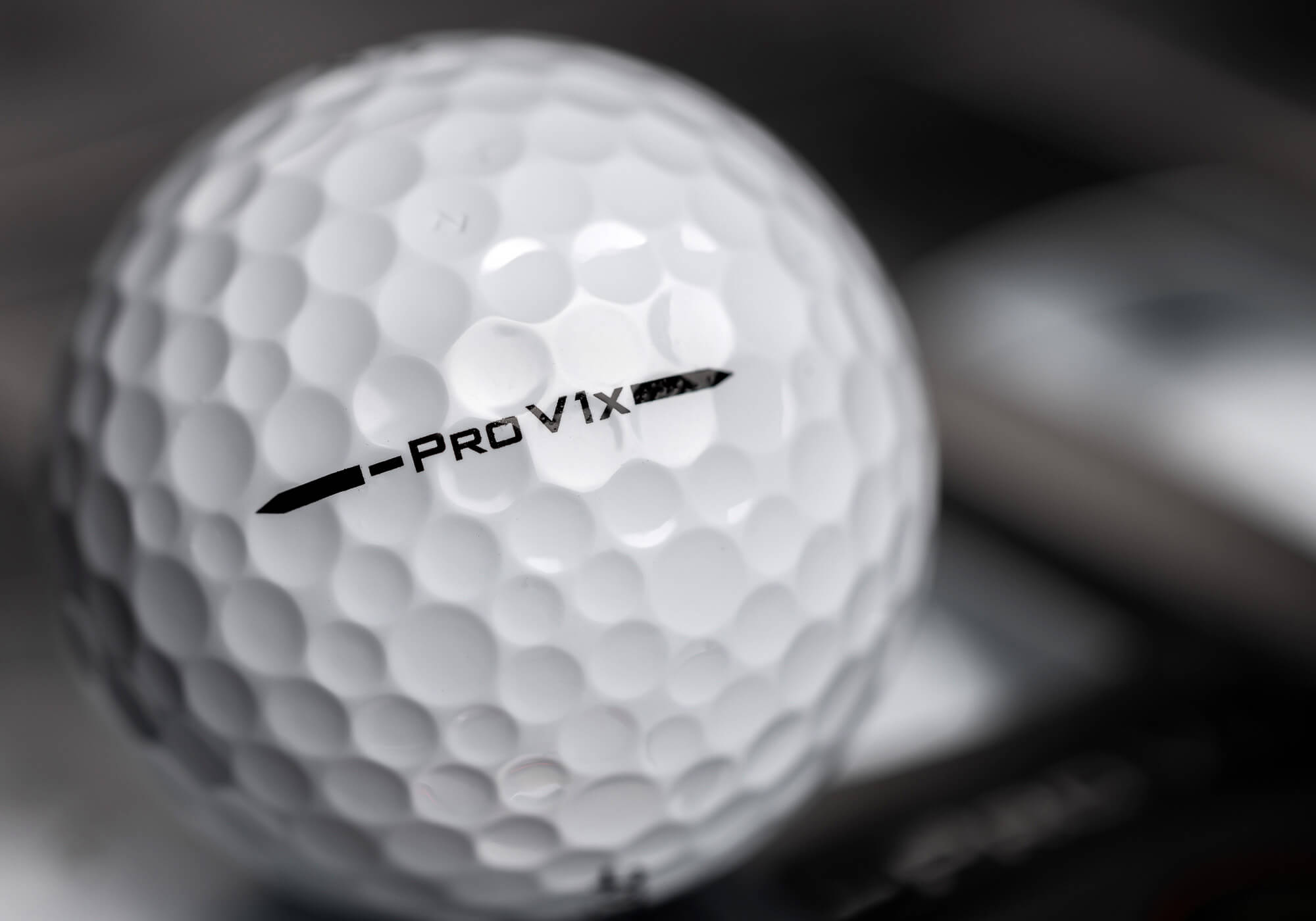
When Left Dash first hit the market, there was nothing else like it in the tour ball space. A premium urethane ball that explicitly prioritized distance over short-game spin was, at the time, a genuinely novel concept.
It isn’t anymore.
Callaway’s Chrome Tour Triple Diamond, Ben Griffin’s Maxfli Tour LS and others have moved into the territory Left Dash carved out. Competitors have pushed compression and speed specifically to compete in a segment that didn’t exist before Dash defined it. Whether you credit Titleist for creating the category or just for being first to acknowledge what many golfers are looking for, the landscape looks fundamentally different than it did in 2017.
As for what comes next, the honest answer is that nobody knows. Left Dash doesn’t operate on a predictable two-year cycle. Titleist has said it will be updated when players demand more or new technology reveals the opportunity. With the USGA’s revised testing conditions set to take effect in 2030 (higher clubhead speed, lower spin in the test protocol), the regulatory environment for a ball that lives at the edge of the performance curve is, let’s say, fluid.

For now, the new Pro V1x Left Dash does what it set out to do: give the small percentage of golfers who live at that edge more of what they already value without drifting toward the middle ground that Pro V1 and Pro V1x serve so well.
It took Titleist the better part of a decade to get here. They almost got it wrong along the way. And the ball they ultimately made is, in the most literal sense, more of the same which, as it turns out, is exactly what Dash needed to be.








Floyd
6 months ago
What a great article, funny thing is I did the exact same thing yesterday at the course, thought I was playing a normal ProV1x and turned out to be a left dash. My numbers were great with 2500 spin with the driver and an extra 10 yards of carry.