


Earlier this week in our newsletter (which you should definitely join), I put up the bat signal for readers to send in their hottest takes, questions and anything else that was on your minds.
Man, you all delivered in a major way. I received dozens of replies. In the interest of time and not making this article a million words long, I picked out the best handful.
I will do a new mailbag each month so please send any submissions to me ([email protected]) and you may be featured in an upcoming story like this one.
As for topic? Anything your heart desires. Pro golf, equipment, our MGS world … Fire away.
Without further delay, here are this month’s best submissions.
“PLEASE stop writing and perpetuating the lie that the golf ball is the only piece of equipment golfers use for every stroke! What!? Do we all take off our shoes to putt? Do we all go shoeless for bunker shots? And I believe both Jack Nicklaus & John Daly (just to name two) left their gloves on to putt as well. So there is another piece of equipment used on every shot. Truth, no?” — Jonathan Eastwood
Golf shoes are apparel, no? We all wear our apparel on most (if not all) shots but that’s not considered equipment. You could play golf without shoes, a la Sam Snead, but I challenge anyone to play without a golf ball.
The general rule of thumb is that golf gear is broken into three sections. You have apparel (shoes, shirts, pants, hats), equipment (clubs, balls, bags, tees, gloves) and accessories (towels, head covers, ball markers, umbrellas). Apparel is what you wear. Equipment is what you need to play and accessories go in the ancillary bucket of everything supporting apparel and equipment.
So when we say the golf ball is the only piece of equipment golfers use for every stroke, that’s how we mean it.
Your club will change depending on the shot. Your golf bag is mandatory but not a part of each shot. A glove will come on and off for the vast majority of golfers although you make a good point that some like to keep it on.
No matter how you slice it (including into the woods), the golf ball is king.
Now, you can argue that certain elements of golf gear are a hybrid. A rangefinder is equipment to some but it might be considered an accessory to someone else. You don’t need it to play but it’s a direct part of the game play for many. Shoes have performance characteristics that can directly impact someone’s game on a recurring basis. But, then again, so does all apparel. Being comfortable is tied to performance.
It’s a matter of semantics but the importance of the ball is really what we’re trying to drive home here. As we just saw in our ball test, choosing the right option can make a massive difference in terms of distance and consistency.
“Hi Sean, it always baffles me when a golf pro gives advice to ‘release the club,’ mainly when referencing a driver. Just what does this tidbit of advice really mean in simple terms? What needs to be done to release the club and how would someone know if they had released the club?” — Bob Judas
Hi, Bob, great question. The concept of releasing a golf club is one of the most confusing and misunderstood elements of instruction.
Technically speaking, releasing the club is what the clubhead does through impact (and immediately after it) as your wrists and forearms allow the club to move from its delivery position into the follow-through.
But you asked for simple terms …
Take a club and hold it waist-high. Swing it back like a baseball bat. The face opens, right? Then swing it back to the original position. It becomes square again. Swing it through. The face closes. You’ve released the club.
A good release doesn’t happen at impact. In truth, it’s more a byproduct of everything else happening in your swing rather than something to focus on for one specific moment.
You achieve a good release by
- Having your trail arm extend through the ball
- Making sure your forearms naturally rotate after impact
- Feeling like the clubhead is accelerating past your hands on the follow-through
You may have heard the expression “let the club do the work.” Our instruction expert Brittany Olizarowicz just wrote about this topic earlier in the month. She says the expression can be useful for an experienced player who already has clubface control and has started overcomplicating things with hand manipulation. It’s a fair reminder to simplify and trust the club (however, it would be less useful advice for a beginner who needs reps to understand what a closed, square and open clubface feels like).
If you feel stuck with this concept, you can also try operating at half-power the next time you are on the range. Focus on your hands not stopping at the ball. The slowing down of everything highlights the aforementioned conditions of a good release.
As for the driver being released versus any other club, they all have faces that open and close. The speed may be different but the mechanics are generally the same.
“Hi Sean, I trust you guys are all well over there! I’m based in South Africa and absolutely love your stories, articles and opinions. I’m just curious to know how many international subscribers you have and whether or not we could have some input based on our local conditions and available equipment. I look forward to your feedback.” — Derek Meano
Cheers, Derek. Thanks for reading. It’s always remarkable to me that our audience extends all over the world, especially into a golf-rich area like South Africa. Say what you want about the internet but it’s incredibly cool we get to connect like this.
I’ll be the first one to raise my hand and say that we can consider our international following more. MyGolfSpy HQ is based in Virginia, our remaining staff is spread out across the U.S. and golf’s major manufacturers are based here (mostly in California) so all of that tends to lead us to think about golf from more of an American point of view.
However, to answer your question, about 25 percent of our audience is based outside the United States. That is several million readers annually. When I recently asked our audience to submit the best municipal courses from their home state, I was surprised to get so many emails from Canadians and South Africans. Canada accounts for our second-largest following.
To your point, golf equipment availability varies in different parts of the world. There are many important international manufacturers of varying sizes and we try to highlight those whenever possible.
When it comes to getting gear from OEMs, South Africa is well supported there. Titleist, for example, has an actual Acushnet South Africa operation in Gauteng.
Where this becomes more complicated is talking about boutique/niche manufacturers or certain custom orders where you are looking for a relatively rare shaft or something along those lines. Adding more info on international orders is something we can do more consistently.
Derek, let us get in the lab and I hope to have a more thorough answer for you next time.
“I’m not going to go to the trouble of applying sunscreen, dressing into golf specific clothes and shoes, loading my clubs after checking my golf balls and golf tees stock, driving to the course, signing in, loading onto a cart, teeing off and getting into a comfortable position on the course to only play 12 holes. If you only want to play 3 or 12 holes, I don’t care. Unless I’m tired, I may play more than 18 holes. A 12-hole course is just a waste to me. I don’t want to get dirty to only go and play a few holes, unless that’s absolutely all the time I have. And let’s sum this up, you LOVE to play golf? Then why in the heck do you want to play less? Just because you don’t have time to play 18, don’t force the rest of us to do the same. You can leave anytime you want in the round you choose.” — Turtlehacker
Turtlehacker, my official stance on this is that you should be able to play however much golf you want to play.
Our MGS staff had this debate last year and there was a wide variety of answers for what should be a standard round of golf. The concept of 18 holes is an arbitrary number passed down over centuries. If golf was starting over, what would the number be?
My answer was 15 but some of my colleagues believe in shorter rounds. Multiple people answered that we need more loop concepts so players can opt for variable lengths. I like that idea because golfers can easily return to the clubhouse in 30- to 45-minute increments. It’s a “choose your own adventure” while still safeguarding a full-length round for those who want it.
Golf has historically had three barriers to entry: time, cost and difficulty. Offering shorter rounds could address the first two quite nicely. Then again, golf hasn’t been struggling to get people out on the course over the past few years, has it?
Everyone has different priorities when it comes to playing golf. There are times when I want to get in a full practice session, play 18 holes (or more) and then post up at the clubhouse bar. But with being a new parent, it’s hard to carve out six-hour time blocks.
Courses could probably do a better job of offering variable rates but they also don’t have much incentive for that. Many courses don’t even have nine-hole rates; you are pigeon-holed into going with the 18-hole rate and playing however much you can. If they offered, say, 12-hole rates, they would likely be losing money given that most golfers wanting to play 12 holes would previously have paid the 18-hole rate.
For that reason, I think 18-hole courses will always rule the day. Inertia and tradition, you know? We’re seeing 12-hole courses being built but I’m not sure they will ever rise in popularity to challenge the standard.
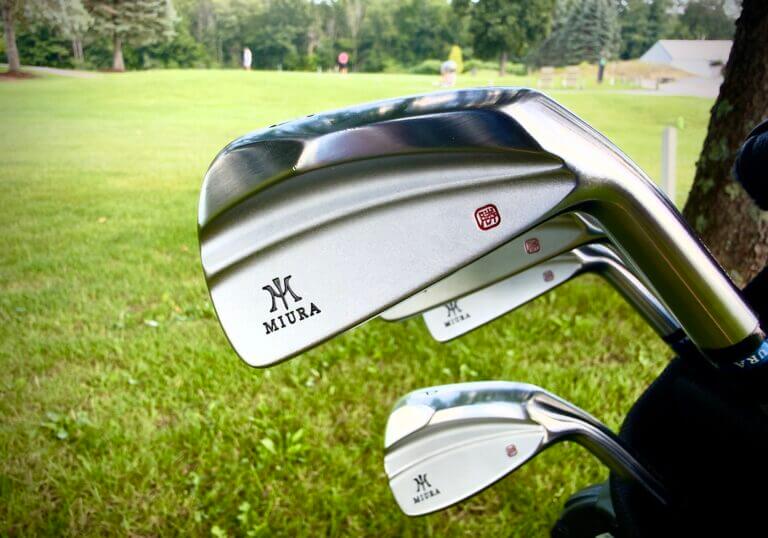
“Just a quick question: Does the team ever test Miura Giken irons? I just bought a set and yes, custom built, but they are like butter. From player irons to cavity backs. I even tried the Bettinardi irons, which were also smooth. Anyway, just a suggestion as it always seems like the same Titliest, TM, Callaway, Kirklands, Mizzys, etc.” — Ryan Coffey
We received many responses in the same vein so this question is representative of a larger theme where readers want to know why we don’t test certain brands and “focus on the bigger names” instead.
Clubs are submitted for testing. Some brands choose not to submit. When they don’t submit, they are generally not included in testing.
There are instances where a brand submits one year and not the next. Reasons for not submitting vary. Some brands might be fearful of poor performance, some might not be able to handle the increased demand if they were to win testing, and some don’t see the value in submitting for their particular brand.
Miura, like many other brands, did not submit for iron testing. We have asked a few years in a row and they declined each time, which is their right.
In certain situations, we decide to purchase the clubs ourselves and test them. In the case of Miura—an expensive brand that revolves around custom-built sets—we decided not to do that. There are other scenarios where we do buy clubs. New Level declined to participate in wedge testing this year but we bought the wedge ourselves (and it performed very well). We have bought PXG clubs in the past.
Those decisions are dependent on many factors such as cost, popularity, past performance and value to the consumer.
We tested 47 iron models from 19 brands this year including smaller outfits many golfers aren’t familiar with. The notion that we only test larger brands is inaccurate.
Naturally, the most impactful brands are going to be the focus but that doesn’t mean smaller brands can’t be included and excel—a Orka famously performed incredibly well in past testing. The Takomo Iron 101 MKII was the single most accurate iron in all of game-improvement, the category Takomo went on to win. Takomo had not submitted for testing in 2025 but did so in 2026.
Our primary mission is to be a service for golfers. We believe the irons included in testing provide a great view into what clubs suit golfers. We’re hoping more brands can be included in the future.
So that is all I have for the August mailbag. Remember, send your questions into [email protected] and they could be included in the September mailbag.









Emery
1 month ago
My take on “Releasing the Club” is basic. If you do not release, you “Hold On” and produce a Cut. “Releasing” the club should produce a more “In to Out” swing path on the bottom of the swing, do this poorly and you have a Slice.