


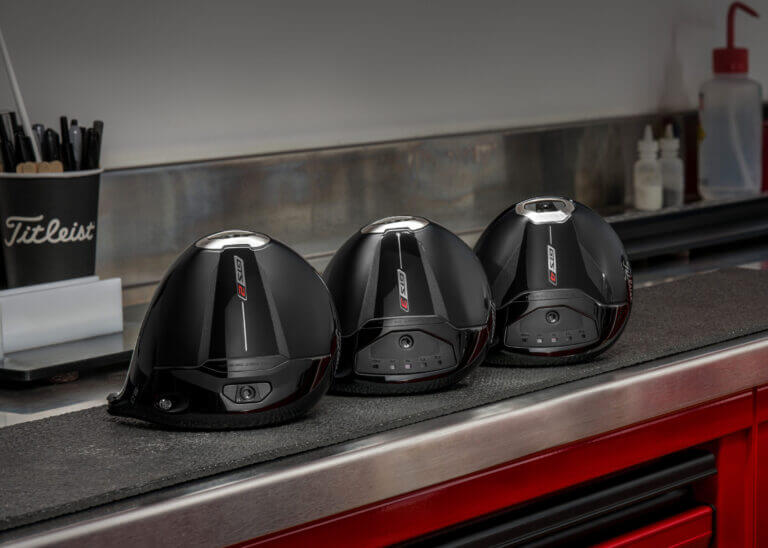
Driver lineups keep growing. Most brands now sell three to five models. The problem for amateur players is that brands don’t name their drivers consistently. “Max” is the core model at PING and Callaway but the high-forgiveness model at TaylorMade and “LS” shows up as initials at some brands, a number at one, and a different name entirely at others.
To make this a little easier to understand, I sorted 10 brands into four categories. I called them low spin, core, max and then we have the fourth group: a mix of slice fighters and speed helpers.
Low spin
These are for fast swingers who create too much spin and most brands label them “LS.” COBRA, TaylorMade, Srixon, Wilson and Tour Edge all do. PING calls its version the LST, for Low Spin Tech, and Callaway’s low-spin option is the Triple Diamond. Titleist skips the letters altogether and its higher numbers (3 and 4) are the ones that lean toward low spin.
Even the labels that look obvious don’t always deliver. PING’s LST has historically been less low-spin and higher-MOI than most LS models so “LS” tells you what a head is meant to do, not how it compares to the same-named head at another brand.
Core
This is the do-it-all head built for the middle of the bell curve and almost nobody puts “core” in the name. TaylorMade’s is simply the standard model. PING describes its MAX as a middle-of-the-bell-curve driver and in our testing, we called Callaway’s Max the core model, built to fit the widest range of golfers. At Titleist, the GTS2 is the core model.
This is where the word “Max” starts to mislead. At PING and Callaway, Max is the middle of the lineup, not the extreme.
Max
If you look at the name alone, this is the maximum-MOI, maximum-forgiveness head. PING’s K, COBRA’s Max-K and Wilson’s Max+ are good examples of the “10K” class. Because PING’s MAX is already its core driver, its most forgiving head sits at the extreme end of the MOI scale under a different name.
Callaway’s Max is the exception. It’s probably Callaway’s most forgiving driver but Callaway chose not to chase a 10K badge so its MOI numbers don’t match the heads above.
Max heads also come with trade-offs. The bigger shapes are less aerodynamically efficient so many golfers swing them slower and they tend to launch higher and spin more. A common workaround is to play a lower loft to bring down launch and spin.
Slice-fighters and speed-helpers
This group covers the draw-biased and lightweight heads. The draw models are the easiest to spot: Callaway’s Max D, COBRA’s Max-D and PING’s SFT, which stands for Straight Flight Tech. The lightweight options use “Lite,” “Fast” or “HL” in the name: TaylorMade’s Max Lite, Callaway’s Max Fast and PING’s HL build, a lighter head, shaft, and grip for swings below 90 mph. Wilson handles it with LITE versions of its Max and Carbon.
A dedicated draw model isn’t the only way to get draw bias. Many core and max drivers now let you configure it with movable weights such as the two swappable rear weights on Callaway’s Max which set up a neutral or draw flight. That falls short of what a dedicated draw model does but it’s something to know before assuming you need one.
Final thoughts
There is no standard for driver names. LS, Core, Max, and D are shorthand the industry leans on, not rules, and every brand has their own style. Don’t shop by the label. A Max at one brand is the middle of the lineup while a Max at another is the most stable head it makes. The same word, or even the same letters, can mean something different depending on whose name is on the head.
Instead, compare drivers across brands by what they do and let testing data do the sorting. Use that to build a short list and then get fitted. A fitter can put the right head, shaft and settings in your hands and that matters a lot more than the name on the crown.




Leave A Reply