


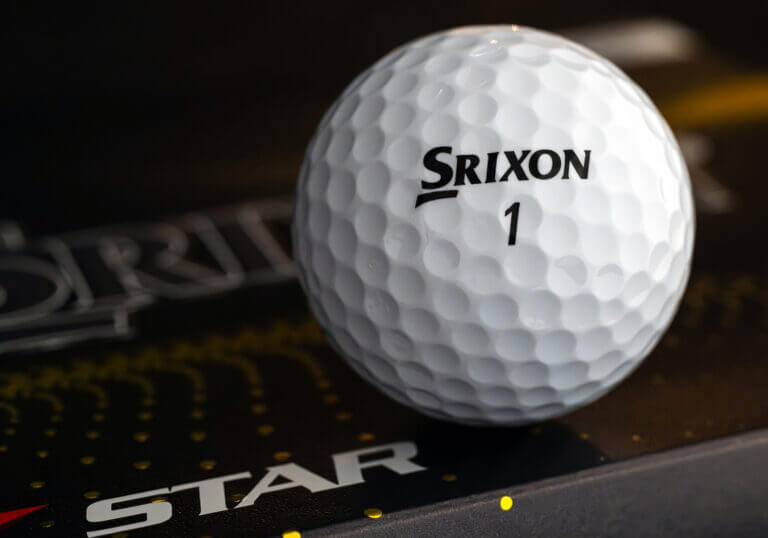
You might think this is easy, right? Grab a box, they’re a golfer, it’ll work.
It’s not that simple.
Buying the wrong golf ball is a lot like buying the wrong size shirt or shoes: it’s a thoughtful gift that doesn’t fit. Until you dig into our golf ball test and Ball Lab data, it’s hard to see why. That’s what I’m here for.
I get asked some version of this every year: “What golf balls should I get [insert golfer here] for the holidays?” (or a birthday). So here are four tips to make it easier.
1. Go urethane
If you’re choosing between cover materials, urethane is the better gift. It costs more and that’s kind of the point. Even golfers who play ionomer to save money will appreciate getting something they wouldn’t buy for themselves.
Off the tee and on full iron shots, ionomer and urethane overlap a lot. Some ionomer balls outperformed plenty of urethanes in our test. Where cover material decides things is around the green and in wet conditions.
On our 35-yard wedge test, urethane averaged about 1,250 rpm more spin than ionomer. On wet full-wedge shots, ionomer lost nearly a third of its spin compared to about a tenth for urethane.
2. Know what you’re paying for
There are a lot of golf ball brands out there now and they fall into a few tiers. You’ve got the big names and you’ve got the value tier. You’ll see urethane balls in the $30-40 range and plenty more in the $50-60 range.
Both can be good. It isn’t really a case of “expensive balls are better.” Our data shows price tracks short-game spin closely but it barely tracks distance. At slower swing speeds, the distance gap all but disappears.
What you’re really paying for is wedge performance. A player who cares about the short game will probably want to look in that $50-60 range.
3. Cheaper doesn’t have to mean worse (but shop from tested balls)
Here’s something I think surprises people. If you see a box of urethane balls from a brand you’ve never heard of for $20 less per dozen, it’s fair to be curious. Will it ruin your golfer’s next round if you buy these? Probably not.
Quality has improved across the market and the share of balls with genuinely poor-quality scores in our testing has roughly halved.
But a bargain isn’t automatically a good gift and a urethane cover doesn’t guarantee greenside spin. The Snell PR3, Kirkland Performance+ White and PXG Xtreme Tour all spun less at the green than the best ionomer in our test even though they are urethane golf balls.
So don’t shop by cover label alone. If you want a value pick you can feel good about, our Great Buy winners are all urethane balls under $40: the Maxfli Tour, Maxfli Tour S and Vice Pro.
4. Still not sure? Pick a ball that works for most
If you can’t find out what they play (a peek in their bag or a question to their golf buddy is worth trying), the next best move is a ball that held up across swing speeds in our test. A few made our top picks at more than one speed.
- Maxfli Tour: Our low-spin pick at low swing speeds and our Great Buy at high speeds, for under $40.
- Titleist Pro V1: A top pick at low and high swing speeds.
- Wilson Staff Model: A top pick at low and mid swing speeds.
- TaylorMade Tour Response: The only ball in the test to finish in the top 10 for driver and 7-iron distance at high speed even though it loses some spin around the green.
Want to dig deeper? Our Golf Ball Selector lets you compare all 48 balls by swing speed, spin distance and price.




Leave A Reply