




This article is part of a new Smarter Golf series powered by Arccos data.
It started with a slow laptop.
In 2015, Edoardo Molinari, PGA Tour pro, Ryder Cup vice-captain and the man who would become Matt Fitzpatrick’s data strategist, asked the young Englishman about his game stats. Fitzpatrick had thousands of rows of data but he couldn’t load them.
“He was clearly someone who cared about the numbers,” Molinari recalls. “He just didn’t have the right tool yet.”
That tool would eventually help Fitzpatrick win a U.S. Open, climb to world No. 3 and, among other recent accomplishments, hold off the world’s best player in a sudden-death playoff at Harbour Town to win the RBC Heritage. None of it, Molinari will tell you, was an accident.
The tool is on-course data. Specifically, the kind drawn from 1.5 billion shots and 25 million rounds inside the Arccos platform, waiting for the average golfer to pay attention to it.
Most don’t and the data shows exactly what that’s costing them.
You don’t know how far you hit it
Ask a 15-handicapper what their 7-iron goes. They’ll say 165, maybe 170. Ask about their driver and you’ll hear 250, maybe more.
The Arccos data, drawn from shots played on actual courses (not the range, not with perfect contact), tells a different story.
A 15-handicapper’s typical 7-iron travels 140 yards. Their typical drive goes 226 yards.
PGA Tour average: 176 yards with a 7-iron, 300 yards off the tee.
That’s a 35-yard gap on the 7-iron and a 74-yard gap with the driver. Not the gap between a pro’s average and an amateur’s best shot. The gap between a pro’s average and an amateur’s actual typical shot.
Here’s what the data shows across handicap bands:
| Player | Typical 7-iron | Typical Drive |
|---|---|---|
| PGA Tour avg | 176 y | 300 y |
| Scratch–5 | 154 y | 259 y |
| 6–10 | 147 y | 241 y |
| 11–15 | 140 y | 226 y |
| 16–20 | 134 y | 213 y |
| 20+ | 123 y | 197 y |
All figures are total distance (carry + roll), from Arccos platform data.
Golfers benchmark the wrong shot. They remember the 7-iron that flew the flag. They forget the ones that came up short. The Arccos sensor in the grip remembers every single one.
Molinari experienced this firsthand. He started tracking his own shots on a spreadsheet in 2003 as an engineering student in Torino, Italy.
“The first real breakthrough came when I realized I was very good with my wedges from a certain range. Once I saw that in the data, I started laying up to that distance on purpose, and I started making a lot more birdies. That was the moment I understood what data could actually do. It wasn’t about collecting numbers for the sake of it. It was about making a specific decision on the course that I wouldn’t have made otherwise.”
Most amateurs make the same decisions every week about club selection, laying up, attacking the pin, etc., and they have no information or data upon which to base their decisions.
You’re losing strokes in the wrong place
The belief that putting is what’s keeping you from lowering your handicap needs to change.
Three-putts are visible and humiliating but the Arccos data shows the putting green is not what is keeping your handicap higher.
For an 11–15 handicapper, here’s how many strokes per round are lost compared to a scratch golfer:
| Category | Strokes Lost vs. Scratch |
|---|---|
| Tee | −3.63 |
| Approach | −5.67 |
| Short Game | −2.93 |
| Putting | −1.99 |
Approach play is the single biggest category by a wide margin. Nearly three times more strokes are lost on approach shots than putting. A 15-handicapper who cuts their approach losses in half would shave roughly three strokes off their handicap.
The same golfer who cut their putting losses in half would save one.
The putting myth persists because putting is the most easily countable part of the game. But a 20-plus handicapper only averages about 38 putts per round, roughly 10 more than a tour pro. Their total scoring gap to that tour pro is around 33 strokes. The full-swing game is where those strokes are disappearing.
The strokes nobody’s counting
A 15-handicapper averages 1.66 penalty strokes per round. In 41%= percent of their rounds, they take two or more.
| Handicap | Avg Penalties / Round | Rounds with 2+ |
|---|---|---|
| Scratch–5 | 1.03 | 27.3% |
| 6–10 | 1.39 | 36.0% |
| 11–15 | 1.66 | 40.9% |
| 16–20 | 1.94 | 45.3% |
| 20+ | 2.43 | 50.1% |
Penalty strokes are different from approach misses or three-putts because they are preventable. You don’t need a swing change. You need smarter decisions and, to make smarter decisions, you need accurate information about where your ball goes.
A 15-handicapper who eliminated one penalty stroke per round would cut nearly two shots off their handicap. That’s an improvement most golfers spend years chasing through technique work.
What Matt Fitzpatrick sees that you don’t
When Molinari showed Fitzpatrick his early tracking system, the response was immediate. As soon as Fitzpatrick returned from the COVID shutdown, he was the first to input his data. The benefits showed up quickly.
“What the data showed us with Matt was that, given his accuracy, if he could gain distance off the tee, he had a chance to become one of the best drivers of the ball in the world,” Molinari says. “I couldn’t believe how much distance he ended up gaining while keeping the accuracy intact. You usually give up one to get the other. He didn’t.”
The more recent development is Fitzpatrick’s iron play. For years, approach was an honest weakness in the data. Then he changed swing coaches, started working with Mark Blackburn, and the numbers shifted.
“His approach play has become the strength of his game,” Molinari says. “To make a change that significant when you’re already a top-10 player in the world is very impressive.”
Molinari describes how Fitzpatrick uses Arccos in two concrete ways. First, it shapes his practice by telling him exactly where he’s gaining and losing strokes. Second, it drives tournament strategy.
“For certain holes where he’s undecided on what to do off the tee or into the green, we’ll give him a specific target line. Not ‘left half of the fairway’ but ‘five yards left of center.’ That level of precision takes the guesswork out of it.”
The same tool. Available to every golfer.
Molinari started with a spreadsheet in a university dorm room. Fitzpatrick had a laptop full of data he couldn’t load. Neither had what every Arccos golfer has today: automatic shot tracking, instant Strokes Gained analysis and a database of 1.5 billion shots to benchmark against.
The three numbers in this piece come directly from that platform. They’re the recorded reality of how 15-handicappers play, across millions of rounds.
Most golfers are playing on assumptions. The data tells a different story. The golfers who listen to it are the ones who improve.
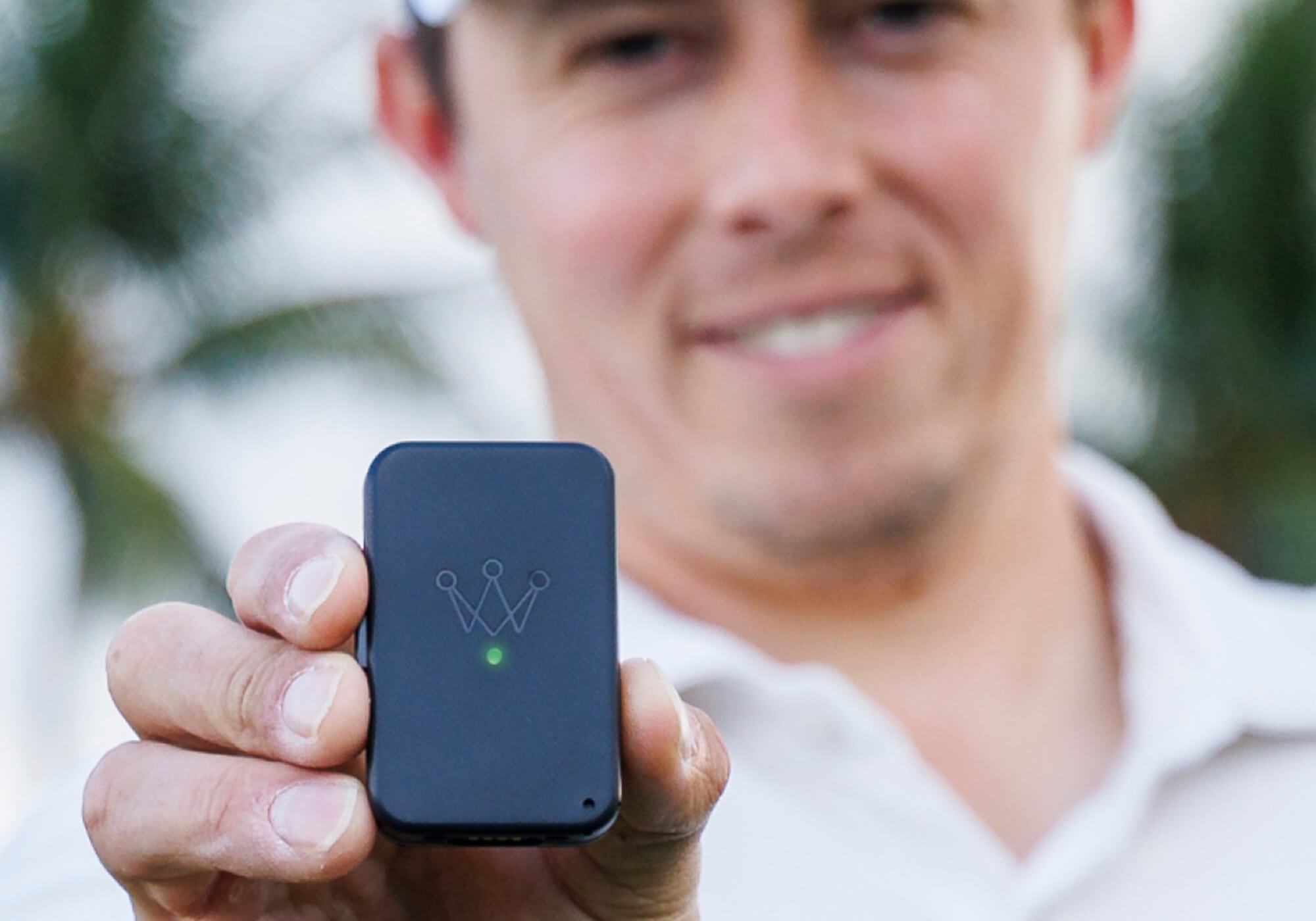
Arccos is the world’s first AI-powered golf performance tracking platform and the official game tracker of the PGA Tour. The platform database includes 1.5 billion shots, 25 million rounds and more than four trillion data points. Arccos Air is the newest way to access all of it: a compact wearable that slips into your pocket and automatically tracks every shot using GPS and AI with no sensors on your clubs and no phone required during your round.









Mike
4 months ago
I think that most 15+ handicappers would still benefit from more short game practice because they miss so many greens. You don’t need arcos; just go to a range (or indoor simulation) w/ trackman. It will give you your carry distances w/o a subscription. But here’s a tip 15+’s could benefit from. Take more than enough club to reach the green, esp if the pin is in the back. One season I got really “nerdy” & tracked my approach shots. 2/3 of my missed greens were short in the 4 to 8 o’clock dispersion. Only about 5% of the time did I overfly a green, & most of those were due to skulled shots.