
The Soft Feel Trap: Golf Balls That Cost You Speed (And The Few That Don’t)
News

The Soft Feel Trap: Golf Balls That Cost You Speed (And The Few That Don’t)

Support our Mission. We independently test each product we recommend. When you buy through our links, we may earn a commission.

The Soft Feel Trap: Golf Balls That Cost You Speed (And The Few That Don’t)

For some golfers (myself included), there is a lot to like about playing a soft-feeling golf ball. The sound off the putter, feedback on short shots and overall feel are nice benefits. The problem is that recent golf ball testing continues to confirm that “soft is slow.”

That does not mean soft-feel golf balls are unusable or that every golfer should avoid them. As with most things in golf, it comes down to compromise. Some softer-feeling golf balls give up significantly more speed than others and a few manage to preserve more driver ball speed while still delivering the soft feel many golfers want.

To see how much separation exists within this category, we pulled driver ball speed data for several of the softer-feeling golf balls tested in the 2025 MyGolfSpy Golf Ball Test across fast, mid and slow swing speeds.

Driver Ball Speed: Soft-feel golf balls compared

Golf BallFast Swing SpeedMid Swing SpeedSlow Swing Speed
Callaway ERC Soft165.63148.90123.80
TaylorMade Tour Response164.55148.16123.08
Titleist TruFeel164.98148.30123.44
Vice Pro Air163.71147.45122.49
Callaway Supersoft163.02146.89122.81
Srixon Soft Feel162.99146.68122.45
TaylorMade Speed Soft162.39146.46122.76

Two “soft” golf balls to try if you want soft feel without losing too much speed

If you like the feel of a softer golf ball but want to minimize the distance penalty off the tee, the data points to two options worth trying. Neither eliminates the tradeoff entirely but both retain more speed than most balls in this category.

TaylorMade Tour Response
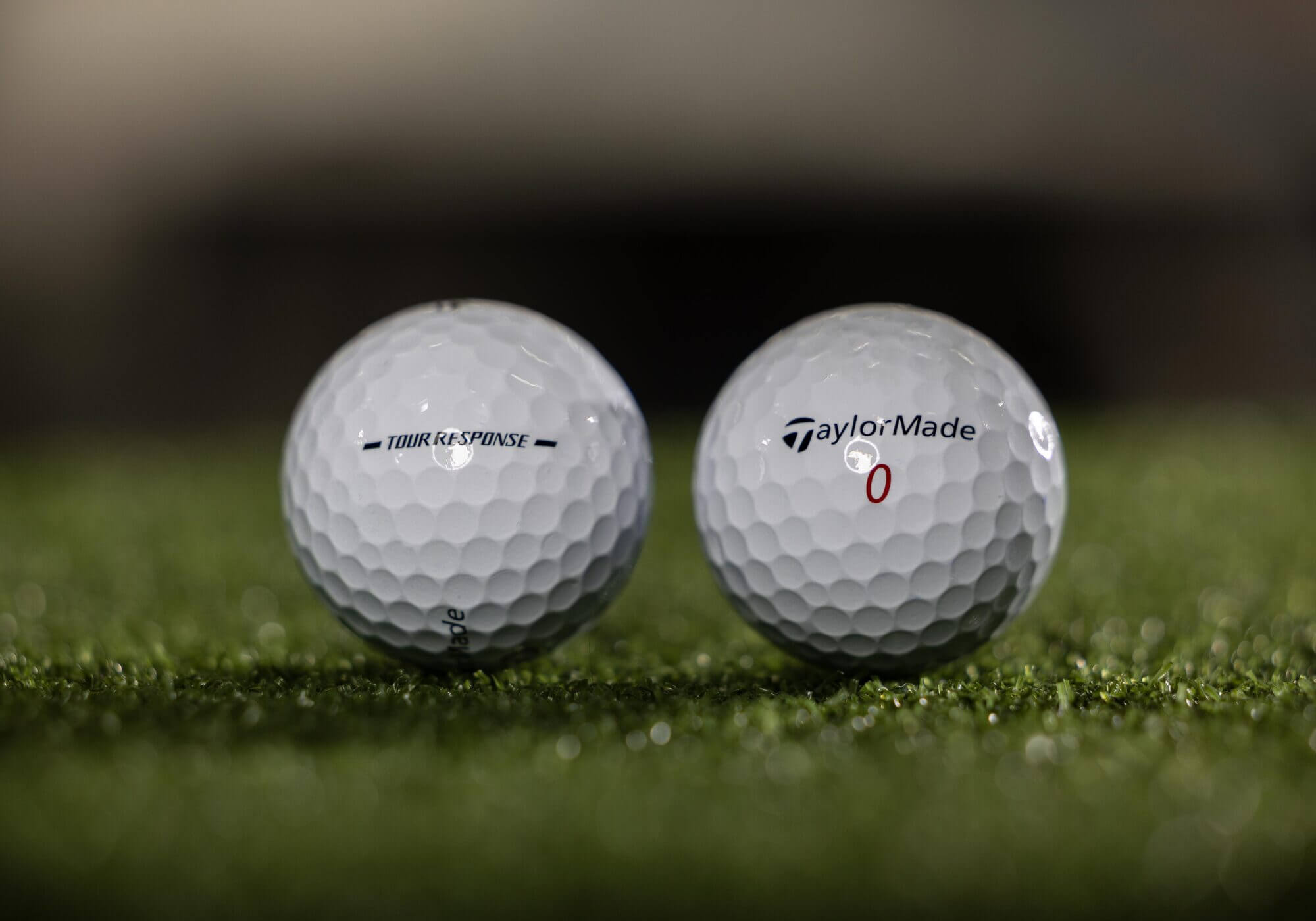
Within the soft-urethane category, the 2025 test data consistently shows Tour Response preserving more ball speed than most balls with a similar feel. It produces lower driver spin which can help manage flight while still delivering solid mid-speed iron distance and more usable greenside spin than soft ionomer options.

✅ Buy if: you want soft urethane without giving away too much speed.
❌ Skip if: you need high driver spin or a very firm/fast profile.

Vice Pro Air
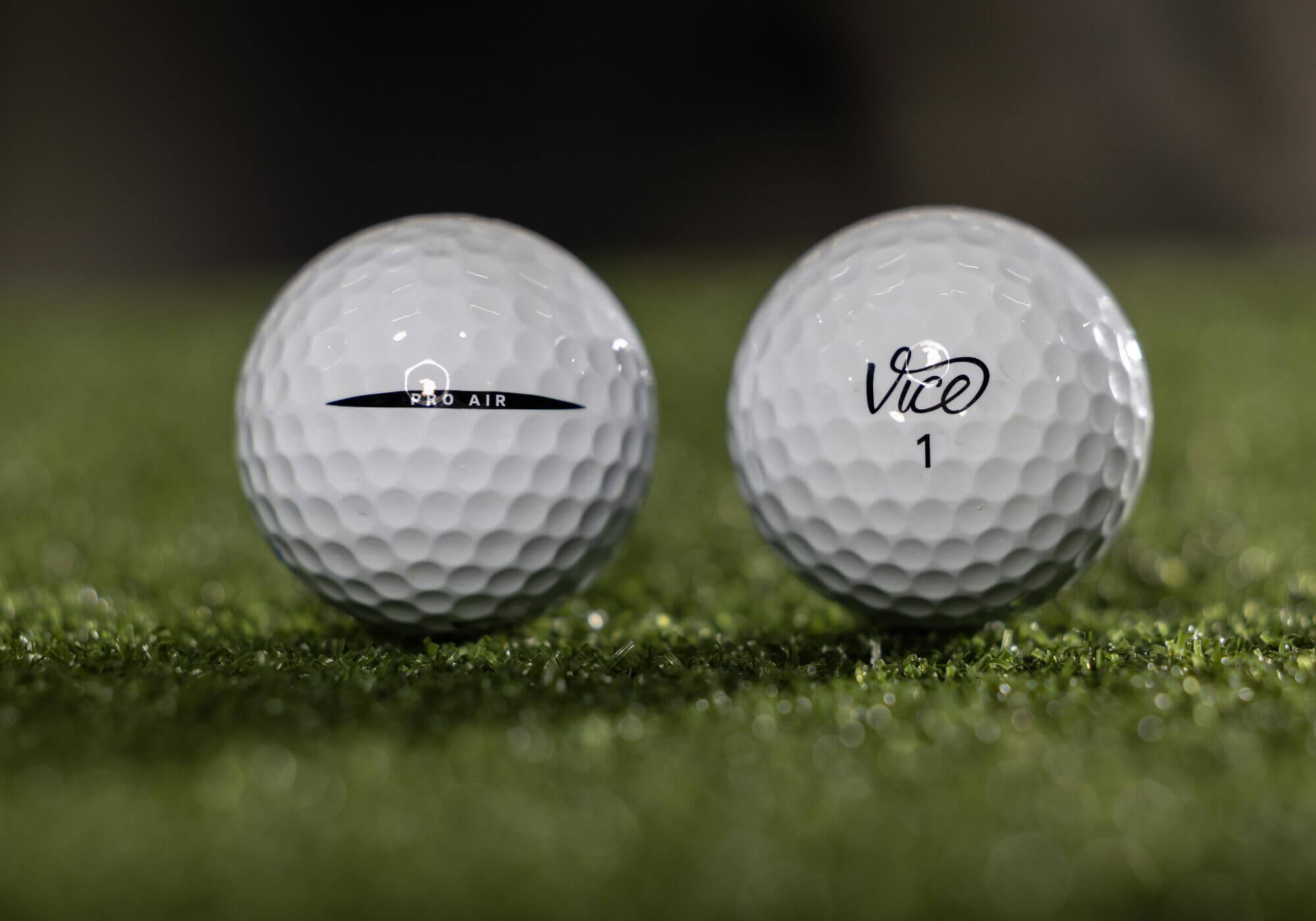
Vice Pro Air fits the soft-leaning profile in the 2025 test, producing lower driver spin while maintaining mid-pack ball speed among softer-feel balls. As with most soft constructions, speed is not its strength but the trade-off is measured rather than extreme.

Buy if: you want a urethane ball that trends low in driver spin while maintaining playable ball speed within the softer-feel category.
Skip if: you are prioritizing maximum driver ball speed or need higher spin characteristics off the tee.

What the 2025 ball test reinforces about soft feel

“Soft” is not a performance category of golf balls. Soft feel can span a wide compression range from under 60 compression to balls in the high 70s or low 80s. It’s important to remember that feel alone is not a reliable performance predictor. Here are some of the things to keep in mind about soft-feel golf balls in our 2025 testing.

  • Lower compression generally correlates with lower ball speed: The test repeatedly reinforces that softer balls trend slower off the driver, particularly at higher swing speeds.
  • Excessively soft balls show the clearest speed penalties: The steepest drops in driver ball speed appear in the lowest-compression, softest ionomer models rather than soft-leaning urethane constructions.
  • Low driver spin is common among soft-feel balls: Many softer balls appear near the bottom of the driver spin charts. While low spin can help manage dispersion and increase roll, it does not offset speed losses on its own.
  • Ionomer soft balls struggle on greenside shots: The test is clear that even the best-performing ionomer balls fail to generate competitive greenside spin. If short-game spin matters, urethane is required.
  • Speed does not have to come at a cost unless feel is pushed to extremes: Golfers do not need to sacrifice speed unless they are seeking an excessively soft feel.

For You

For You

Instruction
Jun 9, 2026
If You Still Play Long Irons, Copy This Thought From Ludvig Åberg
PLM 2025_Most Wanted_Foresight GC3 PLM 2025_Most Wanted_Foresight GC3
News
Jun 9, 2026
College Golf Tournament Prep Looks Nothing Like It Did When I Played
News
Jun 9, 2026
The Best Father’s Day Golf Gifts That Won’t Break the Bank
Brittany Olizarowicz

Brittany Olizarowicz

Brittany Olizarowicz

Britt Olizarowicz is a scratch golfer, former teaching professional and one of MyGolfSpy’s leading voices on equipment testing and golf performance. She has spent more than 15 years working at private clubs in New York and Florida and now specializes in translating test data and swing mechanics into practical advice for everyday golfers. Britt began playing at age 7 and has never left the game. When she’s not writing, you’ll find her on the course, playing pickleball, cooking, running or out on the boat with her family.

Brittany Olizarowicz

Brittany Olizarowicz

Brittany Olizarowicz


    This site is protected by reCAPTCHA and the Google Privacy Policy and Terms of Service apply.

      Scott

      5 months ago

      TaylorMade Tour Response is the best for me 90 mph driver speed. Feels a little firm when putting but has great stopping spin around the greens. You can’t have it all.

      Reply

      Barry Schwartz

      5 months ago

      It would have been helpful to have a non-soft ball listed for comparison to see how much ball speed is lost from the soft balls. When you look at the difference from the fastest to slowest in your chart, that’s less than what you lose by hitting vs, missing the sweet spot. Does 1 or 2 mph of ball speed off the driver really matter?

      Reply

      Smokey

      5 months ago

      I think a disservice was done by not testing the newest TaylorMade Distance+ ball. At $22/dozen and 77 compression, it also has better mid-iron and wedge spin than most 2-piece balls. It’s a great option for anyone swinging under 100mph, imo.

      Reply

      League Golfer

      5 months ago

      The Titleist TruFeel has higher ball speed, at every swing speed, than everything else on this list except for the Callaway ERC. So why is the TruFeel in the third spot on the list when the listings certainly seem to be listed in overall ball speed, and why did the Vice Pro Air get a nice little write up but not the TruFeel? This website never gives enough credit to any ionomer covered golf ball. And yes, I know the Callaway is not a urethane cover golf ball, but it is an expensive golf ball considering it does not have a urethane cover.

      Reply

      hallmar

      5 months ago

      hear hear!

      played ERC and Tru Feel and they are both awesome. Mainly use Tru Feel now, really helps that it’s pretty cheap as well.

      Especially since I don’t live in a country where it’s always 20C warm and hitting a ProV1 at colder temperatures feels like hitting a rock

      Reply

      Uncle George

      5 months ago

      I am an old man with a slow swing speed. There are countless articles, videos, books, etc. that tell me that I will gain distance by using a soft ball. My ball of preference for some time has been Srizon Q Star Tour, low 70’s compression with a urethane cover.
      Recently have played Callaway SuperSoft on advice from above mentioned sources, maybe even MGS. Driver distance seemed to be better than Srixon, but spin sucked. This MYGOLFSPY article tells me that soft balls are shorter. Can’t have it both ways. Which is longer for slow swings, soft or firm balls?

      Reply

      Mo

      5 months ago

      Is Chrome Soft not considered soft for this exercise? I thought the compression was around 75 or so?

      Reply

      Bob Yorks

      5 months ago

      I’ve settled on the Callaway chrome. It gives me better distance, and a good feeling. Much better than any of the ‘soft’ balls I’ve tried.

      Reply

      Randall

      5 months ago

      The table on the article shows the Callaway etc soft with better ball speeds across all swung-speed profiles … yet it doesn’t get a mention? Why is that?

      Reply

      John J.

      5 months ago

      Do you not look at your own stats generated in the MGS ball test?

      Titleist Tour Soft – 123.87 (best of the bunch)
      Callaway Chrome Soft – 123.09
      Taylormade Tour Response – 123.09

      Reply

      vito

      5 months ago

      No mention of the of the Maxfli Tour S or the Titleist Tour Soft which both did very well in the MGS test for slow swing speed players vs. firmer balls?

      Reply

      HikingMike

      5 months ago

      Could be since this is about softer balls they had a cutoff by compression. I see the highest compression on the given list is the Callaway ERC Soft at 77. The Maxfli Tour S is 80 and the Titleist Tour Soft is 88. If the cutoff is somewhere between 77-80 (or 78-79 depending on rounding), neither of your suggestions would be included. I would have liked to have seen a column for compression in the table.

      Reply

      Mo

      5 months ago

      Could be, but Chrome Soft comes in around 75 compression doesn’t it?

      Fake

      5 months ago

      For what it’s worth, the Supersoft is now $28 at my local big box store. The Vice Pro Air was $21 there.

      Reply

    Leave A Reply

    required
    required
    required (your email address will not be published)

    This site uses Akismet to reduce spam. Learn how your comment data is processed.

    Instruction
    Jun 9, 2026
    If You Still Play Long Irons, Copy This Thought From Ludvig Åberg
    PLM 2025_Most Wanted_Foresight GC3 PLM 2025_Most Wanted_Foresight GC3
    News
    Jun 9, 2026
    College Golf Tournament Prep Looks Nothing Like It Did When I Played
    News
    Jun 9, 2026
    The Best Father’s Day Golf Gifts That Won’t Break the Bank