


Golfers love wedge spin.
Put two wedges on a launch monitor and if one produces 7,200 rpm while another produces 6,800, it’s easy to assume the first one gives you more control.
But if the goal is to hit wedge shots close to the hole, spin is only one part of the equation.
Our 2026 wedge test included 15 wedges and 11,400 shots across full swings, 50-yard dry shots and 50-yard wet shots. The results are a good reminder that you probably shouldn’t choose a wedge by chasing the biggest spin number.
More spin is useful but it’s not the end goal
The Performance Golf ONE.1 produced the most spin in our dry 50-yard test at 7,217 rpm.
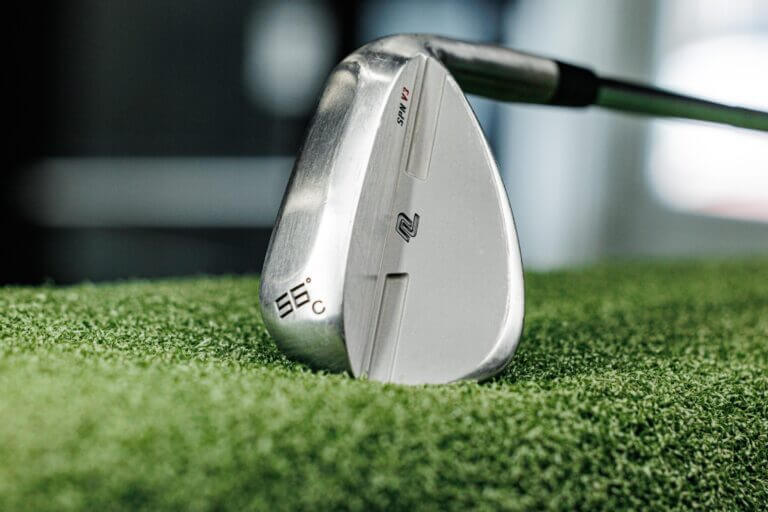
New Level’s SPN V3 was a little lower at 7,062 rpm. It finished those shots an average of 6.9 feet from the hole and went on to finish as the most accurate wedge in our 2026 test. The Performance Golf ONE finished about 10 inches further away on average for the 50-yard dry shot.
Ten inches isn’t a lot but it showed up at other distances as well. Across the different shots we tested, the biggest spin number didn’t consistently produce the best proximity. The spin number by itself doesn’t tell you how close your shots are going to finish.
A wedge still has to control distance and direction. You can hit a shot directly at the flag and leave it well short. You can also produce plenty of spin but have enough variation in carry distance that your shots end up scattered long and short of the target.
That’s why the carry window matters.
If one wedge consistently carries 50 yards while another jumps between 47 and 53, the second wedge can produce all the spin in the world and still be harder to control.
Moisture can change the picture quickly
This is where focusing on one dry-spin number becomes even more misleading.
The ONE.1 produced 7,217 rpm on the dry 50-yard shot. When moisture was introduced, spin dropped to 3,506 rpm.
Now compare that with the Vokey SM11.
Vokey produced 6,857 rpm dry and 6,860 rpm wet. Essentially nothing changed. That performance across different conditions helped the SM11 finish as our best wedge for spin in 2026.
Moisture doesn’t just change the number in the spin column.
When spin and launch change, carry can change with them. The ball may fly differently, land differently and react differently once it hits the green.
If your wedge performs one way from a clean, dry fairway and another way when there is dew on the grass, that makes it harder to predict the shot.
Even wedge design tells us there is more to this than spin
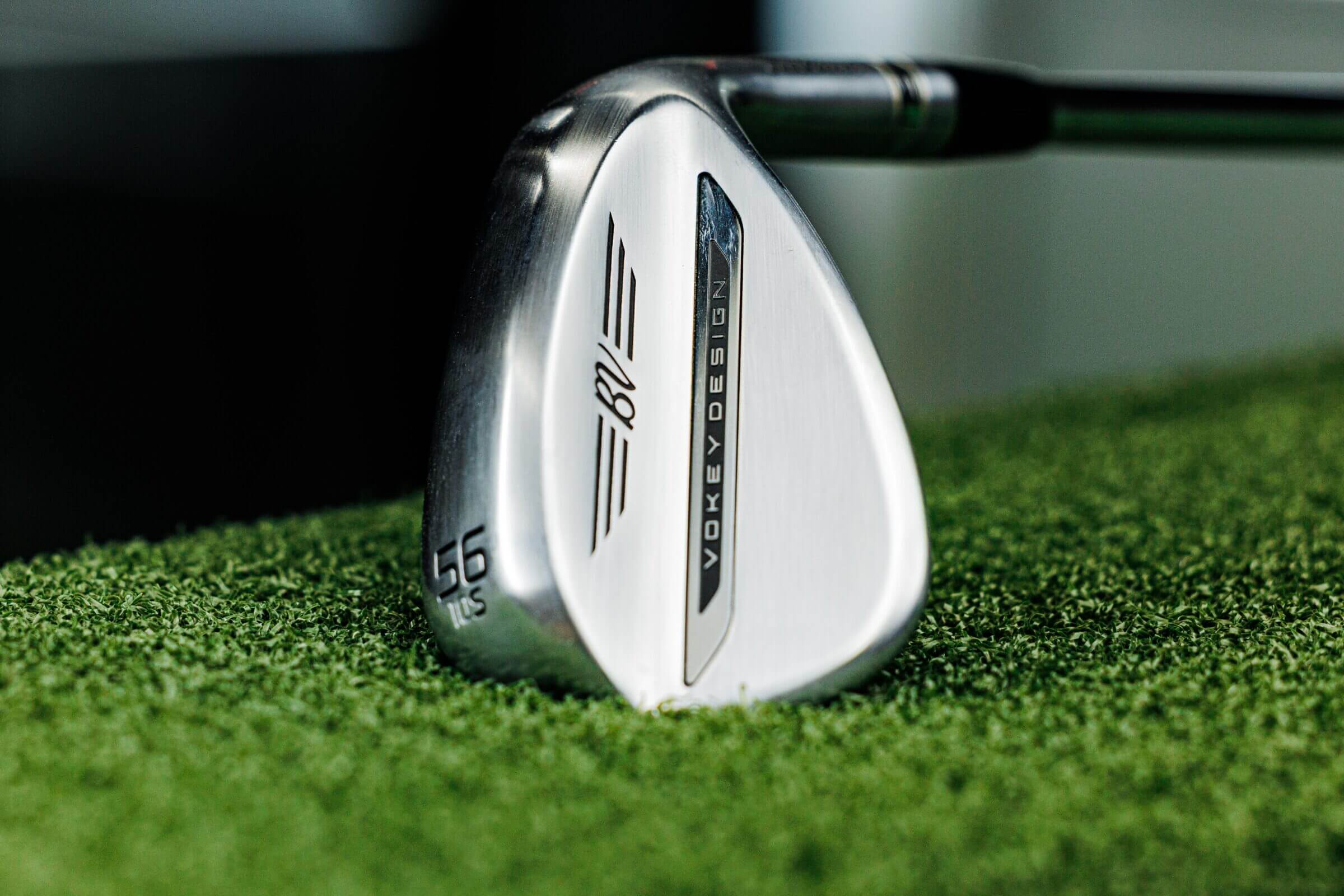
The Vokey SM11 is a good example.
Its groove profiles change depending on loft because different wedges are being asked to do different jobs.
Pitching and gap wedges put more emphasis on consistency and distance control. Sand wedges have to balance full shots with touch shots. Lob wedges put more emphasis on greenside spin.
The goal isn’t simply to squeeze the highest possible rpm number out of every loft.
The spin you need from a full pitching wedge is not necessarily the same thing you need from a 30-yard lob shot. In both cases, you’re trying to produce a predictable combination of launch, carry and stopping power.
What should you look for when testing wedges?
Pay attention to spin. You still need enough of it to create the flight and stopping power you want.
Just don’t stop there.
Hit shots to an actual number and watch your carry window. Look at where the entire group finishes, not just your best shot. Pay attention to whether the ball launches in a similar window and whether your misses stay reasonably close to the target.
If you can see how the wedge performs with moisture, that’s useful information, too.
The wedge producing the highest spin number might end up being the right one for you. It also might not.
What you’re really looking for is a predictable combination of launch, spin, carry and proximity.





Leave A Reply