


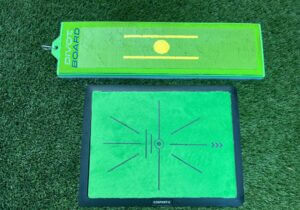
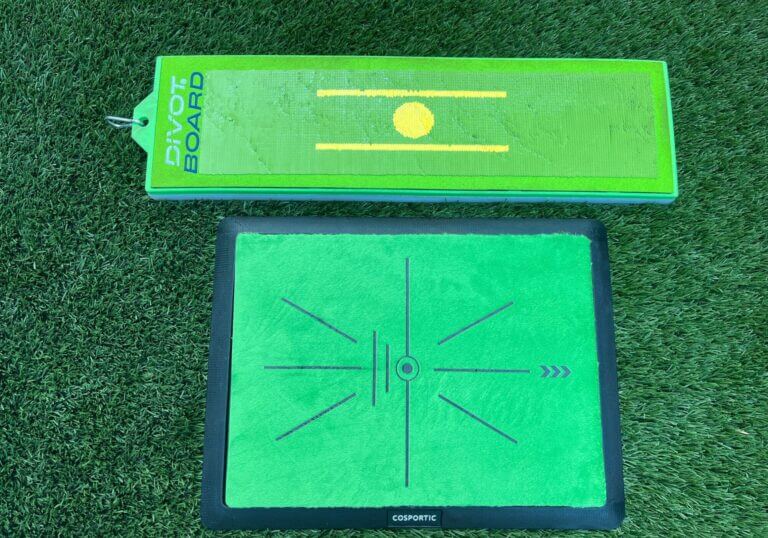
The Divot Board has always been one of my favorite golf training aids.
It’s smart, simple and useful. I’ve had one for about six years and have used it not only for my own practice but also to help other golfers understand what is happening at impact. It’s especially good for indoor practice when you can’t take real divots or see turf interaction.
Since the Divot Board has become so popular, I’ve seen other products pop up that claim to do the same thing. Most are much cheaper. So I broke down and bought one of the less expensive versions available on Amazon to see what the differences were.
Like a lot of things you test in golf, this one became pretty clear: you get what you pay for.
What is the Divot Board?
The Divot Board is a portable training aid that shows you where your club is striking the ground. It gives instant visual feedback on low point, swing path and whether you are catching the ground too early or too late.
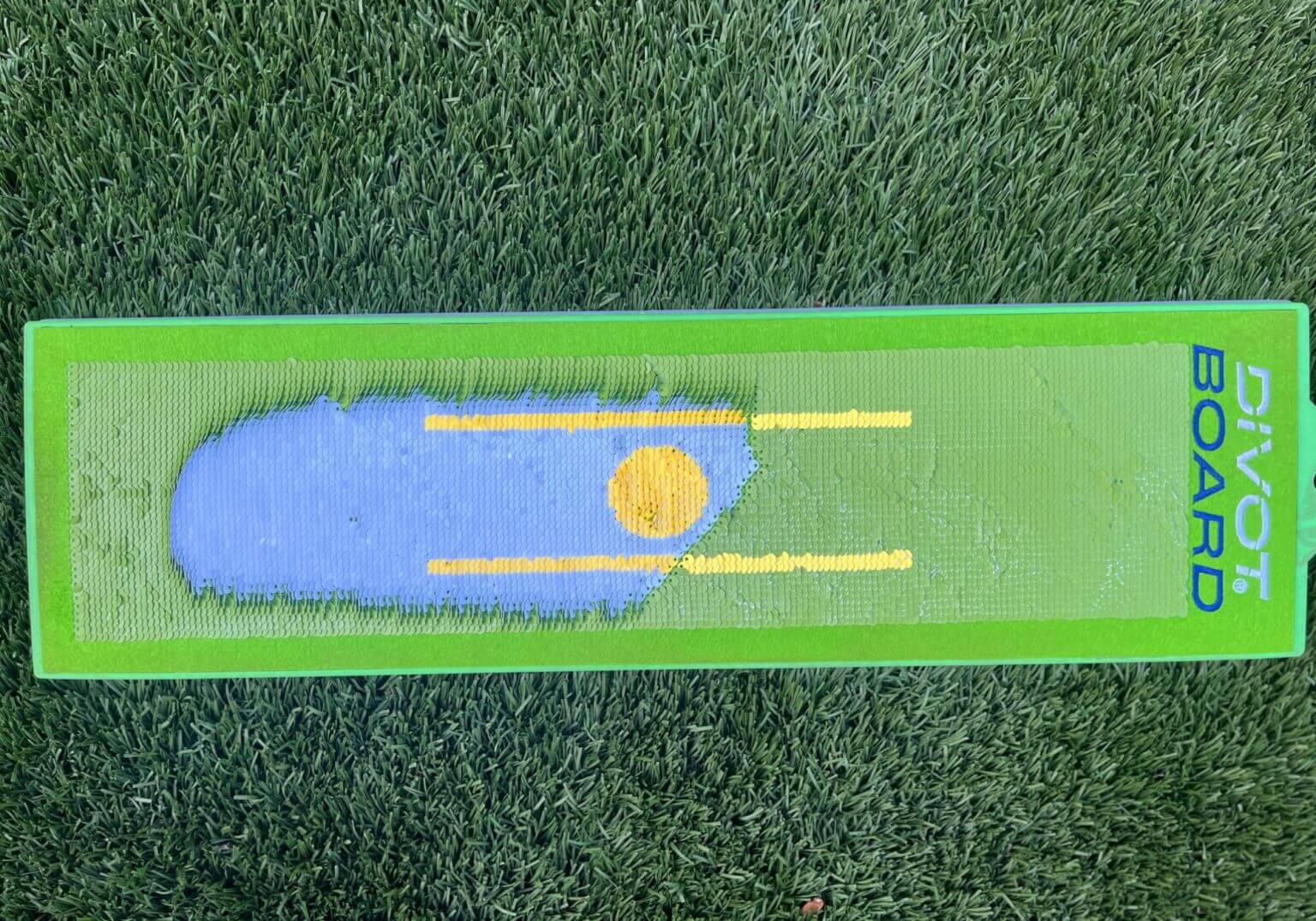
You can use it indoors or outdoors with or without a golf ball. The surface changes as the club moves through it. You can see the path and contact point immediately after each swing.

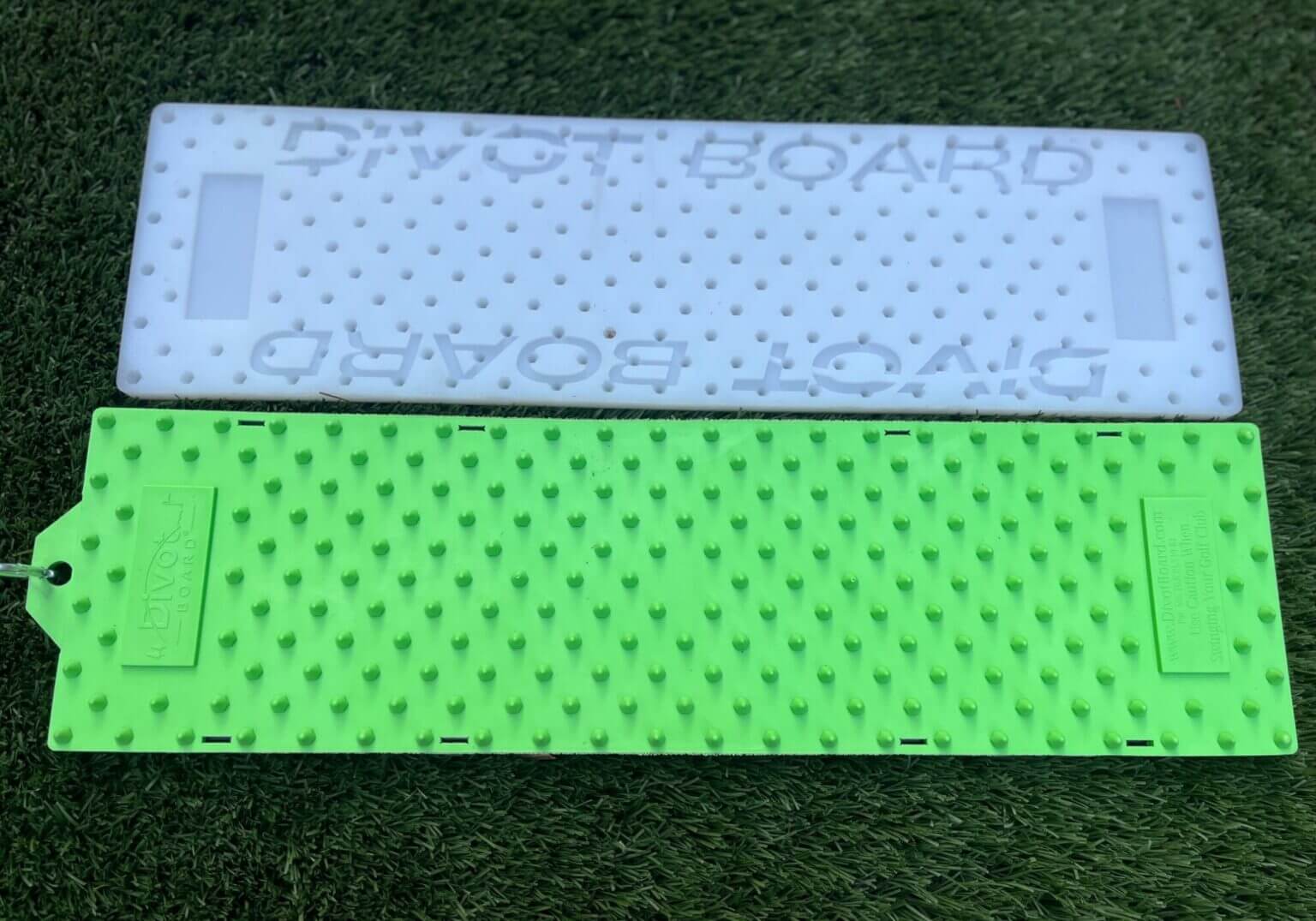
The standard Divot Board is currently on sale for $99.99. There is also a Divot Board Mini for $59.99 which brings the price much closer to some of the cheaper alternatives.
Replacement pads are available for both models. The full-size replacement pad is $49.99 and the Mini replacement pad is $29.99. Divot Board says the pad lasts between 1,000 and 3,000 swings depending on swing speed, force and how often you hit behind the ball. In my experience, they last a long time.
You can also buy grip pads to help keep the board from moving when practicing on smooth surfaces.
What is the cheaper version?
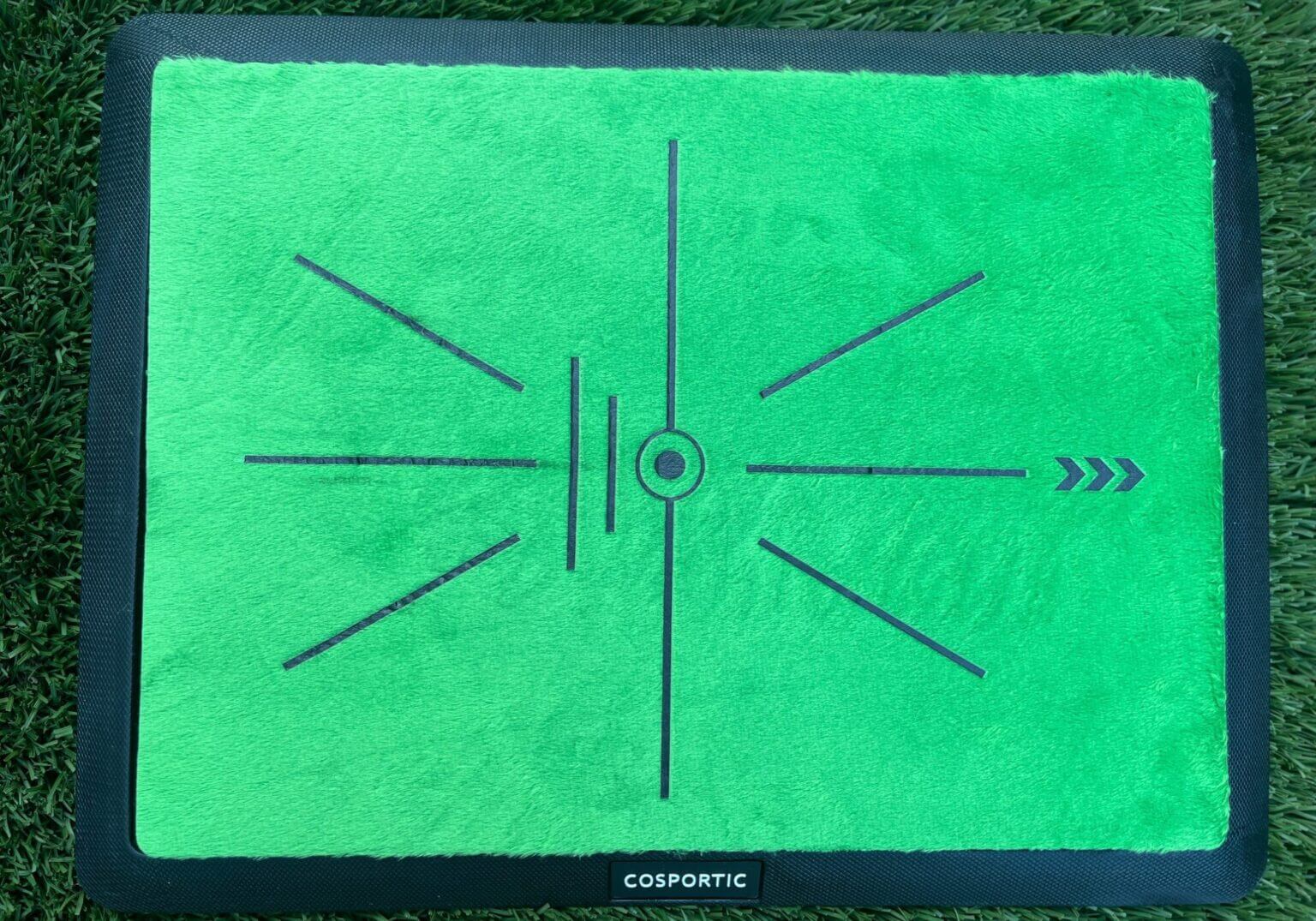
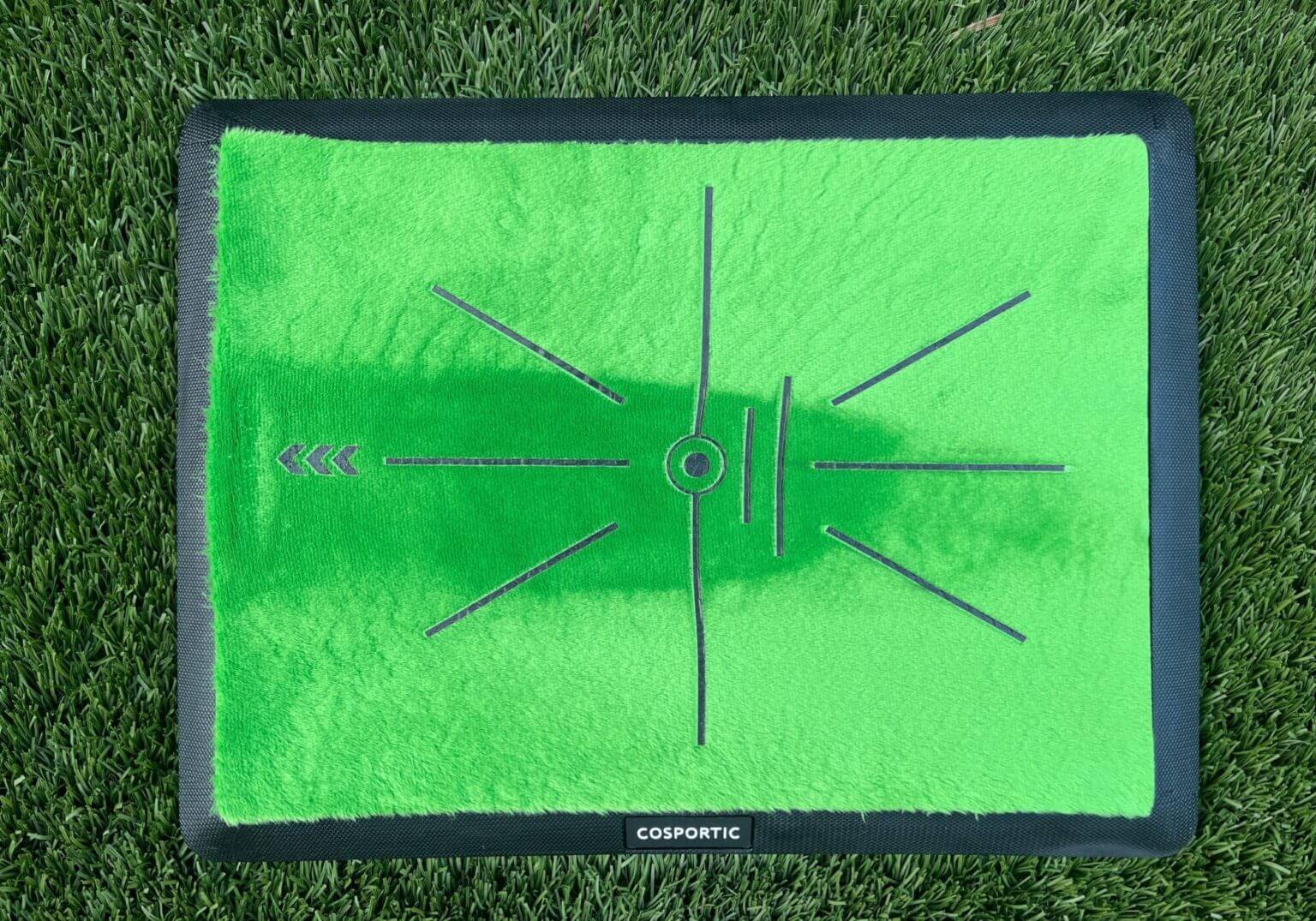
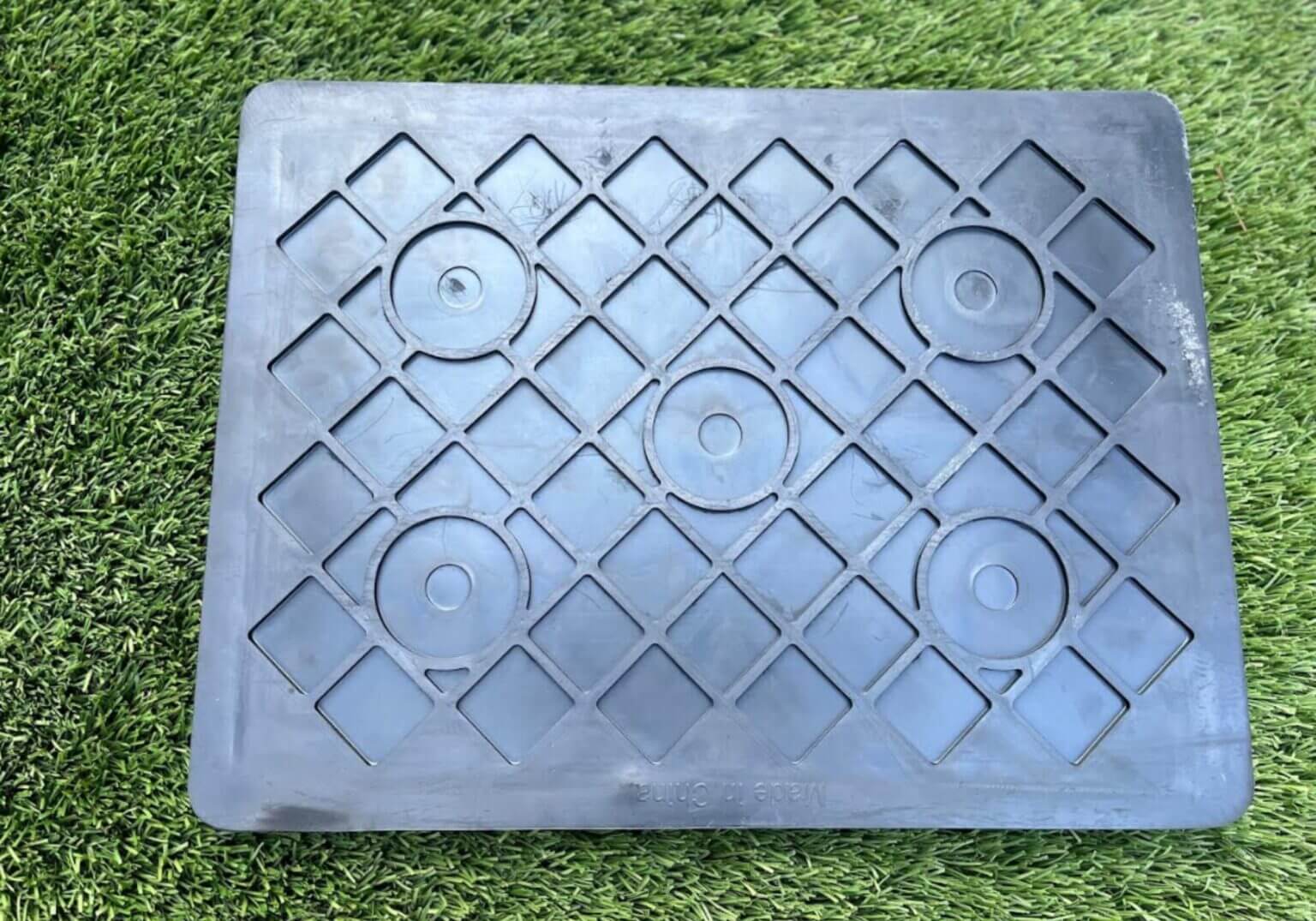
The cheaper version I tested was the Cosportic Golf Hitting Mat with Swing Path Feedback. It sells on Amazon for $27.99 and comes with a rubber base, a replaceable velvet surface and an extra surface pad.
The idea is similar. You swing across the mat and the surface shows your swing path. It claims to help you see toe, center or heel contact and gives you a way to practice indoors, in the garage, on the patio or in the yard.
The biggest difference I noticed
The cheaper mat moved around too much.
That was the first issue and it was enough to make practice frustrating. When you are working on low-point control, you need the board or mat to stay put. If the mat slides, shifts or moves after impact, the feedback becomes less useful.
With the Divot Board, you have to actually strike it to get useful feedback. That makes it feel closer to the type of interaction you are trying to train.
With the cheaper version, the feedback was not as clean (probably because it was sliding) and the contact did not feel as realistic. It showed some path information but it did not give me the same level of confidence in what I was seeing.
The Divot Board also does a better job visually. Something as simple as the color variation on the board makes a difference. You can see the strike pattern clearly and that visual sticks with you. The entire point of a training aid like this is to create feedback you can remember and use on the next swing.
Is the cheap version worth it?
Normally, I can find a use case for the cheaper version of a golf product.
Maybe it’s good enough for a beginner or it makes sense if you are not sure you’ll use the training aid often. Maybe it works as a way to test the concept before spending more money.
In this case, I really can’t find that use case.
I would either buy the Divot Board or skip this category entirely and work on low-point control using grass. Put a tee in the ground, draw a line on the turf or pay attention to where your divot starts. Those are free ways to learn the same basic concept.
The Mini changes the price conversation
The release of the Divot Board Mini makes this comparison even more interesting.
At $59.99, the Mini is still more than the Amazon mat but it’s closer. I’ve only recently started using the Mini and I like it just as much as the original.
It’s smaller, easier to store and still gives the same type of clean feedback that makes the Divot Board useful in the first place. For most golfers practicing at home, the Mini may be all you need. It’s about the same size as the Cosportic Golf Hitting mat.
If the full-size Divot Board feels like too much money, I’d look hard at the Mini before buying a cheaper knockoff.
Final verdict
For me, this one is Divot Board or bust.
The real Divot Board costs more but it works better, lasts a long time and has replacement parts available. It also gives cleaner feedback and a better strike feel which is the whole reason to buy this type of training aid in the first place.
As with any golf training aid, you have to be realistic. If you’re going to use it twice and throw it in a closet, don’t buy one. But if you want something you can use at home to work on contact, low point and swing path, the Divot Board is worth it.









Dom
3 months ago
I went through 2. 8 dollars each off temu. Totally worth it. And yeah it moves but your impact point is still shown. I threw em out because I got what I could out of em for about 4 years. No way am I paying over 30 bucks for a training aid. Especially when lessons are 60 with a pro. I’ve bought sooooooo many “cheaper” versions of things for golf. Never wished I hadn’t. Only met ppl who wish they knew so they didn’t spend the money. Instead spend it on the ridiculously inflated tee time price