


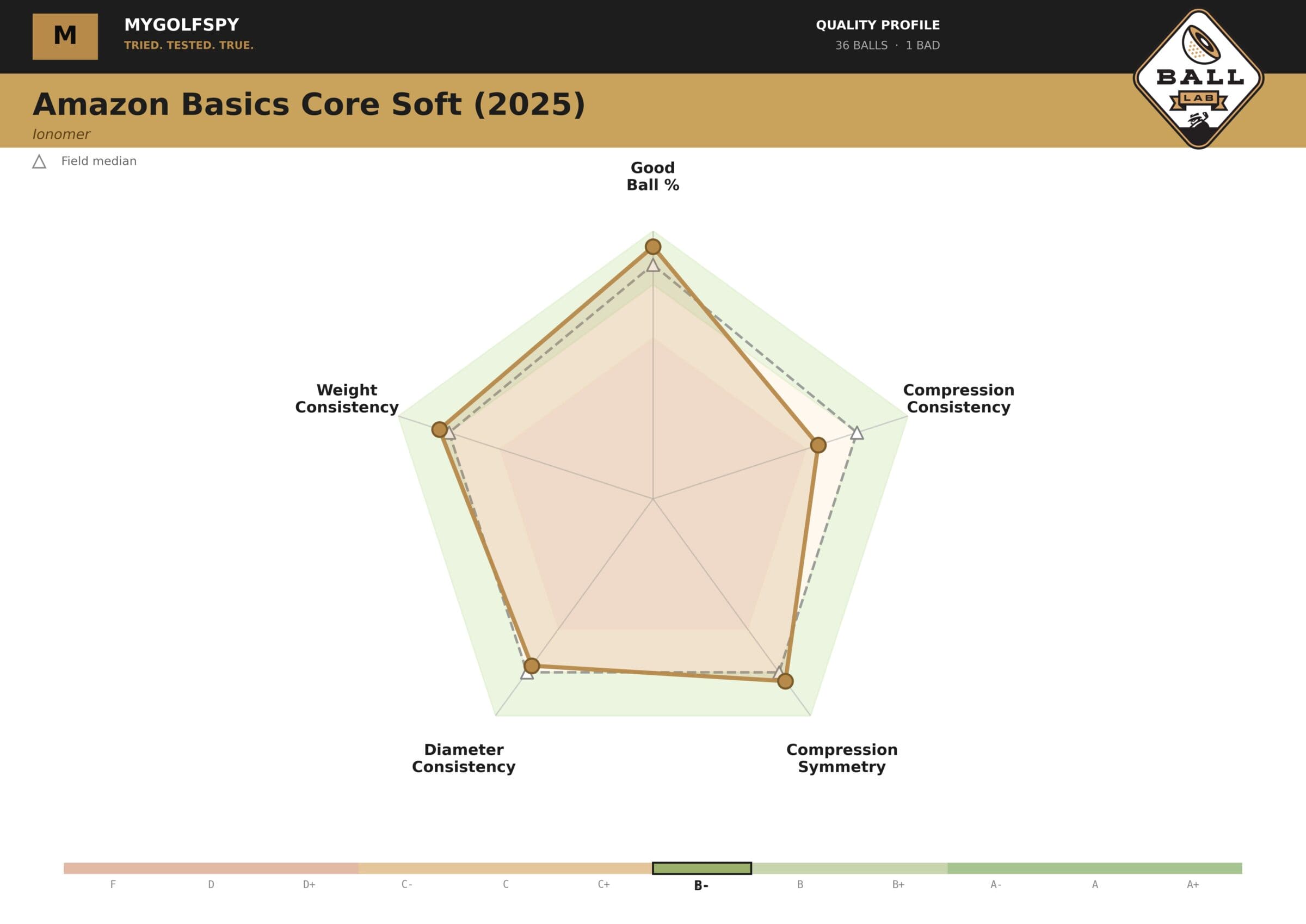
The 2025 Amazon Basics Core Soft earned a Quality Score of 82 with a B- overall grade: Not Recommended. It posted an A on good ball rate with only one bad ball out of 36 and no category-level defects across cores, layers or covers. Compression symmetry came in at a solid B. The weak spot is compression consistency which graded at D. It’s the widest delta in the sample and a number that stands out even in a crowded field of budget balls.
At $17.59 a dozen, the Amazon Basics Core Soft sits at the very bottom of the price ladder for golf balls. It’s a two-piece ionomer construction. That’s the same basic formula as most distance and recreational balls. It’s manufactured by SM Global, the same factory that makes the Kirkland Signature and PXG Xtreme series. Box 1 was made at SM Global’s Vietnam facility while Boxes 2 and 3 came from SM Global China. For the golfer who just needs a ball that goes reasonably straight and doesn’t cost much, the price is hard to argue with. But the compression consistency data tells a real story about what you’re getting for that price.
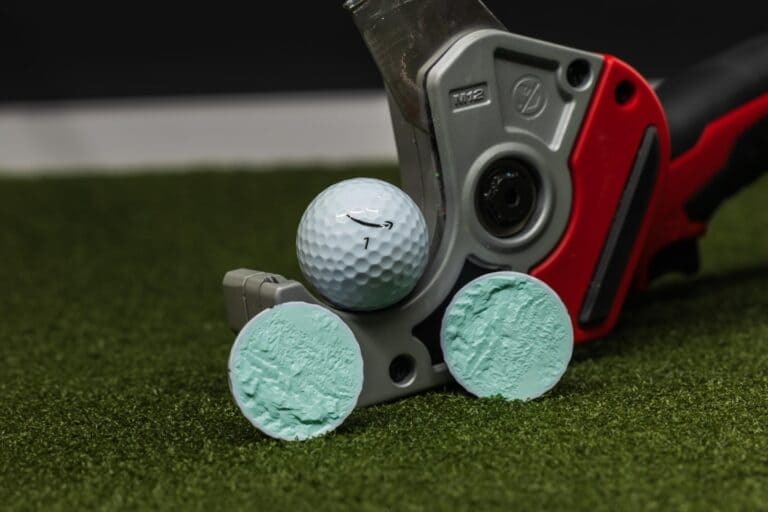
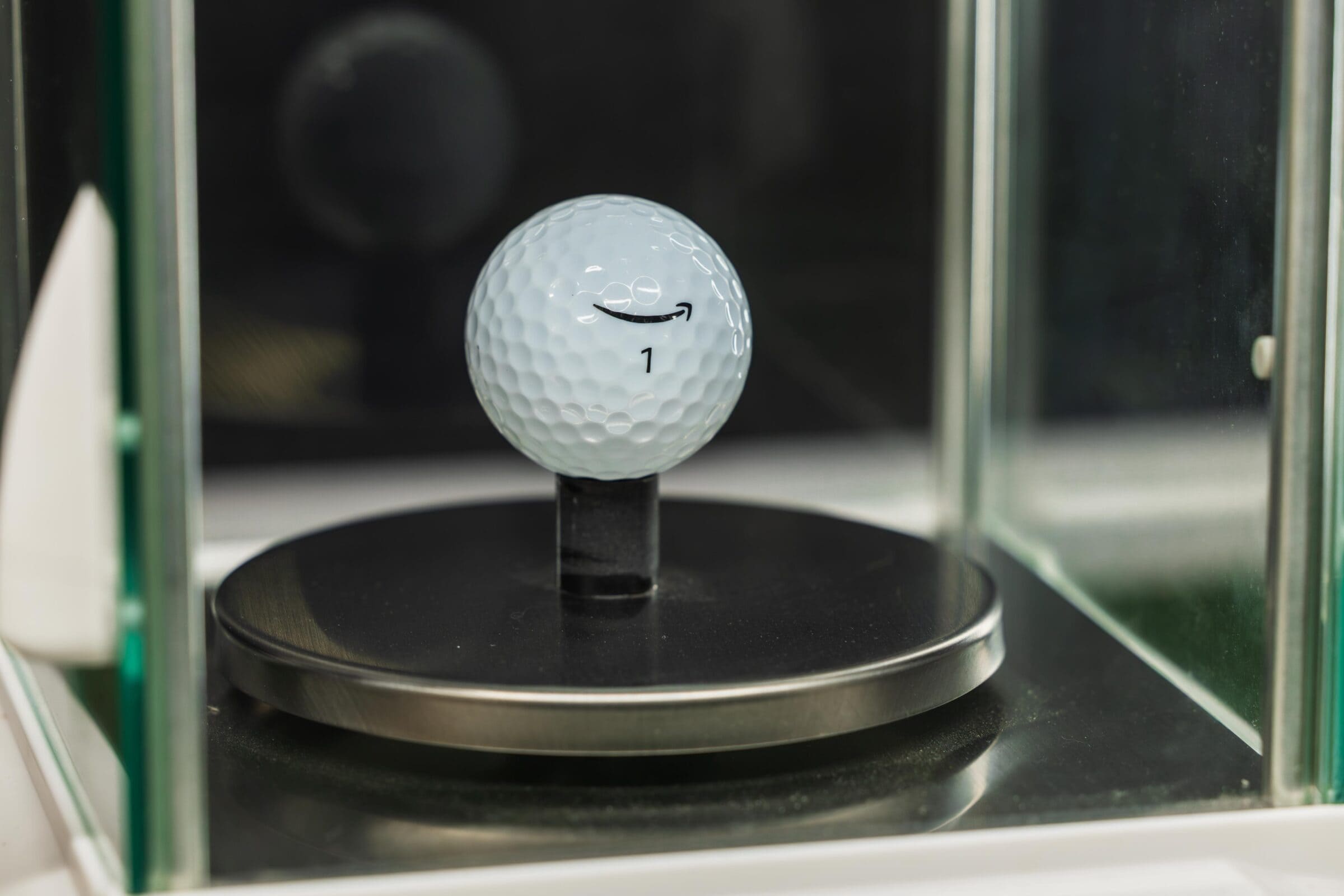
Here’s what the 2025 Amazon Basics Core Soft looks like under the microscope.
Amazon Basics Core Soft

 Pros
 Pros
- Exceptional good ball rate of 97.2% (A) — only 1 bad ball out of 36 with no category-level defects across cores
- Compression symmetry graded at B (84) with a median of 1.5 points against a field average of 2.0
Cons
 Cons
- Compression consistency earned a D (65) — a delta of 10.7 points across the sample ranks
- Diameter consistency graded at C+ (77) with Box 3 running smaller on average than the other two boxes, adding another layer of variability across the sample
Our Verdict
 Our Verdict
The 2025 Amazon Basics Core Soft earns a Quality Score of 82 and a B- grade: Not Recommended. Good ball rate came in at 97.2 percent with just one bad ball out of 36 and no category-level defects identified across cores, layers or covers. Compression consistency was the biggest drag on the score, earning a D with a delta of 10.7 points across the sample. The factory split between boxes adds context: Box 1 came from SM Global Vietnam and ran about five compression points softer than Boxes 2 and 3 which came from SM Global China. Diameter consistency graded at C+ with Box 3 running smaller on average than the other two. At $17.59 a dozen, the price is the pitch but the compression data is what it is and golfers who care about getting the same ball performance from the first sleeve to the last may want to look elsewhere.
All the data you need to choose the best golf ball for your game:
2026 Ball Test Results and 2026 Completed Ball Labs

Google is changing how content is shown. Add MyGolfSpy as your preferred source to ensure you don’t miss the latest gear news, instructional tips and buying guides.
Product details
- Price: $17.59/dozen
- Construction: 2-piece ionomer
- Compression: 57 (Soft)
- Factory: SM Global, Vietnam/China
- Diameter: 1.6819 in.
- Weight: 1.6069 oz.
- Bad Balls: 1 of 36
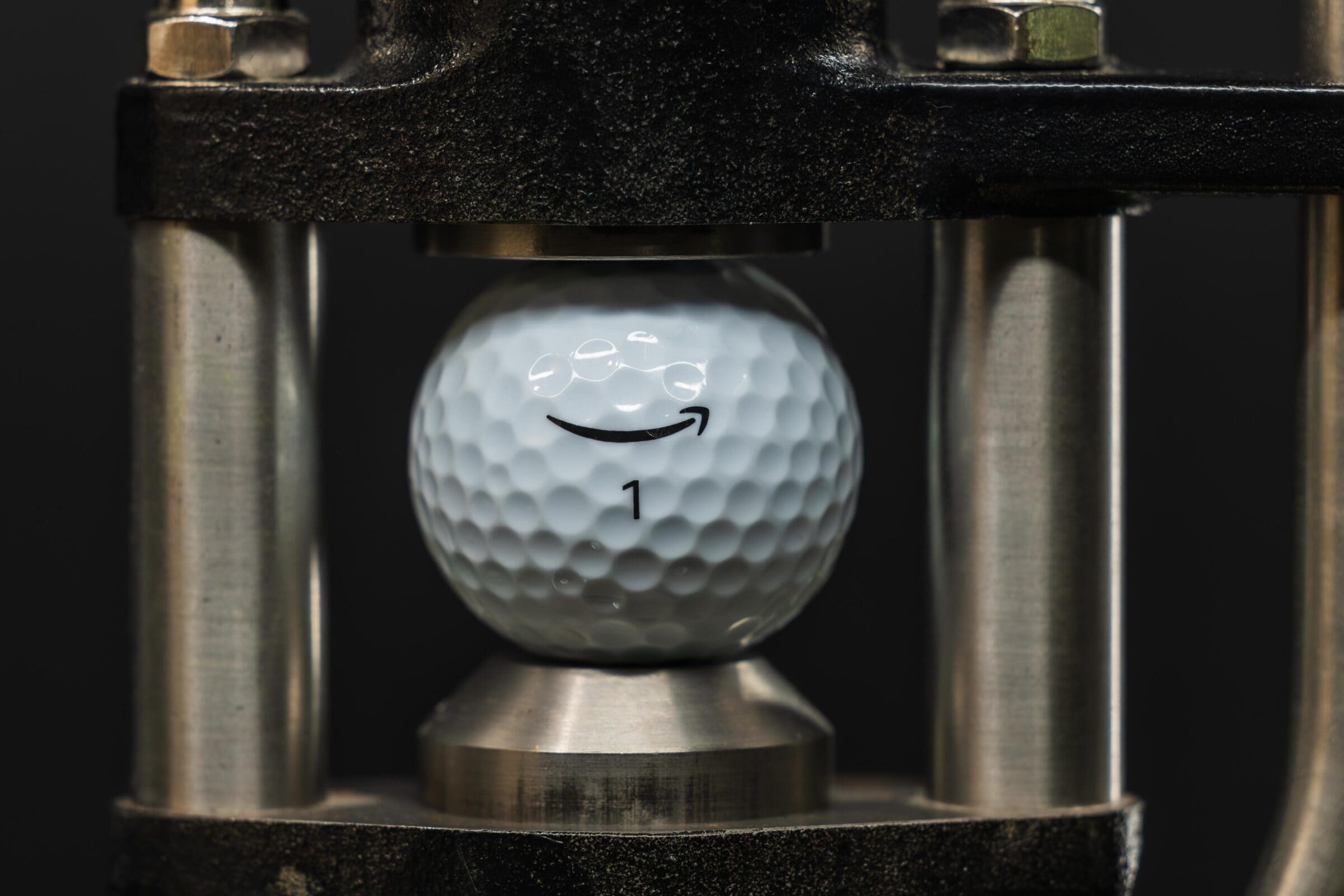
Test results
The 2025 Amazon Basics Core Soft scored 82 and earned a B- grade: Not Recommended. It’s a bit of a mixed result. A strong Good Ball rate and solid compression symmetry on one end, a compression consistency score that ranks near the bottom of the database on the other.
Good Ball Rate came in at 97.2 percent. Only one of 36 balls was flagged and no category-level defects were identified across cores, layers or covers. For a ball at this price point, that’s an unexpectedly clean result.
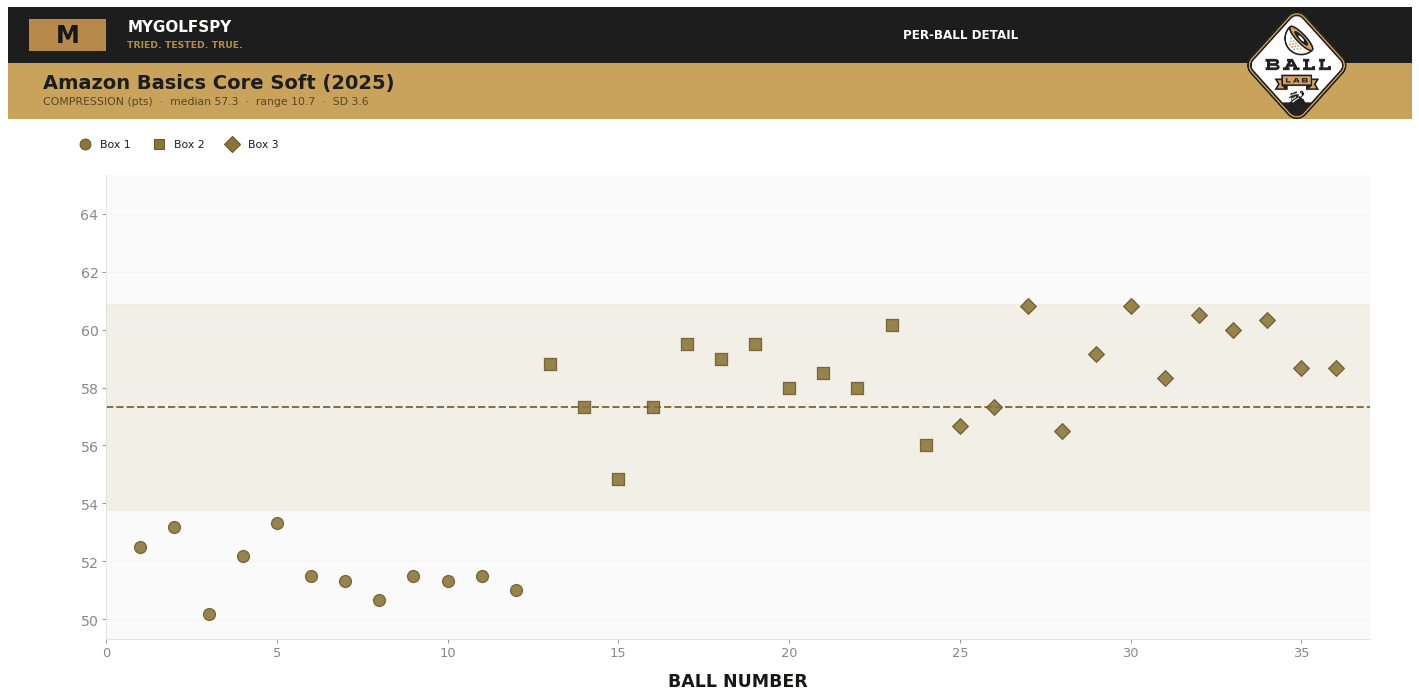
Compression consistency graded at D with a delta of 10.7 points and a spread running from 50.2 to 60.8. That ranks in the bottom half of the database and sits above the field average of 9.6 points.
The factory split is a meaningful part of the story for the Amazon Basics golf ball. Box 1 was manufactured at SM Global Vietnam and averaged about five points lower in compression than Boxes 2 and 3 which came from SM Global China. Pull from different boxes and you may not be playing the same ball.
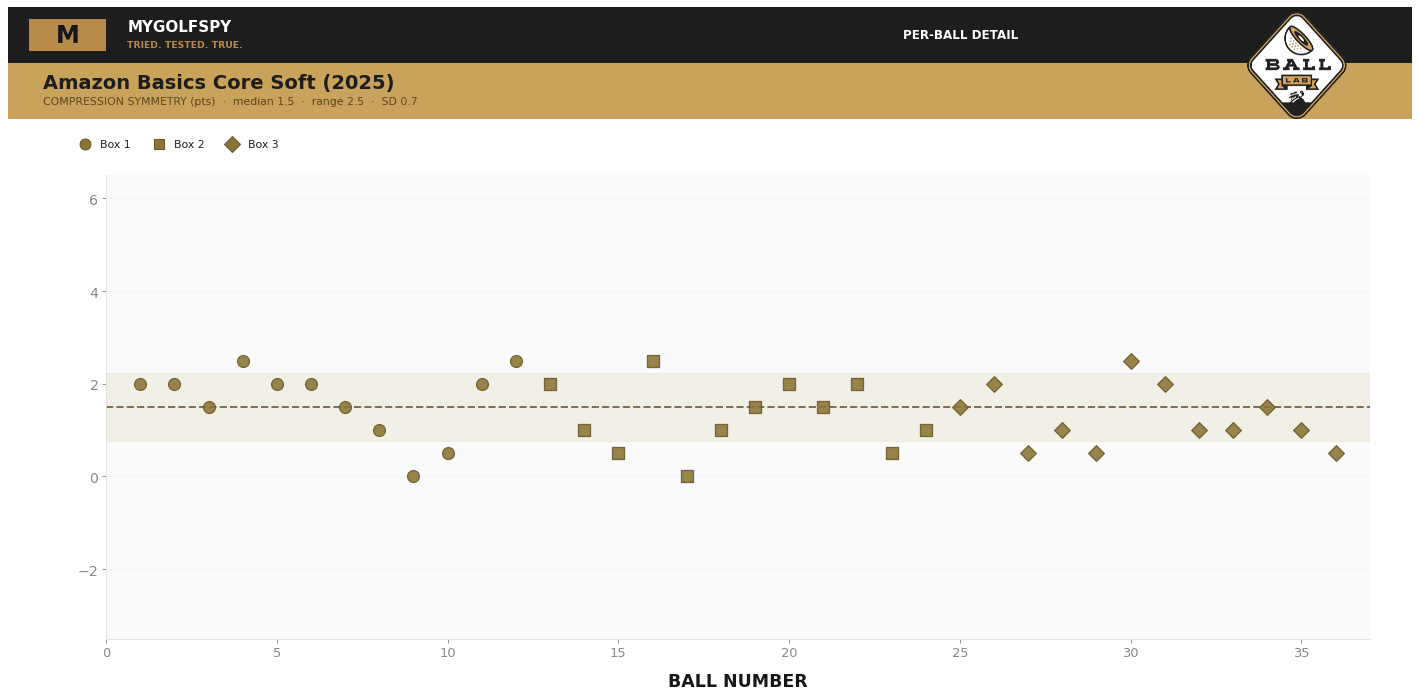
Compression symmetry graded at B with a median of 1.5 points against a field average of 2.0. That’s actually one of the better results in this category. Each individual ball compresses consistently across its three measurement points even if ball-to-ball compression varies widely.
Diameter consistency graded at C+ with a median of 1.6819 inches and an SD of 0.0010. Box 3 ran smaller on average than Boxes 1 and 2, adding another layer of lot-to-lot variability. Weight consistency graded at B with a range running from 1.6032 to 1.6124 ounces and a standard deviation of 0.0022. It has one of the cleaner weight profiles in the sample.
Use the MyGolfSpy Golf Ball Selector to compare 48 golf balls using data from our 2026 robot test. Filter by swing speed and see how each ball performs from driver to wedge to find the best fit for your game.

Compression
Compression is a measure of how much force is required to deform a golf ball. The higher the number, the firmer the ball. Consistency matters because a ball that compresses differently from shot to shot produces different results from shot to shot. Ball Lab measures every ball individually and tracks both the average and the spread across the sample.
The 2025 Amazon Basics Core Soft averaged 57, in the soft range of our database. Compression consistency graded at D with a delta of 10.7 points and a spread running from 50.2 to 60.8. The 10.7-point spread is worse than the field average of 9.6. The factory split between boxes drives much of the compression spread we saw. Box 1 from SM Global Vietnam averaged roughly five points softer than Boxes 2 and 3 from SM Global China.
Compression symmetry tells a different story. The Core Soft averaged 1.5 points of deviation against a field average of 2.0, grading at B. Each individual ball compresses consistently across its three measurement points. The inconsistency here is ball to ball, not within each ball.
The charts below detail the compression measurements in our sample.
Weight
Weight consistency is another metric Ball Lab tracks. Even small differences across a dozen balls can translate to inconsistent ball flight. Ball Lab weighs every ball to four decimal places.
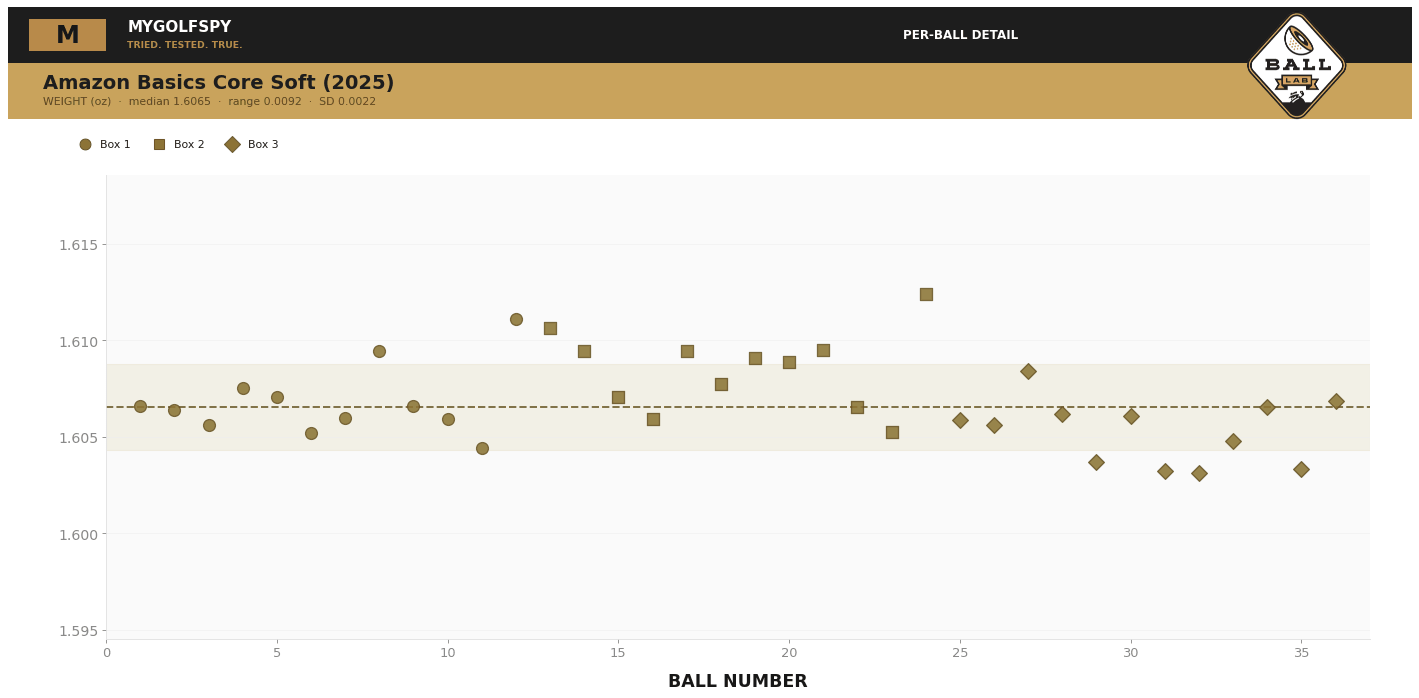
The 2025 Amazon Basics Core Soft averaged 1.6069 ounces across 36 balls, in the light range of the database. Every ball cleared the USGA maximum of 1.6205 ounces with a range running from 1.6032 to 1.6124 and a standard deviation of 0.0022. That’s one of the tighter weight spreads in the sample, a clean result for a ball at this price point.
Weight consistency grades out at B.
The charts below detail the weight measurements in our sample.
Diameter
A ball that isn’t uniform in shape can move offline on the putting green or produce inconsistent flight in the air. Ball Lab measures each ball across multiple axes to get a true picture of its shape.
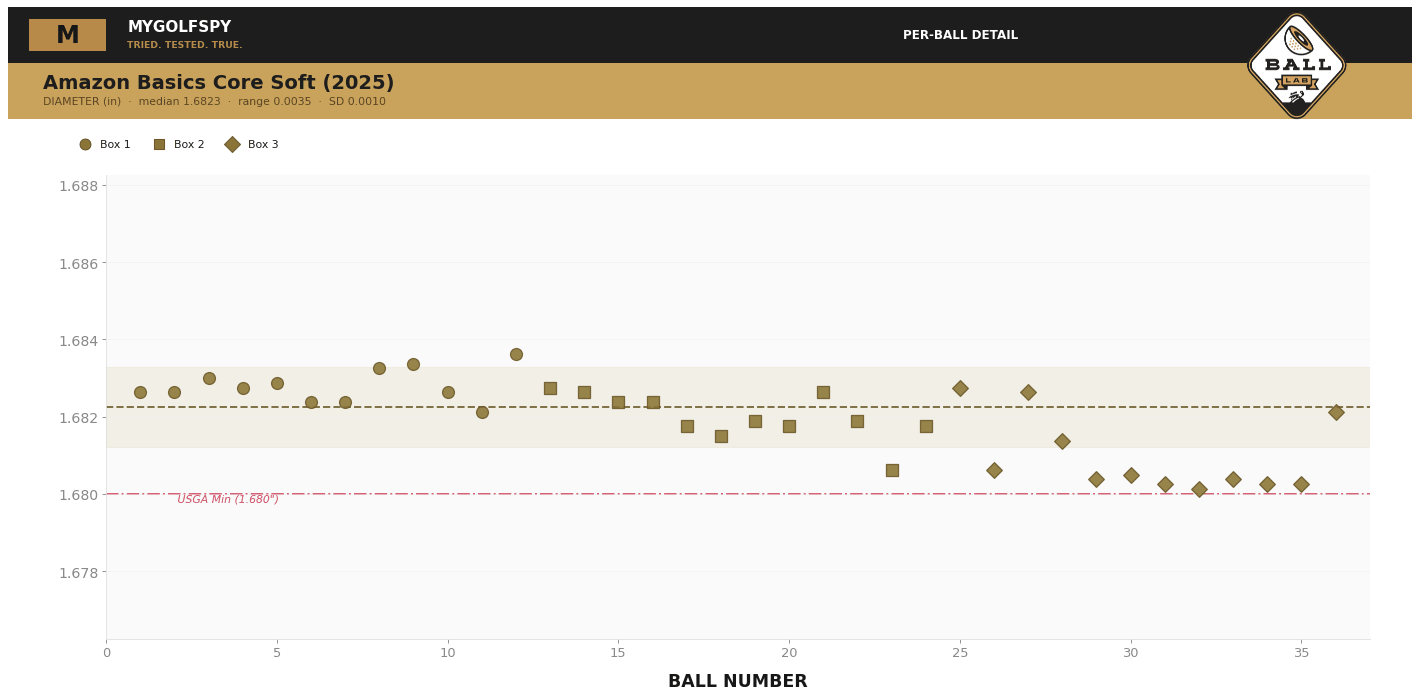
The 2025 Amazon Basics Core Soft averaged 1.6819 inches, above the USGA minimum of 1.680, with a roundness deviation of 0.0005 inches. Every ball cleared the minimum. The pole-versus-seam data shows no consistent shape bias. Twenty-four of 36 balls fell within gauge noise and no lot-wide pattern was identified. Box 3 was the least consistent of the three at an SD of 0.00095 while Box 1 ran tightest at 0.00043.
Diameter consistency graded out at C+.
The charts below detail the diameter measurements in our sample.
Ball Test Results 2026
In the 2026 MyGolfSpy Golf Ball Test, the Amazon Basics Core Soft earned a notable distinction for a ball at its price point. It was named the low swing speed ionomer pick and finished as one of the three fastest balls off the 7-iron at low swing speed.
At mid swing speed off the driver, it produced one of the lower ball flights in the ionomer category. It has the kind of trajectory that leans on roll rather than carry to build total distance. Depending on the golfer and the conditions, that can work in your favor or against you.
At high swing speed, it ranked 13th for iron ball speed, finishing just behind the Titleist TruFeel and Callaway Supersoft. Not a standout result at that speed but consistent with what a soft two-piece ionomer delivers when swing speed climbs.
The ball test data lines up with what Ball Lab found: this is a ball designed for a specific golfer who is budget conscious.
Ball Lab report card
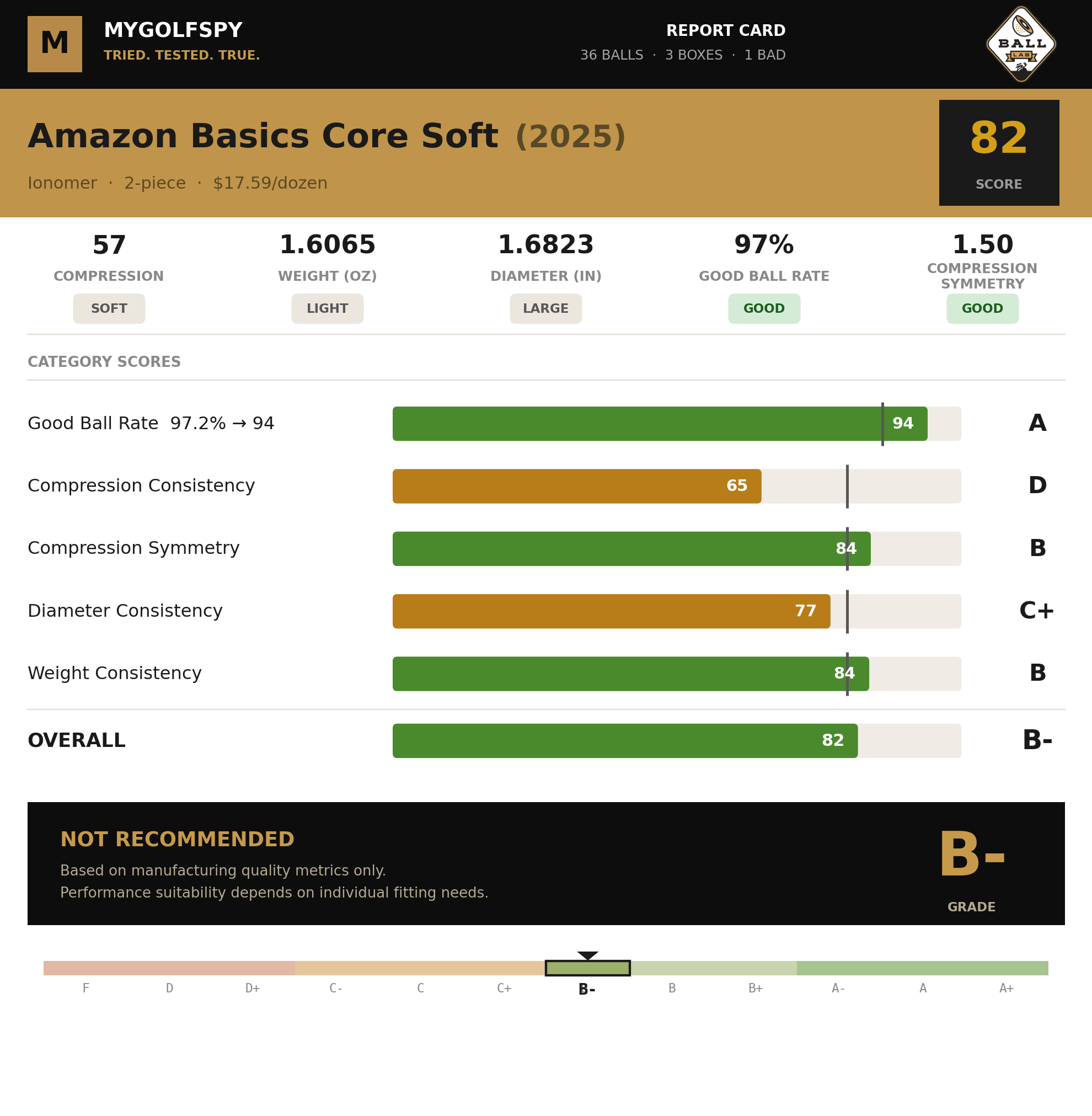
Each Quality Score is a weighted average of five grades: good ball rate, compression consistency, compression symmetry, diameter consistency, weight consistency. Our scoring system punishes defective balls more severely while giving greater weight to compression metrics than to weight and diameter.





Joe
2 minutes ago
they’re no Kirklands :)