


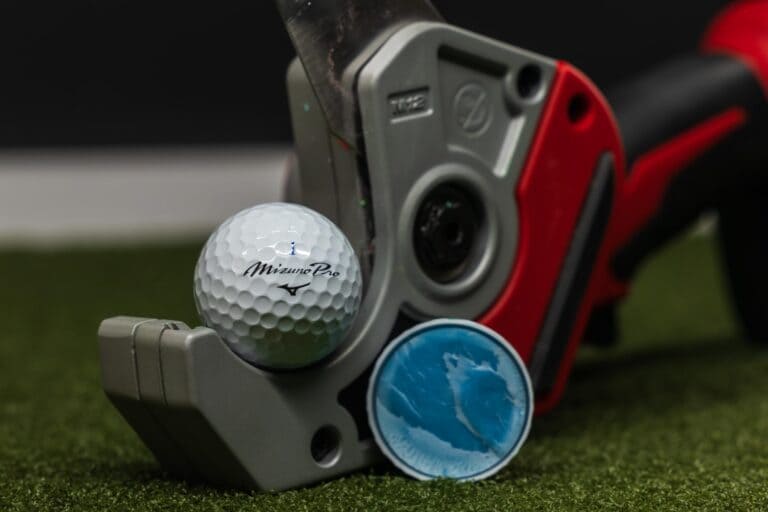
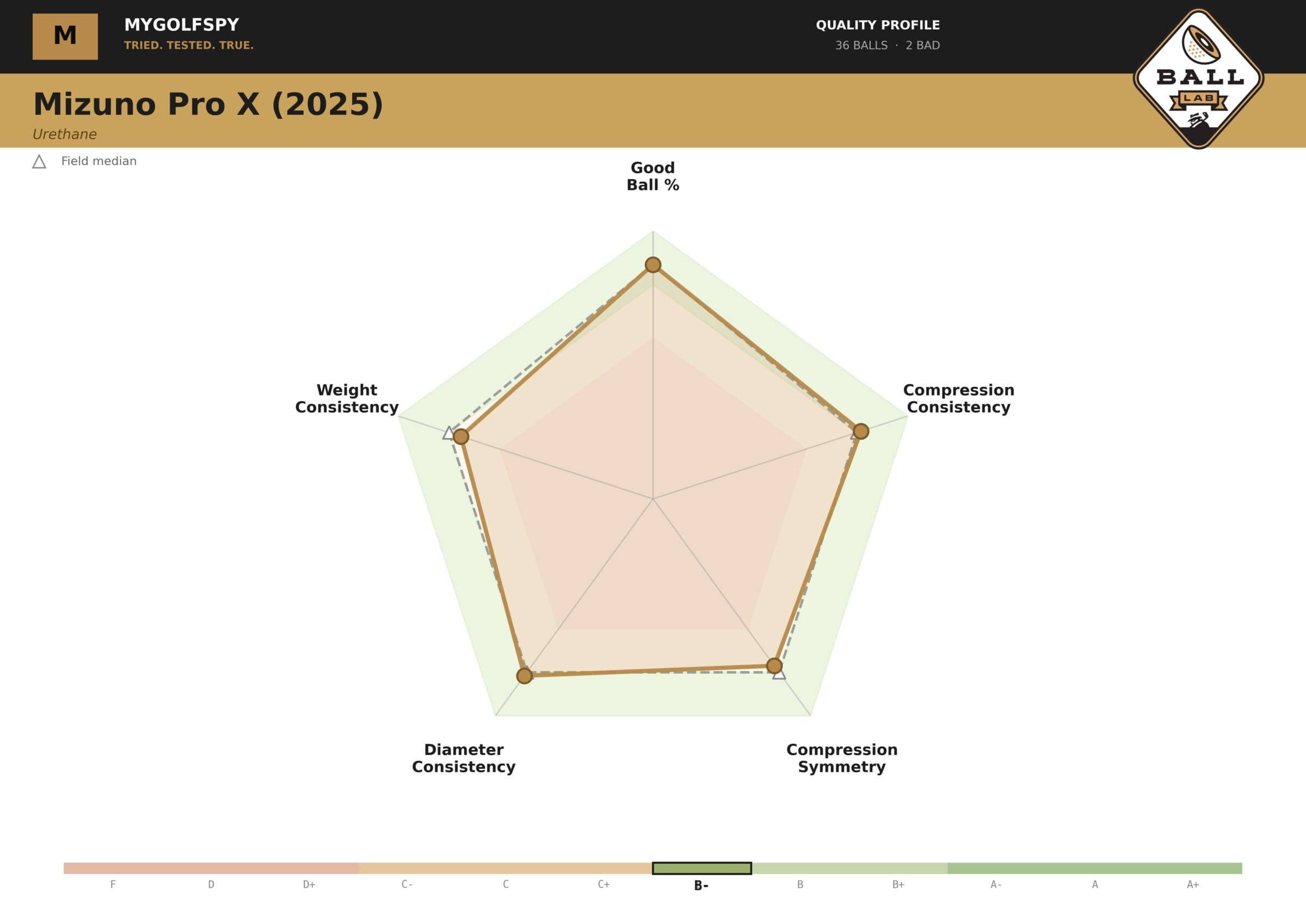
The 2025 Mizuno Pro X earned a Quality Score of 83 with a B overall grade, landing it in Conditionally Recommended territory. It posted a B+ on good ball rate with two bad balls out of 36 and compression consistency came in at a B-. Weight consistency was the weak spot at C and compression symmetry trailed the field at C+. It’s a solid-performing X-firm urethane ball but the inconsistencies across weight and compression symmetry are worth knowing before you commit.
Mizuno has built a strong reputation in irons but the Pro X is the brand’s bid to compete at the premium urethane level against the Titleists and TaylorMades of the world. At $49.99 a dozen, it’s priced to compete and, on paper, the construction is legitimate: three-piece urethane, 332 dimples, manufactured in Vietnam. For golfers who want a firm, low-spinning “tour ball” without paying $60+, the Pro X makes a reasonable case for itself. The question Ball Lab always asks is whether the manufacturing quality holds up to scrutiny at that price point.
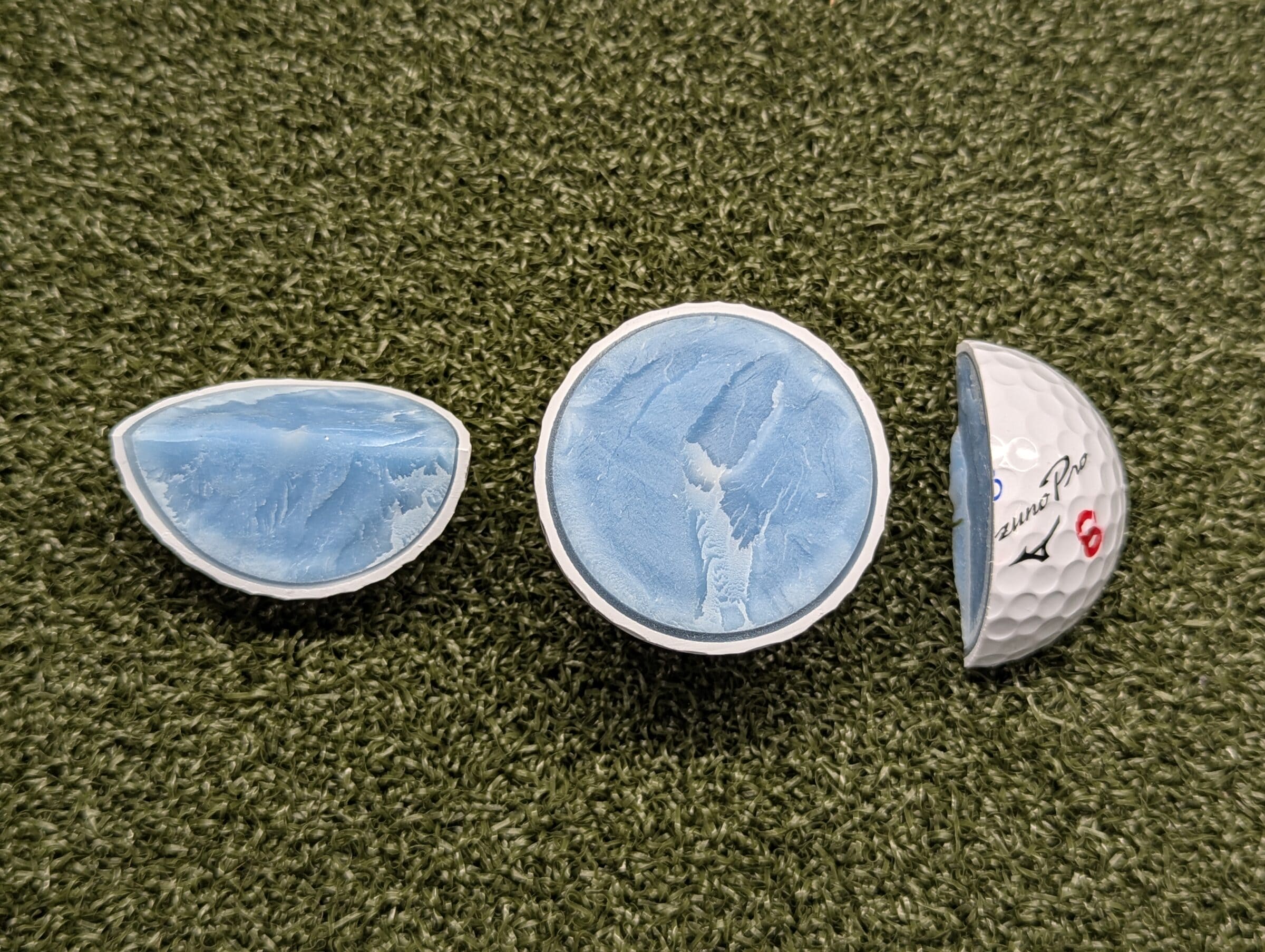
Here’s what the 2025 Mizuno Pro X looks like under the microscope.
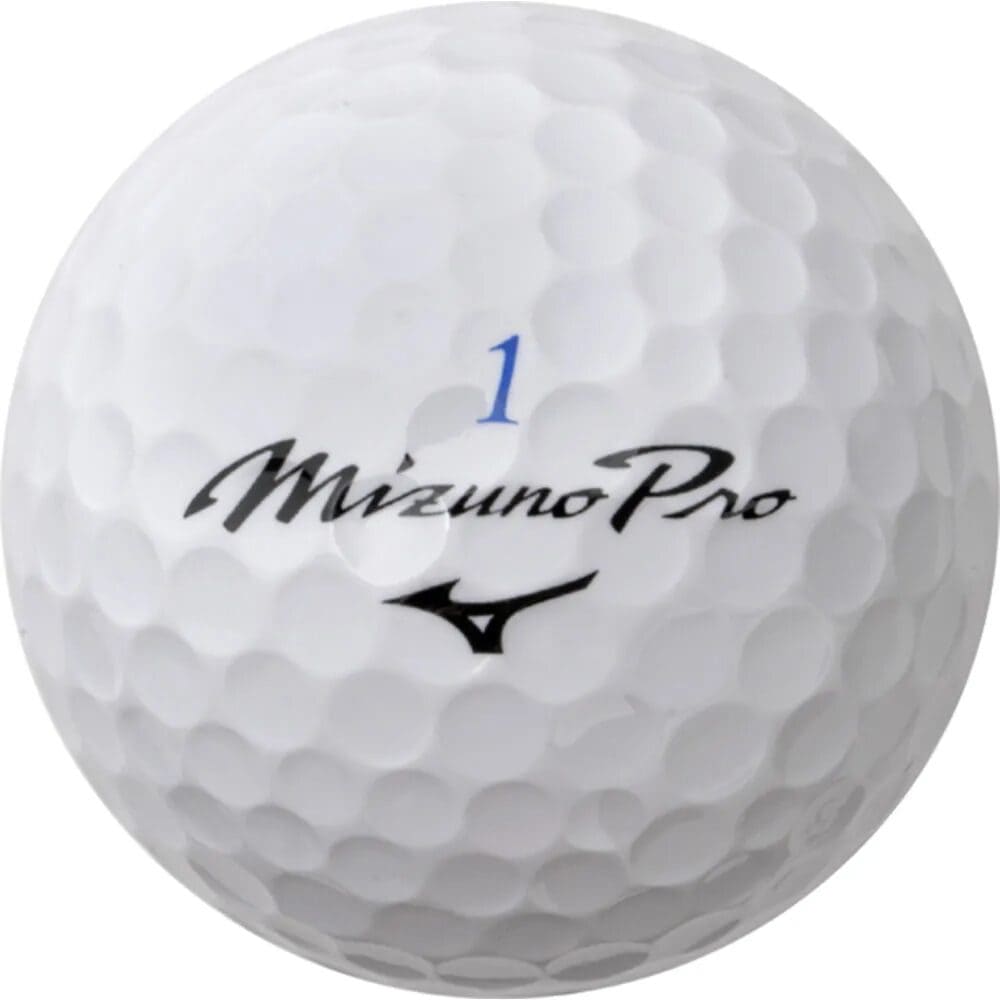
Mizuno Pro X
 Pros
Pros
 Pros
Pros - Strong good ball rate of 94.4% (B+) — 2 bad balls out of 36 tested
- Compression delta of 7.7 points beats the field average of 9.5, meaning ball-to-ball compression variation is tighter than most
Cons
 Cons
Cons - Weight consistency earned a C (75) — the weakest metric in the sample with meaningful ball-to-ball variation
- Compression symmetry came in at C+ (77), trailing the field average and dragging the overall score down
Our Verdict
 Our Verdict
 The 2025 Mizuno Pro X earns a Quality Score of 83 and a B grade: Conditionally Recommended. Good ball rate came in at 94.4 percent with two defective balls out of 36, both flagged for layer concentricity issues. Weight consistency was the biggest drag on the score, earning a C, and diameter consistency graded at B-. For a $49.99 urethane ball going up against the big names in the premium category, there’s enough here to make it worth considering but the weight and symmetry inconsistencies are real and golfers who demand tighter manufacturing tolerances may want to look elsewhere.
All the data you need to choose the best golf ball for your game:
2026 Ball Test Results and 2026 Completed Ball Labs

Google is changing how content is shown. Add MyGolfSpy as your preferred source to ensure you don’t miss the latest gear news, instructional tips and buying guides.
Product details
- Price: $49.99/dozen
- Construction: 3-piece urethane
- Compression: 103 (X-Firm)
- Factory: Feng Tay, Vietnam
- Diameter: 1.6822 in.
- Weight: 1.6015 oz.
- Bad Balls: 2 of 36
Test results
The 2025 Mizuno Pro X scored 83 and earned a B grade: Conditionally Recommended. The score reflects a ball with some genuine strengths in compression delta and good ball rate offset by below-average weight consistency and compression symmetry that sits right at the field average.
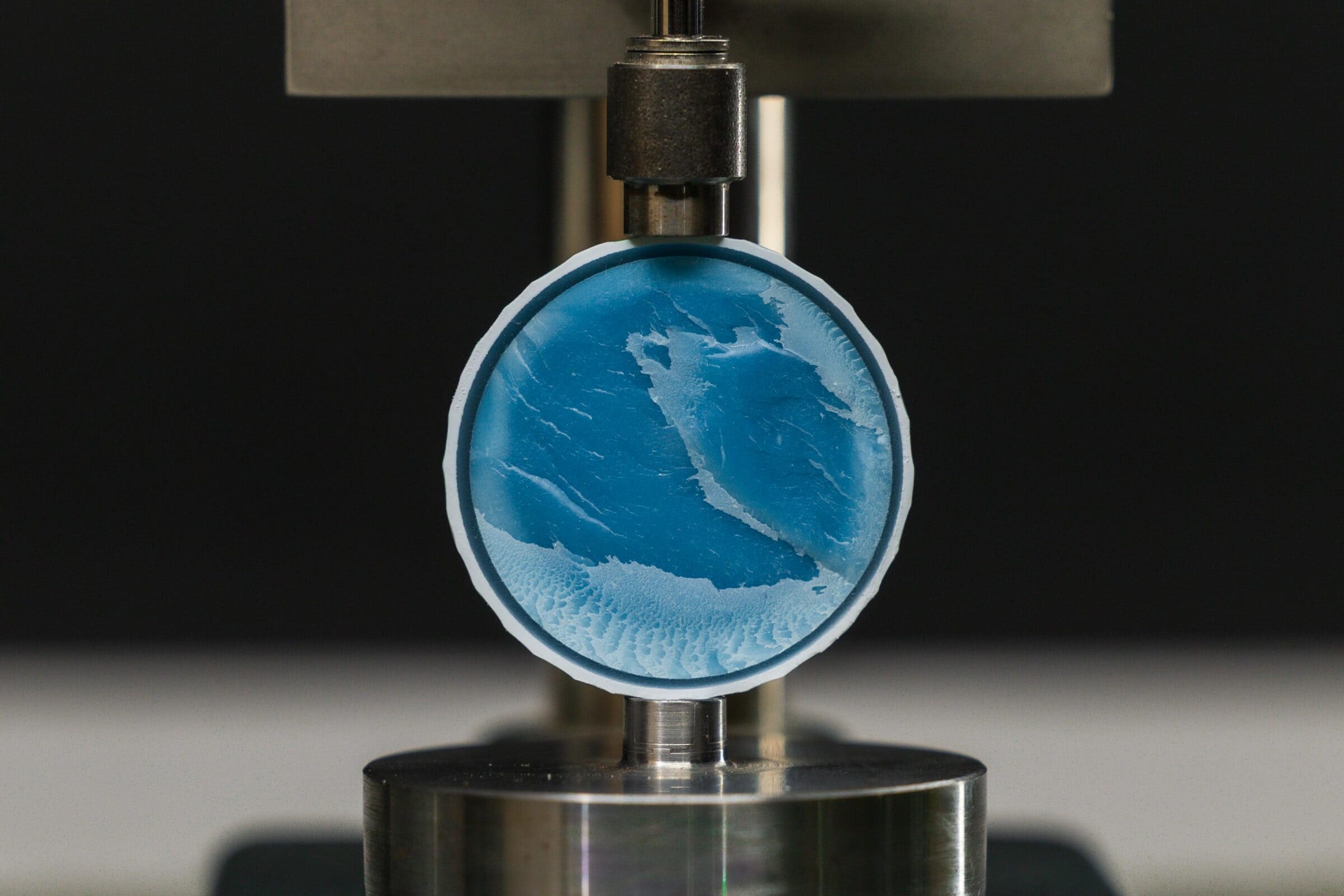
Good Ball Rate came in at 94.4 percent. Two of 36 balls were flagged for layer concentricity issues which is what keeps this from a clean bill of health. The rest of the sample passed inspection across cores, layers and covers.
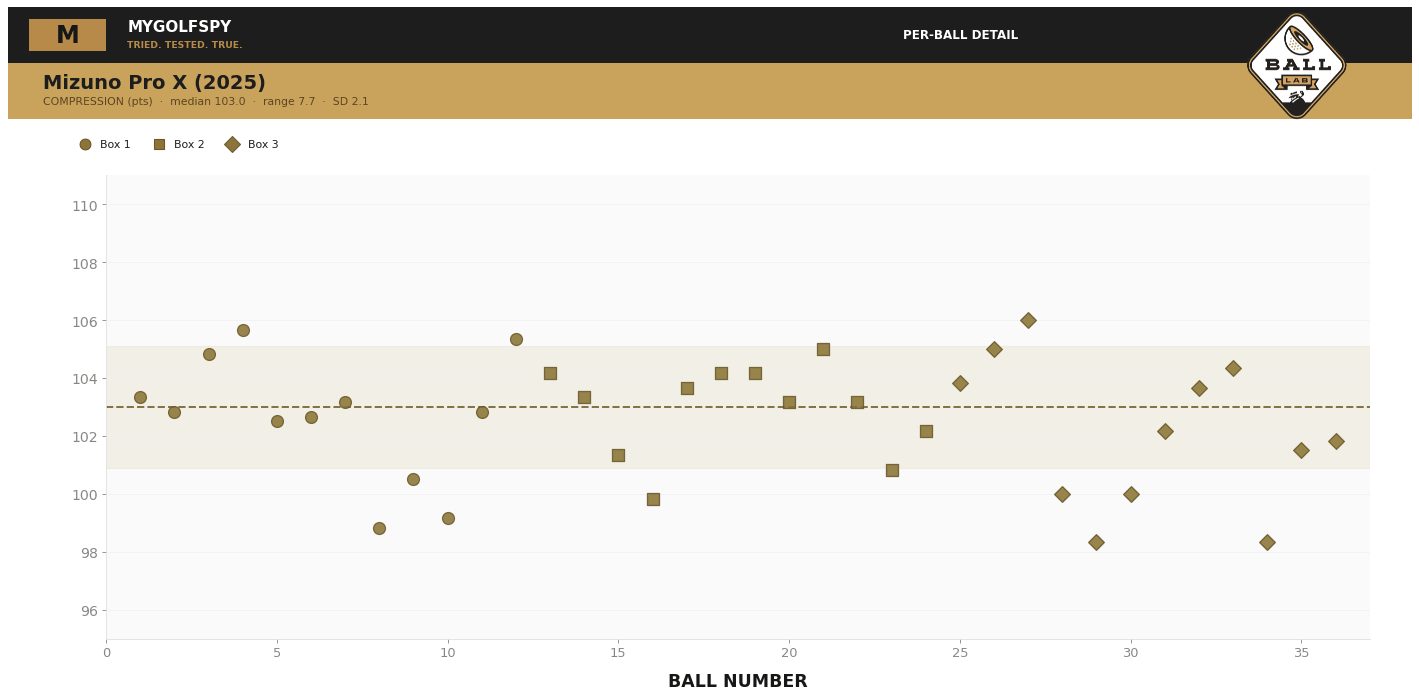
Compression consistency graded at B- with a delta of 7.7 points and a spread running from 98.3 to 106.0. That delta beats the field average of 9.5 points, placing this sample in a solid position relative to the broader database.
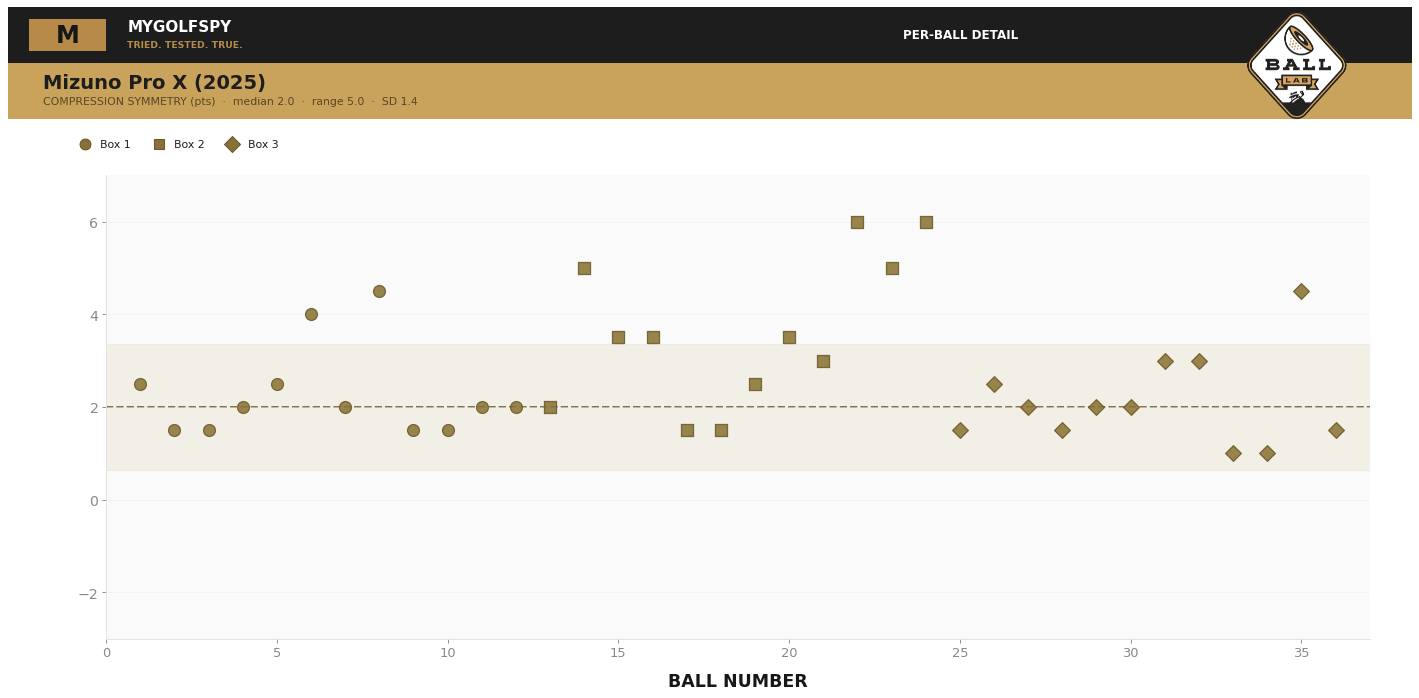
Compression symmetry graded at C+ with a median of 2.0 points against a field average of 2.0, right at the line. There are balls in this sample with meaningful variation across the three measurement points we take on every ball and that internal inconsistency is what pulls this grade down.
Diameter consistency graded at B- with a median of 1.6824 inches. One ball touched the USGA minimum of 1.680 inches and Box 1 ran less consistent than Boxes 2 and 3. Weight consistency graded at C with a range running from 1.5919 to 1.6115 ounces and a standard deviation of 0.0043. Box 3 showed the most spread, accounting for much of the drag on this metric.
Use the MyGolfSpy Golf Ball Selector to compare 48 golf balls using data from our 2026 robot test. Filter by swing speed and see how each ball performs from driver to wedge to find the best fit for your game.

Compression
Compression is a measure of how much force is required to deform a golf ball. The higher the number, the firmer the ball. Consistency matters because a ball that compresses differently from shot to shot produces different results from shot to shot. Ball Lab measures every ball individually and tracks both the average and the spread across the sample.
The 2025 Mizuno Pro X averaged 103, in the extra-firm range of our database alongside the Titleist Pro V1x. Compression consistency graded at B- with a delta of 7.7 points and a spread running from 98.3 to 106.0. That delta beats the field average of 9.5 points so while the grade is B-, the raw number tells a better story than the letter might suggest relative to what we typically see at this compression level.
Ball Lab also measures compression symmetry which tracks how evenly compression is distributed across three points on each individual ball. Is each ball consistent within itself? The Mizuno Pro X averaged 2.0 points of deviation against a field average of 2.0, grading at C+, right at the field average. Some balls in the sample showed meaningful spread across the three measurement points which is what pulls this grade down and separates it from the stronger performers in the database.
For context, elite tour balls typically come in around 1.0 or below on compression symmetry. The Pro X is sitting at exactly the field midpoint; not a red flag but not a strength, either.
The charts below detail the compression measurements in our sample.
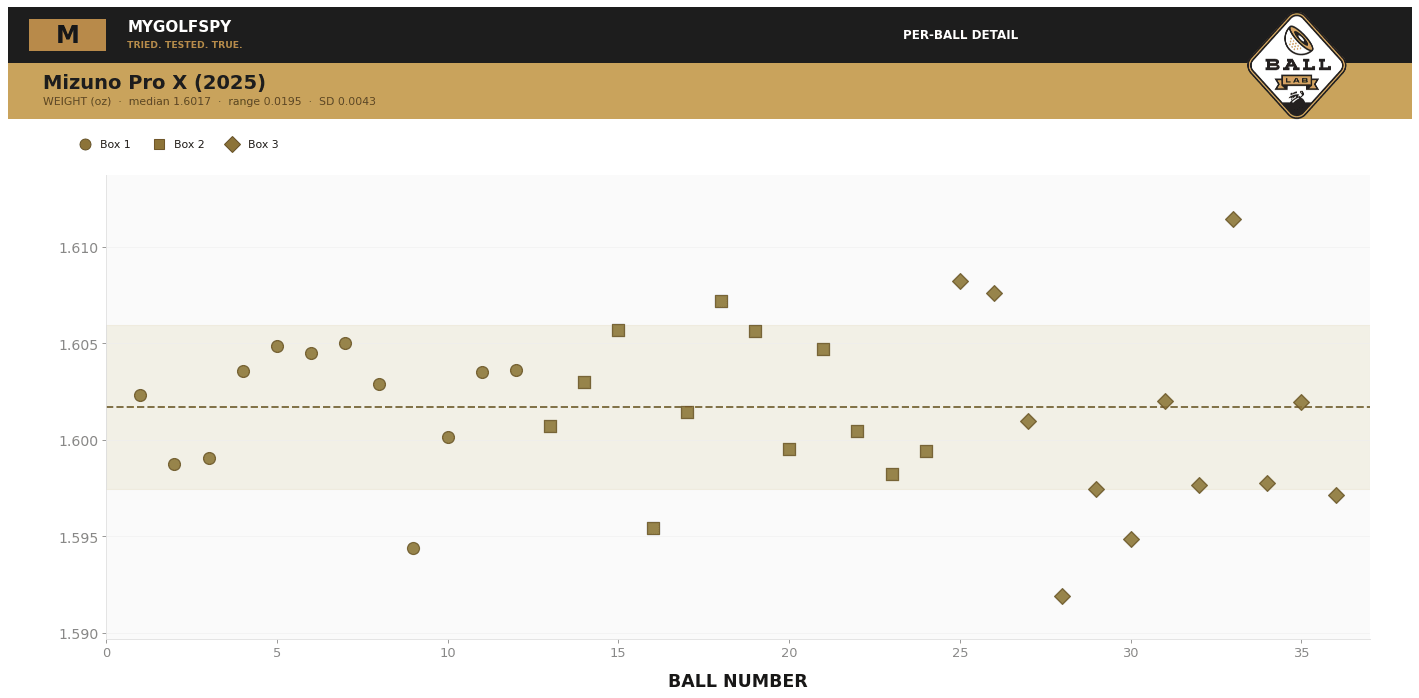
Weight
Weight consistency is another metric Ball Lab tracks. Even small differences across a dozen balls can translate to inconsistent ball flight. Ball Lab weighs every ball to four decimal places.
The 2025 Mizuno Pro X averaged 1.6015 ounces across 36 balls, in the light range of the database. Every ball cleared the USGA maximum of 1.6205 ounces with a range running from 1.5919 to 1.6115 and a standard deviation of 0.0043. That standard deviation is notably higher than what we see from the stronger performers in the database and it shows up in the chart. Box 3 showed the most spread, running lighter and less consistent than Boxes 1 and 2 which accounts for a meaningful portion of the overall drag on this metric.
Weight consistency grades out at C.
The charts below detail the weight measurements in our sample.
Diameter
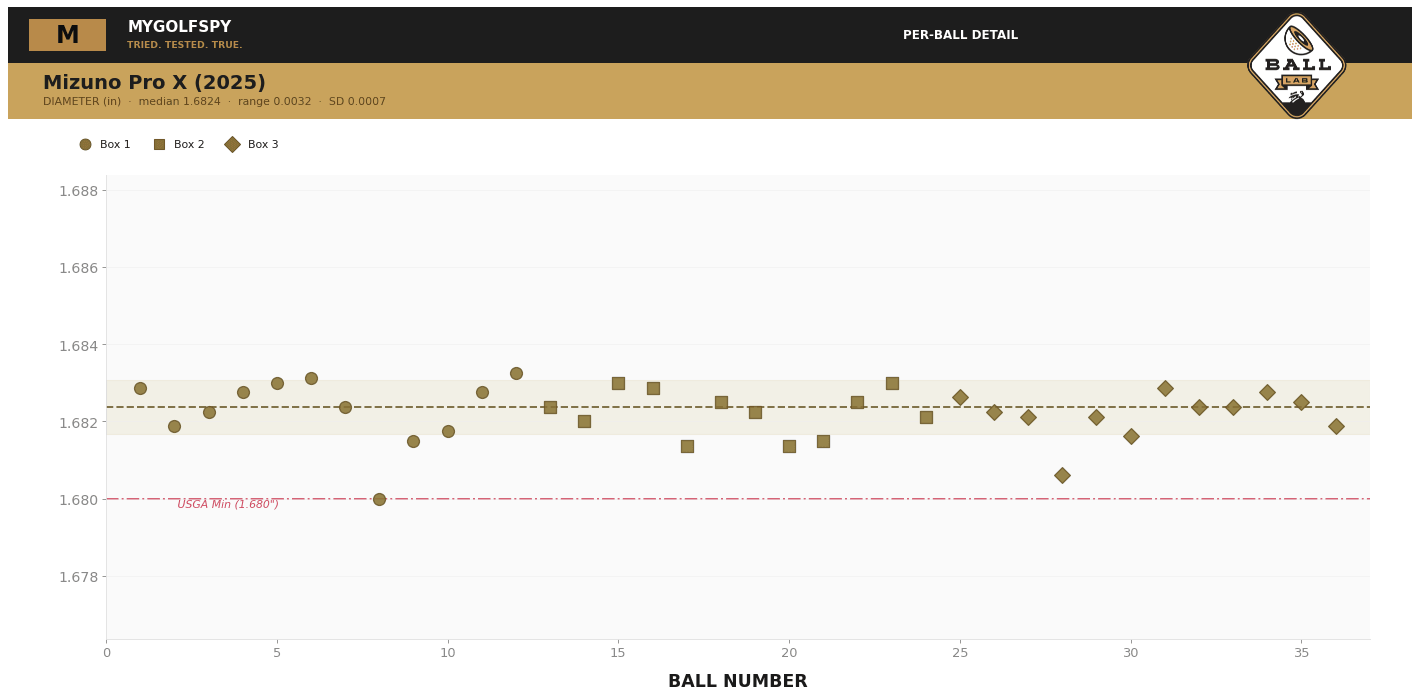
A ball that isn’t uniform in shape can move offline on the putting green or produce inconsistent flight in the air. Ball Lab measures each ball across multiple axes to get a true picture of its shape.
The 2025 Mizuno Pro X averaged 1.6822 inches, above the USGA minimum of 1.680, with a roundness deviation of 0.0011 inches. Every ball cleared the minimum. The pole-versus-seam data shows no consistent shape bias across the sample: balls split 14 thicker at the pole, four thicker at the seam and 18 within gauge noise which tells us there’s no lot-wide pattern to speak of. Box 1 was the least consistent of the three at an SD of 0.00088 while Boxes 2 and 3 ran tighter.
Diameter consistency graded out at B-.
The charts below detail the diameter measurements in our sample.
Ball Test Results 2026
In the 2026 MyGolfSpy Golf Ball Test, the Mizuno Pro X showed up in a few notable spots across the field.
At high swing speed off the driver, the Pro X was one of the longer balls in the test, finishing in the same group as the Pro V1x and Snell PR4. It was well above the test median for carry distance. That’s a strong result for a ball at this price point.
At mid swing speed, it earned a spot as a high-spin pick off the driver, finishing among the highest-spinning balls in that category alongside the Srixon Z-Star Diamond and Callaway Chrome Tour X. For golfers who need spin to hold greens and stop the ball, that’s a meaningful data point. It also landed a mid-speed pick for players prioritizing spin profile over raw distance.
The one area where the Pro X fell back was iron ball speed at high swing speed where it tracked near the bottom of the speed chart among firm balls. That’s consistent with what an X-firm compression profile tends to produce in robot testing. It’s a tradeoff that comes with the territory.
Taken together, the ball test data supports what the construction suggests: the Pro X is built for the faster, high-spin golfer who wants a firm, tour-level ball without paying a premium price.
Ball Lab report card
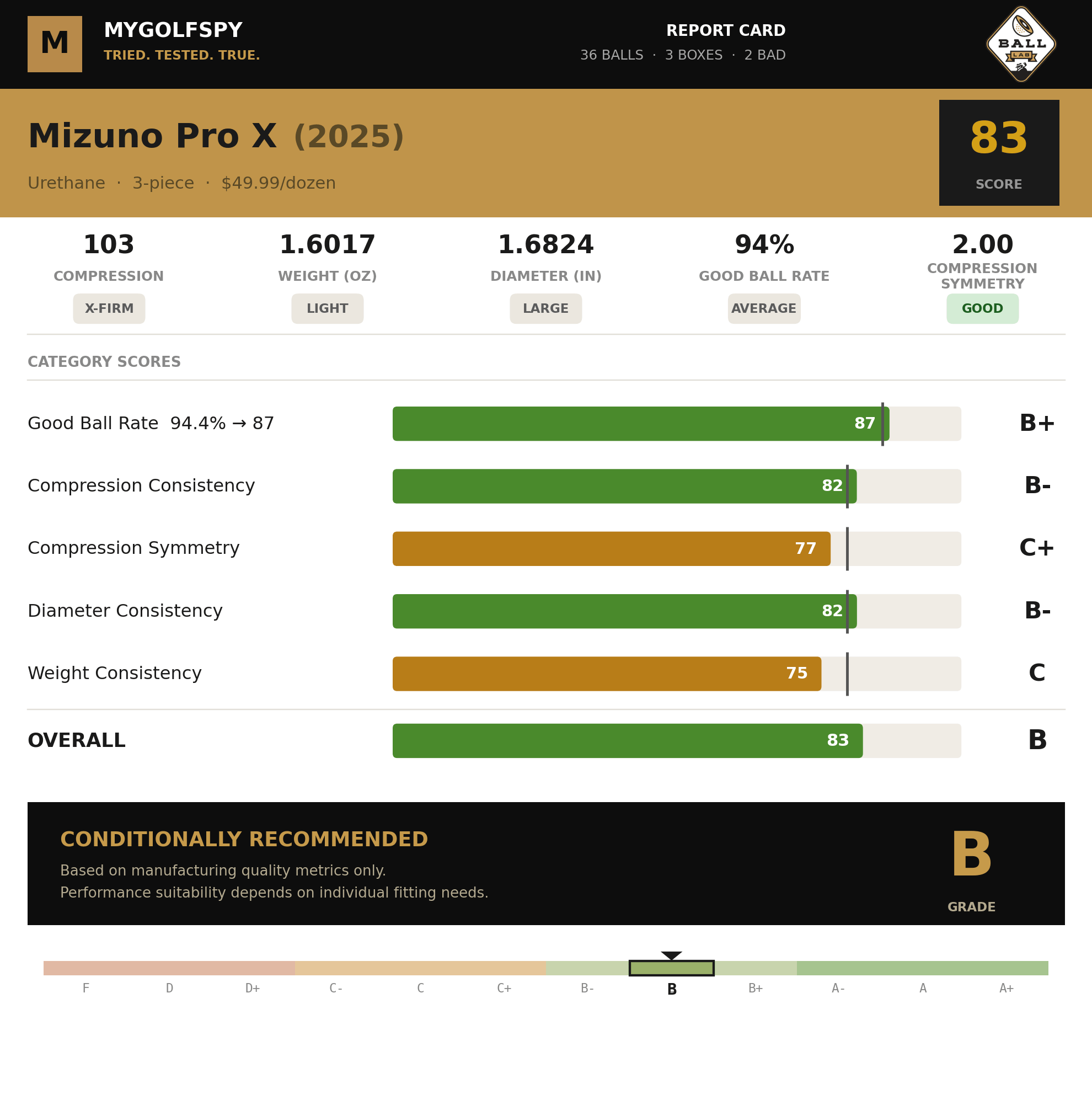
Each Quality Score is a weighted average of five grades: good ball rate, compression consistency, compression symmetry, diameter consistency, weight consistency. Our scoring system punishes defective balls more severely while giving greater weight to compression metrics than to weight and diameter.




Leave A Reply