



The latest distance fix would strip the testing tolerances from driver and golf ball limits at elite events. The real-world impact? Not much, and that might be the point.
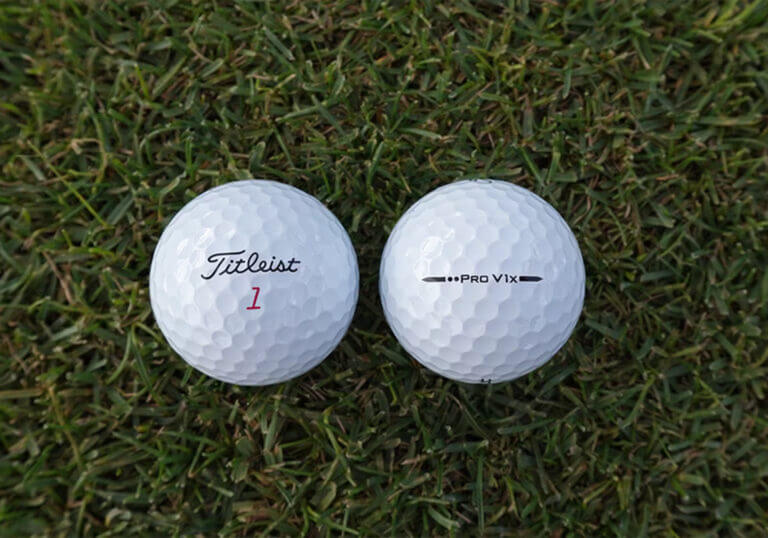
Cam Young didn’t single-handedly roll back the rollback but his Titleist Pro V1x Double Dot certainly gave it a hard shove.
The governing bodies sold the updated Overall Distance Standard on the premise that its effects would be asymmetric. That is to say, the longest hitters would lose the most and the rest of us would barely notice. Then word got out at the PGA Championship at Aronimink that the ball Young, one of the longest hitters in the game, had been gaming since the 2025 Wyndham Championship would already conform under the proposed test conditions. His driving distance average before the switch was 302.7 yards. This season it’s … 302.7 yards.
So much for asymmetry. Like most things in golf, the outcome turned out to be entirely player dependent.
At the U.S. Open at Shinnecock in June, the USGA, R&A, PGA Tour and DP World Tour conceded the new ODS “may not achieve the desired results” and USGA CEO Mike Whan said he was pursuing “a simpler, more narrow solution.” The governing bodies went back to the drawing board and last week (Sept. 21, to be exact) they reemerged with that solution in the form of a Notice to Manufacturers. At the request of the PGA Tour and DP World Tour, they’re floating three optional Model Local Rules for elite play. Two of them would eliminate the tolerances on the measurements that govern golf ball and driver performance.
Two tests, two tolerances
For those not deeply versed in the ways of golf’s governing bodies (lucky you), we’re effectively talking about two tests.
On the driver side, it’s the Characteristic Time (CT) test which replaced COR testing in 2004. It uses a pendulum apparatus to measure how long a small weight stays in contact with the driver face. Longer contact means more spring-like effect. The current limit is 239 microseconds with a tolerance of 18 microseconds. That gets us to an absolute limit of 257.
Golf balls go through a three-part process. The first step captures actual launch conditions from robot strikes. Next is an indoor test range where a ball cannon helps the USGA understand the ball’s aerodynamic properties. Finally, the robot and aero data are fed into a computer program to calculate how far the ball would travel, roll included. That’s the basis for the current ODS limit of 317 yards, plus three yards of tolerance (320 yards total, if you’re struggling with the math).
The new proposal would allow tournament organizers to remove the tolerances for both. Drivers would be capped at a hard 239 and balls at 317.0 yards. The third rule would limit club length (excluding putters) to something shorter than 46 inches. The Rules of Golf allow 48 inches but most elite events already cap it at 46 via Model Local Rule G-10.
Manufacturers have until Oct. 21 to comment and the rules could be in play as early as January 2028.
Bifurcation by another name
The more interesting piece, I suppose, is the decision to introduce the changes as a Model Local Rule.
I’d presume the intent is for elite amateur and professional events to adopt the tolerance reductions while the rest of us carry on as usual. We’ve seen this before. The original 2023 rollback proposal was also pitched as a Model Local Rule which amounted to bifurcation by another name.
It’s semantics at best but semantics that create potential headaches for manufacturers and competitors alike. An elite amateur could, in theory, need one driver and ball for one event and different gear the following week.
For manufacturers, the question is whether they’d produce two specs for drivers and balls or simply adjust manufacturing to hit the new targets. To answer that, we need to put some context around how close to the line everyone is playing.
How much speed are we actually talking about?
With a functional limit of 257, CT targets for most manufacturers land in the mid-240s. That’s admittedly a bit outside the spirit of the current rules.
The reality is that some of what you might call modern performance is the result of improved manufacturing techniques. As manufacturing consistency has improved, tolerances have tightened, allowing brands to push CT targets higher without worrying about individual heads failing. The same is true on the golf ball side where manufacturing improvements have allowed ball makers to push closer to the conforming line.
So, yes, almost everyone is designing above 239. But some quick math: 10 CT points is worth roughly half a mile per hour of ball speed. From where most drivers sit right now, dropping to 239 amounts to less than a one-mph penalty. It’s a safe bet everyone on Tour has more than that in reserve.
The three-yard tolerance on the ball is arguably more of a real-world penalty. That said, the algorithm the USGA uses for ODS produces an aggressive amount of roll so, in many cases, the real-world impact would be less than the three yards suggested by the tolerance.
Tolerances exist for a reason
It’s also worth pointing out that these tolerances aren’t loopholes. They’re there because the measurements are imperfect.
The ODS rule relies heavily on algorithms. As for CT, if you measured the same club with three gauges, you’d be unlikely to get the same number twice. Likewise, if three operators used the same gauge, they’d be unlikely to land in exactly the same place. It’s basic gauge R&R stuff which is a roundabout way of saying you can say you’re eliminating the tolerance but the measurement variability doesn’t disappear.
Nevertheless, faster is faster (and slower is slower). In the driver category, everyone wants to be as fast as the rules allow. Functionally, though, we’re not talking about a dramatic reduction in ball speed, even if the change forces CT targets into the low 230s or below.
And while it’s not widely discussed, the CT rules were written for titanium. As new materials have been introduced, the USGA has had to create formulas to translate CT measurements for things like TaylorMade’s carbon faces into a titanium equivalent. Innovation had already turned conformance into a bit of a moving target.
How would equipment makers respond?
If the proposal were to become the law of the land (or at least the law of the PGA Tour), do OEMs lower their CT targets or simply loosen their tolerances a bit?
Every part plots somewhere on a curve. Loosen the manufacturing tolerances and you could easily end up with some heads in the 230s and some in the 250s. The slow stuff goes to the Tour. The fast stuff heads to PGA TOUR Superstore or Golf Galaxy for you and me.
We also have to acknowledge market realities. There are brands like Vice, Kirkland and Takomo that make drivers but have near-zero presence in serious competition. That’s not a performance judgment. It’s simply an acknowledgment that you won’t find them on Tour and probably not in many of the elite competitions the governing bodies are trying to regulate more tightly.
Does that create an opportunity for smaller brands to push the limits while bona-fide Tour brands have to roll back? Maybe. But nobody wants to produce two lines of remarkably similar drivers or two lines of otherwise similar golf balls. There’s real cost in making slow stuff for the Tour and fast stuff for the rest of us.
Lipstick, meet pig
Early feedback from the OEMs I’ve spoken with is that if the USGA and R&A insist on putting this particular shade of lipstick on their rollback pig, they’d just as soon the governing bodies skip the Model Local Rule approach altogether. Ditch the tolerances for everyone.
Nobody is going to feel it much. Average golfers might notice a little on their best drives but, for the most part, the impact falls within the noise of our games.
On Tour, the impact would likely be next to nothing. And that suggests the latest proposal isn’t so much about doing anything consequential about the “distance problem” as it is about making it look like they are.
Let us know what you think in the comments.









Mike
3 weeks ago
I nixed my usga membership years ago. Whenever I see any mail from them it’s the first thing I throw in the trash.